

Industrial automation companies have historically grown through trade shows, referrals, and a handshake with the right plant manager. That playbook still matters, but it’s no longer enough. In 2027, roughly 70% of B2B buyers prefer researching products online before ever picking up the phone, and approximately 72% of marketing budgets are now allocated to digital channels. If your company isn’t visible during that research phase, you’re not on the shortlist.
This guide is written for industrial automation companies, manufacturing companies, OEMs, system integrators, and equipment dealers selling complex solutions like robotics cells, machine vision systems, warehouse automation, and controls platforms. Digital marketing strategies must address long sales cycles and multiple stakeholders, and that requires a fundamentally different approach than what works for SaaS companies or consumer brands.
What you’ll get here is a step-by-step framework for digital marketing for industrial automation: how to define your audience, build a website that converts engineers into leads, create content that earns trust on the plant floor, and measure what actually matters for pipeline and revenue. This is practical, people-first guidance drawn from real results in the industrial sector, not theory borrowed from industries that look nothing like yours.
Table of Contents
How Industrial Automation Buyers Actually Research in 2027
Define Your Ideal Customers and Buying Personas in the Industrial Sector
Build a High-Conversion Industrial Automation Website
SEO for Industrial Automation: From Generic Terms to Intent-Rich Searches
Content Marketing That Engineers and Plant Managers Actually Read
Social Media Marketing for Industrial Automation (With Realistic Expectations)
Marketing Automation Tools and CRM: Making Long Sales Cycles Manageable
Lead Generation and Sales Alignment for Industrial and Manufacturing Companies
Measure What Matters: Analytics, KPIs, and Continuous Improvement
Why Choose Our Agency for Digital Marketing in Industrial and Automation Markets
Next Steps: Turn Your Industrial Automation Marketing Plan Into Action
How Industrial Automation Buyers Actually Research in 2027
Industrial buyers conduct extensive online research before making purchases. A controls engineer searching for a “vision-guided palletizing cell for frozen foods” will run 10 to 15 searches, download data sheets, compare integration approaches, and possibly ask an AI assistant for ROI benchmarks on cobots in packaging lines before ever submitting a contact form.
What makes industrial digital marketing strategy complex is the number of viewpoints inside a single buying decision. Engineering cares about technical specifications, communication protocols, and uptime. Operations wants throughput, changeover speed, and safety compliance. Finance needs payback period and total cost of ownership. Long B2B sales cycles involve multiple decision-makers and high-value equipment, so your digital marketing efforts must speak to each of these perspectives across multiple digital channels.
The implication for your marketing strategy is straightforward: if you’re not visible, helpful, and credible during this research, you never make the shortlist. Digital marketing for industrial automation targets technical decision-makers online, and every section that follows is designed to help you reach them where and when they’re looking.
Define Your Ideal Customers and Buying Personas in the Industrial Sector
Most industrial automation businesses think they “sell to everyone.” In practice, companies that define a clear Ideal Customer Profile and two to four buying personas grow faster because they concentrate their limited marketing resources where they’ll have the most impact.
An ICP for the industrial automation sector might look like this: US-based food processing plants with three or more production lines, annual revenue between $50M and $500M, experiencing recurring downtime due to manual inspection or packaging. Automation marketing requires a distinct approach due to complex product offerings, and that specificity is what separates effective campaigns from wasted spend.
Key personas in industrial companies typically include:
- Engineering Manager – needs protocol compatibility, uptime data, retrofit feasibility
- Operations or Plant Manager – focused on throughput, safety, and changeover time
- VP of Manufacturing – weighing capital allocation and strategic modernization
- Procurement – comparing total cost of ownership, lead times, and service terms

Gather this data through short interviews with your best customers, win/loss analysis from recent years, and feedback from sales engineers who sit in technical demos. Document simple, one-page personas focused on pains, triggers, decision criteria, and common objections. Skip the 10-page marketing fiction nobody reads.
Build a High-Conversion Industrial Automation Website
Your website is now the primary “trade show booth” for industrial automation companies. It runs 24/7, serves every persona on the buying committee, and must convert anonymous researchers into known contacts. A strategic website overhaul can triple organic traffic and dramatically increase qualified leads when done right.
Effective manufacturing website design helps industrial automation companies create user-friendly websites that communicate technical capabilities and convert visitors into qualified leads.
A strong industrial site should include:
- Clear positioning on the homepage with sector-specific navigation (e.g., “Food & Beverage Automation,” “Warehouse Automation,” “Robotics & Cobots”)
- Detailed product and system pages with specs in readable HTML, not locked behind PDFs
- Industry and application pages (e.g., “case packing automation,” “robotic welding cells”)
- A resources section with guides, webinars, and case studies
- Service pages covering integration, retrofit, and maintenance
Conversion elements must be tailored to long sales cycles: RFQ forms, “Request a Line Assessment,” “Book a Virtual Demo,” and downloadable calculators that gate contact info. Gated technical resources provide value while capturing marketing qualified leads. Keep prominent phone and email options for urgent production issues.
A case study published by the National Institute of Standards and Technology (NIST) highlights how manufacturer Steven Plastics improved its website and introduced an instant quote form, resulting in a reported 30% increase in online quote request leads.
Optimizing website speed is crucial for user experience, and mobile-friendly websites improve engagement and conversion rates. Don’t let your site become a PDF graveyard where search engines can’t index your best content. Regular SEO audits identify areas for website improvement and keep your digital foundation solid.
SEO for Industrial Automation: From Generic Terms to Intent-Rich Searches
Search engine optimization helps industrial companies rank for specific equipment solutions. And in 2027 that visibility feeds both traditional search results and AI-generated answers. It’s a durable competitive advantage that compounds over time. A website overhaul paired with focused SEO can increase organic traffic by 3X or more.
A targeted approach to SEO for industrial equipment manufacturers helps businesses improve visibility for technical searches and attract buyers actively researching equipment solutions.
The mistake most industrial automation companies make is chasing broad terms like “industrial automation” or “robots.” An effective industrial digital marketing strategy targets long-tail, intent-rich queries tied to real buying triggers:
- “Stainless steel conveyor automation for meat processing”
- “Retrofit PLC migration from S5 to S7”
- “Machine vision OCR for date code verification”
High-intent search optimization targets specific machinery parts and systems, which is where qualified leads actually come from. SEO optimizes website pages for niche engineering keywords related to automation, connecting you with the right buyers at the right moment.
On-page essentials for the industrial sector include clear H1/H2 structure, descriptive title tags, internal linking between products, applications, and industries, and technical SEO elements like Product and FAQ schema where helpful. Off-page, focus on keeping profiles updated on supplier directories, contributing technical articles to industry publications, and earning links through real case studies.
Search engine rankings improve when you regularly review Google Search Console, track which topics attract qualified leads, and prune outdated content. Today, about 62% of manufacturing marketers focus on SEO changes as a priority, and for good reason. SEO enhances visibility in search results for manufacturers in ways that compound month after month. Data driven insights from your search performance should guide every content decision.
Content Marketing That Engineers and Plant Managers Actually Read
Content marketing for the industrial automation industry must be technical, specific, and application-driven. When we say “engaging content,” we mean useful on the plant floor, not generic Industry 4.0 slogans. Technical content marketing enhances credibility among industrial buyers because it demonstrates you understand their problems at a granular level.

The numbers support this approach: content marketing generates over 3x as many leads as outbound marketing and costs 62% less than traditional marketing methods. That’s why 90% of marketers incorporate content promotion into their customer acquisition plans.
Content types that work for industrial automation companies:
- Deep-dive application notes with cycle time and scrap reduction data
- Before/after case studies quantifying labor savings or throughput gains
- Commissioning checklists and maintenance guides
- ROI calculators and technical selection guides
- Thought leadership articles on safety, standards, and modernization
High-quality content helps build trust and nurture leads in manufacturing. Creating valuable content positions companies as authoritative sources in their industry. Education and case studies help build trust with technical decision-makers who need to justify purchases to multiple stakeholders.
A practical cadence in 2027: publish at least one substantial article or case study per month focused on a specific automation problem (e.g., “Reducing Changeover Time on Form-Fill-Seal Lines with Servo Retrofits”). Repurpose each piece into a LinkedIn post series, a short explainer video, a sales one-pager, and an email nurture asset so your marketing efforts compound over time.
Alignment matters: involve subject-matter experts in outlining high value content, but have marketing translate it into clear language that connects to business outcomes. Back in 2021, 88% of manufacturing marketers aimed to enhance brand awareness, and content remains the most cost effective lead generation tool to build brand awareness and generate quality leads simultaneously.
Social Media Marketing for Industrial Automation (With Realistic Expectations)
With 5.24 billion active social media users worldwide, social media platforms are impossible to ignore. But social media marketing for industrial companies is primarily about trust, brand visibility, and staying top-of-mind, not instant RFQs. Social media marketing builds credibility and trust with potential clients over time, and it’s crucial for turning browsers into loyal customers.
LinkedIn is the primary channel. It connects directly with operations directors and chief engineers. Recommended cadence: two to three posts per week featuring project spotlights, short clips of working cells, trade show recaps, and commentary on standards or safety updates.
Use paid LinkedIn tactically: sponsor high value content like guides or webinars to specific job titles in targeted manufacturing subsectors. Run small retargeting campaigns to stay in front of website visitors who browsed your application pages.
Secondary channels include YouTube for technical demos and webinars, and niche forums where automation engineers gather. Facebook and Instagram may support employer branding but are usually lower-priority for lead generation in the industrial space.
Measure success by engagement from the right people, increases in branded search and direct website traffic, and sales conversations that begin with “I’ve been seeing your posts for months.”
Marketing Automation Tools and CRM: Making Long Sales Cycles Manageable
If you sell automation, you should also use automation tools internally. Today, 76% of companies use automation tools for marketing efficiency, and 50% of B2B firms report automation enhances prospect quality. Marketing automation nurtures leads over long sales cycles that can stretch 6 to 18 months in the industrial automation sector.
Implementing marketing automation for manufacturing helps industrial companies streamline lead nurturing, automate follow-ups, and manage complex sales cycles more efficiently.
Customer relationship management systems serve as the single source of truth for contacts, plants, installed base, open projects, and service history, replacing the spreadsheet chaos that plagues many manufacturing companies. CRM systems paired with marketing automation create a powerful engine for managing multi-stakeholder deals.
How marketing automation supports long buying journeys:
- Automation tools can personalize communication with prospects based on their role and interests
- Automated workflows guide prospects through the sales funnel with relevant content
- Automated email sequences nurture leads during 6-18 month sales cycles
- Personalized emails enhance customer relationships and engagement
- Email updates keep customers informed about new products and services
Email nurturing builds relationships across long buying cycles in industrial sales. Email marketing is the most effective lead generation channel for roughly 48% of professionals. About 18% of manufacturing marketers find email an effective strategy for their specific audience.
A simple starter architecture: one CRM instance integrated with website forms and your email marketing platform, lead scoring based on digital behavior plus firmographics like company size and sector, and automated reminders for sales engineers when a prospect visits a robotic palletizing page three times in a week.
Technology alone doesn’t fix process issues. You need agreed definitions of MQL versus SQL, ownership of data quality, and regular pipeline review between marketing and sales to remain competitive.
Lead Generation and Sales Alignment for Industrial and Manufacturing Companies
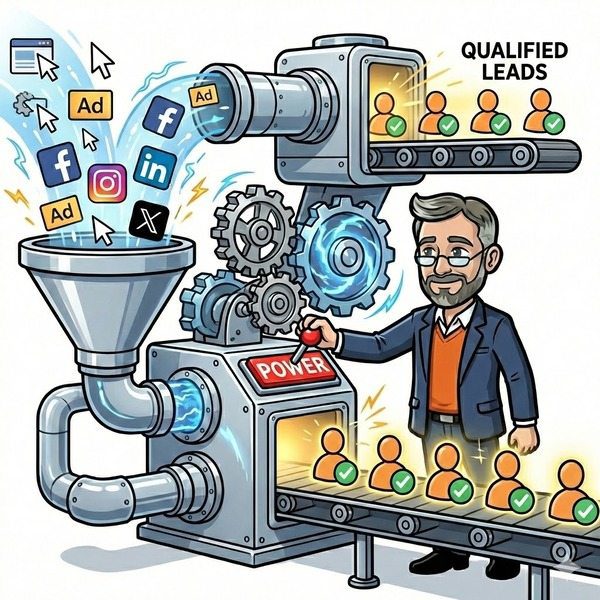
The goal of digital marketing for industrial automation is not just website traffic but qualified leads that convert into projects, retrofits, and service contracts. Digital marketing helps manufacturers build credibility and generate qualified leads online, and it can convert traditional trade shows into ongoing engagement strategies.
Key lead sources in the industrial sector:
- Organic search driving potential customers to application and retrofit pages
- Pay-per-click advertising targets high-intent searches for automation products. PPC ads provide immediate visibility on search engines, and 90% of internet users see Google ads. PPC can generate leads for industrial companies, allows targeting based on keywords and demographics, and can deliver fast results compared to organic search.
- LinkedIn campaigns targeting specific job titles in target audience segments
- Email re-engagement of dormant contacts using personalized sequences
- Account-based marketing targets specific enterprise accounts with personalized messaging, focusing marketing resources on high-value manufacturing companies
To generate leads effectively, integrate your digital marketing efforts with sales and focus on modernizing your B2B sales funnel for industrial equipment companies. This means shared definitions of what constitutes a qualified lead, documented handoff processes, and feedback loops where sales reports which content and channels produced the most real RFQs and plant visits.
A practical example: offer a “Line Modernization Assessment” to generate leads, then track how many assessments progress to proposals and installed systems, tying results back to channel and campaign. For companies with dealer or integrator networks, equip partners with co-branded landing pages, content, and email sequences that reflect consistent industrial marketing messaging.
For warehouse automation and material handling businesses, effective material handling lead generation also requires targeted campaigns that reach the right industrial buyers.
Measure What Matters: Analytics, KPIs, and Continuous Improvement
In 2027, industrial marketing leaders are expected to show clear links from digital activity to pipeline and revenue. Long-term metrics should assess performance based on the complete customer journey, not just clicks and impressions. Industrial automation digital marketing requires a technical approach to measurement that mirrors the precision your customers expect from their equipment.
Understanding how equipment companies should measure marketing ROI helps connect campaign performance with qualified opportunities, pipeline value, and revenue.
Core key metrics for industrial automation companies:
- Qualified form fills and RFQs
- Demo and assessment requests
- MQL-to-SQL conversion rates
- Opportunity value sourced by channel
- Time from first touch to opportunity creation
- Search engine rankings for priority terms
- Online visibility trends in Google Analytics and Search Console
Use Google Analytics for tracking customer behavior, conversions, and performance metrics. Google Search Console reveals which queries and pages drive organic traffic. CRM reports close the loop on downstream revenue attribution.
Establish a monthly review rhythm: assess core content performance, refine relevant keywords focus, review email and LinkedIn engagement, and prioritize one to three experiments like a new landing page variant or subject line A/B test. Effective digital marketing enhances visibility and generates leads for industrial companies, and effective strategies include technical content and high-spec optimization paired with continuous improvement cycles. Incremental, data-driven optimization beats wholesale reinvention every time.
Why Choose Our Agency for Digital Marketing in Industrial and Automation Markets
We specialize exclusively in equipment manufacturers, OEMs, system integrators, dealers, and rental providers across the industrial sector and manufacturing sector. Our team understands the language of controllers, protocols, retrofits, and plant-floor realities because that’s all we do.
Our approach to digital marketing for agricultural and heavy equipment manufacturers also reflects the importance of industry-specific messaging, technical content, and long B2B sales cycles.
We focus on revenue, not vanity metrics. We connect SEO, content marketing, paid media, conversion rate optimization, and marketing automation directly to qualified opportunities, pipeline value, and booked projects. Services span website strategy and development, industrial equipment SEO, AI-era search optimization, PPC for high-intent industrial queries, CRM and marketing automation setup, outbound prospecting support, and full analytics and attribution.
We work collaboratively with your sales and engineering teams to produce content that earns credibility with technical audiences and drives the buying process forward. Our clients in construction equipment, warehouse automation, food processing equipment, and material handling have seen measurable improvements in organic traffic, lead volume, and cost effective lead generation, and we bring that same discipline to every engagement.
Next Steps: Turn Your Industrial Automation Marketing Plan Into Action
Industrial digital marketing is a core driver of growth for automation and manufacturing companies in 2027, not an optional add-on. The companies that embrace digital marketing now, with a clear strategy connecting content, SEO, paid media, and CRM to real revenue, will outpace competitors still waiting for the next trade show.
Audit your current presence against the playbook above. How does your website stack up? Are you visible for the right keywords? Is your content actually helping the sales process? Pick two to three initiatives to tackle in the next 90 days and commit resources to executing them well.
Ready to map digital marketing strategies to your specific industrial sector, product lines, and revenue goals? Request a consultation or marketing audit and let’s build a plan that turns your industrial automation marketing into a predictable, scalable growth engine. Even complex, long-cycle businesses can build reliable pipelines when the right marketing strategy, sales process, and digital channels work together.
FAQs: Digital Marketing for Industrial Automation
How is digital marketing for industrial automation different from generic B2B marketing?
The industrial automation industry involves deeply technical buying processes, committees of five or more stakeholders, and sales cycles stretching 6 to 18 months. Generic B2B tactics miss the mark because they don’t account for the technical audiences evaluating specs, safety compliance, and integration complexity. An effective digital marketing strategy for this space requires content and messaging calibrated to engineers, plant managers, and procurement teams simultaneously.
Which digital channels usually produce the best leads for industrial automation companies?
Search engine optimization and content marketing consistently deliver the highest-quality leads over time. Search engine marketing through pay per click provides faster results for high-intent queries. LinkedIn is the strongest social channel for reaching potential clients in manufacturing. Email marketing rounds out the mix for nurturing leads over long sales cycles. The best results come from coordinating all of these digital channels together.
How long does it take to see results from industrial marketing efforts?
Paid search and email campaigns can generate leads within weeks. Organic search and content marketing typically take 6 to 12 months to build meaningful momentum. In one documented case, first ranking improvements appeared around week 11, with organic MQLs from retrofit pages starting around month five. Set realistic expectations and commit to the long game.
What budget should manufacturing companies allocate to digital marketing in 2027?
Budget depends on company size, the number of verticals you serve, and your current digital maturity. Companies with limited marketing resources should start by investing in a strong website, foundational SEO, and one to two content pieces per month. As pipeline results appear, reinvest in paid media, marketing automation, and expanded content production. The key is tying spend to measurable pipeline outcomes, not arbitrary percentages.
How do we create engaging content if our engineers are too busy to write?
Use interview-based workflows. A 30-minute conversation with an engineer can produce enough material for a full application note or case study. Marketing translates the technical detail into clear, valuable content that preserves accuracy while connecting to business outcomes. Repurpose existing technical docs, project reports, and commissioning notes into search-friendly formats. 90% of marketers use content promotion for customer acquisition, and this approach scales even with lean teams.
Can digital marketing support our dealer or integrator network?
Absolutely. Partner enablement through co-branded landing pages, shared content libraries, email sequences, and campaign templates strengthens the entire channel. Industrial marketing that supports your partners with services online and ready-to-use digital assets creates a multiplier effect, helping both your brand and your dealers generate quality leads in their local markets. Local SEO for dealer locations further extends online visibility.