

If you run or lead sales at a manufacturing company in 2027, you already know the landscape has shifted. Trade show foot traffic keeps declining, your best reps are stretched thin across territories, and the spreadsheet your team uses to track follow-ups has more gaps than data. Manufacturing sales cycles often involve multiple stakeholders and lengthy approvals, with average cycles stretching 130 days from first contact to close and full buying journeys lasting a year or more. Relying on referrals and handshakes alone is no longer a viable growth plan, making marketing automation for manufacturing increasingly important.
Marketing automation for manufacturing is about using a platform like HubSpot, Salesforce Marketing Cloud, or Marketo to orchestrate every touchpoint across the buyer journey: lead capture forms, email marketing, lead scoring, lead nurturing, and sales notifications, all triggered by real behavior rather than gut feel. Marketing automation accelerates lead generation in the manufacturing industry and reduces reliance on trade shows and manual follow-ups.
The key benefits are straightforward: more qualified leads, better visibility from first website visit through closed deal, and a repeatable process your marketing and sales teams can actually trust. This article covers strategy, tools, core use cases, integration with your CRM and ERP, analytics, implementation steps, and the most common mistakes manufacturers make when they adopt marketing automation.
Whether you’re an owner, sales leader, or marketing manager at an OEM, dealer, or custom equipment builder, this is your practical guide for 2027.
Table of Contents
What Is Marketing Automation in a Manufacturing Context?
Key Benefits of Marketing Automation for Manufacturing Companies
What Can You Automate? Core Use Cases for Automation for Manufacturing
Lead Generation and Lead Capture Forms for Industrial Buyers
Lead Scoring and Improving Lead Quality for Manufacturing Sales Teams
Lead Nurturing and Email Marketing Across Long B2B Sales Cycles
Integrating Marketing Automation with CRM, ERP, and the Sales Process
Analytics, Reporting, and Proving ROI from Marketing Automation
Step-by-Step: How to Implement Marketing Automation for Manufacturing in 2027
Common Mistakes Manufacturing Companies Make with Marketing Automation
Why Choose a Specialized Industrial Marketing Partner for Your Automation Program
Next Steps: Turning Marketing Automation into a Revenue Engine
Frequently Asked Questions About Marketing Automation for Manufacturing
What Is Marketing Automation in a Manufacturing Context?
Marketing automation refers to software and processes that automatically trigger marketing actions-email campaigns, workflows, content delivery, lead routing-based on data and behavior. In a manufacturing context, this goes well beyond a newsletter tool. You’re dealing with engineered-to-order products, dealer networks, RFQ-driven sales, and buying committees of 7–11 people. Your marketing automation software needs to handle that complexity.
The difference between a basic email tool and a full marketing automation platform is significant. A newsletter tool sends one broadcast to your whole list. An automation platform supports multi-step, behavior-based workflows: if a plant engineer downloads a spec sheet and then visits your product page three times, the system routes that person into a tailored nurture sequence and notifies the right rep. Behavior-based triggers in automation increase timely follow-up and engagement. Automated email sequences can deliver product specifications over time, matching what each contact has shown interest in.
Automation tools pull data from website behavior, email engagement, trade show scans, quote requests, and even ERP records to create a unified contact record. This isn’t “set and forget” software. It’s an operating system for your manufacturing marketing strategy that must be planned, tested, and continuously optimized as your products, pricing, and buyer behaviors evolve.
Additionally, a well-structured B2B sales funnel helps manufacturers align marketing automation with their sales processes, improve lead nurturing, and convert more prospects into customers.
Key Benefits of Marketing Automation for Manufacturing Companies
When well-implemented, marketing automation transforms how manufacturing companies generate, qualify, and close opportunities. The benefits of marketing automation center on efficiency, lead quality, alignment, and predictability. Here’s what that looks like in practice:
- Small team leverage. Nearly 40% of companies report improved staff time efficiency through automation. A two-person marketing team can manage follow-ups across thousands of contacts, freeing time for high-value marketing activities like content development and trade show strategy.
- Better lead quality. 40% of companies using marketing automation report improved lead quality. Lead scoring and segmentation filter out tire-kickers so sales teams focus on promising leads. Companies with effective personalization generate 40% more revenue than those blasting generic messages.
- Stronger lead nurturing. Automated lead nurturing increases engagement during long sales cycles. Whether a buyer is researching for 6 months or 18 months, structured sequences keep your manufacturing business top of mind without manual effort.
- Sales–marketing alignment. Marketing automation helps align sales and marketing teams in manufacturing, improving marketing and sales alignment by 30%. Since 43% of CEOs believe misalignment costs sales, closing that gap is a direct revenue lever.
- Measurable attribution. Marketing automation enables measurable performance tracking for campaigns, connecting your marketing efforts to actual pipeline and revenue instead of guessing which trade show or email drove a deal.
- Customer retention and upsell. Automated workflows maintain customer relationships after the initial sale with renewal reminders, service campaigns, and aftermarket offers.
The numbers back this up: companies achieve an average ROI of $5.44 for every dollar spent on marketing automation. Revenue can increase by approximately 34%, and manufacturers see a 40% increase in deal size with automation. Companies using marketing automation also see a 20% higher sales attainment rate.
B2B equipment manufacturers benefit from automating lead generation and nurturing because it creates a repeatable process that turns anonymous visitors into sales-ready opportunities, not just “more emails.”
What Can You Automate? Core Use Cases for Automation for Manufacturing
Rather than automating everything at once, most manufacturing companies should start with five areas: lead generation, lead capture forms, lead scoring, lead nurturing, and basic sales notifications. As maturity grows, expand into quote workflows, renewals, and customer marketing.
Here’s where automation tools make the biggest difference:
- Lead routing. Automatically assign new inquiries to the correct salesperson or dealer based on territory, product line, or application. Automation can streamline distributor and channel marketing efforts in manufacturing, especially for companies with complex dealer networks.
- Trade show and RFQ follow-up. Import scanned leads, trigger a personalized welcome email within hours, and start a nurture sequence tied to the products they expressed interest in. These workflows can also support broader marketing strategies for construction equipment manufacturers, particularly when coordinating trade shows, dealer networks, and digital campaigns. Streamlined marketing processes enhance operational efficiency for manufacturing firms.
- Consistent communication. Maintain regular, relevant communication with engineering firms, general contractors, distributors, and plant managers through automated campaigns without requiring manual sends from your marketing teams.
- Post-sale engagement. Automated reminders and notifications support maintenance and reorder processes. When warranty expiry approaches or a service interval hits, the system sends targeted outreach.
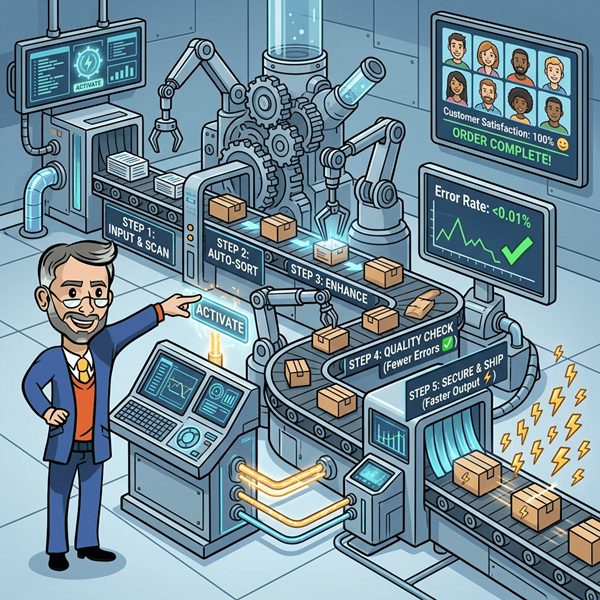
A practical example: a warehouse automation manufacturer can use automated workflows to manage inquiries from integrators differently than end users. Integrators get routed to a channel partner portal with co-marketing resources, while end users enter a nurture track with case studies and ROI content. This kind of segmented handling is where manufacturing marketing automation creates real value.
Lead Generation and Lead Capture Forms for Industrial Buyers
Digital lead generation has become critical in the manufacturing industry. Buyers research online earlier and deeper, often evaluating three to five vendors before ever picking up the phone. Marketing automation can streamline lead generation through automated web forms and chatbots that capture intent around the clock.
Combining automated lead capture with high-converting website design helps manufacturers turn website visitors into qualified leads.
Effective ways to automate lead generation for manufacturers include:
- Gated content: engineering calculators, CAD libraries, 3D models, maintenance checklists, and ROI tools that generate leads by offering something worth a form fill.
- Interactive tools: cost-of-downtime calculators, line design wizards, and configuration tools that deliver personalized content while capturing lead data.
- Always-on offers: spec download centers, quote request forms, and distributor locator contact paths that feed your sales funnel 24/7.
Industrial buyers often require tailored content based on specific product interests, so your lead capture forms should reflect that. Keep early-stage forms short-name, email, company, role-and use progressive profiling to collect detailed specs over time. Tailor forms by audience (OEM vs. plant engineer vs. distributor) to support segmentation in your marketing automation platform.
Connect every form directly to your automation platform so each fill triggers a workflow: assignment to the right rep, confirmation email, nurture entry, and lead scoring update. For example, an ETO equipment builder can capture leads from an “Upload Your RFQ” page and auto-create tasks for the correct regional sales manager, cutting response time from days to hours.
Lead Scoring and Improving Lead Quality for Manufacturing Sales Teams
Lead scoring assigns points to contacts based on fit and behavior to prioritize follow-up. Automated lead scoring helps prioritize high-quality leads for sales teams so reps spend time on contacts most likely to buy, not manually hunting through every email subscriber.
For companies selling warehouse and industrial equipment, effective material handling lead generation also depends on identifying high-intent buyers and nurturing them across multiple touchpoints.
A practical lead scoring model for a manufacturing business might look like this:
| Criteria Type | Example | Points |
|---|---|---|
| Industry match | Target vertical (e.g., food processing) | +20 |
| Job title | Plant Manager, Engineering Manager | +15 |
| Company size | 100+ employees | +10 |
| Visited pricing or demo page | High-intent behavior | +30 |
| Downloaded CAD files or spec sheets | Technical evaluation signal | +25 |
| Opened last 3 emails | Engaged contact | +10 |
| Student or free email domain | Low fit | -20 |
| No activity in 90 days | Disengaged | -15 |
Lead scoring helps prioritize high-quality leads for sales teams and directly ties to sales productivity. 40% of companies using marketing automation saw increased lead quality by implementing scoring models like this.
The practical value of lead scoring is illustrated by a case study from the National Institute of Standards and Technology (NIST), which describes how manufacturer IRMCO incorporated lead scoring and targeted email campaigns into its marketing and customer acquisition efforts.
Calibrate your scores quarterly using closed-won and closed-lost data. If “MQLs” with high scores aren’t converting, adjust the thresholds. Automated lead scoring enhances sales and marketing collaboration by creating shared, data-driven definitions of what makes a qualified lead.
Lead Nurturing and Email Marketing Across Long B2B Sales Cycles
Many industrial buyers research for 6–12 months before they’re ready for a quote. Without structured lead nurturing, you lose those contacts to competitors who stayed top of mind. Marketing automation improves lead nurturing through personalized content matched to each contact’s interests and stage in the buying journey.
The National Institute of Standards and Technology (NIST) also emphasizes the importance of targeted marketing, lead cultivation, and digital communication in helping manufacturers attract prospects and develop long-term customer relationships.
Core nurture programs every manufacturer should build:
- New lead welcome series (days 1–14). Education and credibility, not aggressive selling. Introduce your capabilities, share a relevant case study, and link to your resource library.
- Consideration-stage nurture. Application notes, case studies by industry, ROI comparisons, and total cost of ownership tools for leads based on their specific interests (e.g., food processing vs. packaging automation). Segmented messaging improves engagement and customer experience in manufacturing.
- Re-engagement campaigns. Win-back sequences for inactive leads and past opportunities that went dark. Automated follow-ups can significantly improve lead conversion rates when timed correctly.
- Post-sale onboarding. Support implementation, drive adoption, and surface expansion opportunities. Personalized email workflows can automate lead nurturing processes that extend across the entire customer journey.
Personalized emails can significantly enhance customer engagement rates. Use behavior-downloads, page visits, webinar attendance-to branch email marketing workflows so each contact gets content matched to their interests. In 2027, effective email campaigns for manufacturing are about relevance and timing, not volume. This approach supports more efficient sales cycles and a healthier customer lifecycle.
Integrating Marketing Automation with CRM, ERP, and the Sales Process
Integrating marketing automation with your CRM is non-negotiable for manufacturing companies that want accurate pipeline and revenue data. Without it, you get duplicate contacts, disconnected follow-ups, and a sales process built on guesswork. Data synchronization with CRM systems prevents data-entry mistakes in manufacturing and keeps everyone working from the same record.

A well-structured CRM setup for heavy equipment sales teams helps manufacturers centralize customer data, track opportunities, and coordinate automated follow-ups across the sales process.
Here’s what integration looks like in practice:
- New leads from forms and trade show imports auto-create contacts in CRM with full marketing history attached.
- Opportunity stage changes in CRM trigger different nurture tracks. When a quote is marked “Sent,” the marketing automation platform starts a 30–60 day automated follow-up series with technical FAQs and case studies.
- ERP or order system data feeds active customer status, purchase history, and renewal dates back to the automation platform. When a service contract is 90 days from expiration, the system launches a renewal reminder sequence.
This integration improves sales–marketing alignment through shared dashboards, shared definitions of MQL and SQL, and clear rules for when automation hands off to a salesperson. Nearly two out of five marketers report fully automated customer journeys when CRM and automation are properly connected.
Keep your data clean. Duplicate management, standardized industry and application fields, and consistent naming conventions are the unglamorous foundation that keeps your automated processes running correctly.
Analytics, Reporting, and Proving ROI from Marketing Automation
Manufacturers reporting to ownership, boards, or private equity can’t justify marketing spend with open rates and click-throughs. You need pipeline and revenue metrics. Marketing automation enables measurable performance tracking for campaigns that ties every marketing activity to real business outcomes.
Key reports your marketing automation solution should deliver:
- Lead source and campaign performance: which marketing channels and assets generate qualified leads and closed deals.
- Funnel conversion: visitor → lead → MQL → opportunity → customer, with stage-by-stage conversion rates.
- Sales cycle velocity: how nurtured leads move faster from first touch to purchase order compared to un-nurtured contacts.
Companies can achieve a 34% revenue increase through automation when they use analytics to continuously refine their marketing strategy. 40% of companies using marketing automation report improved staff time efficiency because they stop wasting effort on activities that don’t move the needle.
Build a simple monthly dashboard for leadership with five to seven KPIs: new leads, MQLs, opportunities created, pipeline influenced, and new revenue attributed to marketing. Use that data not just to prove value, but to refine lead scoring models, content formats, send cadences, and segmentation for your specific manufacturing buyers.
Step-by-Step: How to Implement Marketing Automation for Manufacturing
Here’s a practical roadmap for a manufacturing company implementing automation over three to six months:
- Audit current processes. Map where leads come from, how they’re handed off, and where follow-up gaps exist. Identify repetitive tasks that eat your team’s time.
- Define objectives and KPIs. Set specific goals: boost lead generation by 30%, reduce quote-to-close time, improve dealer engagement. Avoid vague targets.
- Select your platform. Choose marketing automation tools that integrate with your existing CRM and tech stack. Consider multi-language support, dealer portals, and ERP integration capabilities.
- Design initial workflows. Start with lead capture, lead scoring, one or two nurture sequences, and basic sales notifications. Don’t try to automate everything on day one.
- Build content. Create application guides, case studies by vertical, on-demand demos, and spec libraries that feed your automated campaigns. Without content, workflows stall.
- Launch a pilot. Pick one product line or region. Run for 60–90 days, measure results, then scale.
- Train your team. Sales reps need to update CRM, log calls, and tag contacts correctly. Marketing needs to monitor workflow performance and adjust. Training is as critical as technical setup.
- Iterate. Review and refresh key workflows quarterly based on closed-won and closed-lost feedback.
Involve both sales and marketing leaders from day one so your marketing automation strategy reflects the real sales process, not just marketing’s assumptions.
Common Mistakes Manufacturing Companies Make with Marketing Automation
Plenty of manufacturing companies invest in automation and still don’t see results. Here are the pitfalls to avoid:
- Using automation as a blast tool. Sending the same email to your entire database defeats the purpose. Fix: segment by industry, role, product interest, and engagement level.
- Over-automating before you have content. Workflows without valuable content just deliver empty sequences. Fix: build a minimum content library before launching nurture programs.
- Passing every form fill to sales. Without lead scoring, reps drown in unqualified contacts and lose trust in marketing-generated leads. Fix: implement scoring and only route contacts that meet your MQL threshold.
- Skipping CRM integration. Disconnected systems create duplicate outreach and blind spots. Fix: make CRM integration a launch requirement, not a phase-two item.
- No shared MQL/SQL definitions. If sales and marketing disagree on what “qualified” means, friction is guaranteed. Fix: define criteria together, review monthly, adjust based on data.
- Letting data hygiene slide. Duplicate accounts, inconsistent industry tags, and stale records cause workflows to misfire. Fix: schedule quarterly data audits.
- Set-and-forget mentality. Workflows built in 2025 with outdated messaging won’t serve your 2027 buyers. Fix: review and update sequences quarterly based on performance.
Anchor every decision in manufacturing realities: long sales cycles, technical audiences, and multi-contact buying groups. Your marketing automation work will only be as good as the process and data behind it.
Why Choose a Specialized Industrial Marketing Partner for Your Automation Program
A generalist agency can set up email templates and basic workflows. But manufacturing marketing automation demands an understanding of capital equipment sales cycles, dealer and distributor models, technical buying journeys, and the integration points between marketing technology, CRM, quoting tools, and revenue dashboards.
A comprehensive equipment marketing strategy connects automation with SEO, paid advertising, content, and sales enablement to generate qualified leads and support long-term customer relationships.
A specialized industrial marketing partner brings:
- Experience mapping the customer journey for markets like construction equipment, material handling, food processing, mining, waste and recycling, and warehouse automation.
- Strategy for lead generation, lead nurturing, and lead scoring tailored to each product line rather than generic B2B playbooks.
- Content development for technical audiences-case studies, calculators, configuration tools, and gated resources-that feed automated campaigns with substance, not filler.
- Platform selection, implementation, and integration with existing systems so your marketing automation solution connects to real revenue data.

Consider a typical scenario: an equipment manufacturer moves from spreadsheet tracking and inconsistent follow-ups to automated lead management. Response time drops from five days to 24 hours. Qualified demo requests climb within the first year. That kind of business growth comes from specialization, not from a one-size-fits-all marketing playbook.
The goal is measurable pipeline growth, not just more marketing activities on a dashboard. Industrial specialization shortens the learning curve and delivers results that matter to your sales success.
Next Steps: Turning Marketing Automation into a Revenue Engine
Marketing automation for manufacturing is not a software purchase. It’s a commitment to building a predictable, scalable system for lead generation, lead nurturing, and revenue attribution across your entire customer lifecycle. The manufacturers who invest now-while buying behavior continues shifting online-will compound their advantage over competitors still running on spreadsheets and gut feel.
Start with concrete next steps:
- Audit your current lead capture and follow-up process. Identify where leads fall through the cracks.
- Define clear goals for lead quality, not just lead volume.
- Choose a pilot product line or region to launch your first focused automation rollout.
If you’re ready to stop guessing and start building a revenue engine, schedule a consultation to review your current sales and marketing tech stack. We can help you design a roadmap for integrating marketing automation with your CRM and dealer network, build your first lead scoring and nurturing workflows, and connect your marketing efforts to the pipeline and revenue metrics that actually matter. The opportunity is here. The question is whether you’ll capture it before your competitors do.
Frequently Asked Questions About Marketing Automation for Manufacturing
How is marketing automation different from a standard email marketing tool for manufacturers?
Email marketing sends one-to-many campaigns to a list. A marketing automation platform orchestrates multi-step, behavior-based workflows across email, web, and sometimes SMS. It adds lead scoring, dynamic segmentation, CRM integration, and personalization based on which product pages an engineer viewed or which spec sheet they downloaded. Think of it this way: a newsletter is a single touchpoint, while automation is a 10-step sequence that adapts based on how each lead interacts with your technical resources across the entire customer journey.
How long does it take a typical manufacturing company to see results from marketing automation?
Initial setup and pilot workflows typically take 60–90 days. Meaningful improvements in lead quality and pipeline usually appear within six to nine months. Because long sales cycles delay revenue attribution, focus on leading indicators first: MQL volume, meeting booked rates, and follow-up speed. Marketing automation can increase deal sizes by 40% over time, but don’t expect overnight transformation.
Do smaller manufacturing companies with lean teams really need marketing automation?
Lean marketing teams often benefit the most. Automating repetitive tasks like follow-up emails, list management, and lead routing replaces hours of manual work without adding headcount. A 20–50 person manufacturer can use a lightweight automation platform to handle trade show follow-up, website lead capture, and basic lead nurturing. Start simple with one or two high-impact workflows rather than trying to build an enterprise-grade system on day one.
How does lead scoring work when multiple people are involved in a manufacturing buying decision?
In manufacturing, buying groups typically include engineering, operations, purchasing, and finance contacts. Scoring should work at both the individual level (per contact) and the account level (total activity from one facility or company). When three contacts from the same plant all engage with your content in the same month, that account-level rollup signals real intent. Align your lead scoring models with real past deals to identify which roles and actions were common in your most successful opportunities.
What types of content work best in automated campaigns for technical audiences?
Content that resonates with engineers, plant managers, and operations leaders includes application notes and design guides, CAD files and 3D models, spec sheets, ROI calculators, total cost of ownership comparisons, and commissioning or maintenance checklists. Automation lets you deliver personalized content matched to funnel stage-early education for awareness, detailed justification materials for the capital expenditure approval stage. Industrial buyers often require tailored content based on specific product interests, so map every asset to a stage and audience.
How do we avoid overloading our customers and prospects with automated emails?
Set global send limits-no more than two to three marketing emails per week per contact. Use engagement-based logic to pause workflows when someone just received a quote or booked a demo. Exclude active opportunities from broad promotional sends. Offer clear unsubscribe and preference centers so technical buyers can choose topics and cadence. Enhancing customer engagement means respecting your audience’s time, not flooding their inbox.