

Manufacturing contributed approximately $2.3 trillion to the U.S. GDP in 2023, yet most manufacturing companies still rely on referrals, repeat orders, and trade show handshakes as their primary growth channels. Buyers have moved on. They research online before contacting manufacturers, often completing the majority of their evaluation before a single sales call happens. Manufacturers must adapt to digital-first research behaviors or risk losing deals to competitors who show up earlier in the buying process.
Manufacturing sales cycles span 6 to 18 months on average, involve multiple stakeholders, and require technical clarity at every stage. A scattered collection of one-off marketing efforts will not sustain pipeline through those timelines. What works is a set of coordinated manufacturing marketing strategies built around real buyer needs, tracked against revenue, and refined quarter by quarter.
This article covers practical, non-generic marketing ideas for equipment manufacturers, OEMs, and industrial suppliers. It is written for owners, presidents, sales leaders, and marketing leaders who want a marketing plan that connects activity to pipeline and revenue. Digital marketing allows manufacturers to reach a broad audience quickly; the challenge is doing it with precision and discipline.
Table of Contents
- Start with a Revenue-Focused Manufacturing Marketing Strategy
- Clarify Your Ideal Manufacturing Customers and Niches
- Build a Buyer-Centric Content Marketing Engine
- Turn Your Website into a Manufacturing Resource Hub
- SEO and Search Visibility for Manufacturing Companies
- Manufacturing Content Formats That Build Trust Fast
- Use Customer Testimonials and Case Studies as Core Proof
- LinkedIn and Social Media for Technical Thought Leadership
- Targeted Digital Marketing Campaigns and Paid Media
- Trade Shows and Industry Events Integrated with Digital
- Interactive Tools and Calculators That Generate Leads
- Email Marketing and Lead Nurturing for Long Sales Cycles
- Align Marketing, Sales, and Dealer or Channel Partners
- Measure What Matters: Manufacturing Marketing KPIs and Dashboards
- Common Manufacturing Marketing Mistakes to Avoid
- Why Choose a Specialist Team for Your Manufacturing Marketing
- Next Steps: Turn Manufacturing Marketing Ideas into a Working Plan
- FAQs About Manufacturing Marketing Ideas and Strategies
1. Start with a Revenue-Focused Manufacturing Marketing Strategy
A strong manufacturing marketing strategy in 2027 starts with revenue targets, not tactics. Before choosing channels or launching marketing campaigns, define what “success” means in dollars. Following NIST’s marketing and sales guidance for manufacturers, consider how many marketing-sourced opportunities your sales team needs per quarter and what average deal size those opportunities should carry.
Manufacturing marketing must address multiple stakeholders’ concerns. A typical buying committee includes engineers who evaluate specs, maintenance managers who care about uptime, procurement officers focused on cost and compliance, and executives who approve capital expenditure. Each role searches differently, reads different content, and has different objections. Effective manufacturing marketing requires understanding these technical buyer needs and mapping content to each role.
Around eight in ten B2B decision-makers seek performance guarantees before committing to a new supplier. Your marketing materials and sales conversations need to answer that demand with data: test results, uptime records, warranty terms, and third-party certifications.
Build a one-page manufacturing sales strategy that connects three to five core marketing strategies (search engine optimization, trade shows, email nurturing, paid search, outbound sequences) to measurable KPIs. Those KPIs should include qualified leads per month, RFQ submissions, and marketing-sourced pipeline value. Share the plan with sales leadership so marketing efforts align with the same revenue goals.
2. Clarify Your Ideal Manufacturing Customers and Niches
Most manufacturing companies try to market to everyone in their manufacturing sector and end up resonating with no one. The fix: use real order data from the past three to five years to identify which industries, equipment types, and geographies produce the highest margins, shortest sales cycles, and best win rates.
Build two to four concrete ideal customer profiles. Examples:
- Midwestern ready-mix concrete producers with 50 to 200 trucks looking to replace aging batch plant controls
- U.S. food processors upgrading to automated washdown conveyors by 2028
- Regional waste haulers expanding fleet capacity in the Southeast
Account-based marketing strategies focus on high-value and high-stakes manufacturing deals. Targeted account-based marketing can result in more relevant sales conversations for manufacturers because messaging speaks directly to specific job titles, plant sizes, and common industry challenges. Account-based marketing should address multiple stakeholders within target accounts, delivering different content to the engineer evaluating your system and the CFO approving the budget. Account-based marketing creates hyper-personalized campaigns for high-value enterprise clients rather than spraying generic ads across a broad target audience.
Tailor your content marketing topics, trade show attendance, and targeted digital marketing campaigns directly to these ICPs.
3. Build a Buyer-Centric Content Marketing Engine
Content marketing for manufacturing focuses on technical resources, not brand fluff. The goal is to answer the questions your potential customers are already asking during their buying process, then convert that attention into qualified leads.
Effective industrial product marketing translates technical specifications into practical benefits for engineers, procurement teams, and other decision-makers.
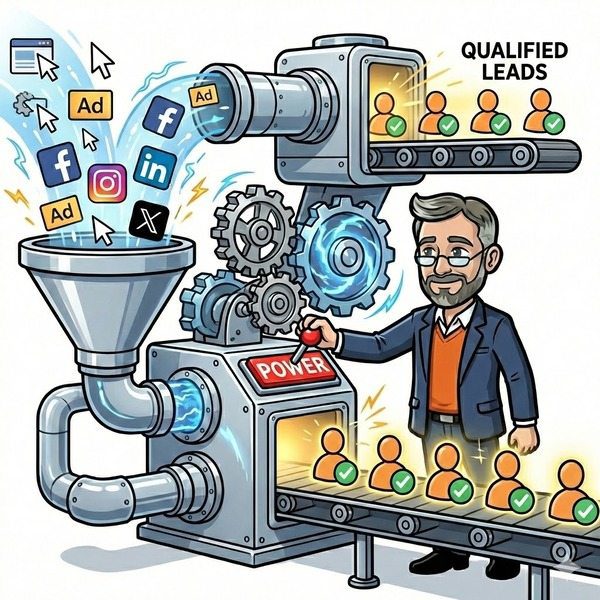
Start with a six- to twelve-month content calendar built from real inputs: sales call transcripts, RFQ questions, support tickets, and field service reports. Topics should be specific. “How to cut conveyor belt downtime by 30% in dusty food plants” will outperform “Why conveyors matter” every time. Technical content should focus on answering potential buyers’ specific questions. Publishing technical content that provides practical solutions builds trust with potential customers.
High-performing content formats for manufacturers include:
- Application notes tied to specific industries or processes
- Troubleshooting guides for common failure modes
- “How we solved X problem for Y plant” stories with real numbers
- Equipment sizing worksheets and selection matrices
- Safety and compliance checklists (e.g., OSHA, NEC, USDA)
- ROI calculators with exportable results
Publish deep-dive technical content to educate industrial buyers instead of using hard sales pitches. Educational content boosts engagement and builds trust with audiences.
Every major content asset needs a clear next step: download the full guide, schedule a consult, or request a plant walk-through. Data-driven targeted content is essential for effective manufacturing marketing. Without a conversion path, content creation generates page views but not pipeline.
4. Turn Your Website into a Masnufacturing Resource Hub
Most manufacturing business websites still function as digital brochures: a homepage, an “About Us” page, and a product catalog buried in PDFs. That structure fails technical buyers who expect detailed specifications and compliance documentation before they pick up the phone.
Effective manufacturing website design makes technical specifications, product resources, and RFQ forms easier for potential buyers to find.
Creating a resource hub centralizes valuable content for audiences in one searchable location. Organize it with categories like “Case Studies,” “Equipment Specification Guides,” “Maintenance Best Practices,” “Industry Trends,” and “Regulatory and Safety Updates.” Use filters by industry and equipment type so a food processing engineer can find relevant resources without scrolling through mining content.
Successful manufacturers use gated content to capture leads. Gate your highest-value assets (full PDF case studies, configuration worksheets, compliance checklists) behind a short form, while keeping overviews and summary pages ungated for search engine optimization and AI visibility. Offering free CAD drawings on websites helps in lead generation for components and custom parts. Optimizing for AI-driven search requires clear structuring of technical capabilities in crawlable HTML, not locked inside image-based PDFs.
Add clear CTAs throughout: “Talk with an applications engineer” or “Request a spec review.” Powerful on-site search and a fast-loading, mobile-friendly experience round out the basics.
5. SEO and Search Visibility for Manufacturing Companies
Ninety-one percent of pages do not receive organic search traffic. For manufacturers, that statistic is worse when product pages are built entirely in PDF catalogs that search engines cannot index properly. A strong manufacturing SEO strategy focuses on technical long-tail keywords, the exact phrases your buyers type when they have a specific need.
Research shows that industrial buyers search for specific engineering terms online. Examples: “stainless steel screw conveyor for dairy plant,” “Class II Div 2 dust collection system 2027 compliance,” or “hydraulic press 500-ton capacity food grade.” Build a prioritized keyword list by combining language from real RFQs, competitor page analysis, and Google Search Console data. Focus on high-intent phrases over vanity keywords like “manufacturing” or “equipment.”
Creating dedicated landing pages improves discoverability for specific manufacturing services. Structure each page for both human readers and search engines: descriptive URLs, clear H1 and H2 headings, detailed specs in HTML, and FAQ sections answering follow-up questions. SEO helps manufacturers attract leads through online searches when pages match the procurement-stage terms buyers actually use.
Track search engine optimization quarterly: organic traffic to product and capability pages, qualified contact form submissions from organic visitors, and rankings for a defined set of 30 to 50 manufacturing terms. SEO investments of $3,000 to $10,000 per month typically show ranking improvements in three to six months, with website traffic growth in six to nine months and pipeline impact in nine to twelve months.

6. Manufacturing Content Formats That Build Trust Fast
Technical buyers do not respond to hype. They respond to evidence, trade-offs, and practical guidance they can apply to their own operations. Effective marketing for the manufacturing industry relies on trust and technical clarity, not polished sales language.
White papers, engineering guides, and “design mistakes to avoid” articles support inbound marketing and shorten engineering evaluation time. Case studies and technical content should highlight quantifiable results for B2B buyers: throughput improvements measured in units per hour, scrap reduction in percentage points, payback periods in months.
Short “field report” pieces work well for mid-funnel content. Summarize a pilot project, retrofit outcome, or performance improvement with real numbers and timelines. Case studies should detail engineering challenges and performance benchmarks so readers can compare the scenario to their own plants.
Format matters too. Use summary tables that capture key specs, before-and-after KPIs, and equipment configurations. Engineers scan; they do not read marketing copy line by line.
7. Use Customer Testimonials and Case Studies as Core Proof
Customer testimonials and case studies are the highest-trust content a manufacturing business can produce. Publishing case studies can highlight ROI for manufacturing marketing because they show real outcomes, not promises.
Structure each case study around five elements:
- Customer background: industry, plant type, location, scale
- Problem: downtime, scrap rate, safety risk, throughput bottleneck
- Solution: equipment or system installed, configuration details
- Implementation: timeline, integration challenges, training
- Results: quantified improvements within 6 to 18 months
Include named plants, industries, and regions whenever possible. “Ontario-based plastics processor reduced changeover time by 27% in 2025” is more credible than “a customer saw improvement.” Using visual marketing showcases manufacturing capabilities effectively; include process photos, layout diagrams, and performance charts where relevant.
Repurpose every case study into at least four formats: a website page, a sales one-pager, a trade show handout, and snippets for LinkedIn posts and email campaigns. This multiplies the return on every real world success story your marketing team produces.
8. LinkedIn and Social Media for Technical Thought Leadership
LinkedIn is ideal for targeting decision-makers in manufacturing. Most plant managers, reliability engineers, and procurement leaders maintain LinkedIn profiles and engage with technical content on the platform. Social media marketing for manufacturers helps build brand authority and engage audiences when the content is practical rather than promotional.

Design a 90-day LinkedIn posting plan featuring:
- Short educational posts (500 to 700 words) on common industry challenges
- Video clips of industrial equipment running in the field
- Employee spotlights highlighting application engineers and field techs
- Customer testimonials summarized in two to three paragraphs
Video marketing is effective for demonstrating manufacturing products. Short clips of equipment in operation, virtual factory tours, and “how it works” walkthroughs generate more engagement than product announcements. Video marketing can effectively showcase a factory’s capabilities and processes without requiring a buyer to visit a plant. Technical podcasting can position a manufacturing brand as an industry authority, especially when episodes feature real customers discussing outcomes.
Paid social media campaigns can drive targeted traffic effectively on LinkedIn by targeting specific job titles, industries, and company sizes.
Use LinkedIn analytics to identify which posts drive profile visits, website clicks, and demo requests, then build future manufacturing marketing strategies around those topics. Social media marketing on other social media platforms like YouTube (for equipment demos) and Facebook (for dealer network engagement) can supplement LinkedIn.
9. Targeted Digital Marketing Campaigns and Paid Media
Targeted digital marketing campaigns give manufacturers a way to generate pipeline while organic efforts ramp up. By 2025, 88% of organizations report using AI in marketing, and paid media platforms use AI-driven bidding and audience modeling to improve efficiency.
Build Google Ads campaigns around high-intent phrases: “industrial dust collector retrofit quote,” “robotic palletizer integrator near me,” or “hydraulic press rebuild service.” Average cost per click in industrial categories runs around $5.87, with cost per tracked conversion near $75. For stricter definitions of qualified leads (RFQ submissions from buyers with budget and timeline), cost per lead rises to $250 to $300. Send paid traffic to dedicated landing pages, not your homepage.
LinkedIn ad strategies let you target roles (plant manager, maintenance supervisor, reliability engineer, procurement manager), specific industries, and company sizes. Offer something useful: a payback calculator, a spec guide, or a webinar registration. Innovative marketers adopt digital-first strategies to engage industrial buyers through these online platforms rather than relying only on outbound calls.
Retargeting ads follow visitors who viewed product pages or spec sheets, serving them proof-based content (case studies, video demos) instead of repeating the same offer. Every campaign should be tied to cost-per-qualified-lead and closed-won revenue. Track campaign performance weekly and adjust spend toward the marketing channels producing the best lead quality.
10. Trade Shows and Industry Events Integrated with Digital
Trade shows remain valuable for the manufacturing industry because complex products often require hands-on evaluation. Interactive booth demos can enhance engagement during trade shows, and demonstrating products in trade shows can improve lead generation for complex manufacturing purchases. But industry events only pay off when tightly integrated with digital marketing before and after the event.
Effective trade show marketing strategies include pre-show digital campaigns to secure meetings. Run targeted email sequences, LinkedIn posts, and calendar-booking links inviting specific accounts to see demos or review plant drawings on-site. Transitioning from traditional trade shows to digital experiences attracts more customers for manufacturers who blend both approaches. Immersive digital experiences enhance technical demonstrations; consider running live remote demos or virtual factory tours for contacts who cannot attend in person. Virtual factory tours can showcase manufacturing capabilities without requiring travel.
On the show floor, capture leads efficiently with badge scanners, two to three quick qualification questions, and tags by product interest. Sync every lead into CRM and nurturing workflows within 24 to 48 hours. Leads responded to within one hour are seven times more likely to qualify than leads contacted after a day.
Post-show follow-up should be segmented: send case studies to visitors who asked about ROI, application notes to those with technical questions, and design consult offers to those evaluating new lines. Generic “thanks for stopping by” emails waste the investment you made to get to the show floor.

11. Interactive Tools and Calculators That Generate Leads
Interactive tools enhance visitor experience and drive engagement on manufacturing websites. They also generate leads from buyers who are actively evaluating options, not just browsing.
Practical examples for manufacturing companies:
- Compressed Air Leak Cost Calculator: Input plant size, operating pressure, estimated leak rate; output annual cost of wasted energy
- Line Layout Throughput Simulator: Enter product dimensions, line speed, shift schedule; output estimated daily throughput
- Payback Period Estimator: Compare current manual process costs to automated solution costs; output months to break even
- 3D Product Configurator: Allow clients to customize complex parts online, select materials, dimensions, and options
Interactive product configurators simplify the buying process for industrial customers. 3D product configurators allow clients to customize complex parts online and generate spec sheets they can share with their buying committee. In 2026, digital self-service for orders over one million euros tripled, signaling that even large-ticket buyers expect online configurability.
Gate these tools lightly: let visitors use them freely but require an email to save or export results. Align calculator outputs with sales conversations so reps can reference the same assumptions in proposals. Webinars establish thought leadership and engage potential customers as a complementary format; webinars help establish thought leadership and generate leads when paired with interactive demos.
12. Email Marketing and Lead Nurturing for Long Sales Cycles
Email newsletters nurture relationships and keep brands top-of-mind during the 6- to 18-month buying journeys typical in manufacturing. A single touchpoint rarely converts an industrial buyer. Consistent, relevant email campaigns build familiarity and trust over months.
Create segmented lists by industry, role (engineer vs. executive vs. maintenance manager), and lifecycle stage (new lead, active project, dormant account). Marketing automation for manufacturing helps tailor campaigns to specific buyer roles so each contact receives content that matches their current needs.
Build multi-step nurture flows triggered by key actions:
| Trigger | Sequence Content |
|---|---|
| Downloaded a spec guide | Follow up with related case study, then ROI calculator invite |
| Visited pricing page | Send competitive comparison sheet, then consultation offer |
| Attended a webinar | Deliver recap with key takeaways, then plant assessment offer |
| Dormant 6+ months | Re-engage with new product announcement or industry trend report |
Send a monthly or quarterly “plant improvement bulletin” style newsletter with practical tips, short case study highlights, and invitations to upcoming trade shows or virtual demos. Educational content is crucial for engaging manufacturing customers through email; avoid making every send a product pitch.
13. Align Marketing, Sales, and Dealer or Channel Partners
Manufacturing marketing ideas only produce revenue when the sales team and dealer networks act on the leads marketing generates. Misalignment between the marketing department and the sales pipeline is the most common reason good campaigns produce weak results.
Co-build qualification criteria with sales: budget, authority, need, timeline, and installed base. When marketing and sales agree on what a “sales-ready” lead looks like for each product line, handoffs get cleaner and follow-up gets faster. Innovative marketing strategies can enhance customer acquisition in manufacturing, but only when the sales process is ready to receive and work the leads.
Create shared content libraries that dealers, distributors, and reps can use: localized brochures, email templates, trade show follow-up sequences, and application-specific slide decks. Documented evidence of sustainability practices can differentiate manufacturers from competitors when channel partners share those materials with environmentally conscious buyers.
Hold a recurring monthly or quarterly “commercial sync” meeting where marketing, sales, and key channel partners review performance data, discuss feedback from the field, and choose marketing campaigns for the next period. This meeting is where marketing resources get redirected based on what the market is actually telling you.
14. Measure What Matters: Manufacturing Marketing KPIs and Dashboards
Manufacturing companies should track metrics that reflect business opportunities and marketing effectiveness, not just impressions and clicks. B2B marketing success should be measured by qualified leads and conversion rates tied to real pipeline.
Critical metrics for a manufacturing marketing team:
| Metric | What It Tells You |
|---|---|
| Marketing-qualified leads (MQLs) | Volume of leads meeting agreed criteria |
| Sales-accepted leads (SALs) | Leads sales confirms as real opportunities |
| Opportunity-to-quote ratio | How many opportunities turn into formal quotes |
| Quote-to-win rate by source | Which marketing channels produce deals that close |
| Marketing-sourced revenue (rolling 12 months) | Total revenue originated by marketing efforts |
| Cost per qualified lead | Efficiency of marketing dollars by channel |
Manufacturers should track cost per qualified lead as a key metric. Benchmarks: generic tracked conversions cost around $75 per lead in industrial paid search; strict RFQ-qualified leads may cost $250 to $300 or more.
Effective measurement connects marketing activities to business outcomes. Use CRM and marketing automation tools to track the journey from first touch (a targeted digital marketing campaign, a trade show badge scan, an organic search visit) to closed-won order. Set realistic timeframes: expect early indicators (traffic, engagement, form fills) in two to three quarters, with pipeline and revenue impact visible over four to eight quarters in complex sales cycles.
A simple executive dashboard might show: total MQLs this quarter, SALs accepted, open pipeline value by source, cost per qualified lead by channel, and quote-to-win rate. One screen; no vanity metrics.
15. Common Manufacturing Marketing Mistakes to Avoid
Manufacturers face challenges in demonstrating product usage effectively, but many of the biggest marketing failures are self-inflicted. Here are the mistakes we see most often.

Relying solely on trade shows and referrals. Both are valuable, but neither scales. When a key salesperson retires or a trade show gets canceled, pipeline disappears overnight. Manufacturing marketing requires a diversified set of marketing channels.
Creating content without talking to sales or existing customers. A marketing department that writes blog posts based on guesses will produce generic material that engineers ignore. The best content comes from real sales conversations, field service observations, and customer feedback.
Ignoring SEO and technical search terms. A company that only advertises its brand name misses buyers searching by process problem, like “bottling line downtime reduction” or “automated case packer for frozen food.” Those are the searches that generate leads from buyers with active projects.
Treating all leads the same. A procurement manager requesting an RFQ is not the same as a student downloading a white paper. Without lead scoring and qualification criteria, the sales team wastes time on contacts that will never buy.
Stopping campaigns too early. SEO and content marketing mature over 6 to 12 months. Paid campaigns need 60 to 90 days of data before optimization produces reliable results. Manufacturing marketing requires patience and consistent marketing dollars to produce compounding returns.
The best manufacturing marketing strategies are systematic, patient, and connected to revenue outcomes rather than one-off tactics.
Why Choose a Specialist Team for Your Manufacturing Marketing
An industrial marketing agency that focuses on equipment, OEM, and industrial markets brings advantages a generalist firm cannot match. We understand long B2B sales cycles, complex sales cycles involving multiple decision-makers, and the technical language your buyers speak. We connect marketing campaigns to the sales pipeline and revenue, not vanity metrics.
Our team builds search-optimized websites, runs paid search and social advertising on Google Ads and LinkedIn, implements CRM and marketing automation tools, and creates high-quality video and written content for technical audiences. We know how dealer and distributor networks operate, and we design marketing resources that channel partners actually use.
We support both strategic planning (positioning, marketing plan design, ICP development) and hands-on execution (campaign setup, content development, analytics, reporting) tailored to your specific market segments. Whether you sell agricultural equipment, food processing equipment, construction equipment, or specialty industrial equipment, we build programs that generate qualified leads and measurable pipeline.
Next Steps: Turn Manufacturing Marketing Ideas into a Working Plan
A 30-60-90 day roadmap gets you from ideas to action:
- Days 1 to 30: Clarify ICPs, set pipeline goals with sales, audit your website and messaging for gaps
- Days 31 to 60: Fix core website issues, publish two to three high-value content assets, launch one quick-win paid campaign
- Days 61 to 90: Build a 6-month content calendar, implement lead scoring in CRM, define quarterly KPIs and a reporting cadence
Manufacturing marketing success does not require doing everything at once. It requires doing the right things in sequence, measuring results honestly, and adjusting based on what the data shows.
If you are ready to stop guessing and start building a marketing engine that generates high quality leads for your manufacturing business, reach out for a consultation. We will audit your current strategy, identify the fastest paths to pipeline, and help you build a plan that connects every marketing dollar to real revenue. Manufacturers who invest in thoughtful, data-backed marketing strategies now will be better positioned to win deals and build resilient pipelines through 2027 and beyond.
FAQs About Manufacturing Marketing Ideas and Strategies
How is marketing used in manufacturing today?
In 2027, manufacturing marketing spans demand generation, lead nurturing, sales enablement, and customer loyalty. Examples include using educational content to support engineering evaluations, targeted digital marketing campaigns to reach plant managers by specific job titles and industries, and marketing automation to stay top-of-mind during long procurement processes. It goes well beyond brochures and events.
What are the most effective manufacturing marketing strategies to generate leads?
The best marketing strategies combine five elements: SEO around technical long-tail keywords, proof-rich case studies with quantified results, integrated trade show plans with digital follow-up, LinkedIn thought leadership, and interactive calculators or configurators. Results come from combining these into a cohesive plan that both marketing and sales support, not from running any single tactic in isolation.
How much should a manufacturing company invest in marketing?
A realistic range is 3% to 7% of annual revenue. Spend more when entering new markets, launching new equipment lines, or pursuing aggressive growth targets. Spend less (but never zero) when capacity-constrained or operating in a mature, stable market. Budget should be tied to clear business objectives and tracked against marketing-sourced pipeline and revenue.
How long does it take for manufacturing marketing to work?
Paid campaigns and outbound efforts can show volume results in 30 to 90 days. Organic search, content marketing, and reputation building often take 6 to 18 months to mature. Evaluate progress using leading indicators (website traffic, engagement, quality of opportunities) while keeping a multi-quarter view on revenue impact. Long sales cycles mean the gap between a first touch and a closed deal can be a year or more.
Do small manufacturing companies need digital marketing, or are trade shows enough?
Even small shops benefit from a focused online presence. Sixty-one percent of buyers prefer a buying experience without a sales representative, meaning they are evaluating you online before you know they exist. A lean starter set: an optimized website with clear capability pages, a small library of case studies and how-to content, one or two targeted digital campaigns through Google Ads or LinkedIn, and consistent email follow-up around each trade show.
How can manufacturers make marketing feel authentic, not “salesy,” to engineers?
Focus on plain-language explanations, real data, failure modes, and trade-offs instead of hype. Engineers respond to honesty about where a solution fits and where it does not. Showcase subject-matter experts in your content. Publish practical troubleshooting advice. Back claims with test data, third-party certifications, and customer testimonials from named plants and industries. Valuable insights come from the field, not from a copywriter guessing at specs.