

Table of Contents
This is a practical guide to choosing a marketing agency for equipment manufacturers, written for teams that want to stop wasting budget on generic marketing and start connecting marketing activity to real pipeline and revenue. Use the links below to jump to the section most relevant to your situation.
- Why Specialized Agencies Matter
- How Technical Buyers Really Buy in 2027
- Core Services to Expect
- Digital “Engine” vs. One-Off Campaigns
- Key Marketing Strategies for Heavy Equipment Manufacturers
- What to Know Before Hiring
- Choosing the Right Marketing Partner for Industrial Companies
- Common Mistakes to Avoid
- How the Process Typically Works
- FAQs
- Why Choose a Specialized Equipment Marketing Agency
- How to Take the Next Step
Introduction: Why Equipment Manufacturers Need a Different Kind of Marketing Agency
By 2027, technical buyers for heavy equipment, agricultural machinery, and industrial systems complete roughly 60 percent of their buying process online before ever speaking to a supplier. Engineers, plant managers, and procurement teams are running detailed, specification-driven searches, comparing total cost of ownership across vendors, and building internal business cases before they pick up the phone. Heavy equipment marketing now relies on digital strategies to reach these buyers where they already are.
However, generic marketing agencies struggle here. Industrial and equipment sales involve complex buying committees, long sales cycles that stretch six to eighteen months, and multi-tier dealer networks. Buyers also face strict safety and regulatory requirements, and products are defined by torque ratings and duty cycles rather than lifestyle branding. A marketing agency built for consumer goods or SaaS simply does not have the vocabulary, the patience, or the process to serve manufacturing companies well.
This article explains what a specialized marketing agency for equipment manufacturers actually does. It also covers how that agency supports revenue growth rather than just brand awareness, and how to select the right marketing partner. We will cover industrial marketing strategy, inbound and content marketing for technical buyers, and digital lead generation. We will also show how to connect every marketing dollar back to pipeline and booked revenue.
Why a Specialized Marketing Agency for Equipment Manufacturers Matters
Industrial companies in construction, agriculture, material handling, food processing, and mining need marketing agencies that already speak their language. The gap between a general B2B agency and a manufacturing marketing agency is not subtle. In fact, it shows up on day one.
For example, a specialized agency understands the difference between a duty cycle rating and a horsepower number. Likewise, it knows what CE, UL, and USDA certifications mean for your messaging. It grasps total cost of ownership arguments, because that is how your equipment buyers actually make decisions. General agencies tend to optimize for impressions and clicks. Manufacturing marketing agencies optimize for qualified RFQs, demo requests, configured quotes, and dealer inquiries, the metrics that actually move your equipment business forward.
Moreover, familiarity with dealer networks, OEM-dealer-end user dynamics, and rental and fleet models is critical. Equipment marketing agencies should support both end customers and channel partners like distributors, because that is how most heavy equipment actually gets sold. A specialized partner shortens onboarding, reduces costly messaging mistakes, and accelerates results. It already understands typical buying committees that include engineering, operations, safety, finance, and procurement teams. Agencies that choose to understand long sales cycles in manufacturing deliver faster time-to-value because they are not learning your industry on your dime.
How Technical Buyers and Specifiers Really Buy Equipment in 2027
The modern buying process for heavy equipment and industrial systems is research-heavy, multi-stakeholder, and largely digital before any human contact happens. Equipment purchases typically involve multiple decision-makers including engineers and executives, and each one needs different information at different stages.
Engineers and plant managers search using detailed, problem-based queries: “reduce loader hydraulic downtime in sub-zero conditions” or “stainless auger conveyor for USDA washdown.” Above all, they expect to find answers, not marketing fluff. Industrial buyers want B2C-quality web experiences: fast-loading sites, clear navigation organized by application, transparent performance data, comparison tools, and downloadable spec sheets. In fact, a static PDF catalog is no longer sufficient.
Self-serve information is now table stakes. Technical buyers expect 3D models, CAD downloads, ROI calculators, maintenance guides, and commissioning checklists. These support the complex internal approvals required for capital equipment. An experienced industrial marketing agency maps content to every stage of the buying process. Early educational pieces define the problem, mid-funnel comparison guides narrow the field, and late-stage tools help procurement teams justify the capex internally.
Core Services a Marketing Agency for Equipment Manufacturers Should Provide
Here is a high-level checklist of digital marketing services that heavy equipment companies should expect from a serious partner.
- Website strategy and development: Sites must handle multiple audiences (OEMs, equipment dealers, distributors, rental companies, and end users) with clear paths to RFQs, demo scheduling, and dealer locator tools. Web design should prioritize speed, mobile usability, and structured product data.
- Industrial search engine optimization and search visibility: This includes keyword research for niche equipment terms, technical on-page SEO, schema markup for products and specifications, and engine optimization for both traditional search results and AI-powered overviews. SEO and paid search capture high-intent traffic for dealers and direct buyers alike.
- Content marketing for technical buyers: Manufacturing marketing relies heavily on technical content like white papers and case studies. Expect application notes, engineering blogs, equipment comparison guides, and maintenance playbooks. Content marketing helps manufacturers engage technical audiences effectively, and effective content marketing addresses long sales cycles in manufacturing. TREW Marketing specializes in content marketing for technical buyers, and agencies following that model have shown that content marketing can increase web leads by over 50 percent.
- Inbound marketing and automated lead nurturing: Marketing automation, gated content, and email marketing sequences nurture prospects through sales cycles for industrial equipment that often last from 6 to 18 months.
Demand Generation, CRM, and Reporting Services
- Paid advertising campaigns: Google Ads, LinkedIn paid ads, and trade-specific platforms targeting job titles like maintenance manager and fleet director across industrial sectors such as mining, waste and recycling, and warehouse automation.
- Outbound and account-based marketing: Account-based marketing is effective for targeting high-value decision-makers in equipment sales. Weidert Group’s ABM campaign generated $325,000 in closed business by targeting OEM and dealer channels, results that inbound alone would not have delivered.
- CRM integration and marketing automation: Connect website forms, campaigns, and dealer inquiries into a CRM with clear lead routing for your sales team. Transparent measurement focuses on pipeline contribution and qualified opportunities rather than vanity metrics.
- Analytics, attribution, and revenue reporting: A serious manufacturing marketing agency ties channel performance to quotes, opportunities, and booked revenue. Technical content capabilities are crucial for marketing agencies in the industrial sector, and reporting should prove it.
Building a Digital Marketing Engine Instead of One-Off Campaigns
Many heavy equipment manufacturers still rely on trade shows and referrals as their primary demand generation channels. Trade shows can drive significant revenue for equipment manufacturers when integrated with marketing efforts. However, running occasional campaigns between events never compounds into predictable growth.
A digital marketing engine for manufacturing companies looks like this: consistent organic traffic from search engine optimization and content marketing, always-on paid search and paid social programs, and ongoing email marketing nurture that fills the pipeline year-round. Integrated marketing ties together website UX, technical content, search visibility, outbound prospecting, and sales enablement so every tactic supports the same revenue goals.
In 2027, your digital presence also means being understandable to AI systems. That does not require gimmicks or special AI-only content. It means clear structure, unambiguous product specifications, and strong topical coverage, the same things that help human readers.
Marketing strategies for equipment manufacturers should align with long sales cycles and technical buying behavior. Instead, think in 12- to 24-month horizons with quarterly milestones for traffic, MQLs, SQLs, and dealer lead volume. In short, one campaign will not transform your pipeline. A compounding engine will.
Key Marketing Strategies for Heavy Equipment and Industrial Manufacturers
This section outlines a practical mix of digital marketing strategies rather than abstract theory.
Problem-led content strategy: Build content around recurring operational problems (downtime, safety compliance gaps, throughput bottlenecks, fuel consumption, emissions) rather than pure product features. Industrial Strength Marketing enhances brand visibility through content marketing using exactly this approach, and the results speak for themselves.
Application and industry pages: Organize your site by sectors: construction equipment, agricultural equipment, mining, food processing, waste and recycling. Each page should include sector-specific use cases, relevant certifications, and case studies. Manufacturing SEO structured this way can increase organic search growth by 582 percent. Industrial Strength Marketing achieved a 222 percent YoY increase in leads through SEO, and TREW Marketing increased web traffic by 50 percent using similar digital marketing strategies.
Local and dealer-focused SEO: Optimize for regional queries like “excavator dealer in Ohio” or “material handling equipment service in Texas.” Consistent NAP profiles for heavy equipment dealers and branches matter. SEO helps heavy equipment dealers capture high-intent traffic from equipment buyers who are ready to act.
Video and visual demos: Walk-arounds of new models, side-by-side performance comparisons, and service procedure videos build confidence for industrial buyers evaluating remotely. Godfrey’s campaign generated 82 million potential readers for CASE by combining visual content with strategic distribution.
Sales enablement content: Spec comparison sheets, objection-handling guides, and ROI calculators give your sales team and equipment dealers tools for live conversations with fleets and construction companies. A strong product launch strategy also requires these materials from day one.
Lifecycle and aftermarket marketing: Campaigns around parts, service agreements, retrofits, and upgrades help manufacturers grow revenue from existing installed bases. Ultimately, this is where long term success compounds.
What to Know Before Hiring a Marketing Agency for Equipment Manufacturers
Before your first conversation with a potential marketing agency for equipment manufacturers, gather your internal data. You will need historic quote volume, close rates, average sales cycle length, top product lines, key territories, and current dealer performance metrics.
Next, clarify your priority outcomes. Are you focused on more direct lead generation? Better dealer support? Launching a new model line? Expanding into a new region? Growing aftermarket revenue? Your brand strategy and goals shape the agency’s approach.
Then, map current buyer journeys for at least two product lines. Note where industrial prospects currently fall off: unclear specs on the website, slow distributor response times, missing comparison tools. Interview recent customers to understand what content influenced their buying process.
Finally, define realistic timelines and constraints. Be honest about budget ranges, internal approvals, IT resources, and which subject-matter experts are available for interviews. Agencies that understand your constraints will plan accordingly.
How to Choose the Right Marketing Partner for Manufacturing and Industrial Companies
Selecting the right marketing partner is the decision that determines whether your investment compounds or evaporates. Here is a practical framework for heavy equipment and industrial companies.
To begin, focus on industry expertise. Evaluate agencies based on their specific service expertise with manufacturing marketing, long sales cycles, technical content, and multi-stakeholder decision-making. Look for agencies with a proven track record in your industry. Ask to see case studies from 2020 to 2026 that show measurable outcomes: YoY lead growth, revenue impact, or improved dealer performance. Gorilla 76 helped a client generate $800,000 in new revenue in one quarter. Belkins’ campaigns deliver 120 percent of KPI goals on average. Altitude Marketing has an average client retention of 3 years, which says something about sustained value.
Also, check for cookie-cutter approaches in agency solutions. The best manufacturing marketing agencies tailor strategy to your specific equipment business, not repackage a template. Ask agencies about their past failures and lessons learned-this reveals maturity and honesty more than any pitch deck.
Next, speak directly with the people who will work on your account: strategists, writers, paid media specialists, graphic design leads. The sales team that pitches you is rarely the team that delivers.
We advise requesting a small diagnostic project first. A website and analytics audit or a go-to-market plan for a single product line tests fit before a long retainer. This is how the best marketing agencies for manufacturing brands demonstrate real specialized expertise.
Common Mistakes Equipment Manufacturers Make with Marketing Agencies
Avoiding a few recurring mistakes can save months and significant budget.
- Choosing on awards, not relevance: Selecting agencies based solely on creative awards or big consumer-brand logos rather than proven industrial marketing experience with heavy equipment or machinery leads to slow ramp-ups and misaligned content.
- Static catalog websites: Treating websites as PDF repositories instead of ongoing lead-generation and sales-support tools that evolve with new models, regulations, and applications. Your digital presence must be a living system.
- Shallow content: Underestimating the content depth required for technical buyers. Publishing generic blogs instead of detailed, specification-rich resources wastes budget and erodes credibility with industrial clients.
- Siloed strategy: Failing to involve your sales team, dealer managers, and service leaders in marketing strategy leads to misaligned messaging and leads that are impossible to qualify. Industrial strength marketing requires cross-functional input.
- No tracking infrastructure: Not setting up proper CRM integration, unclear lead sources, or no closed-loop reporting makes it impossible to see which marketing efforts actually generate revenue growth. Without attribution, you are guessing.
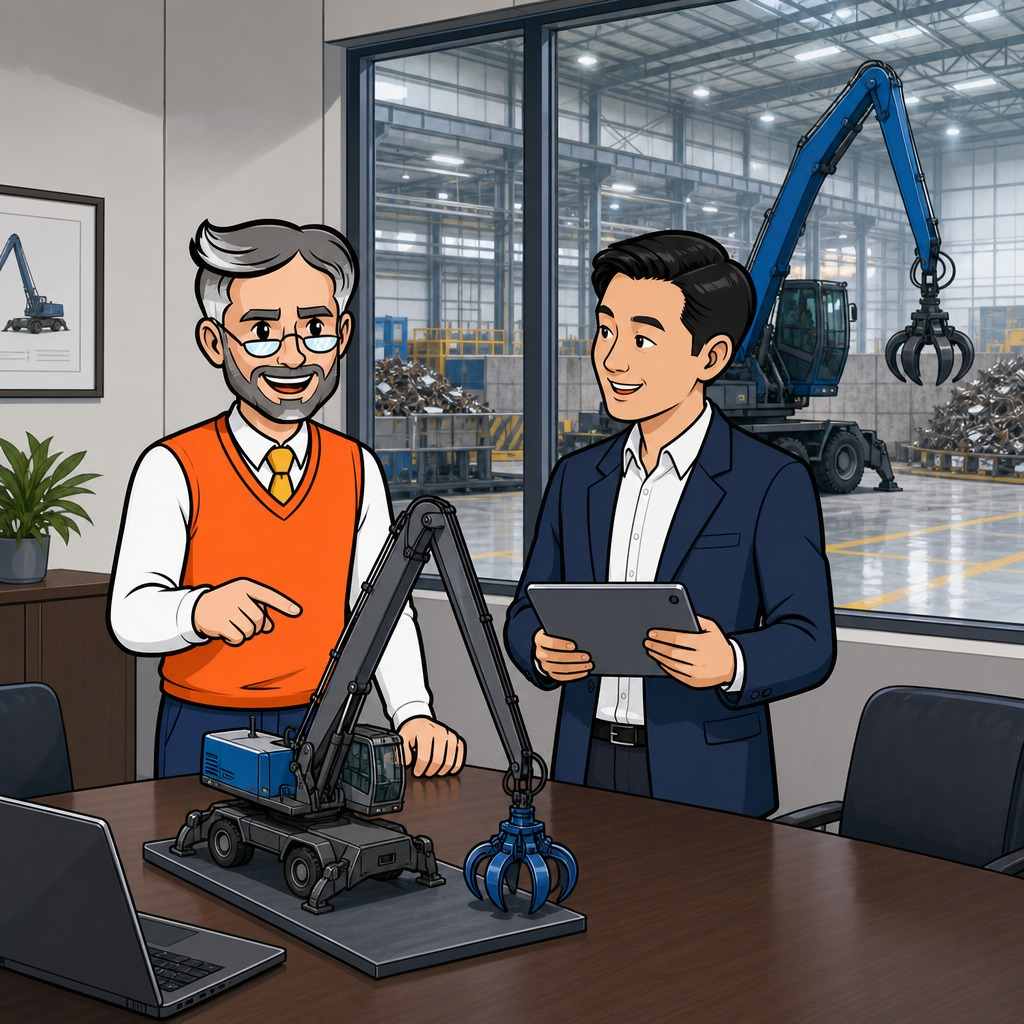
How the Engagement Process Usually Works with a Manufacturing Marketing Agency
Here is what to expect from a typical 6- to 12-month engagement with an industrial marketing agency.
Discovery and audit phase: Stakeholder interviews with sales, product engineering, dealer support, and service teams. Website and analytics review. Competitive analysis of other heavy equipment companies in your market. Technical audits of your current search visibility and conversion paths.
Strategy and planning: Creation of a manufacturing marketing roadmap specifying target segments, brand positioning, content plan, channel mix, and KPIs tied to revenue. This is where demand generation strategy takes shape.
Build and implementation: Website development updates or redesign, CRM and marketing automation setup, foundational content creation, and initial SEO and paid advertising campaigns. Meanwhile, digital marketing services launch in parallel.
Optimization and scaling: Monthly or quarterly reviews focused on pipeline metrics, dealer feedback, campaign performance, and incremental experiments-new content formats, new geographies, or new channels.
Long-term partnership: The most effective manufacturing marketing agencies act as long-term partners who continuously refine digital marketing strategies as product lines, market share dynamics, and buyer behavior evolve.
FAQs About Marketing Agencies for Equipment Manufacturers
These FAQs address the most common concerns from heavy equipment manufacturers and industrial companies evaluating marketing agencies.
How is a marketing agency for equipment manufacturers different from a general B2B agency?
Specialized manufacturing marketing agencies understand technical products, specification-driven sales, dealer networks, and long buying cycles. They create content and campaigns that resonate with engineers, maintenance teams, and procurement teams rather than generic business audiences. Altitude Marketing has over 20 years of experience in lead generation and manufacturing SEO, which illustrates the depth of focus these firms bring.
How long does it take to see results from industrial marketing efforts?
For most heavy equipment manufacturers, early indicators like improved traffic and form fills appear in 60 to 90 days. Meaningful pipeline impact (qualified leads, configured quotes, or dealer opportunities) typically builds over 6 to 12 months as SEO, content marketing, and nurture programs compound. Measurable revenue growth is a priority, and patience with the right strategy pays off.
Do we really need both inbound and outbound marketing for heavy equipment sales?
Inbound marketing captures active demand from technical buyers researching solutions. In contrast, outbound and account-based marketing reach large industrial accounts with long planning cycles. Weidert Group’s ABM campaign closed $325,000 in business from channels that inbound alone would not have reached. In practice, the most successful heavy equipment companies in 2025 through 2027 use a coordinated mix of both.
What internal resources should we have before partnering with a manufacturing marketing agency?
First, have at least one internal owner for marketing decisions, accessible subject-matter experts in engineering or product management, and basic CRM or sales tracking in place. In turn, clearer internal ownership speeds execution and improves results. You do not need a full marketing department-just committed points of contact.
How much technical detail should our marketing include for engineers and plant managers?
Technical buyers expect detailed specifications, performance charts, standards compliance data, and application limits. A good agency translates those details into business outcomes-reduced downtime, energy savings, improved throughput-so non-technical stakeholders like executives and finance teams can follow. Overall, both depth and translation matter.
Can a marketing agency help us support and grow our dealer or distributor network?
For example, specialized industrial marketing agencies create co-branded campaigns, dealer marketing kits, local landing pages, and lead-sharing processes. This drives more high-quality inquiries to equipment dealers while giving manufacturers clearer visibility into regional performance. Life sciences and motion industries verticals use similar models, but the equipment sector has unique dealer dynamics that require tailored approaches.
Why Choose a Specialized Equipment Marketing Partner
Working with a focused equipment marketing consultancy is not about paying a premium for a niche label. It is about getting to revenue faster with fewer missteps.
In addition, a specialized partner brings deep familiarity with equipment sectors: construction machinery, agricultural equipment, material handling, warehouse automation, food processing, mining, and waste and recycling systems. That industry expertise means your brand strategy and messaging connect with how industrial buyers and industrial marketers actually think.
The right partner takes a revenue-first approach, connecting manufacturing marketing efforts (SEO, paid media, content, and automation) to real metrics like pipeline value, booked orders, dealer engagement, and aftermarket growth. Southern metal fabricators and global OEMs alike benefit from this focus.
Finally, full-funnel capability matters. From brand positioning for industrial companies and website conversion optimization to technical content development and campaign execution, your marketing partner should align closely with your sales team. Altitude Marketing has over 20 years of experience in manufacturing SEO, and that depth of experience translates into a lead strategy for qualified buyers that compounds quarter over quarter.
Owners, presidents, and sales leaders who want to reduce reliance on trade shows and referrals and move toward predictable, data-driven growth need a marketing partner that understands market share battles in a competitive market-not one learning your industry from scratch.
Next Steps: How to Take Action on Your Equipment Marketing Strategy
Marketing is a strategic revenue lever for manufacturing businesses, not a cost center. Treat it that way, and the returns follow.
Here is a simple three-step path forward:
- Document your baseline. Capture current lead volume, close rates, average deal size, and which channels deliver your best industrial prospects today.
- Shortlist 2 to 3 specialized marketing agencies for equipment manufacturers. Look for proven results with heavy equipment companies, not just polished pitch decks.
- Schedule strategy conversations focused on your top equipment lines for 2027. Bring real data (typical deal sizes, regional priorities, dealer feedback) so potential partners can provide specific, grounded recommendations.
If you are ready to move beyond one-off campaigns and build a digital marketing engine that generates qualified leads month after month, reach out to a specialized marketing agency for equipment manufacturers. Review your current digital presence, identify quick-win opportunities, and outline a 6- to 12-month plan that connects every marketing dollar to pipeline and revenue. The manufacturers who start now will own their competitive market by the time their competitors catch up.