

Table of Contents
Why Construction Equipment Lead Generation Matters in 2026
Defining a “High-Quality Lead” for Construction and Heavy Equipment
Building a High-Converting Website for Construction Equipment Lead Gen
Content and SEO Strategy to Attract Ready-to-Buy Construction Equipment Leads
Lead Gen Forms and Conversion Optimization for Better Lead Quality
Using Paid Ads Strategically: From Search to Social for Construction Equipment
Email Marketing and Long-Term Nurturing for Equipment Buyers
Integrating Trade Shows, Local Networking, and Online Lead Generation
Measuring Lead Generation Performance and Proving ROI
Common Construction Equipment Lead Generation Mistakes to Avoid
Why Choose Our Team to Lead Your Construction Equipment Lead Generation
Next Steps: Turn Your Construction Equipment Lead Generation into a Predictable Growth Engine
Frequently Asked Questions About Construction Equipment Lead Generation
Why Construction Equipment Lead Generation Matters in 2026

The way contractors, fleet managers, and project managers buy heavy equipment has fundamentally changed. Roughly 70% of B2B buyers now research online before contacting a salesperson, comparing specs, financing, and availability across OEM, dealer, and marketplace sites long before picking up the phone. Dealerships without a strong online presence risk becoming invisible during the most critical phase of the buyer’s journey.
Heavy machinery involves massive capital expenditure and long sales cycles. A single mid-size excavator can run $250,000 to $500,000 new, and multi-unit rental contracts reach into the millions. With multiple stakeholders involved—operations, procurement, finance—deals often take six to eighteen months to close. This raises the bar for lead quality, not just volume. Your sales team cannot afford to spend months nurturing prospects who were never a fit.
The main point is this: effective lead generation in the construction industry requires a mix of digital marketing and relationship-building. Over-reliance on trade shows and referrals creates unpredictable pipeline. Modern construction equipment lead generation blends SEO, paid ads, email campaigns, and AI-assisted outbound with trade shows and local networking to keep your pipeline full across every season.
Defining a “High-Quality Lead” for Construction and Heavy Equipment
Before you try to generate leads at scale, your team needs a shared definition of lead quality. Without it, marketing sends unqualified names to sales, follow ups stall, and everyone blames each other.
Key qualification dimensions for construction equipment include:
- Application: Earthmoving, roadbuilding, lifting, paving, or attachments
- Purchase vs. rental intent: Outright buy, rent-to-own, or short-term equipment rental
- Fleet size and business size: One machine for a local contractor vs. dozens for a national fleet
- Timeline: Equipment needed in 90 days, 6 months, or next fiscal year
- Budget range: New vs. used, class of machine, financing needs
Build an Ideal Customer Profile for at least two segments. A regional contractor buying a new excavator in 2026 might require a high-HP machine, manufacturer support within 200 miles, and a budget of $250k–$500k with a project start within six months. A national rental fleet looking for bulk purchases cares about standardized models, multi-state delivery, and resale value.
Marketing and sales should jointly define Marketing Qualified Leads (MQLs) and Sales Qualified Leads (SQLs) using explicit criteria—project start date within 90 days, authority confirmed, minimum deal size. Target decision-makers like contractors, project managers, and fleet owners. Implementing account-based marketing targets specific high-value customers who fit your ICP. Track lead-to-opportunity and opportunity-to-closed-won conversion rates to continuously refine what “good” looks like. Tracking key metrics like conversion rates is crucial for assessing lead quality, and high-quality leads convert at a rate of 47% for targeted pages. Lead quality and sales efficiency are the key performance indicators for success.
Building a High-Converting Website for Construction Equipment Lead Gen
Your website is your 24/7 digital showroom—the hub for all inbound and outbound construction equipment lead generation. Since 70% of buyers conduct research online before contacting sales, what they find (or don’t find) on your site determines whether you make the shortlist.
Critical elements for construction equipment sites:
- Speed: A website must be mobile-friendly and fast for optimal performance. Optimizing website speed impacts both user experience and search rankings. Target under three seconds, especially on 4G/5G connections at job sites.
- Navigation: Clear categories—excavators, loaders, lifts, trailers, attachments—so site visitors find what they need instantly.
- Inventory pages: Optimizing inventory listings for clarity and transparency enhances lead generation. Include specs, photos, downloadable PDFs, and financing details.
- Lead gen forms: Quote request pages, rental reservation forms, and “Talk to a specialist” options on every equipment page.
- Trust elements: Case studies from recent projects, customer testimonials from contractors, warranty and service information, and financing options. High-value equipment sales require trust and in-depth information. Content marketing can improve trust and demonstrate equipment performance.
- Calls to action: Sticky “Request a quote” buttons, clickable phone numbers on mobile, and simple forms throughout. Landing pages dedicated to specific equipment categories convert far better than generic contact pages.
Content and SEO Strategy to Attract Ready-to-Buy Construction Equipment Leads
Organic search is often the most profitable channel for construction equipment lead generation over a 12–24 month horizon. One enterprise dealer group grew organic clicks by over 481% quarter-over-quarter through consistent content and SEO investment. SEO improves visibility for construction equipment dealers online, and effective SEO captures prospects actively looking to buy equipment.
Keyword strategy matters. Long-tail keywords attract more qualified traffic for equipment sales. Mix high-intent terms (“used 2024 30-ton excavator for sale in Texas,” “concrete pump rental near me”) with educational topics (“how to choose a wheel loader for a quarry in 2026”). This combination attracts organic traffic from people search at every stage of the buying process.
Your content plan should include:
- Monthly equipment comparison guides (models, fuel efficiency, attachments)
- Financing explainers (leasing vs. buying, tax treatment)
- Maintenance checklists for specific machine classes
- Project spotlight case studies that highlight ROI for contractors

Use relevant keywords naturally in H1/H2 headings, meta descriptions, spec tables, and alt text. Educational content positions your dealership as a trusted resource and builds authority that generates high-quality leads over time. AI can create thousands of lead generation pages quickly, and data shows 52% of created lead generation pages ranked on page one—some within a single month.
Optimizing websites for high-intent local keywords improves search visibility. Local SEO is essential for showing up in local search results. Build dealer or rental location pages optimized for cities and regions (e.g., “heavy equipment rental in Phoenix, AZ”) with maps, hours, and local project examples. Using industry-specific online marketplaces captures active buyers alongside your own site, and listing in online directories extends your reach to potential customers.
Lead Gen Forms and Conversion Optimization for Better Lead Quality
Construction equipment lead gen forms must balance simplicity with qualification. Too many fields and you lose prospects mid-form. Too few and your sales team drowns in unqualified inquiries. Digital marketing generates better-qualified leads for sales teams when forms ask the right questions.
Recommended qualifying questions:
- Type of work (residential, commercial, infrastructure)
- Project start date or timeline
- Purchase vs. rental
- Estimated budget band
- Location of use
Use conditional logic to tailor questions by equipment type. A crane rental inquiry needs different fields than a skid steer purchase. This “lightweight decision tree” approach keeps forms short while gathering data that matters.
A/B test relentlessly: form length (three fields vs. six), button copy (“Get a quote in 24 hours” vs. “Request information”), and placement (sidebar vs. end-of-page). Digital marketing supports lead quality and pipeline progression when you optimize these details. For 2026 buyers, ensure autofill works, inputs are mobile-friendly, privacy language is clear, and confirmation messages set expectations for response time.
Using Paid Ads Strategically: From Search to Social for Construction Equipment
Paid advertising works as “on-demand” lead generation—useful for launching new inventory, entering new markets, or filling pipeline gaps while SEO compounds. Generating leads in the construction equipment industry needs high-intent digital marketing, and hyper-targeted paid advertising should focus on urgency in search queries.
Google Search and Performance Max campaigns target buyers actively searching for heavy equipment. Use tight keyword themes, negative keywords to filter mismatched traffic, and geographic targeting around dealer territories. One equipment company kept cost per lead under $300 with average lead values around $100,000 by segmenting campaigns by product and city. Construction equipment leads cost between $20 and $200 each depending on equipment type and competition.
Social media platforms are pretty nice for reaching decision makers who aren’t actively searching. LinkedIn is a prime channel for B2B outreach in construction, letting you target construction company owners, project managers, and fleet managers with gated content or demo offers. Social media can effectively generate B2B leads in construction when paired with valuable content. Video content on social media boosts engagement and lead generation, and social media engagement helps identify potential leads directly.
Retargeting ads can re-engage visitors who showed interest in specific equipment pages, bringing back site visitors who browsed but didn’t convert. Using project intelligence tools can identify opportunities before competitors do, giving you an edge with your ad spend.
Track cost per lead, cost per opportunity, and cost per closed deal. Optimize budgets toward campaigns delivering better leads, not just more clicks.
Email Marketing and Long-Term Nurturing for Equipment Buyers
Construction equipment decisions often take three to eighteen months. Sales cycles for heavy equipment are typically long and require nurturing. Email campaigns can drive warm B2B sales leads effectively throughout this extended process, keeping you top-of-mind after the first inquiry.
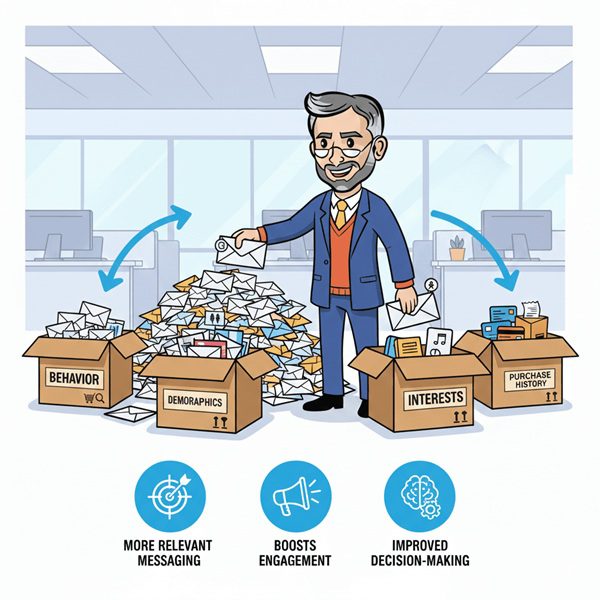
Segment your lists by:
- Role: Owner, estimator, fleet manager
- Interest: Earthmoving, lifting, paving, attachments
- Lifecycle stage: Early research, quote requested, existing customers
Core email sequences to build:
- Post-demo follow-up: Share insights like case studies, financing plans, and current inventory
- Long-term education series: Equipment comparisons, maintenance tips, cost-per-hour analysis
- Reactivation: Contact stalled prospects with updated promotions or new inventory alerts
- Cross-sell: Suggest attachments, service contracts, and upgrades to existing customers
Content marketing builds authority and generates high-quality leads through email just as it does through search. Track open rates, click-through rates, and most importantly, opportunities and revenue sourced through email marketing over time.
Integrating Trade Shows, Local Networking, and Online Lead Generation
Attending trade shows allows for face-to-face networking with potential clients and remains critical for building relationships in heavy equipment sales. The key is connecting offline activity to your digital pipeline.
Before the show: Send targeted email invitations, run LinkedIn outreach to local contractors, and use paid ads promoting a specific offer at your booth (e.g., free fleet utilization review).
At the show: Capture leads in a structured way—QR code forms, tablets with CRM-connected lead gen forms, badge scanners. Tag every lead source accurately.
After the show: Follow up within 24–48 hours after the trade show. Send personalized thank-you emails to booth visitors. Use follow-up calls to discuss specific interests from the event. Capitalize on rapport built during the trade show for conversions. Incorporate offers in follow-up communications to encourage engagement. Run retargeting ads to event attendees.
Local networking tactics: Building strategic partnerships can help generate warm leads. Partner with rental yards, ready-mix plants, and regional builders’ associations. These relationships generate referral leads supported by digital content showcasing local projects.
Measuring Lead Generation Performance and Proving ROI
Construction equipment leaders need to connect every lead gen channel to pipeline and revenue, not vanity metrics like impressions or raw lead counts.
Key KPIs to track:
| Metric | Why It Matters |
|---|---|
| Qualified leads per month | Pipeline health |
| Lead-to-opportunity conversion | Marketing effectiveness |
| Opportunity-to-closed-won rate | Sales effectiveness |
| Average deal size by channel | Channel value comparison |
| Sales cycle length | Forecasting accuracy |
| Marketing-sourced revenue | ROI proof |
Use your CRM to track each lead from first touch (SEO, paid ads, trade show, referral) through signed contract. Build quarterly dashboards comparing channels—for example, how paid search leads closed faster than trade show leads but at higher cost per acquisition. The cost to generate a construction equipment lead ranges from $20 to $200, but what matters is cost per closed deal. Prune underperforming campaigns regularly and reinvest into sources delivering the best lead quality, even if volume is lower.
Common Construction Equipment Lead Generation Mistakes to Avoid
This is a practical checklist for owners, sales leaders, and marketing managers:
- Relying only on trade shows and referrals without building digital channels leads to unpredictable pipeline and multi-month dry spells
- Measuring success by lead count alone instead of qualified opportunities and closed revenue—vanity metrics mask real problems
- Publishing generic, copy-paste content that doesn’t reflect real equipment expertise, resulting in poor search results and low trust with your target audience
- Slow follow-up on quote requests (3–5 days) severely damages conversion rates in competitive markets
- Ignoring video: Video content effectively showcases equipment and builds trust, yet many dealers skip it entirely
- No tracking infrastructure: Without data connecting ad spend to closed deals, you’re flying blind
Why Choose Our Team to Lead Your Construction Equipment Lead Generation
When your company needs more leads and a predictable pipeline, you need a team that understands the construction equipment market—not a generalist agency learning your industry on your dime.
Our team specializes exclusively in equipment manufacturers, OEMs, dealers, and rental providers across earthmoving, roadbuilding, material handling, and lifting segments. We deliver a full services mix: website redesigns for equipment dealers, SEO and AI-enabled search optimization, paid search and social campaigns, CRM setup, and email marketing tailored to long sales cycles.
We take a revenue-first approach: every campaign maps to pipeline, deal stages, and closed revenue. Typical implementation launches a full inbound framework within 90 days, with tangible results—improved lead quality, reduced cost per opportunity—visible within the first construction season. We support distributed dealer networks and help clients build trust across multiple locations and markets.

Next Steps: Turn Your Construction Equipment Lead Generation into a Predictable Growth Engine
You now have a framework covering the full spectrum: defining lead quality, building a strong website, using SEO and paid ads to attract organic traffic and reach decision makers, running email campaigns that nurture prospects through long sales cycles, and integrating offline channels into your digital pipeline.
Start by auditing your current setup—website performance, lead gen forms, channel mix, and tracking leads from source to closed deal. Identify the one or two biggest gaps holding back revenue. Then schedule a consultation, request a lead generation roadmap, or launch a focused pilot project to improve both construction equipment lead quality and volume.
Even incremental improvements—smarter qualification on forms, faster follow-up sequences, better materials on your inventory pages—can materially improve your pipeline within a single construction season.
Frequently Asked Questions About Construction Equipment Lead Generation
Here are answers to the questions we hear most from equipment dealers, OEMs, and rental fleet operators.
How long does it take to see results from construction equipment lead generation?
Paid ads and optimized lead gen forms can generate new leads within weeks. SEO and content marketing typically take four to nine months for significant impact, with 52% of generated pages ranking on page one in one month in some implementations. For high-ticket heavy machinery ($150k–$500k machines), deals may still take several months to close even when leads come in quickly.
What channels work best to generate leads for heavy equipment sales and rentals?
High-intent Google search leads often close fastest. Well-targeted paid ads deliver quicker but at higher cost. Email marketing nurtures long-cycle buyers effectively. Trade shows supported by strong follow ups drive large, complex deals. The best mix varies by business model—OEM vs. dealer vs. rental fleet—and by region and equipment category.
How can we improve lead quality instead of just increasing lead volume?
Tighten your ICP, add qualifying questions to lead gen forms, and create more specific content for your audience. Align marketing and sales on clear MQL/SQL definitions. Regularly review closed-won vs. closed-lost deals to identify which sources and messages attract the best-fit construction equipment buyers.
Is email marketing still effective for construction equipment buyers in 2026?
Yes, especially for long, complex buying journeys where buyers compare multiple brands and financing options. Segmented, relevant email campaigns with practical content (maintenance tips, financing options, case studies) outperform generic newsletters. Some equipment companies see 50%+ open rates with well-targeted sequences.
How much should a construction equipment company budget for lead generation?
Many mid-sized dealers and rental fleets invest 5–10% of annual revenue in marketing, with a meaningful portion dedicated to digital lead gen. Start with a focused pilot budget—a defined three to six month spend on paid ads, content creation, and website upgrades—and scale based on measured ROI.
Can smaller regional dealers compete with national brands in digital lead gen?
Absolutely. Regional dealers win locally by focusing on geo-targeted SEO, fast response times, localized content, and strong service positioning. Use case studies from nearby projects and emphasize local inventory and support. Smaller dealers with sharp local focus consistently outcompete larger, less personal players in their market.