This guide is built for forklift dealers, distributors, and rental fleets that want to stop guessing and start generating more leads and more sales through smarter marketing. Whether you sell new equipment, move used forklifts, manage a rental fleet, or run a forklift service operation, the strategies here are designed to drive measurable pipeline and revenue.
Everything here focuses on real-world forklift marketing, not generic B2B advice. Examples reference material handling equipment, electric forklifts, and dealer networks across North America.
Table of Contents
Introduction: Why Forklift Marketing Needs to Change by 2026
Forklift Market Snapshot: Why the Opportunity Is Bigger Than It Looks
Know Your Target Market Before You Spend a Dollar on Marketing
Core Forklift Marketing Strategy: From Random Tactics to a Revenue Plan
Turn Your Website Into a 24/7 Forklift Lead Machine
SEO for Forklift Dealers and Rental Fleets
Paid Search and Digital Advertising That Actually Sells Forklifts
Content Marketing for the Material Handling Industry
Email Marketing and CRM: Nurturing Forklift Leads Until They’re Ready to Buy
Video and Social Media for Forklift Marketing
Trade Shows, Local Events, and Offline Tactics That Still Work
Measuring What Matters: From Clicks to Forklift Revenue
Common Forklift Marketing Mistakes to Avoid
When to Get Expert Help With Forklift Marketing
Why Choose Our Team for Forklift and Material Handling Marketing
Next Steps: Turn Forklift Marketing Into Predictable Revenue
FAQs About Forklift Marketing
Introduction: Why Forklift Marketing Needs to Change by 2026
The material handling industry has transformed since 2020. E-commerce growth reshaped warehouse demand. Labor shortages pushed operations toward automation and smarter equipment. Electric forklifts went from niche to mainstream as regulations tightened and lithium-ion battery costs dropped. Through all of it, the way buyers find and evaluate forklift dealers changed permanently.
Yet many dealers still rely on referrals, walk-ins, and trade shows as their primary lead sources. The problem is clear: potential buyers now start online with very specific searches—”electric forklift rental Dallas,” “used reach truck near me,” “forklift service contract Chicago.” If your company isn’t showing up for those queries with a strong online presence, you’re invisible to the fastest-growing segment of your target market.
In this article, forklift marketing means coordinated digital marketing, sales enablement, and service promotion designed to drive measurable pipeline and revenue. You’ll learn how to reach the right audience, generate more qualified leads, and convert them into long-term service and equipment customers. No fluff, no theory-only tactics—just the playbook that works for dealers, rental fleets, and distributors in 2026.
Forklift Market Snapshot: Why the Opportunity Is Bigger Than It Looks
The forklift market is not slowing down. The global forklift market will reach USD 141.32 billion by 2032, with the forklift market projected to grow at a CAGR of 6.5% from 2025 to 2032. In the U.S. alone, the market was valued at $8.12 billion in 2025 and is expected to grow to approximately $13.59 billion by 2031. The U.S. forklift rental market is expected to grow to $1.6 billion by 2026.
Market callout: Electric forklifts made up over 60% of U.S. forklift market share by power source in 2025, with the electric segment growing at roughly 10.98% CAGR through 2031. Electric forklifts are expected to grow at a CAGR of 7.6% globally.
Here’s what’s fueling this demand:
- E-commerce remains a significant demand driver: U.S. retail e-commerce sales grew 12.2% year over year in the second quarter of 2026, according to the U.S. Census Bureau.
- Growth in e-commerce, 3PLs, and cold storage has accelerated demand for new and used forklifts, especially electric forklifts and narrow-aisle units. The e-commerce industry accounts for 17% of global forklift demand. Autonomous forklifts are expected to grow at a CAGR of 8.9%.
- Aging fleets and emission regulations—like California’s zero-emission forklift requirements—are pushing upgrades from ICE to electric forklifts across the U.S. and Canada.
- Asia Pacific will dominate the forklift market during the forecast period, but North American dealers and rental companies who build a strong digital presence now will capture more of the domestic demand versus competitors still invisible online.
This economic growth represents a massive opportunity for any forklift business willing to invest in marketing that actually reaches today’s buyers.
Know Your Target Market Before You Spend a Dollar on Marketing
Forklift buyers are not a single group. Messaging must change by segment to generate more qualified leads instead of wasting budget on the wrong audience.
Core buyer types include:

- Warehouse managers and DC operations leaders focused on uptime, safety, and throughput
- Plant managers in manufacturing concerned with maintenance costs and compliance
- Construction superintendents needing rough-terrain lift trucks for jobsite heavy loads
- Rental managers at 3PLs and seasonal operations looking for flexibility
- Small business owners purchasing 1–2 units who care about price, financing, and local forklift service
Purchase triggers differ too. A new facility opening, lease expiration, OSHA citation, automation project, or the shift from LP/ICE to electric forklifts each demands different messaging. Heavy equipment buyers operate on high-intent and high-value decisions, which means your marketing needs to match that seriousness.
Target industries such as warehousing and logistics are key for forklift rental demand. Local businesses primarily search for forklift rentals to minimize transport costs, so geography matters as much as product type.
Build 3–4 simple buyer personas. For example: “Warehouse Operations Manager in Columbus, OH, managing a 50-truck fleet, focused on uptime and operator safety. Common questions: What’s the ROI break-even between electric and propane? How quickly can batteries be charged? Is spare parts support local?” This kind of persona keeps your sales team and marketing campaigns aligned on the right audience.
Core Forklift Marketing Strategy: From Random Tactics to a Revenue Plan
Many dealers jump into SEO, PPC, or social media without a plan and end up with unprofitable campaigns that generate traffic but not revenue. Effective marketing strategies for heavy equipment sales combine digital tactics with trust-building service initiatives—not random acts of marketing.
Follow this four-step framework:
- Define goals – Are you after more leads for new equipment? Higher rental utilization? More service contracts? Each goal shapes everything downstream.
- Clarify your audience – Use the personas you built. A campaign targeting fleet managers replacing 20 propane units with electric forklifts looks nothing like one targeting a local contractor renting a single unit.
- Map your offers – Financing options, demo requests, site visits, rental promotions, service bundles. Each persona needs a reason to act now.
- Choose channels – SEO, paid search, email, trade shows, outbound. Pick based on where your buyers actually search, not what’s trendy.
Alignment across new equipment sales, used equipment, rentals, and forklift service is crucial. Campaigns shouldn’t compete or confuse potential buyers. A visitor searching for a rental quote shouldn’t land on a new-equipment-only page.
Build a 12-month marketing roadmap tied to sales targets, inventory realities, and OEM priorities. If your company is pushing electric models in Q1–Q2 2026, your content creation, ads, and email sequences should reflect that focus.
Think of your pipeline as a funnel: awareness (search, trade shows), consideration (comparisons, content), quote request (forms, demos), sale, then post-sale service renewal. A strong online presence is crucial for forklift marketing at every stage.
Turn Your Website Into a 24/7 Forklift Lead Machine
Your website should be the primary engine for qualified inbound leads—not just an online brochure that lists your phone number and a few product photos.
Essential pages for any forklift business:
| Page Type | Purpose |
|---|---|
| New forklifts by brand/class | Capture high-intent purchase searches |
| Used inventory | Attract budget-conscious buyers and quick-cycle deals |
| Rentals | Serve short-term needs; effective rental marketing needs to make availability and delivery details clear to customers |
| Forklift service & maintenance | Drive recurring revenue |
| Parts | Support existing customers, capture search traffic |
| Financing | Remove purchase objections |
| Industries served | Speak directly to warehouses, retail, distribution, logistics |
| Location/branch pages | Win local searches for each territory |
Structure pages around high-intent searches. A page titled “Electric Forklift Rental in Dallas” with clear pricing ranges, fleet availability, delivery info, and a simple quote form will outperform a generic “Rentals” page every time. Optimizing website inventory pages with specific parameters like lift capacity, fuel type, and mast height aids in local search visibility.
For converting visitors into leads, every page needs visible CTAs: quick quote forms (keep fields minimal for high-intent visitors), “request a demo” buttons, “book a site visit” options, and click-to-call buttons especially on mobile. Response time transparency matters—tell prospects they’ll hear back within 2 hours, and then deliver on it.
Trust signals drive conversions. Customer testimonials significantly influence potential buyers’ decisions. Add OEM certifications, service response guarantees, and case studies. One forklift dealer in Akron, Ohio added live chat to their site and generated over 1,000 leads from that channel alone, with a 29% year-over-year traffic increase. That’s what happens when you treat your website as a lead machine, not a digital business card.
SEO for Forklift Dealers and Rental Fleets
Search engine optimization is essential for digital marketing success in the material handling industry. Organic search is how your potential customers find you when they’re actively looking for equipment, service, or rentals. SEO improves website ranking and attracts organic traffic—the kind of traffic that converts because the visitor already has intent.
Keyword strategy should focus on combinations that match how buyers actually search:
- “Forklift dealer + city” (e.g., “forklift dealer Houston”)
- “Electric forklift rental + region”
- “Material handling equipment dealer near me”
- “Forklift service contract + city”
- Model-specific and class-specific terms
- Used forklifts, lift trucks, and narrow-aisle reach trucks
These are the relevant keywords that drive qualified organic traffic. Long-tail searches are often more qualified because they signal a buyer further along in the buying process.
On-page SEO for this niche means clear H1/H2 structure, service area mentions on every relevant page, and strong internal links between equipment, rentals, and service pages. Each page should target a distinct intent—don’t make one page try to rank for everything.
Local SEO is where many dealers win or lose. Google Business Profiles and local SEO are critical for attracting forklift rental customers. Optimize your profile with correct NAP (name, address, phone), photos, service categories, and reviews. Create dedicated location pages for each branch—Houston, Phoenix, Charlotte, wherever you operate. One Houston-area forklift dealer dominated local map-pack results for their core terms simply by optimizing their Google Business Profile and building consistent citations.
Content hubs attract and educate high-value visitors. Think “Electric Forklift Guide 2026,” “Warehouse Material Handling Safety Checklist,” or “How to Inspect a Used Forklift Before You Buy.” These pieces build authority with search engines and provide valuable insights to your target audience.
The compounding effect is real: SEO can increase leads by 600% in three years. One forklift company we tracked saw exactly that—forklift clients increased leads by 600% in three years by committing to a sustained SEO and content strategy.
Paid Search and Digital Advertising That Actually Sells Forklifts
SEO builds long-term momentum, but PPC campaigns can effectively drive targeted traffic to websites right now. PPC advertising drives targeted traffic to your website by placing your forklift business at the top of search results for high-intent queries. Advertisers pay a fee each time their PPC ad is clicked, so the key is making every click count.
PPC is essential for showing up in specific search results where organic rankings haven’t matured yet. Forklift dealers should invest in Google Ads for PPC, especially when launching new product lines or entering new territories. PPC campaigns can increase forklift sales effectively when campaigns are structured properly.
Google Ads strategy for forklift marketing:
- Segment campaigns by intent: purchase, rental, service
- Create separate ad groups for electric vs. ICE equipment
- Geotarget by dealer territory—don’t pay for clicks from cities you can’t serve
- Use ad extensions highlighting financing, response time, and local service
Remarketing is where many dealers leave money on the table. Visitors who viewed your rental page should see rental-specific ads across the web for 30 days. Someone who browsed electric forklifts should see ads about battery technology and demo availability. High-intent paid search ads are effective for capturing immediate buyer demand, and remarketing keeps your brand in front of prospects who weren’t ready to convert on the first visit.
Paid social works in limited, strategic ways. LinkedIn targets enterprise accounts and operations directors. Facebook reaches local owners and operators. Both platforms support retargeting audiences who visited key pages.
Here’s a quick numeric example: if your cost per lead is $50 and your close rate on qualified leads is 5%, you need 20 leads to close one deal. On a $25,000 forklift sale, that’s $1,000 in ad spend to generate $25,000 in revenue—before factoring in lifetime service and parts revenue. That math works for most dealers.
Content Marketing for the Material Handling Industry
Forklift buyers research heavily before contacting a sales team. They compare total cost of ownership, fuel vs. electric, maintenance costs, battery life, and operator safety across various industries. Content marketing strategies should promote both new equipment and used equipment to attract various customers at different stages of the buying process.
Specific content ideas that generate leads:
- “Total Cost of Ownership: Electric vs. LP Forklifts”
- “Checklist for Replacing a 20-Truck Warehouse Fleet”
- “What to Inspect When Buying a Used Forklift”
- “State-by-State Incentives for Zero-Emission Industrial Equipment“
- “How Electric Forklifts and Charging Solutions Impact Your Utility Bill”
Electric forklifts and charging solutions are increasingly relevant due to the industry’s move toward electrification, and content that addresses buyer objections around charging infrastructure, battery life, and ROI builds trust before the first sales call.
Practical tools work exceptionally well as lead magnets. Fleet audit worksheets, downloadable maintenance schedules, and ROI calculators gated behind simple lead forms attract serious prospects—not tire-kickers.
Case studies can be more persuasive than testimonials in B2B sales. A detailed story showing how you helped a cold storage facility in Atlanta reduce downtime by 40% after switching to lithium-ion electric forklifts carries more weight than a generic five-star review.
Repurpose content into sales enablement. Turn guides into PDFs that sales reps attach to quotes. Create talking points for new salespeople. Mix written articles, short videos, and email sequences rather than relying on just one format. Content creation should serve both marketing and your sales team simultaneously.
Email Marketing and CRM: Nurturing Forklift Leads Until They’re Ready to Buy
B2B equipment purchases involve long buying cycles—often 6 to 18 months from first inquiry to signed deal. Email and CRM bridge the gap between a prospect’s first website visit and the moment they’re ready to buy. Email marketing campaigns can increase engagement and response rates throughout that entire window.
Core segments:
- New equipment prospects (by class, power source, application)
- Used forklifts buyers (price-sensitive, shorter cycle)
- Rental-only customers (seasonal, project-based)
- Forklift service contract prospects and lapsed service clients
Email campaigns for equipment marketing should target specific segments based on industry and equipment type. Don’t send the same newsletter to a warehouse operations manager evaluating a 30-unit electric fleet and a contractor who rented one reach truck last quarter.
Example automation workflows:
- New lead welcome series – Introduce your company, highlight service capabilities, share a relevant case study
- Quote follow-up sequence – After a quote request, send a buying guide, customer testimonial, and financing options over 7–14 days
- Service reminder campaigns – Trigger emails based on equipment hours or last PM date to reengage customers for scheduled maintenance
Existing customer lists are valuable for promoting additional rentals and services. Promoting scheduled servicing and maintenance can create predictable recurring revenue that smooths out the natural ups and downs of equipment sales.
Track lead source, opportunity stage, and revenue attribution within your CRM. Automated APIs can sync available inventory with major heavy equipment trading platforms, keeping your listings current without manual updates. Monthly newsletters that share local project highlights, safety tips, and promotions without feeling spammy keep your brand top of mind for prospects and clients alike.
Video and Social Media for Forklift Marketing
Video is powerful for demonstrating forklifts, warehouse solutions, and operator safety in a way static content simply cannot match. Here’s the data that matters: 96% of people have watched an explainer video to learn more about a product or service, while YouTube Shorts alone now average more than 200 billion daily views. If your forklift business isn’t producing video, you’re missing a massive channel.
Publish video demonstrations of equipment to boost engagement and customer understanding. Videos of 60 to 90 seconds get the highest Facebook engagement, making them ideal for product showcases, operator tips, and customer walkthroughs. Show real equipment in real customer environments—warehouses, distribution centers, cold storage facilities—with permission and clear calls to action.
YouTube works as a long-term content channel. Product walk-throughs, maintenance tips, battery charging demonstrations, and “how we designed this warehouse’s material handling layout” videos attract prospects and build expertise over time. Optimizing videos for SEO increases visibility on YouTube and helps your content surface in Google search results too.
Here’s a detail many dealers overlook: 85% of Facebook videos are watched without sound. Adding captions improves video accessibility and SEO. Use on-screen text to communicate your message because many B2B viewers watch on mute during work hours.
Track metrics that matter: views, watch time, clicks to website, and leads generated from video—not just vanity likes. A video that drives 10 demo requests is worth more than one that gets 10,000 views and zero conversions.
Trade Shows, Local Events, and Offline Tactics That Still Work
Trade shows and local expos remain an integral part of the material handling industry. Buyers still want to see equipment in person, compare specs, and evaluate service support. But the dealers who win at trade shows in 2026 are the ones who integrate offline presence with digital marketing.
Before the show: Pre-promote your booth via email, LinkedIn posts, and remarketing ads. Schedule demos and meetings before the event starts so your sales team walks in with a full calendar, not an empty booth.
At the show: Scan badges directly into your CRM. Ask quick qualification questions and tag contacts by interest—electric forklifts, automation, rentals, service. Use QR codes linking to relevant landing pages or content downloads.
After the show: Follow-up sequences should start within 48 hours. Personalized messaging and relevant content (a spec sheet for the model they examined, a case study from their industry) outperform generic “nice to meet you” emails every time.
Developing referral partnerships can increase business in equipment rental services. Partner with rack systems suppliers, warehouse automation integrators, and local safety consultants. Smaller-scale efforts also work: safety training breakfasts, OSHA refresher sessions, and facility walk-throughs offered to local warehouses serve as both genuine service and effective lead generation.
Measuring What Matters: From Clicks to Forklift Revenue
Marketing must be tied to closed deals, rental utilization, and forklift service revenue—not just traffic or impressions. Too many dealers celebrate “more website visits” without knowing if those visits turned into quotes or sales.
Key metrics to track:
| Metric | Why It Matters |
|---|---|
| Leads by channel | Know where qualified leads come from |
| Cost per lead | Compare efficiency across SEO, PPC, email, trade shows |
| Opportunity conversion rate | Leads → quotes → closed deals |
| Sales cycle length | Understand how long each product/service takes to close |
| Customer lifetime value | Include service, parts, and rental revenue over time |
Connect website analytics, call tracking, and CRM data to see which keywords and campaigns produce profitable deals. Tracking phone calls and not just online forms can enhance customer acquisition efforts in forklift rentals—many buyers still prefer to call, especially for rentals and urgent service needs.
Hold quarterly reviews where sales and marketing examine which campaigns drove the most signed quotes and renewals. Be willing to prune honestly: stop or adjust channels that don’t produce quality forklift or material handling leads within a set timeframe. Redirect budget to what’s working.
Common Forklift Marketing Mistakes to Avoid
Here’s a quick checklist of pitfalls that cost forklift dealers leads and revenue:
- Treating the website like a static catalog – Listing equipment without CTAs, lead forms, or service information. No one fills out a form that doesn’t exist.
- Ignoring local SEO – Inconsistent NAP data, no Google Business Profile optimization, missing location pages for each branch, and weak review presence.
- Over-relying on manufacturer co-op ads – Co-op programs help, but they rarely produce targeted, measurable leads the way a properly executed digital strategy does.
- Sending all traffic to the homepage – Generic landing pages kill conversion rates. Visitors searching for “used forklifts” need to land on a used inventory page, not your homepage.
- Weak or missing offers – No clear CTA, no “book a site visit,” no rental promotions. Prospects need a reason to act today.
- Buying low-quality, generic forklift leads – Leads that don’t match your geography, capacity needs, or applications waste your sales reps’ time and erode trust in marketing.
- Trying to serve everyone at once – Dominate 3–5 core markets or applications (food and beverage DCs, cold storage, 3PLs, retail distribution) before expanding. Depth beats breadth.
When to Get Expert Help With Forklift Marketing
If your lead volume has gone flat, rental fleet utilization is stagnant, or new product launches (like electric forklifts) aren’t gaining traction, it may be time to look beyond DIY efforts or a generalist agency.
Triggers that signal the need for specialized help:
- Adding a new branch or entering a new territory
- Signing a new OEM line or launching electric forklifts
- Pursuing automation or warehouse integration projects
- Inconsistent pipeline that makes revenue unpredictable
- Poor attribution—you can’t tell which marketing efforts produce deals
A specialized equipment marketing partner helps with strategy, SEO, paid search, CRM setup, and revenue attribution calibrated for long sales cycles. They understand how to sell lift trucks, not just “generate traffic.”
Before engaging a partner, prepare your baselines: current monthly leads by channel, close rates, core geographic markets, product mix, and marketing spend. You can’t measure improvement without knowing where you started.
Why Choose Our Team for Forklift and Material Handling Marketing
We specialize in equipment marketing for forklift dealers, rental fleets, and material handling integrators across North America. This isn’t a sideline—it’s our focus. We understand the difference between a Class 1 counterbalance and a Class 3 walkie, and we know why that distinction matters in your marketing.
- Equipment industry expertise – We’ve helped dealers launch electric fleet campaigns, expand dealer networks, and grow service contract revenue. We speak your language because we live in this world.
- Revenue focus – We connect SEO, digital marketing, and outbound prospecting directly to pipeline, quotes, and closed deals. More traffic is meaningless if it doesn’t produce more sales.
- Full-stack capabilities – Industrial-grade websites, forklift SEO, paid search and social campaigns, AI-assisted outbound prospecting, CRM implementation, and marketing automation built for equipment companies.
- Consultative approach – Audits, strategy workshops, and ongoing optimization that help owners, sales leaders, and marketing teams build predictable lead flow. We work with your team, not around them.
Next Steps: Turn Forklift Marketing Into Predictable Revenue
The dealers and rental fleets winning in 2026 are the ones who treat marketing as a revenue engine—not a cost center. A strong website, targeted content, smart SEO, disciplined paid campaigns, and tight sales alignment create a system that delivers more leads and more sales month after month.
Here’s how to start:
- Audit your current forklift marketing. Look at your website, SEO visibility, monthly lead volume by channel, and CRM usage. Where are the gaps?
- Gather your data. Pull the last 12 months of lead and sales numbers. Know your close rates, your best-performing products, and your strongest markets.
- Identify your priorities. List your top 3 target markets and priority products—electric forklifts, rentals, service contracts, or all three.
- Get expert input. Schedule a discovery call or strategy session with a team that specializes in material handling and equipment marketing. Find the fast wins and build a plan that scales.
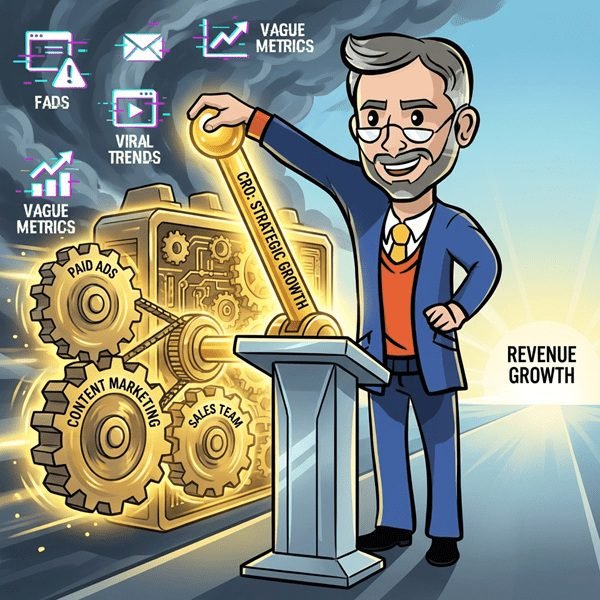
If you’re ready to stop guessing and start building a predictable forklift sales pipeline, reach out. We work with dealers, distributors, and rental fleets across North America who want marketing that connects directly to revenue. Contact us to start the conversation.
FAQs About Forklift Marketing
These are the questions forklift dealers, distributors, and rental companies ask most often when evaluating their marketing options.
How long does it take to see results from forklift marketing?
Expect quick wins from PPC and lead nurturing within 30 to 90 days. Paid campaigns can generate leads almost immediately when targeting high-intent searches. SEO and content compound over 6 to 12 months, building an asset that continues to deliver organic traffic long after the initial investment.
Dealers with existing website traffic and brand awareness usually see faster results than those starting from scratch. Realistic expectations should tie to sales cycle length—new forklift purchases may take 6 to 18 months to close, while rental and service leads often convert much faster.
What marketing channels work best for forklift dealers and rental fleets?
The most effective channels for most dealers are SEO and local search, Google Ads, remarketing, targeted email campaigns, and a well-maintained Google Business Profile. These channels directly reach potential customers who are actively searching for equipment, service, or rentals.
Social media fits specific roles: LinkedIn for reaching larger accounts and hiring, Facebook for local awareness among owners and operators, and YouTube for demos and training content. The “best” channel mix depends on your service area, product lines, and whether your business prioritizes new, used, rental, or forklift service.
How can I get more qualified forklift leads instead of tire-kickers?
Start by tightening targeting. In ads and on your website, filter by geography, lifting capacity, and applications. A visitor searching for a 5,000-lb electric sit-down in Phoenix is far more qualified than someone clicking a generic “forklifts” ad from 500 miles away.
Use more specific forms that ask about fleet size, timeline, and current equipment. Educational content, detailed case studies, and clear pricing ranges tend to attract higher-intent prospects who match your ideal target market. The goal is attracting potential buyers, not just traffic.
Do I really need separate marketing for electric forklifts?
Yes. Electric forklifts often have different buyers, different objections, and different search behavior compared with ICE units. Warehouse managers evaluating a fleet conversion ask about charging infrastructure, battery life, total cost of ownership, and state-level incentives—questions that don’t apply to propane buyers.
Dedicated landing pages and content addressing those pain points produce more leads and better conversions. Many warehouses are actively searching for “electric forklift” terms right now, and dealers with focused content capture that demand while competitors rely on generic equipment pages.
How should I market forklift service and maintenance contracts?
Give forklift service equal prominence to equipment sales on your website. Highlight the benefits that matter to buyers: uptime, safety compliance, and predictable costs. Too many dealers bury service pages or treat them as an afterthought.
Run targeted campaigns to existing equipment owners in your region, emphasizing rapid response times, OEM-trained technicians, and preventive maintenance programs. Use email and outbound calling to re-engage lapsed service customers. Promoting scheduled servicing and maintenance can create predictable recurring revenue that stabilizes your forklift business between big equipment deals.
What budget should a forklift dealer set aside for marketing?
Most equipment dealers invest 3% to 8% of annual revenue in marketing, with the exact number depending on growth goals and competitive landscape. A dealer trying to expand into a new territory or launch an electric forklift line will need to invest more aggressively than one maintaining steady market share.
Start with a focused 90-day pilot budget that includes website improvements, core SEO work, and at least one paid channel for predictable lead flow. Track cost per lead and cost per sale to refine your investment over time rather than guessing. The dealers who measure their marketing spend against actual revenue closed always outperform those who don’t.