Table of Contents
Introduction: Turning Food Processing Equipment Demand Into Qualified Deals
Why Lead Generation Matters for Food Processing Equipment in 2026
How Food & Beverage Equipment Buyers Research and Decide
Building Digital Visibility Where Serious Buyers Are Looking
Content Marketing That Wins Trust With Engineers and Plant Teams
Using Account Based Marketing to Win High-Value Plants and Brands
Turning Product and Application Pages Into Real Sales Conversations
Outbound, LinkedIn, and Email for Reaching the Right Plants
Using AI and Automation So Good Leads Never Go Cold
What to Measure: From Clicks to Commissioned Lines
Why Choose a Specialized Equipment Marketing Partner
Next Steps: Build a Lead Generation System Around Your Equipment and Buyers
Frequently Asked Questions About Food Processing Equipment Lead Generation
Introduction: Turning Food Processing Equipment Demand Into Qualified Deals
Food processing equipment buyers in 2026, whether they are plant managers sourcing a new IQF tunnel, engineering heads specifying aseptic fillers, or operations leaders planning a full line retrofit, spend months researching online before they ever speak with a vendor. Ninety-three percent of B2B buying processes start with online research, and buyers are typically 57% to 70% through their evaluation before contacting a single supplier. For multi-million-dollar projects with 9- to 18-month sales cycles and buying committees of five to eight stakeholders, the gap between “website visitor” and “qualified deal” is where most equipment companies lose.
This article is a working playbook for food processing equipment lead generation. It is written for OEMs, integrators, and automation providers in the food and beverage industry who need a predictable sales pipeline, not just more traffic. The framework combines SEO, content marketing, account based marketing, outbound prospecting, and AI-supported follow-up, based on patterns observed across industrial and food manufacturing marketing programs.
You will learn how to attract the right decision makers, how to qualify them with structured forms and scoring, how to nurture leads across long buying cycles, and which metrics actually connect marketing spend to commissioned equipment. Generating leads in the food processing equipment industry requires balancing technical credibility and relationship-building; this guide covers both.
Why Lead Generation Matters for Food Processing Equipment in 2026
Three forces are pushing food processors to buy equipment now. First, labor shortages and wage inflation are accelerating automation investment; according to PMMI’s 2025 study of 383 CPG end users, 71% of buyers cited production capacity limitations as a primary purchase trigger, and 63% cited the need for new machine capabilities. Second, stricter safety and compliance requirements (FSMA enforcement, retailer audits, HACCP updates) mean that older equipment no longer passes muster. Third, many installations from the 2018-2022 wave are hitting capacity limits, creating a 2024-2027 upgrade cycle in ready-to-eat, frozen foods, and plant-based segments. The global B2B food market is projected to reach $6.8 trillion by 2034, and equipment suppliers who cannot surface during the research phase will lose share.
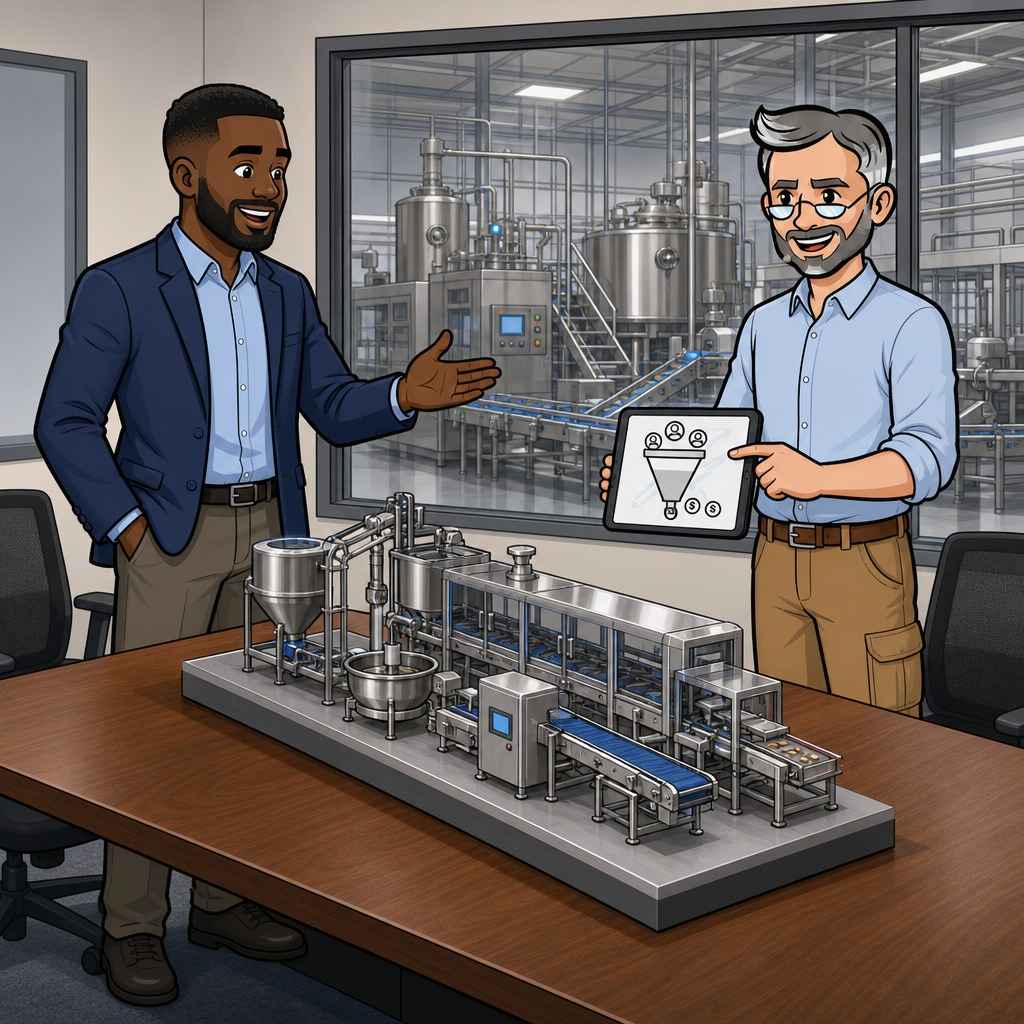
Consider three real scenarios playing out right now: a frozen meals plant adding a second IQF line to meet retailer volume targets, a beverage industry co-packer upgrading filling and CIP systems to satisfy new FSMA water-use standards, and a bakery replacing manual depositors because labor costs per unit have risen 18% in two years. Each project involves five to eight decision makers: plant manager, engineering, maintenance, QA/food safety, procurement, finance, and sometimes corporate operations. Buyers in the food processing equipment industry are typically engineers, plant managers, and operations executives. Casual, unstructured lead generation efforts cannot reach or satisfy all of them.
Industrial buyers complete over half of their purchasing research online before contacting a vendor, so digital visibility and technical education are now as critical as trade shows and distributor relationships. Effective lead generation in the food processing equipment sector relies on these two pillars. Here, “lead generation” means generating qualified, project-linked opportunities that include scope, timeline, rough budget, product types, and production capacity targets, not just contact lists or newsletter signups.
How Food & Beverage Equipment Buyers Research and Decide
The buying process for food processing equipment follows a predictable arc: problem recognition, solution research, vendor shortlisting, plant trials or demos, capex justification, and board or finance approval. What has changed is where each step happens. Seventy-one percent of B2B buyers begin their purchase journey with a generic search, typing queries like “how to reduce CIP time for dairy plants” or “automated depositor for gluten-free batter” long before they know which OEM to call. On average, 60 digital touchpoints are involved in B2B deals today, spanning Google searches, technical articles, LinkedIn posts, YouTube demos, supplier case studies, and industry media like ProFood World or Food Engineering.
At each stage, different stakeholders care about different things. Production teams search for uptime and throughput data. QA searches for compliance certifications (3-A, EHEDG, NSF). Maintenance teams look for serviceability and spare parts access. Procurement managers search for total cost of ownership and switching cost data; research combining MEC-FAHP models with 50 equipment purchasers found that switching cost ranked as the top decision factor, followed by price, brand, service professionalism, and after-sales service accessibility. Creating buyer personas for each of these roles can enhance the effectiveness of marketing efforts in the food processing equipment sector.
The buyer journey in prose form: Learn (identify the problem and possible solutions) → Shortlist (filter by technical fit and compliance) → Compare (request specs, run pilots, review case studies) → Justify (build ROI case for finance) → Approve (capex sign-off) → Implement (installation, training, commissioning). Effective food processing equipment lead generation must mirror this journey, serving content and touchpoints matched to each phase and each stakeholder. Lead generation strategies should cater to the long buying cycles characteristic of B2B equipment sales; a single touchpoint will not close a six-figure deal.
Building Digital Visibility Where Serious Buyers Are Looking
For a food and beverage equipment manufacturer, search visibility means being discoverable for the exact machines, applications, industries, and problems you solve, not just your brand name. The difference matters: ranking for “Pro Equipment” is useful only to people who already know you. Ranking for “automatic depositors for gluten-free batter,” “aseptic beverage processing skid,” or “high-shear mixer for plant-based sauces” puts you in front of potential buyers with active projects.
SEO is foundational for digital lead generation strategies, and it should focus on search terms specific to industrial equipment challenges and solutions. Targeting high-intent search terms is essential for lead generation in the food processing equipment industry. Organize your site around search intent clusters:
- Equipment type: spiral freezers, retort systems, tunnel pasteurizers, CIP skids
- Application: ready meals, dairy, bakery, beverages, plant-based proteins
- Problem: downtime reduction, yield loss, contamination prevention, allergen changeover
- Commercial intent: “supplier,” “price,” “OEM,” “manufacturer USA”
A basic digital marketing strategy starts with a technical SEO cleanup (crawl errors, page speed, mobile usability), on-page optimization for each product and application page, schema markup for products, and structured internal linking that connects application pages to product pages to case studies. Effective SEO strategies include optimized blog articles and educational resources that answer the queries engineers type into Google. Companies with strong digital presence can build credibility faster because they answer buyer questions before competitors even appear.
Paid search via Google Ads can be layered on top to capture high-intent queries for specific equipment categories while organic SEO compounds. Effective digital marketing increases brand visibility across multiple channels; a combined paid and organic approach ensures you are present when interested prospects search for solutions.
Content Marketing That Wins Trust With Engineers and Plant Teams
Generic articles titled “benefits of food processing machinery” do not generate leads. Content marketing should focus on education rather than promotion, and it must be written for real engineers, production leads, and plant managers in the food and beverage industry. Seventy-four percent of B2B marketers say content marketing helps generate demand or leads, but only when the content is specific enough to answer a real operational question.
Formats that attract qualified food manufacturing leads:
- Application notes: “Designing a CIP Regime for Low-Acid Beverages” with cycle times, chemical concentrations, and flow rates
- Line layout guides: Floor plan examples for 10,000-meal/day vs. 25,000-meal/day plants
- ROI and TCO calculators: Interactive tools that let procurement managers input their current labor, downtime, and throughput to see projected payback; total cost of ownership calculators are useful for procurement decision-makers in the equipment sector, and interactive tools like calculators can convert website visitors into qualified opportunities
- Specification checklists: Downloadable PDFs comparing semi-automatic vs. fully automatic depositors by speed, washdown rating, and allergen changeover time
- Retrofit case studies: Before-and-after throughput, OEE, and changeover numbers from real plants (e.g., “Reduced changeover from 45 to 18 minutes on a midwestern ready-meal line”)
- Problem-led articles: “How to Increase Oven Throughput 25% Without Expanding Floor Space” instead of “Our New Spiral Oven”
Publishing technical and educational content helps build credibility with decision makers. Content marketing should focus on ROI and compliance metrics that resonate with plant directors, because those are the numbers that get capex approved. AISEO emphasizes creating unique, useful, and context-rich content; surface-level rewrites of competitor pages will not rank or convert.
High-value technical downloads can improve lead capture by providing valuable information in exchange for contact details. A specification checklist or capacity calculator behind a short form (name, company, equipment interest, timeline) generates more qualified leads than a generic “subscribe to our newsletter” popup. Distribute content across your website, email marketing campaigns, LinkedIn, and pitch the strongest pieces to industry media to reach a wider food and beverage audience. Your sales team can also send specific articles to prospects mid-conversation, turning content development into ongoing sales enablement.
Using Account Based Marketing to Win High-Value Plants and Brands
Account based marketing is a focused approach for landing a finite list of strategic accounts: the top 50-200 food manufacturers, co-packers, and beverage plants that match your line design or equipment portfolio. Account-based marketing is crucial for targeting multinational food conglomerates in equipment sales, and using targeted ABM can enhance outreach to specific enterprise food manufacturers that would never find you through inbound alone.
Start by defining target accounts by sub-vertical: frozen foods, ready-to-eat meals, bakeries, meat and poultry, dairy, non-alcoholic beverages, breweries, plant-based foods, and confectionery. Identify and map decision makers inside each account: plant managers, engineering managers, corporate operations, procurement directors, and reliability/maintenance leaders. Using LinkedIn for account based marketing can directly target food manufacturers expanding facilities or investing in automation.
A light ABM playbook:
- Personalized email sequences referencing specific lines or known projects (“We noticed your facility in Ohio added a second shift; here is how similar plants have handled depositor throughput at that volume”)
- Tailored content hubs per vertical (a “Frozen Meals Resource Center” with case studies, spec sheets, and layout guides)
- LinkedIn outreach via Sales Navigator to connect with engineering heads and share relevant technical content
- Trade show follow-up at events like PROCESS EXPO or PACK EXPO, where you can validate digital engagement with face-to-face meetings
Personalized outreach is more effective than broad advertising in high-value B2B equipment sales. ABM works best when tightly integrated with CRM integration, email, and content development so that every touch references prior engagement and observed interests (pages viewed, assets downloaded).
Turning Product and Application Pages Into Real Sales Conversations
Most equipment manufacturers‘ websites read like static catalogs. To generate qualified leads, product and application pages need to function as conversion-focused sales pages without losing technical depth. Modern B2B buyers increasingly research independently across digital channels. Gartner’s 2026 research found that buyers used an average of seven information sources during a recent purchase, while 70% preferred a completely digital, self-service buying experience.
Each key product or application page should include:
- Use cases by food type (frozen entrees, chilled soups, ambient sauces)
- Capacity ranges (kg/hour, bottles/hour, meals/day)
- Typical line configurations and integration points
- Utility requirements (electrical, water, compressed air, steam)
- Sanitation details (washdown rating, CIP compatibility, allergen changeover procedure)
- Compliance standards met (3-A, EHEDG, BISSC, NSF)
Replace generic CTAs (“Contact us”) with specific, low-friction calls: “Request a line review,” “Send us your current throughput and target capacity,” or “Download layout examples for 10,000-20,000 meals/day plants.” Design smarter forms that qualify leads by asking about current equipment, product types (frozen, chilled, ambient), daily volume, plant location, and project timeline. Keep optional fields clearly marked to avoid friction.
Implementing interactive 3D models allows buyers to inspect machinery configurations online, reducing the need for early-stage site visits and accelerating the shortlisting process. Add social proof close to CTAs: short case snapshots with measurable results and recognizable food industry segments. Conversion rates improve when potential buyers can see evidence of results before filling out a form.
Outbound, LinkedIn, and Email for Reaching the Right Plants
Inbound alone often cannot fill capacity targets, especially for niche equipment like spiral freezers, aseptic fillers, or retort systems. A multi channel approach that includes targeted outbound is critical for reaching the right buyers at the right time. Multi-channel outreach increases brand visibility and conversion rates across the sales pipeline.
Build a clean, continuously refreshed data layer of target accounts using NAICS codes for food manufacturing, plant locations, product types, and existing automation levels. Then execute a practical multi-touch outreach sequence:
- Initial email referencing a specific problem (allergen changeover bottleneck, labor shortage on packaging)
- LinkedIn connection with a short note tied to their role or plant
- Follow-up email sharing a relevant article, case study, or thought leadership piece
- Final check-in timed to budget cycles or seasonal production spikes
Email sequences can nurture leads during prolonged sales cycles common in equipment purchases. Effective lead nurturing includes personalized follow-up messaging; cold emails that reference a generic “food processing solutions” pitch get deleted, while messages referencing a specific line or plant problem get read.
Trade shows remain important for lead generation in the food processing equipment sector, but post-event nurturing is vital to maintain engagement with leads collected at trade shows. Without a structured follow-up cadence after PACK EXPO or Anuga FoodTec, those badge scans decay within weeks. LinkedIn outreach and targeted email campaigns keep those conversations alive.
Use outbound to invite individual prospects to webinars, plant tours, or “line audit” consultations instead of immediately pushing quotes. This aligns with longer consideration cycles and builds trust with prospects who are still months away from a purchase decision.
Using AI and Automation So Good Leads Never Go Cold
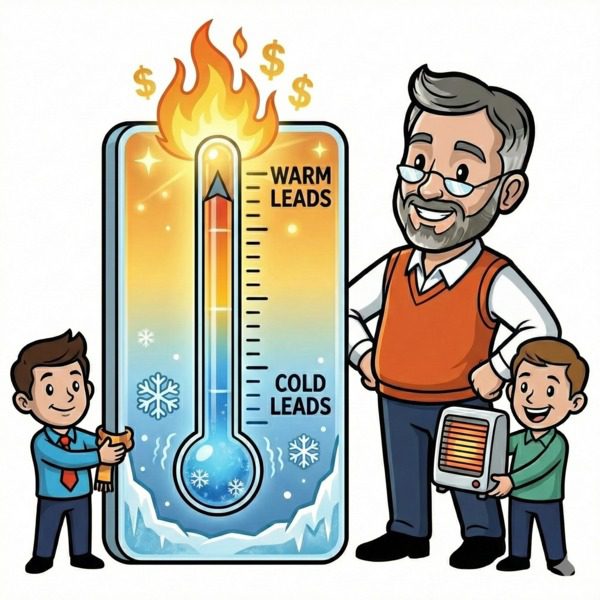
Timing kills or saves deals in food processing equipment. Projects stall for months when budgets freeze or plant priorities shift, then restart overnight when an audit reveals a compliance gap or a retailer changes specs. Without systematic follow-up, leads that looked promising in March are forgotten by September.
AI and machine learning enhance personalization in lead generation by tracking prospect behavior and triggering relevant outreach at the right moment. An on-site AI chatbot trained on your FAQs, product data, and application notes can answer questions like “Can this depositor handle high-viscosity fillings?” or “What is the typical lead time on a 2026 installation?” and capture contact details for follow-up. AI chatbots can qualify leads before they reach sales teams, routing only project-ready conversations to your engineers.
Automation tools streamline the lead nurturing process through structured workflows:
- When a form is submitted, the system sends 3-5 clarifying questions by email (capacity, product type, target go-live month, country/region)
- Lead scoring assigns points based on role, company size, equipment interest, and timeline urgency
- Qualified leads route to sales with full context attached
- AI-assisted outbound schedules personalized check-ins 30-90 days after initial contact (“Are you still considering upgrading your cooking kettles for your soup line?”)

Automation should support, not replace, technical sales conversations. Engineers should still handle line design, ROI modeling, and plant visit discussions once leads are qualified. The goal is to ensure that no interested prospect falls through the cracks during an 18-month buying cycle.
What to Measure: From Clicks to Commissioned Lines
Traffic and impressions are secondary. The main objective is commissioned equipment and installed lines in food manufacturing plants. Measurement metrics such as quote-to-order conversion rates are important for assessing lead generation success and connecting marketing spend to actual business growth.
A focused metric set for food processing equipment lead generation:
| Metric | Why It Matters |
|---|---|
| Qualified equipment opportunities per quarter | Measures pipeline volume with real project scope |
| Meetings booked with plant/engineering decision makers | Confirms you are reaching the right buyers |
| Quote value generated | Ties marketing to revenue potential |
| Win rate by segment (frozen, bakery, beverage) | Reveals which verticals convert best |
| Sales cycle length (first digital touch to PO) | Tracks whether marketing shortens the sales process |
| Form submissions with full project details | Separates serious prospects from casual browsers |
Use CRM to attribute opportunities to first-touch and multi-touch interactions. For example: a prospect discovers your site via a “spiral freezer retrofit” article, downloads a capacity calculator two weeks later, attends a line optimization webinar 60 days after that, and requests a quote the following month. Without attribution, you cannot tell which content or channel drove that deal.
Run a quarterly review: prune low-performing campaigns, double down on content and channels generating real opportunities, and refine your ICP and vertical focus based on which segments convert best. This discipline turns scattered lead generation efforts into a compounding pipeline engine.
Why Choose a Specialized Equipment Marketing Partner
Food processing equipment sellers benefit from working with marketers who understand industrial buying cycles, plant operations, and regulatory context. A specialized partner brings experience with OEMs and integrators, the ability to translate engineering language into buyer-focused content, and proven frameworks linking digital marketing to actual pipeline and revenue.
That partner can support the full stack: website strategy, industrial SEO, content development, paid search and social, AI-assisted outbound prospecting, CRM and marketing automation, and conversion optimization tuned for long, technical sales cycles. Pro Equipment Marketing measures success in meetings, quotes, and installed equipment, not impressions, clicks, or followers, and helps align marketing and sales teams around shared pipeline goals. That focus on closing deals and real business outcomes is what separates industry expertise from generic B2B agencies.
Next Steps: Build a Lead Generation System Around Your Equipment and Buyers
Modern food and beverage buyers research online, expect detailed technical guidance, and move slowly but decisively. Lead generation must be structured, multi-channel, and tightly aligned to real plant problems. A scattered collection of trade show appearances, a basic website, and occasional LinkedIn posts will not produce the predictable flow of more qualified leads that equipment companies need in a competitive market.
Audit your current system across the full journey: search visibility, website conversion, content library, ABM list, outbound cadence, and follow-up automation gaps. Identify where prospects drop off and where you lack the technical content to keep them engaged.
If you are ready to connect your equipment portfolio and engineering expertise to a predictable flow of qualified opportunities in the food and beverage industry, request a marketing and lead generation audit or book a strategy call to discuss your 2026-2027 growth goals. Share your current website and key equipment lines, and let us show you where the gaps are and how to close them.
Frequently Asked Questions About Food Processing Equipment Lead Generation
These FAQs address the most common questions from food industry equipment teams about b2b lead generation, digital marketing strategy, and pipeline development.
How is food processing equipment lead generation different from other B2B markets?
Equipment is capital-intensive, safety-critical, and tightly regulated. Buyers must validate hygiene standards (HACCP, FSMA, 3-A, EHEDG), uptime reliability, and compliance documentation, not just price. Sales cycles run 9 to 18 months with multi-stakeholder signoff, which requires sustained nurturing and technical content that generic B2B playbooks do not provide.
What are the most effective lead generation strategies for food and beverage equipment suppliers?
The most effective lead generation strategies combine search-driven digital visibility, problem-focused content marketing, account based marketing aimed at strategic plants, targeted LinkedIn and email outreach, and trade show follow-up systems rather than one-off events. Success comes from integrating these tactics into one system so buyers experience consistent messaging from first search to final proposal.
How much content do we really need to start generating leads?
Start with 10-15 in-depth application or problem pages, 3-5 strong case studies with measurable results, and 2-3 downloadable tools (checklists, calculators, or spec templates). Quality and specificity matter more than volume. Three excellent guides on “ready-meal line design” will generate more qualified leads than 30 shallow blog posts. Scale from there based on which topics drive the most opportunities.
Can LinkedIn actually generate leads for heavy food processing equipment?
Yes, but only when used to reach decision makers (plant managers, engineering heads, corporate ops) with targeted messaging tied to real plant problems related to heavy equipment. Use LinkedIn Sales Navigator to build account lists, engage with posts from target companies, and share technical content. Generic company updates will not move the needle; industry expertise demonstrated through specific, problem-solving posts will.
How long does it take to see results from SEO and content marketing in food manufacturing?
Expect 3-6 months for early increases in relevant organic enquiries and 6-12 months for a steady baseline of inbound leads in focused segments. Competition and your starting point affect the timeline. Bridge the gap with high-intent paid search campaigns (Google Ads targeting commercial-intent queries) and outbound prospecting to ensure pipeline progress while organic search visibility builds.
How should we balance inbound vs. outbound for equipment sales?
Use a blended model: inbound and content marketing for broad, compounding demand generation; outbound and ABM to capture strategic accounts and time-sensitive production capacity gaps. Revisit the mix quarterly based on where more opportunities and wins are actually coming from across the food and beverage sub-verticals you serve.