

For decades, equipment manufacturers, OEMs, and distributors have relied on trade shows, referral networks, and cold outreach to fill their sales pipelines. While these channels remain important in 2027, they are no longer sufficient on their own. Industrial inbound marketing complements traditional methods by attracting buyers who are already researching solutions online before contacting sales.
Industrial inbound marketing draws engineers, plant managers, procurement teams, and fleet leaders to your brand through helpful, technical content rather than interruptive ads or cold calls. This approach attracts buyers actively seeking information, resulting in leads that are further along in their evaluation and more likely to convert. Given the long, complex buying cycles in industrial markets—often involving multiple decision-makers—companies that appear during online research have a decisive advantage.
This article explains how industrial inbound marketing works for equipment manufacturers in 2027, how to align strategies with the buyer’s journey, which digital tactics drive pipeline, and how to measure results. Whether you sell custom machinery, construction equipment, or warehouse automation systems, these principles apply broadly.
Table of Contents
- What Is Industrial Inbound Marketing (and Why It Matters in 2027)
- Inbound vs Outbound Marketing in Industrial and Equipment Markets
- The Industrial Buyer’s Journey: Awareness, Consideration, Decision
- Core Industrial Inbound Marketing Strategies That Actually Work
- Your Website as the Hub of Industrial Inbound Marketing
- SEO and Technical Content Marketing for Industrial Companies
- Mapping Inbound Marketing Content to the Buyer’s Journey
- Using Account Based Marketing (ABM) Together With Inbound
- Lead Nurturing, Marketing Automation, and CRM Alignment
- Measuring Industrial Inbound Marketing ROI
- Common Industrial Inbound Marketing Mistakes to Avoid
- Why Choose Our Industrial Inbound Marketing Agency
- Next Steps: How to Get Started With Industrial Inbound Marketing
- FAQs About Industrial Inbound Marketing
What Is Industrial Inbound Marketing (and Why It Matters in 2027)
Industrial inbound marketing adapts the core inbound principles – attract, engage, delight – to the specific realities of selling capital equipment, custom machinery, and automation systems. Unlike generic B2B marketing advice written for SaaS companies, this approach accounts for niche audiences, safety-critical applications, dealer and distributor networks, and evaluation cycles that can stretch well over a year. Industrial marketing requires understanding long, complex buying cycles and stakeholder relationships that simply don’t exist in most other industries.
The key components of a successful inbound strategy for industrial manufacturers include:
- Search engine optimization targeting technical and spec-driven queries
- Content marketing built around engineering applications, standards, and real-world problem solving
- Email nurture sequences that keep your company visible across months-long sales cycles
- CRM and marketing automation aligned to move leads from awareness through decision
- Sales enablement content that arms your sales team with the right materials at the right moment
Inbound marketing generates roughly 54 percent more leads than outbound methods and typically costs about 61 percent less than traditional marketing. For manufacturing companies with finite marketing budgets and sales teams stretched across territories, that efficiency compounds. Today, approximately 85 percent of manufacturers have a defined digital marketing strategy, yet many still struggle to connect that strategy to measurable pipeline. Great inbound marketing bridges that gap by shortening RFQ cycles, improving quote quality, and feeding leads to dealer networks in a structured way. Effective inbound marketing emphasizes educational content over promotional messages, which is exactly what technical buyers demand.
Inbound vs Outbound Marketing in Industrial and Equipment Markets
Inbound marketing is about being found when buyers search for solutions. Outbound marketing is about reaching out to buyers whether they are looking or not. Both have a role in industrial markets, but they perform differently when it comes to lead quality and cost.
Where outbound still works in 2027:
- Major trade shows like CONEXPO, AGRITECHNICA, and PACK EXPO for brand visibility and relationship building
- Targeted cold outreach to specific accounts identified through ABM research
- Local association events and regional industry meetups
- Direct mail to plant managers in niche verticals
Where outbound falls short alone: most traditional outbound methods rely on timing and volume. You hope your message reaches someone who happens to need your product right now. Inbound marketing strategies flip this – they generate more qualified leads because buyers self-educate, raise their hands, and arrive at your sales funnel already informed. Inbound marketing aligns content with buyer needs at various stages of the sales cycle, so when a lead does engage your sales team, they are closer to a real buying decision.
In addition, manufacturers can benefit from modernizing their B2B sales funnel. This approach connects inbound lead generation with sales processes and helps convert more qualified prospects into customers.
Consider two scenarios: a rep cold-calls a plant operations manager who has no current project and politely hangs up. Meanwhile, an engineer at the same plant downloads your “conveyor selection guide,” returns twice to view spec sheets, and submits a sizing consultation request. The second scenario is what inbound marketing creates – prospective customers who come to you with intent.
The smartest approach for manufacturing organizations is a blended strategy: inbound as the always-on engine generating a steady flow of qualified leads, outbound tactics as amplification for reaching accounts that are not actively searching yet.
The Industrial Buyer’s Journey: Awareness, Consideration, Decision
The industrial buyer’s journey includes three core stages – awareness, consideration, and decision – plus a large pool of “out-of-market” future buyers who may not have a project today but will in eighteen months.
The buying process often involves multiple stakeholders. A typical equipment purchase touches engineering (who defines specs), maintenance and operations (who care about reliability and uptime), EHS (who evaluate safety and compliance), procurement (who manage costs and vendor qualification), finance (who approve capital expenditure), and executive sponsors (who sign off on strategic investments). Each persona engages differently at each stage, and your inbound marketing content needs to address their relevant pain points.
At the awareness stage, buyers are defining a problem. A plant manager searches “reduce unplanned downtime on bucket elevators” or “OSHA compliant guarding for packaging lines.” They are not yet comparing vendors – they are looking for answers. Your content needs to meet them here.
At the consideration stage, buyers compare solution types. An engineer evaluates “cobots vs gantry robots for palletizing” or “screw press vs decanter centrifuge for solids separation.” They want spec sheets, TCO calculators, and side-by-side comparisons. This is where targeted content directly influences their shortlist.
At the decision stage, buyers narrow vendors, request RFQs, schedule site visits, and evaluate pilot projects. Case studies with concrete results, implementation timelines, ROI one-pagers for CFOs, and commissioning guides help de-risk the final decision. Content should establish trust throughout the buyer’s journey, including post-purchase evaluation, which is a critical phase for building lasting relationships and driving referrals from existing customers.

Core Industrial Inbound Marketing Strategies That Actually Work
Effective inbound marketing strategies for industrial companies must fit real sales processes, dealer structures, and regional territories. One-size-fits-all playbooks from consumer marketing simply do not translate. Here are the key components that drive inbound marketing success in the industrial sector:
Search engine optimization: Target spec-qualified, evaluative queries that signal real buying intent. Think “food-grade conveyor belts USDA accepted” or “Tier 4 Final diesel generators rental.” SEO enhances visibility for industrial companies online and makes your manufacturing website discoverable when it matters most.
Content marketing: Publish guides, application notes, maintenance checklists, and engineering-level comparisons. Creating valuable content that addresses specific technical challenges is what separates inbound marketers from companies simply posting product brochures online. Technical content creation includes publishing guides, specs, and ROI calculators.
Paid search as air cover: Use Google Ads to capture high-intent spec terms while your organic search engine rankings build. For example, target “rental telehandlers near me” or “stainless steel valve supplier ISO 9001” to generate leads immediately.
Social media for engineers: LinkedIn is the primary social media platform for reaching engineers, procurement professionals, and operations leaders. Share application-focused posts, project case studies, and industry trend commentary. Social media platforms act as credibility multipliers when used consistently. Promote content through these channels to extend its reach to your niche audience.
Email nurture: Email marketing nurtures leads and promotes content effectively across long buying cycles. Triggered sequences keep your company top-of-mind without being intrusive.
Sales enablement content: Arm your sales team with comparison tools, ROI calculators, and personalized interactions that help close deals faster. Creating buyer personas improves inbound marketing results significantly by ensuring every piece of content maps to a real person with real questions. Webinars and virtual tours build trust with technical buyers by showcasing expertise without requiring travel.
Build a unified plan tying all tactics to opportunities to generate leads at each buyer’s journey stage rather than running one-off campaigns.
These principles also apply to digital marketing for industrial automation, helping manufacturers reach technical buyers through SEO and targeted campaigns.
Your Website as the Hub of Industrial Inbound Marketing
A well-designed website is essential for inbound marketing success. It is the primary destination where all of your inbound marketing efforts converge – where website visitors convert into RFQs, demo requests, dealer contacts, and spec downloads. A well-optimized website is crucial for successful inbound marketing because every other tactic (SEO, content, email, social, paid) drives traffic back to it.
A case study published by the National Institute of Standards and Technology (NIST) highlights how manufacturer Quality Patterns developed an SEO-optimised website and began generating an average of five new leads per week without paid advertising.
Investing in high-converting website design for heavy equipment dealers helps businesses turn website visitors into qualified leads through intuitive navigation, clear calls to action, and optimised conversion paths.
What an industrial lead engine website needs in 2027:
- Fast mobile performance (mobile-friendly websites improve user engagement and SEO rankings)
- Clear product and industry navigation organized by application, not just internal part numbers
- Easy access to datasheets, 3D models, manuals, and certification documents
- Visible CTAs on every product and service page
- Application pages and industry pages (mining, food processing, material handling, construction)
- A resource library housing all educational content and downloadable assets
- A dealer locator or contact routing tool that connects prospects with the right local partner
UX matters for technical users. Engineers expect searchable documentation, CAD/BIM download centers, spare parts lookup, and calculators that help size or select equipment. Interactive tools can improve lead capture by providing targeted results to visitors – for example, a conveyor selection tool that recommends a configuration and then prompts for contact details. Simple conversion patterns work best: “Request a quote,” “Schedule a virtual plant review,” “Talk to an applications engineer.”
SEO and Technical Content Marketing for Industrial Companies
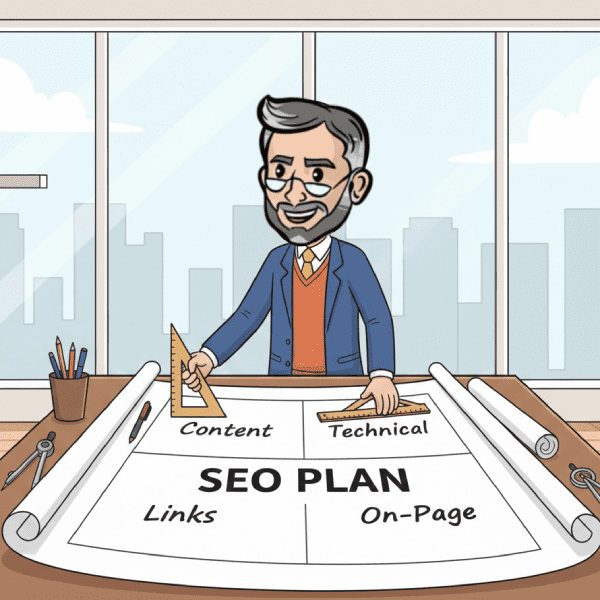
SEO optimization is crucial for making your website discoverable when engineers and procurement professionals research suppliers. In 2027, 62 percent of the industrial buyer’s journey happens online before a technical buyer ever reaches out to a vendor. If your pages do not show up during that research phase, you are invisible.
SEO for industrial marketers targets long-tail, specific keywords and technical queries. Effective SEO requires identifying specific keywords for industrial products across three categories:
- Product terms: “bucket elevators,” “hydraulic press brakes,” “mobile crushing plants”
- Problem terms: “reduce dust emissions in grain elevators,” “eliminate conveyor belt mistracking”
- Industry and standards terms: “food processing equipment CIP guidelines,” “ATEX rated motors zone 1”
A targeted approach to SEO for industrial equipment manufacturers can improve visibility for specialised technical searches and attract buyers actively researching industrial solutions.
Search volumes for spec-qualified queries can be low – forty to five hundred searches per month – but each query signals high intent. SEO is essential for attracting qualified traffic to industrial websites, even when those numbers seem small compared to consumer search volumes.
Content marketing is key to attracting and nurturing leads online. Strong industrial content marketing looks like in-depth guides, explainer articles, engineering blogs, how-to videos, maintenance checklists, and application notes. Content marketing should address specific technical challenges faced by industrial buyers, not rehash generic advice.
Examples of high quality content that drives organic search traffic:
- “Ultimate Guide to Warehouse Automation Design for Distribution Centers”
- “Selection Checklist for Mobile Crushing Plants: Jaw vs Impact vs Cone”
- “Webinar: Designing a Hygienic Conveying Line for Ready-to-Eat Processing in 2027”
- “Failure Analysis: Why Screw Conveyors Stall Under Wet Material Loads”
Successful industrial marketing relies on credibility earned through in-depth, useful content. Effective content marketing requires understanding your audience’s needs – not guessing at them. When you publish relevant content built around the real questions your target audience asks, search engine rankings follow naturally. Focus on clear answers, structured headings, and plain-language explanations that serve both traditional search and AI-powered search experiences.
Mapping Inbound Marketing Content to the Buyer’s Journey
Inbound marketing content should be planned around awareness, consideration, and decision stages to engage prospects at the right moment. Without this mapping, companies often produce a pile of content that attracts traffic but never converts into pipeline.
Awareness stage content answers early-stage questions. Think educational blog posts, industry trend reports (e.g., “automation trends in construction equipment by 2030”), safety best-practice guides, and compliance checklists. This is where you engage customers who don’t yet know your brand.
Consideration stage content helps buyers compare and evaluate. Solution comparisons, payback period calculators, webinars featuring your engineers, and application-specific guides give prospective customers the tools they need to narrow options. This is where content marketing begins to nurture leads toward a shortlist.
Decision stage content closes the gap between evaluation and purchase. Case studies with quantified results (e.g., 40 percent reduction in unplanned downtime, $200K annual savings), implementation timelines, commissioning guides, ROI one-pagers for CFOs, and sample project scopes directly support the sales funnel. Lead nurturing should provide value over time to keep prospects engaged throughout their journey, especially given the long sales cycles typical of industrial equipment.
For equipment manufacturers and dealers, this mapping exercise should be practical – not a theoretical content calendar but a focused list of ten to fifteen assets covering your top product lines and buyer personas across all three stages.
For warehouse equipment manufacturers and distributors, effective material handling lead generation also depends on delivering relevant technical content at each stage of the buyer’s journey.
Using Account Based Marketing (ABM) Together With Inbound
Account based marketing for industrial companies means focusing marketing efforts on a defined list of target plants, fleets, EPC firms, or enterprise accounts rather than broadcasting to everyone. It is especially effective when deal sizes are large and the number of potential customers is finite.
Inbound marketing supports ABM by building a library of content that can be personalized and reused for strategic accounts. For example, if you target the top fifty aggregate producers, you can create a landing page with case studies from similar operations, a tailored ROI calculator, and a comparison guide addressing their specific buying process.
The buyer’s journey still applies inside ABM. Awareness content warms the account (industry trend report shared via LinkedIn ads), consideration content shapes their spec (custom webinar invitation), and decision content supports vendor selection (personalized case study and site visit offer).
One industrial ABM program generated $290,000 in closed opportunities within months by combining inbound content with targeted paid ads and email outreach. This blended approach lets you engage prospects at named accounts while your broader inbound strategy continues to generate leads from the wider market.
Lead Nurturing, Marketing Automation, and CRM Alignment
Nurturing leads with relevant content is crucial for long industrial buying cycles. When a sales cycle stretches six to eighteen months and involves multiple internal approvals, a single touchpoint is never enough. Your inbound marketing efforts need a system that keeps delivering valuable content over time without overwhelming technical audiences.
CRM and marketing automation tools help manage complex multi-stakeholder deals in industrial marketing. Here is how they work together: when a prospect downloads a guide, attends a webinar, or requests pricing, automation triggers a sequence of follow-up communications tailored to their interests and stage. Lead capture strategies involve offering gated technical resources for contact information, which then feeds into your CRM for scoring and routing.
Implementing marketing automation for manufacturing helps industrial businesses streamline lead scoring, personalise follow-up communications, and nurture prospects throughout lengthy sales cycles.
Example nurture sequences for equipment companies:
- After a “Loader Safety Checklist” download: send a training video on pre-operation inspections, then a maintenance tips guide, then a demo invitation
- After a webinar on conveyor design: send related application notes, then a case study, then a quote request prompt
- After a pricing page visit with no form fill: retarget with a comparison guide, then a customer testimonial video
Sales and marketing alignment is non-negotiable. Define shared criteria for marketing qualified leads versus sales qualified leads, set SLAs for follow-up speed (respond to high-intent requests within twenty-four hours), and give your sales team visibility into email engagement and user behavior on your site. Good automation respects technical audiences – no spammy sequences, just helpful, paced information mapped to personalized interactions throughout the buying cycle.
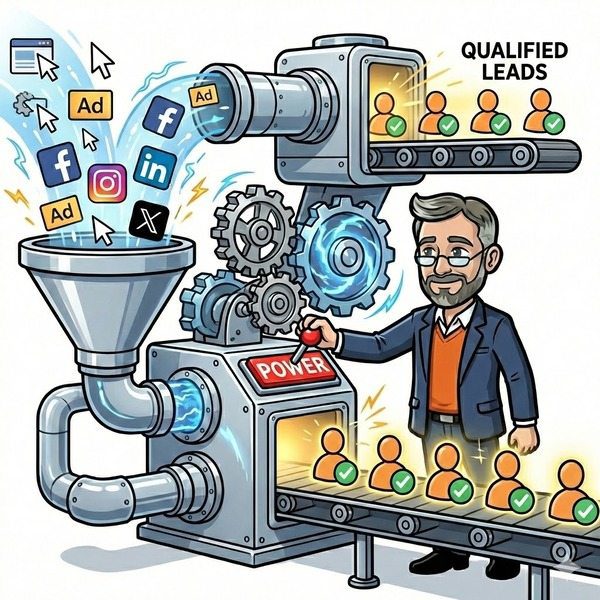
Measuring Industrial Inbound Marketing ROI
Industrial leaders want traceable revenue impact from their marketing strategies, not vanity metrics. If your reporting stops at page views and social impressions, you are missing the point.
Understanding how equipment companies should measure marketing ROI helps manufacturers evaluate campaign performance based on qualified leads, sales opportunities, and revenue rather than traffic alone.
Key metrics to track performance of industrial inbound marketing:
- Organic traffic by product and industry page
- Content-assisted opportunities (which guides or pages did a prospect engage before requesting a quote?)
- RFQs and demo requests from inbound sources
- Lead-to-opportunity conversion rate
- Opportunity-to-order rate
- Revenue influenced by inbound marketing content
Analytics and tracking are essential for evaluating the effectiveness of industrial marketing strategies. Tie your analytics tools, CRM, and marketing automation together so you can see which content pieces contribute to real pipeline. For example, you might find that your “conveyor design guide” influenced $3M in opportunities during a single quarter – that is the kind of insight that justifies continued content creation investment.
Tracking lead sources is crucial for measuring inbound marketing success. Yet 48 percent of manufacturers lack specific monthly lead generation goals, which makes it nearly impossible to know whether inbound is working. Set targets, review performance every ninety days, and adjust topics, channels, and offers based on what actually generates high quality leads. Build dashboards by product line and by region or dealer network so you can see where your inbound strategy is performing and where it needs attention. Metrics for evaluating industrial inbound marketing success include qualified leads and conversion rates at each stage of the sales funnel.
Common Industrial Inbound Marketing Mistakes to Avoid
Here are the pitfalls that undermine inbound marketing efforts for manufacturing organizations – and how to sidestep them:
- Publishing generic blog posts that lack technical detail. Engineers reject fluff. They want specs, materials, certifications, and real performance data. High quality content is the price of admission.
- Ignoring the buyer’s journey. Building only awareness stage content with no consideration or decision stage assets leaves no clear path to RFQs or demos.
- Failing to involve engineers in content creation. Marketing teams writing alone often miss critical technical nuances. Involve subject matter experts as reviewers or co-authors.
- Over-relying on trade shows for lead generation. Trade shows are valuable but episodic. Without an always-on inbound engine, pipeline dries up between events.
- Not capturing leads on high-intent pages. If your product and spec pages have no CTAs, no quote forms, and no downloadable resources, you are leaking potential customers. An effective inbound marketing strategy requires a well-designed, SEO-optimized website with clear conversion paths.
- Poor sales follow-up. Inbound leads go stale fast. If your sales team takes a week to respond to a demo request, you have already lost ground to a faster competitor.
- Misalignment with dealer territories. If your inbound marketing generates leads but routes them poorly (or not at all) to dealer partners, you damage channel customer relationships.
- No measurement framework. Without tracking which marketing content drives more sales, you cannot optimize or justify your investment. You cannot achieve measurable ROI without a clear attribution model.
Audit your current industrial inbound marketing against this list and prioritize fixes with the highest impact on lead quality and revenue.
Why Choose Our Industrial Inbound Marketing Agency
We specialize exclusively in industrial, manufacturing, and equipment marketing. Our team works with equipment manufacturers, OEMs, material handling companies, construction and agricultural equipment producers, food processing equipment builders, warehouse automation providers, mining equipment companies, and waste and recycling equipment manufacturers. We understand the industrial sector because it is all we do.
Our differentiators are rooted in the realities of selling complex equipment:
- Deep understanding of long technical sales cycles and how to nurture leads through them
- Comfort working with engineers, complex specs, and compliance-driven markets
- Ability to connect inbound marketing activity directly to CRM pipeline and revenue – not just clicks or impressions
- Core services built for industrial companies: website and conversion optimization, industrial SEO, AI-informed search optimization, paid search and social advertising for manufacturers, CRM and marketing automation setup, and content development for technical audiences
Our approach is revenue-focused. We measure success by qualified opportunities, quotes generated, and closed orders. We help manufacturing companies build an inbound marketing engine that supports both the marketing team and the sales team, feeds dealer networks, and delivers the kind of more qualified leads that actually turn into revenue.
Next Steps: How to Get Started With Industrial Inbound Marketing
Industrial inbound marketing turns your technical expertise into a consistent pipeline of qualified opportunities. Instead of waiting for the next trade show or hoping for referrals, you build an always-on engine that attracts better-fit prospects, engages them throughout the buyer’s journey, and converts their interest into revenue.

Here is a simple starting roadmap:
- Audit your current website and content for gaps in technical depth and conversion paths
- Identify two to three core buyer personas and map their awareness, consideration, and decision questions
- Prioritize three to five quick-win inbound marketing projects – optimize high-intent product pages, publish one strong case study, and launch an email nurture sequence
- Set monthly lead generation goals and tracking so you can measure progress from day one
If you are ready to stop guessing and start building a predictable pipeline, reach out for a consultation. Share your current challenges, and we will put together a tailored industrial inbound marketing plan built around your products, your markets, and your revenue goals. Schedule a strategy call today and let us show you what a revenue-focused inbound strategy looks like for your business.
FAQs About Industrial Inbound Marketing
These FAQs address real questions from industrial manufacturers, OEMs, distributors, and rental companies evaluating whether inbound marketing work is right for their business.
How long does it take for industrial inbound marketing to generate leads?
Expect early wins in sixty to ninety days through paid search air cover and quick-win content optimizations on existing high-intent pages. Search engine optimization and content marketing compound over six to twelve months, building a durable flow of more leads that grows quarter over quarter. The benefits of inbound marketing accelerate as your content library expands and your domain authority strengthens. Inbound marketing generates 54 percent more leads than outbound methods, but that advantage is realized over sustained effort, not overnight.
Is inbound marketing worth it if we already go to trade shows?
Absolutely. Industrial inbound marketing amplifies trade shows rather than replacing them. Use pre-show awareness content (blog posts, email campaigns) to drive booth traffic, at-show engagement tools (live demos, QR-linked spec sheets) to capture better leads, and post-show nurturing sequences to convert booth scans into real opportunities. Without inbound follow-up, most trade show leads go cold within weeks.
What types of content work best for engineers and technical buyers?
Engineers and procurement professionals favor application notes, spec sheets, CAD/BIM models, design checklists, failure analyses, and detailed case studies over high-level sales brochures. Creating content that addresses their specific technical problems earns credibility and keeps them coming back. Content marketing costs 61 percent less than traditional outbound marketing while delivering higher quality leads because it speaks directly to what technical buyers actually need.
Can inbound marketing help our dealer and distributor network?
Yes. Centralized inbound marketing content and SEO drive leads that can be routed to local dealers through territory-based lead distribution. Co-branded assets, localized landing pages, and email nurture support help dealers convert those leads into orders. This model strengthens your channel without competing with it.
How does inbound marketing support account based marketing efforts?
ABM campaigns rely on a strong inbound content base to personalize messages, landing pages, and outreach for high-value accounts. Instead of creating everything from scratch for each target account, you repurpose existing guides, case studies, and tools with account-specific customization. Inbound content feeds ABM; ABM focuses inbound on your most valuable business objectives.
Do we need a marketing automation platform to start inbound marketing?
You can start with the basics – a well-designed manufacturing website, relevant content, and consistent email marketing. As lead volume grows and your sales processes mature, layer in marketing automation and CRM integration for lead scoring, triggered workflows, and pipeline visibility. Do not let the absence of technology prevent you from making inbound marketing efforts today.