
This is a practical, step-by-step guide for mining equipment lead generation. Whether you manufacture haul trucks, underground loaders, crushing systems, or aftermarket parts, you will find actionable tactics to build a pipeline of real opportunities with mining companies, not just a database of names.
Table of Contents
Introduction: Why Mining Equipment Lead Generation Needs Its Own Playbook
How Mining Equipment Buyers Actually Make Decisions (So You Can Generate Real Leads)
Why Mining Equipment Lead Generation Is Harder Than It Looks
Mapping Your Ideal Mining Buyer: From Commodity to Contact List
Timing Your Outreach Around Mining Project and Budget Cycles
Account-Based Lead Generation for Mining Equipment: Site + Corporate Together
Digital Channels That Actually Work for Mining Equipment Lead Generation
Using Trade Shows, Site Visits, and Local Presence Without Wasting Budget
Turning Proof and Case Studies Into Your Strongest Lead Generation Asset
Measuring Mining Equipment Lead Generation: Beyond Form Fills
Why Choose Our Team for Mining Equipment Lead Generation
Next Steps: Turn Mining Equipment Marketing Into a Predictable Lead Engine
FAQs: Mining Equipment Lead Generation and Mining Buyers
Introduction: Why Mining Equipment Lead Generation Needs Its Own Playbook
Mining equipment purchases involve significant capital investments in assets that often last 10 to 20 years or longer. US mines produced over $105 billion in nonfuel minerals in 2023, and operational complexity is the top risk for mining executives in 2026. This is not an industry where a clever ad or a mass email blast closes deals. The mining sector demands a specialized B2B approach to lead generation, one that accounts for multi-year project lead times, capital cycles tied to commodity prices, and buying groups that span both the site and corporate levels of an organization.
Traditional high-volume marketing falls flat here. Mining buyers are risk-averse. They want proven partners with a track record in similar deposits, regions, and equipment classes. They search for vendor information internally before they ever look externally. Generic outbound damages credibility with the very prospects you need most.
This article covers how to find mining buyers before tenders drop, how to align your marketing with the way decisions actually get made, and how to turn your efforts into a steady source of qualified leads. We are writing in the context of 2024 to 2026, a period marked by accelerating ESG pressures, decarbonization mandates, automation adoption, and remote operations. These shifts change what mining buyers care about and, critically, how mining equipment lead generation must be done.
How Mining Equipment Buyers Actually Make Decisions (So You Can Generate Real Leads)
Effective lead generation starts with understanding how mining equipment decisions are made and who holds the authority to say no. Mining organizations involve more than 11 stakeholders in vendor-selection decisions, according to a 2025 survey of procurement teams at top-tier miners. Mining equipment purchases often involve multiple decision makers, and no single person controls the entire process.
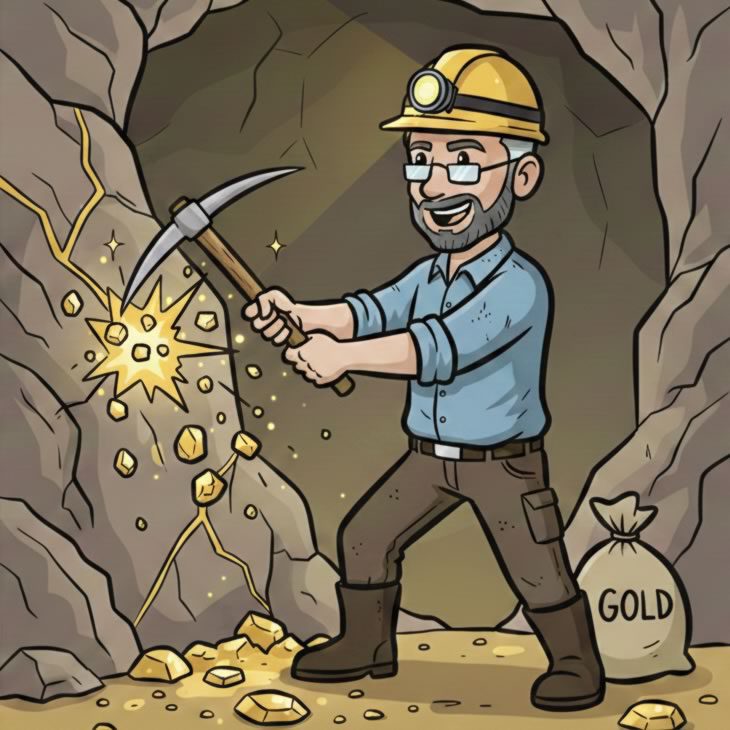
Here are the main buyer groups and what they prioritize:
- Site operations (mine manager, maintenance superintendent, reliability engineers): uptime, safety, day-to-day production, vendor service response times
- Technical and engineering teams (process engineers, metallurgists): specification accuracy, compatibility with existing plant, demonstrated performance in similar geology and climate
- HSE and ESG teams: safety compliance, emissions regulations, community and environmental impacts, decarbonization
- Finance and corporate asset management: cost per ton over asset life, return on capital, fleet standardization
- Procurement: vendor performance history, auditability, RFP compliance, local content requirements
Buyers prioritize uptime, safety, and total cost of ownership above marginal gains in performance or price. Mining operators search for vendor information internally before looking externally, meaning that by the time you receive an inquiry, the buyer has often already formed opinions. Safety considerations are critical in mining equipment decisions and can override every other factor.
Many leads stall because they are generated with only one layer of the buying group engaged, often site-level maintenance contacts, while corporate and procurement stakeholders remain untouched. To generate real opportunities, you need to engage decision makers across the full chain.
Why Mining Equipment Lead Generation Is Harder Than It Looks
Long sales cycles, tenders that seem to appear out of nowhere, and pilots that never scale are common frustrations. These are not signs of bad marketing. They are structural features of the mining industry.
Mining projects take an average of 15.5 years to develop from discovery through feasibility, permitting, financing, and construction to production. Most near-term equipment demand comes from expansions, debottlenecking projects, fleet replacements, aftermarket services, and automation retrofits, not greenfield mines.
Here are the structural challenges that make lead generation in this sector harder than it looks:
- By the time an RFQ or RFP hits the market, preferred vendors often already have internal champions and a performance track record from previous projects or pilots. Companies need to acknowledge long sales cycles and complex decision-making in mining equipment sales.
- Mining buyers are more risk-averse than innovation-driven. High-value manufacturing prospects require extensive information before purchase. They care about proven performance in similar geology, climate, and haul profiles.
- Mining equipment manufacturers need to be included on approved vendor lists to succeed. Approved vendor registration is essential for selling to large miners, and getting on those lists takes time, documentation, and proof.
- “Spray and pray” tactics, generic email blasts, untargeted Google Ads, and random trade shows, waste budget and damage credibility with serious mining buyers.
- Low search volume combined with high specificity means broad campaigns capture the wrong prospects while missing the right ones entirely.
Mining equipment lead generation requires patience and precision. Getting it wrong costs money and reputation.
Mapping Your Ideal Mining Buyer: From Commodity to Contact List
Lead generation for mining equipment starts with a very specific ICP, not a broad list of “all mines.” A focused ideal customer profile can increase the effectiveness of marketing efforts dramatically.
Segment your target list by these factors:
- Commodity: copper, gold, iron ore, lithium, coal, rare earths
- Mining method: open pit, underground, block cave, in situ
- Region: Western Australia, Chile, Ontario and Quebec, Southern Africa, Scandinavia
- Equipment category: drilling rigs, haul trucks, crushers, mills, underground loaders, automation systems, support infrastructure
Build your target account list using public data. NI 43-101 reports in Canada and JORC reports in Australia detail planned expansions, equipment specifications, and capacity targets. Financial filings such as 10-Ks and annual reports from mining firms describe capital projects, plant upgrades, and planned investments. Life-of-mine plans and feasibility studies reveal what equipment types and capacities are being considered.
Identify specific contacts within those accounts: maintenance superintendents, mine managers, reliability engineers, asset managers, and central category managers for mobile or processing equipment. Use LinkedIn and company org charts to validate and expand the list. Sync everything into a CRM with clear tags for commodity, region, site versus corporate levels, equipment interest, and buying stage.
Data analytics helps identify potential leads with precision, and a well-structured database is the foundation for every tactic that follows.
Timing Your Outreach Around Mining Project and Budget Cycles
Generating mining equipment leads is as much about when as who. The same buyer reacts very differently depending on project and budget timing. Specific buying triggers should guide account targeting efforts in mining equipment marketing.
Key project stages and where equipment decisions cluster:
- Scoping and feasibility studies: primary crusher sizing, comminution circuits, concentrator capacities, fleet types decided here
- Permitting and financing: suppliers that help with compliance, emissions, and environmental impact are evaluated
- Construction and commissioning: purchasing and installing large equipment, construction rentals, auxiliary equipment
- Steady-state operations: replacement, rebuild intervals, retrofits for automation or electrification, aftermarket parts and services
Read public filings for timing clues. A feasibility study that mentions a 2028 capacity increase tells you when to engage. Monitoring buying signals can enhance lead generation: rising maintenance backlogs, high downtime on aging assets, safety incidents, or new regulations such as diesel particulate limits underground all create demand for equipment upgrades.
Plan outbound sequences around budget cycles. For North American mines, capital budget planning often happens in Q4. Reach out three to six months before budget lock. For known expansion projects, engage six to eighteen months ahead. This is an ongoing process, not a one-time campaign.
Account-Based Lead Generation for Mining Equipment: Site + Corporate Together
Account-based marketing is a natural fit for mining companies because deal values are high and buying groups are complex. ABM is effective for targeting mining equipment sales because it treats each target mining company as its own market.
For each account, map all relevant contacts across site operations, regional technical teams, global category managers, HSE, and procurement. Mining lead generation requires mapping both site and corporate buyers. Automation streamlines this process when combined with CRM tools and prospecting systems.
Synchronize your messaging by role:
- Site-level content: emphasize uptime, maintenance simplicity, safety, local support, spare parts availability
- Corporate content: focus on TCO, standardization, ESG alignment, risk management, and fleet optimization
- Procurement messaging: highlight compliance, vendor performance, auditability, and contractual clarity
Build a multithreaded contact plan for each account, typically five to ten contacts per mine. Use personalized email, LinkedIn, and phone outreach anchored to a specific initiative detected in public data, such as a fleet renewal, mill expansion, or automation trial. Track engagement at the account level. Multiple responses across roles signal a stronger lead than a single form fill from one contact.
Digital Channels That Actually Work for Mining Equipment Lead Generation
Mining digital volume is small but highly intent-rich. The goal is not traffic. It is the right mining buyers finding you at the right time. Digital marketing should complement traditional outreach strategies in the mining sector.
For SEO, focus on long-tail, high-intent terms that combine equipment type, commodity, and application. Technical content drastically influences purchasing decisions in the mining sector. Build deep application pages and technical guides rather than generic product brochures. Include real data, operating ranges, rebuild intervals, maintenance considerations, and references to specific mining environments like high-altitude operations in the Andes or hard rock underground in Western Australia. High-quality technical content should address buyer-specific operational challenges.
For paid media, run targeted campaigns for a handful of high-value terms on Google Ads and LinkedIn campaigns aimed at specific job titles in mining regions. One equipment supplier reduced Google Ads cost per lead from roughly $302 to $30 over three months by refining ad structure, geography, and product-category targeting. Another revived organic search presence for procurement keywords and saw website form submissions reappear in key product categories. These are targeted campaigns, not broad blasts.
Owned channels matter too. Email newsletters segmented by commodity or equipment family, technical webinars with real case studies, and engineering Q&A sessions for reliability teams all help nurture new prospects and existing contacts through a long sales funnel.
Predictive analytics enhances lead scoring and forecasting accuracy, helping you identify which accounts are most likely to convert based on engagement data and project signals.
Using Trade Shows, Site Visits, and Local Presence Without Wasting Budget
Trade shows and industry networking are crucial for developing buyer relationships in mining, but only if you select and work events deliberately. Trade shows can generate leads if the right events are chosen.
Prioritize events where your specific mining buyers gather: MINExpo for heavy equipment, PDAC for juniors and early-stage projects, Mining Indaba for African operations, and regional events like CIM, Diggers and Dealers, or Exposibram. Use your target list to pre-book meetings four to six weeks before each event, focusing on specific projects or fleets rather than generic introductions.
Post-event follow-up must be rapid and personalized. Reference conversations, site contexts, and next steps. Avoid dumping scanned badges into generic nurture sequences.
Site visits and local presence convert interest into real opportunities. Offering a free assessment of a crushing circuit, underground haul profile, or ventilation system at a mine site can turn lukewarm interest into a pilot. Local infrastructure, parts depots, and field support are competitive advantages that belong in your marketing, not just your sales pitch.
Turning Proof and Case Studies Into Your Strongest Lead Generation Asset
In a risk-averse mining industry, case studies and operational proof often generate more qualified leads than clever campaigns. Mining companies often require proof of reliability from similar operations. Measurable outcomes from equipment use, such as reduced downtime, interest potential buyers far more than feature lists.
A credible mining equipment case study includes:
- Commodity and region (or at minimum a similar context)
- Baseline problem: unplanned downtime, high wear rates, safety exposure
- Equipment model and intervention
- Before-and-after metrics over six to eighteen months: throughput, availability, cost per ton, safety incidents
- Stakeholder testimonials from operations, maintenance, or safety teams
Package case studies in multiple formats: detailed engineering write-ups for technical teams, one-page summaries for procurement, webinar presentations with the customer’s maintenance engineer, and short application notes on product pages. Content marketing, such as case studies and whitepapers, is essential for capturing prospects.
Use case studies for targeted outreach. Gate technical downloads to feed your CRM. Send application-specific content to similar mines by commodity, method, and climate. Build a visible track record by application: for example, a portfolio of documented results for underground narrow-vein gold LHDs, or mill reline outcomes for large copper operations. Effective lead generation strategies focus on building trust and technical credibility. One customer success story, well documented and well distributed, can open doors at dozens of similar operations.
Measuring Mining Equipment Lead Generation: Beyond Form Fills
Because mining sales cycles are long, success cannot be judged only on monthly lead volume. Focus on account progress and opportunity quality.
Define a qualified mining lead clearly: project identified, equipment category match, at least one technical stakeholder engaged, and early confirmation of budget timing aligned to a known expansion or fleet renewal.
Key metrics to track:
- Number of target accounts engaged at three or more buying roles
- Number of mines where you are pre-qualified as a vendor
- Number of technical trials or pilots launched
- Opportunity value in pipeline tied to specific mines and projects
- Win rate where you had at least one site visit or assessment
Connect marketing activities to revenue by tagging form fills by content consumed, mapping email and webinar engagement to later RFQs, and using CRM reports to show how ABM programs influenced awarded contracts.
Run quarterly reviews by region and commodity. What works for underground hard rock in Canada might differ from open-pit iron ore in Brazil. Mining companies can leverage data-driven insights for targeted campaigns, and the mining sector’s lead generation market is expected to grow significantly as more providers adopt these methods. Refine your strategies accordingly.
Why Choose Our Team for Mining Equipment Lead Generation
We specialize in equipment and industrial markets with deep expertise in long, technical sales cycles, including mining equipment manufacturers, OEMs, and equipment dealers. We understand multi-layered mining buying groups and know how to map accounts by commodity, region, and project stage.
Our team integrates website strategy, SEO, paid media, outbound prospecting, CRM, and email into a single revenue-focused lead generation system that connects directly to pipeline and closed-won deals. We deliver measurable results: increased qualified opportunities with named mining companies, higher RFQ participation rates, and better conversion from pilot to standardization.
We work directly with owners, sales leaders, and marketing leaders to build repeatable, data-driven mining lead generation programs, not one-off campaigns that fade after a quarter.
Next Steps: Turn Mining Equipment Marketing Into a Predictable Lead Engine
Success in mining equipment lead generation comes from precise targeting, timing around project and budget cycles, risk-reducing proof, and coordinated outreach across the entire buying group. No single tactic solves it. The companies that build a system, and commit to it as an ongoing process, win.
Take action in the next 30 days: build or refine a target list of 50 to 100 priority mining sites and corporate offices, map key stakeholders at each, and audit your current content for real case studies and track record gaps.
Request a free assessment of your existing mining equipment lead generation efforts. We will review your target accounts, current messaging, and pipeline metrics to identify quick wins and a prioritized 90-day action plan. Mining cycles are long, but companies that start building a high-quality lead generation engine now will be in the strongest position when the next wave of projects and rebuilds moves forward.
FAQs: Mining Equipment Lead Generation and Mining Buyers
What is mining equipment lead generation, exactly?
Mining equipment lead generation is the process of identifying and engaging specific mining companies and buyers, at both site and corporate levels, who have a realistic chance of purchasing your equipment, parts, or services within a defined timeframe. It goes beyond list building. It includes timing outreach around project stages, aligning with technical requirements, and building enough trust and proof that buyers are ready to evaluate your solutions.
Who should I target first: mine sites, corporate headquarters, or contractors?
The best results come from targeting all three where relevant, but tactics differ. For new equipment categories or pilots, start with site-level technical teams who can champion your equipment. For larger fleet or plant standards, prioritize corporate asset and category managers in parallel. Always check if contractors or EPCMs operate key parts of the operation, as they often hold influence over equipment selection, especially in contract mining in Australia or EPCM-specified early-phase projects.
How long does it take for mining equipment lead generation to show results?
Early signals like meetings, free assessment requests, and pilot discussions can appear in 60 to 180 days. Major contracts often close over 9 to 36 months depending on scope and capital cycles. Set milestones by stage: mapped accounts, engaged stakeholders, pilots launched, approved vendor list inclusion, then RFQs and awards.
Do Google Ads and social media really work for mining buyers?
Broad campaigns usually underperform due to low search volume and niche terminology. But highly targeted campaigns around specific technical needs can capture intent from engineering resources searching for solutions. LinkedIn is most valuable for ABM and relationship-building, connecting with reliability engineers, mine managers, and procurement leads, and for distributing technical content that supports ongoing conversations. Machine learning and predictive tools can further refine ad targeting and lead scoring.
What kind of proof do mining buyers need before they will talk seriously?
Mining buyers prioritize compliance and safety in equipment decisions. They value a documented track record in similar conditions: multi-month uptime data, safety improvement statistics, TCO comparisons, and references from recognizable mines in their commodity or region. Safety compliance is a non-negotiable filter in mining procurement. Include detailed case studies, failure-mode analyses, maintenance interval data, and safety risk assessments in your materials.
How can smaller or newer suppliers generate leads without a long track record?
Focus on narrower niches such as specific component upgrades, monitoring systems, or specialized underground tooling. Run tightly scoped pilots in non-critical applications and partner with established local equipment dealers or service providers who already serve key mines. Build credibility quickly through small but well-documented wins and publish those as detailed case studies to support further outreach to new opportunities.
Should equipment dealers handle lead generation themselves or outsource it?
Internal teams know products and local mining operations deeply but often lack time and modern outbound or ABM expertise. Specialized firms can run market research, outbound sequencing, and digital strategy aligned to long mining sales cycles. A hybrid model works best: dealers own relationships and final qualification, while a specialist partner handles data research, outbound sequencing, and targeted campaigns that feed the pipeline with qualified conversations.