
Eighty-one percent of buyers say they need to trust a brand before making a purchase. For manufacturers selling capital equipment, custom components, or engineered systems, that trust forms long before a buyer picks up the phone. A 2026 survey of industrial buyers found that 81% had already built a shortlist before contacting any supplier, and 48% used AI tools in the prior 90 days to research potential vendors. If your manufacturing company is invisible or indistinct during that research phase, you are not on the list.
Manufacturing branding is the deliberate process of shaping how potential customers, partners, and employees perceive your business across every touchpoint. For OEMs, contract manufacturers, equipment makers, and distributors, this goes well beyond a logo or tagline. It includes brand positioning, messaging, visual and verbal identity, customer experience, and post-sale support. A well-built brand reduces perceived risk for engineers evaluating technical specs, plant managers comparing uptime records, and procurement teams assessing total cost of ownership.
This guide covers how to define a strong brand identity, build differentiated brand positioning, deploy modern marketing strategies (SEO, content marketing, social media marketing, email), and measure the impact through pipeline and revenue. It is written from the perspective of a B2B equipment-focused marketing consultancy that works daily with manufacturers and industrial brands across heavy equipment, material handling, food processing, mining, and warehouse automation.
Table of Contents
- What Is Manufacturing Branding Today?
- Why Manufacturing Companies Need a Strong Brand
- Brand Strategy Foundations for Manufacturers
- Defining Your Brand Positioning and Unique Selling Proposition
- Crafting Manufacturing Brand Messaging That Resonates
- Visual and Verbal Identity for Industrial Brands
- Marketing Strategies That Turn Brand Into Pipeline
- Building a Strong Digital Presence for Manufacturing Branding
- SEO and Content Marketing for Manufacturers
- Social Media Marketing and Video for Industrial Brands
- Email Marketing and Nurturing Long Industrial Sales Cycles
- Measuring Manufacturing Branding Success
- Common Manufacturer Branding Mistakes to Avoid
- Future Trends in Manufacturing Branding (2027 and Beyond)
- Why Choose Our Industrial Marketing and Branding Team
- Next Steps: Build a Manufacturing Brand That Drives Revenue
- FAQs About Manufacturing Branding
What Is Manufacturing Branding Today?
Manufacturing branding is the deliberate process of shaping how potential customers, partners, and employees perceive a manufacturer across every touchpoint. It is not a design exercise; it is an operating discipline.
There are three layers of brand identity in the manufacturing industry:
- The corporate industrial brand represents the overall reputation of the manufacturer as a reliable OEM or solutions provider.
- Product-line branding covers specific sub-brands or equipment families (automation systems, heavy equipment, material handling lines) that may target different verticals.
- Factory-level branding reflects the reputation of individual plants, which matters when customers visit for audits or supply chain verification.
Modern manufacturing branding includes brand positioning, visual and verbal identity, brand messaging, customer experience, and post-sale support. Branding in the manufacturing industry relies on building deep trust and demonstrating technical authority because buyers are investing heavily in components or equipment where failure is expensive.
Industry 4.0, reshoring, and supply chain disruptions since 2020 have made brand trust and perceived reliability just as important as price and lead time. Most manufacturing companies already have a brand by default through reputation and word-of-mouth, but that reputation often does not reach new digital buyers searching via Google, LinkedIn, or AI-powered tools. If your own brand is not visible online, it functionally does not exist for the fastest-growing segment of industrial buyers.
A strong brand also supports industrial equipment marketing by improving recognition and credibility among technical buyers.
Why Manufacturing Companies Need a Strong Brand
A strong manufacturing brand converts directly into pipeline health and revenue. Over two-thirds of B2B marketers increased branding budgets recently, and data from McKinsey’s study of 5,300 industrial brands shows that companies in the top quartile of brand visibility achieved about 16% average return on invested capital over five years, outperforming the bottom quartile by roughly 30%.
Here is what a strong brand delivers in practice:
- More and better RFQs. Buyers who recognize your brand arrive with higher intent and clearer fit. Sixty percent of consumers prefer buying new products from trusted brands, and this preference holds even more strongly in B2B contexts where a wrong decision can shut down a production line.
- Shorter sales cycles. Manufacturers face unpredictable long sales cycles. A recognizable brand with clear proof points (certifications, uptime data, case studies) removes objections earlier, letting your sales team focus on deal execution instead of credibility building.
- Premium pricing. A strong brand can increase revenue by up to 33% through consistent presentation. Brands with consistent messaging see a 33% revenue increase because buyers can articulate the value to their own leadership, justifying higher quotes.
- Retention and expansion. Sixty-five percent of a company’s business comes from existing customers due to loyalty. Effective branding can increase customer loyalty by 65%, making it easier to cross-sell and expand account value.
A strong brand helps manufacturers attract new business partners, command higher prices, and stand out in crowded markets. It also helps recruit skilled trades and engineering talent. In a competitive market, manufacturers that invest in brand strategy outperform those competing only on price and delivery.
Brand Strategy Foundations for Manufacturers
A brand strategy is the blueprint for how your manufacturing business will win specific customers over time. It is not a one-off design exercise.
Key components of a brand strategy include:
| Component | What It Defines |
|---|---|
| Target segments | Which industries, applications, and buyer types you serve best |
| Value propositions | The specific outcomes you deliver (not features) |
| Brand positioning | The idea you want in the buyer’s mind |
| Messaging pillars | The 3-5 themes that support your positioning |
| Proof points | Certifications, metrics, case studies, safety records |
| Experience standards | How quoting, documentation, and service reinforce the brand |
Leadership alignment is non-negotiable. If the CEO, sales leader, and engineering lead have three different answers to “why do customers pick us,” no website or trade show booth will fix the disconnect. Workshop with leadership, interview your best customers, and review past deals to identify patterns in why customers chose you. SWF Industrial, a metal fabrication company, ran this exact process before rebranding and saw 200% revenue growth in 24 months, with organic traffic doubling and their workforce growing 20%.
A well-defined brand strategy prevents random acts of marketing. Every tactic, from trade shows to content marketing, reinforces the same story. B2B marketing for manufacturing should focus on creating a predictable revenue stream, and that starts with strategic alignment.
Defining Your Brand Positioning and Unique Selling Proposition
Brand positioning is the clear, specific idea you want in the buyer’s mind about who you serve best and why. A unique selling proposition differentiates a product from competitors. A well-defined USP helps customers understand your business’s uniqueness.
Most manufacturers default to generic claims: “quality, on-time, competitive pricing.” Every competitor says the same thing. Manufacturers should define their unique value proposition beyond generic claims by anchoring it in real advantages. Identifying unique strengths is crucial for crafting a compelling USP.
Concrete examples of differentiated positioning:
- “Fastest lead times on custom conveyors in the Midwest” ties geography and product specialization together.
- “Material handling systems tailored for cold storage facilities with −25°C operation, HACCP-certified” combines technical specification with application focus.
- “Lifecycle support: spare parts available for 15 years, in-field service network across three time zones” turns post-sale commitment into a competitive edge.
A strong USP can justify premium pricing for products. Emotional connections can lead customers to choose higher-priced products, and clear positioning gives non-technical stakeholders in the buying group language to defend your quote internally. Creating a USP can drive customer loyalty and repeat business because buyers who understand your specific value are less likely to shop on price alone.
Document your positioning in a short statement that your sales team, marketing, and leadership can all repeat consistently. If you cannot say it in two sentences, it is not sharp enough.
Crafting Manufacturing Brand Messaging That Resonates
Brand messaging for industrial firms is the core story, key messages, and proof points expressed in language engineers and procurement respect. Effective branding shifts a manufacturer’s narrative from products to value delivered.
Build a messaging framework with three layers:
- One core brand promise. What the company’s mission centers on; the outcome you guarantee. Modern manufacturing branding needs to communicate reliability and quality consistently.
- Three to five supporting pillars. Examples: reliability, technical expertise, lifecycle support, safety, sustainability. Highlighting safety records and certifications builds trust and credibility.
- Specific proof for each pillar. Case studies, ISO certifications, MTBF data, customer satisfaction scores. Consistent product quality and dependable performance are crucial for manufacturing brands.
Storytelling can effectively demonstrate real-world value in manufacturing. Instead of listing a pump’s flow rate, connect it to the result: “Our pumps maintain 99.7% uptime in corrosive slurry applications, reducing unplanned downtime by an average of 14 days per year for mining clients.” Brands with consistent messaging see a 33% revenue increase because specificity builds confidence.
Tailor the brand message to different roles in the buying committee:
| Role | What They Care About | Messaging Focus |
|---|---|---|
| Executive | ROI, risk reduction | Business impact, total cost of ownership |
| Operations | Throughput, reliability | Uptime data, case studies |
| Engineer | Standards, performance | Specs, compliance, tolerances |
| Procurement | TCO, supply risk | Lead times, inventory, certifications |
Clarity beats hype. In industrial brand messaging, specific claims, numbers, and examples outperform slogans every time. A consistent brand presence across all your sales materials, website, and conversations builds the brand recall that keeps you on shortlists.
Visual and Verbal Identity for Industrial Brands
Visual and verbal identity are operational assets in manufacturing. They appear on machines, documentation, safety gear, vehicles, and digital channels for 10 to 15 years. Brands with a strong visual identity are 20% more successful than those with inconsistent presentation.
Concrete elements to define:
- Logo that reproduces well on dark steel, screen-printed equipment, and digital screens
- Color palette visible in plant environments and PDF datasheets
- Typography readable on engineering drawings and mobile devices
- Photography style using real facilities, real equipment, real people (not stock photos)
- Brand voice that is technical but accessible
A cohesive visual identity helps buyers recognize a manufacturing brand easily. Inconsistency signals inattention, and buyers interpret that as a reflection of operational or quality issues. A consistent brand image matters because the same spec sheet your engineer emails today may circulate in a buyer’s organization for months.
Refresh your identity when entering new markets, completing mergers, expanding product lines, or when visuals look dated compared to competitors.
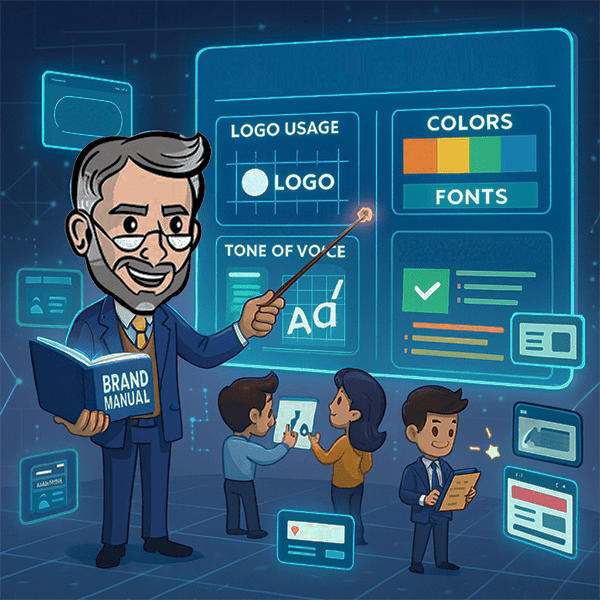
Create practical brand guidelines that shop-floor and dealer teams can use: logo placement on machinery, acceptable color usage, slide templates, and datasheet formats. Manufacturer branding should align visual identity and messaging across all channels; anything less fragments the manufacturer’s brand identity.
Marketing Strategies That Turn Brand Into Pipeline
This section bridges brand strategy and day-to-day marketing execution. The goal is to convert a strong brand into qualified opportunities.
Long, technical sales cycles require always-on marketing strategies that nurture potential customers over months or years. One-off branding campaigns rarely move the needle for capital equipment or engineered systems.
The demand-generation mix suited to manufacturing includes:
- Search engine optimization and content marketing for organic discovery
- Social media marketing on LinkedIn and YouTube for brand awareness and customer engagement
- Targeted email nurturing segmented by industry and role
- Selective paid advertising on Google and LinkedIn for high-intent search terms
- Trade shows and events, still consuming roughly 22% of industrial marketing budgets, but measured for pipeline contribution
Tight sales and marketing alignment is essential. Agree on definitions of marketing-qualified and sales-qualified leads, share a CRM, and build feedback loops on lead quality. An audit of roughly 600 lower-middle-market manufacturers found that only one in ten had both demand-capture and demand-creation channels active. Most relied on trade shows or referrals alone.
Dealers, distributors, and reps should be equipped with co-branded marketing materials that reflect the manufacturer brand’s positioning and messaging. Disconnected dealer materials dilute the brand and confuse target customers.
Furthermore, industrial inbound marketing connects brand awareness with qualified lead generation through SEO and technical content.
Additionally, co-op advertising helps manufacturers and dealers coordinate promotional activities while maintaining consistent brand messaging.
Building a Strong Digital Presence for Manufacturing Branding
Digital channels are now the primary discovery path. Industrial buyers conduct extensive online research before engaging with sales representatives. Nearly half of industrial buyers used AI tools to research suppliers in the past 90 days.
A modern manufacturing website should:
- Clearly state brand positioning and the industries you serve
- Display products, capabilities, and equipment specs
- Make it easy to request a quote, download CAD files, or speak with engineering
- Include both technical content (spec sheets, application notes) and commercial content (case studies, ROI stories)
- Work on mobile devices and load fast
A strong online presence serves both engineers who need tolerances and executives who need ROI justification. Integrate chat or simple contact options aligned with where visitors are in the buying journey.
Maintain accurate profiles on industry directories and marketplaces, but position your website as the central hub. SEO and digital marketing optimize visibility for manufacturing companies, and every profile should drive traffic back to your site where the full brand experience lives.
Similarly, effective website design for heavy equipment dealers combines consistent branding with clear navigation and conversion opportunities.
SEO and Content Marketing for Manufacturers
Search engine optimization is a foundational digital tactic that helps manufacturing brands appear when target customers search for problems, equipment types, or regulatory standards.
For example, digital marketing for industrial automation helps manufacturers showcase technical expertise and reach specialized audiences.
Prioritize search terms that match high-value intent:
- Product categories (“stainless steel conveyors,” “industrial briquetting systems”)
- Application-specific phrases (“cold storage material handling,” “food-grade packaging equipment”)
- “Manufacturer” or “OEM” modifiers
Build a content marketing program geared to industrial audiences: application guides, design checklists, calculation tools, maintenance how-tos, and troubleshooting articles. Deep industry insights and thought leadership establish expertise in engineering. A 2026 study found that roughly 80% of industrial buyers consume thought leadership content during awareness and consideration stages, well before they contact vendors. The 2025 Edelman–LinkedIn B2B report highlights how thought leadership builds trust and influences decision-makers throughout complex purchasing processes.
Consistent content marketing supports brand positioning by proving industry expertise, improving organic visibility, and giving your sales team assets to share with prospects. Well-structured, people-first content that directly answers technical questions is more likely to be surfaced in AI Overviews and similar search experiences. This matters because as AI-assisted search grows, brands that produce original, expert content will hold a competitive edge over those that publish generic spec lists.
Social Media Marketing and Video for Industrial Brands
Social media marketing is not only for consumer brands. LinkedIn and YouTube now influence B2B equipment and manufacturing decisions. Over 53% of new innovations come from smaller manufacturers, and social media platforms give those companies a way to showcase expertise without a national brand’s budget.
Practical content formats that work:
- Short videos from the shop floor showing fabrication, assembly, or testing
- Before-and-after project walkthroughs
- Customer success stories with specific metrics
- Q&A clips answering common technical questions
- Social media posts celebrating team achievements, certifications, or milestones
LinkedIn works well for thought leadership, engineering stories, and case studies. YouTube is ideal for product demos, maintenance videos, and factory tours. SWF Industrial grew its LinkedIn following 6x in six months after aligning social media posts to its refreshed brand strategy.
Social media should mirror the brand strategy and messaging. Disconnected activity, where the social feed tells a different story than the website, undermines brand reputation and confuses potential customers.
Email Marketing and Nurturing Long Industrial Sales Cycles
Email marketing is a low-cost, high-ROI channel for manufacturers to stay in front of engineers, project managers, and purchasers over lengthy buying journeys. Because manufacturers face unpredictable long sales cycles, consistent nurturing keeps your brand top-of-mind when a project finally gets budget approval.
Segment lists by industry, role, and solution interest so the brand message feels relevant. A plant manager at a dairy processor and a mining engineer have different problems; generic blasts waste both their time and your credibility.
A simple nurturing structure:
- Welcome sequence introducing brand positioning, key capabilities, and proof points
- Educational series tied to common projects (e.g., “5 factors in selecting a cold-storage conveyor”)
- Periodic updates on new capabilities, standards changes, or case studies
Keep templates consistent with the visual identity and brand voice. Make it clear where emails come from and how to engage further: reply, schedule a consult, or download technical material. Email is also an effective channel for gathering customer feedback via post-installation surveys or brief check-ins, feeding back into continuous improvement and customer satisfaction tracking.
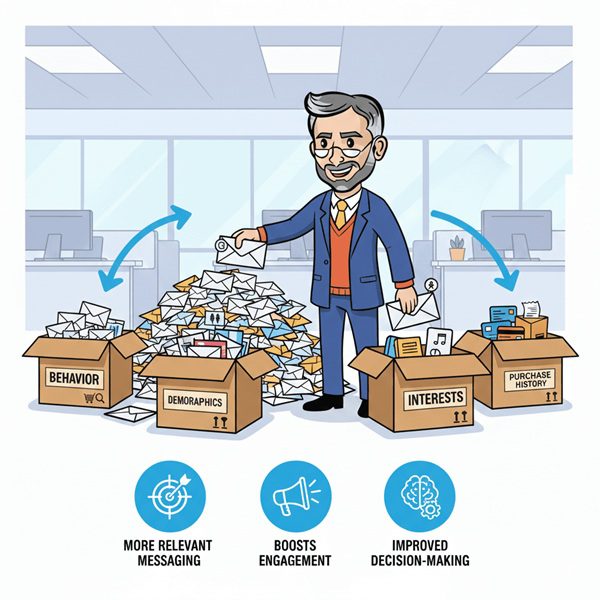
Additionally, marketing automation for manufacturing enables personalized communication and consistent lead nurturing throughout lengthy sales cycles.
Measuring Manufacturing Branding Success
Branding impact must connect to pipeline and revenue, not just impressions or followers. Manufacturers measure brand performance through key performance indicators tied to business growth.
Core KPIs to track:
| Metric | What It Reveals |
|---|---|
| Branded search volume | Whether more buyers are searching for you by name |
| Inbound RFQ quality | Whether your target audience is finding you |
| Close rate (inbound vs. outbound) | Whether brand trust is shortening evaluation |
| Average deal size | Whether positioning supports premium pricing |
| Sales cycle length | Whether brand clarity accelerates decisions |
| Spec downloads / configurator use | Whether engineers are engaging with your content |
A structured approach to measuring marketing ROI also helps manufacturers connect branding investments with qualified opportunities and revenue.
Behavioral metrics like time on capability pages and spec downloads serve as leading indicators of customer engagement. Collect structured customer feedback during quarterly business reviews, post-project reviews, and Net Promoter Score surveys. This data validates whether your brand promise matches the actual customer experience.
Revisit brand strategy at least annually based on data and feedback. Adjust positioning, messaging, and content focus where performance gaps appear. The goal is continuous alignment between what you promise and what buyers experience.
Common Manufacturer Branding Mistakes to Avoid
Manufacturing companies often treat branding as cosmetic or defer it indefinitely. Here are the most common mistakes and their corrective actions:
- Feature-first messaging. Listing specs without connecting them to buyer outcomes (uptime, safety, TCO) fails to move procurement or operations. Fix: translate every feature into a measurable benefit.
- Inconsistent brand messaging. When the website says one thing, the sales deck says another, and the trade show booth tells a third story, buyers question your attention to detail. Fix: align all sales materials and marketing materials to the same messaging pillars.
- Ignoring digital channels. Relying solely on traditional marketing channels like trade shows and word-of-mouth means you are invisible to the growing share of buyers who research online first. Fix: build a digital roadmap starting with website and SEO.
- Copying competitors. Borrowing a competitor’s visual style or tagline blurs positioning and turns your brand into a commodity. Fix: anchor identity in your real strengths and USP.
- Neglecting customer experience. Slow RFQ responses, confusing documentation, or poor onboarding can undo even the best brand strategy. Fix: define experience standards (response times, document quality) as part of brand guidelines.
Future Trends in Manufacturing Branding (2027 and Beyond)
AI, automation, reshoring, and sustainability regulations are reshaping how manufacturing brands must present themselves to target customers.
Buyer expectations for transparency are rising. Traceability in supply chains, sustainability reporting, and clear documentation of quality systems are becoming table stakes, not differentiators. Manufacturers that bake these into their corporate identity will meet customer expectations; those that do not will face harder scrutiny.
Data-driven personalization is entering B2B. Tailored content hubs for key accounts, dynamic website content based on industry, and customized proposals aligned to buyer priorities are moving from innovation to baseline. Sixty percent of consumers prefer buying from brands they trust, and personalization builds that trust faster.
Smart products, IoT-enabled equipment, and remote monitoring mean brands will be judged on software, interfaces, and service responsiveness alongside hardware. A manufacturer brand’s digital experience, from login portals to real-time equipment dashboards, becomes part of the brand itself.
Treat brand strategy as a living asset. Existing customers and potential customers will continue raising the bar on what they expect from a well established brand. Manufacturers who adapt their brand development to evolving regulations, buyer behavior, and technology over the next three to five years will hold market presence; those who freeze in 2027 will not.
Why Choose Our Industrial Marketing and Branding Team
We work exclusively with equipment manufacturers, OEMs, dealers, distributors, and industrial service providers. That specialization means we understand buying committees with five or more evaluators, sales cycles that stretch past 12 months, and the gap between what engineers need to see and what a CFO approves.
Our services span brand strategy, positioning, messaging, website and conversion optimization, SEO and AI-era search optimization, outbound prospecting support, CRM and marketing automation, and analytics tied to actual pipeline and revenue. Every engagement connects branding efforts and marketing strategies to measurable outcomes: qualified opportunities, RFQs, and booked orders.
What sets us apart:
- Vertical depth across heavy equipment, material handling, food processing equipment, mining, warehouse automation, agricultural equipment, and rental/fleet providers
- Dealer network support so manufacturers and their channel partners tell one consistent brand story
- Sales and marketing alignment built into every engagement, connecting your brand voice, marketing efforts, and sales team around shared revenue targets
Next Steps: Build a Manufacturing Brand That Drives Revenue
In 2027, manufacturing branding is not optional for companies that want to grow in a competitive, digitally driven market. The path is clear: define your brand strategy and positioning, align messaging and identity, deploy focused marketing strategies, and measure impact on pipeline and revenue.
Start by assessing your current brand. Do potential customers immediately understand who you are best for and why you are worth more? Are your website, sales materials, and social media posts telling the same story? If not, you have a concrete starting point.
Schedule a consultation, request a brand and marketing audit, or start with a discovery conversation to map your next 6 to 12 months of branding and marketing priorities. The manufacturers who align brand, marketing strategy, and sales around a clear value story will win the next generation of industrial buyers. The question is whether your manufacturing company will be one of them.
FAQs About Manufacturing Branding
These FAQs address common questions owners, presidents, and marketing leaders at manufacturing companies raise when considering brand investments.
How is manufacturing branding different from consumer branding?
Both rely on trust and emotional connection, but manufacturing branding must satisfy technical, financial, and operational scrutiny from teams of engineers, procurement professionals, and executives. Eighty-one percent of consumers need to trust a brand before purchasing, and in B2B contexts, that trust is built through compliance documentation, lifecycle support, and ROI evidence rather than lifestyle imagery.
Industrial brands focus on risk reduction and dependable performance. Channels differ too: LinkedIn, trade shows, content marketing, and sales enablement materials carry more weight than mass consumer advertising. A national brand in consumer goods competes for shelf space; a manufacturer brand competes for a spot on a shortlist that may take six months to finalize.
How long does it take for manufacturing branding efforts to show results?
Foundational work like brand positioning, messaging, and visual identity can be defined in two to three months. Measurable outcomes such as better-fit RFQs, higher win rates, and increased brand recognition typically emerge over 6 to 18 months, depending on sales cycle length.
Track early indicators: increased branded search volume, higher engagement with technical content, and stronger feedback from your sales team on lead quality. For capital equipment with 9- to 12-month cycles, expect the full range before revenue impact is clear.
What budget should a mid-sized manufacturer allocate to branding and marketing?
Mid-sized manufacturers (roughly $10M to $250M in annual revenue) typically allocate 2% to 6% of revenue to marketing. Growth-mode companies pushing into new markets or product lines often reach 6.5% or higher. In 2025, the manufacturing average reached approximately 9.5%, up from 6.7% in 2024.
Start by investing in brand strategy first: positioning, messaging, and a clear unique value proposition. Every dollar spent on websites, content marketing, social media marketing, and paid advertising then supports a unified brand story instead of scattering effort.
How do we prove ROI from branding in a B2B manufacturing environment?
ROI shows up in pipeline metrics: increased inbound inquiries from target industries, improved RFQ quality, higher close rates, and shorter sales cycles. DuraTech Industries grew from $12 million to over $30 million in revenue by focusing marketing with measurement and analytics. RUF Briquetting Systems achieved 257% revenue growth over six years through a holistic digital and content refresh.
Implement CRM discipline to attribute opportunities to specific marketing strategies. Collect customer feedback during account reviews and surveys to track improved perception of reliability and expertise. These leading indicators correlate with renewal and expansion revenue.
Can small or niche manufacturing companies benefit from branding?
Smaller shops and specialty OEMs often gain the most from sharp brand positioning because they can own narrow niches more easily than large corporations. Over 53% of new innovations come from smaller manufacturers, and a clear brand identity helps those innovations reach the right target audience.
A niche focus, such as equipment for regional food processors or components for renewable energy projects, lets you build loyal customers and brand advocates in a defined market. Prioritize a clear unique selling proposition and focused content marketing over broad, expensive branding campaigns.
Which marketing strategies should manufacturers prioritize first?
Start with a clear marketing strategy anchored in brand positioning. Then build a high-performing website, invest in search engine optimization around key product and application terms, and launch targeted email and content nurtures. These lay the foundation for a consistent brand presence.
LinkedIn and YouTube are effective early social media platforms for most manufacturing companies due to their alignment with professional, technical audiences. Add paid search or account-based paid advertising only after foundational messaging, landing pages, and lead-handling processes are ready to convert interest into qualified opportunities. This sequencing prevents wasted spend on traffic that has nowhere productive to go.