

If your company manufactures CNC machines, conveyors, food processing lines, or any other capital equipment, the way your buyers find, evaluate, and choose vendors has fundamentally changed. Industrial product marketing is no longer a side project handled with a few trade show booths and a printed catalog. In 2027, it is the system that connects complex industrial goods with the plant managers, maintenance leaders, engineers, and procurement teams who actually buy them.
This article breaks down concrete industrial marketing strategies from market research and content marketing to trade shows and email marketing campaigns. More importantly, it shows how each tactic ties back to pipeline quality, industrial sales, and revenue. B2B equipment marketing requires a focus on long sales cycles and technical accuracy, and everything here is built around that reality.
You will not find generic advice about “building brand awareness.” Instead, expect practical marketing strategies that tie marketing efforts directly to measurable opportunity creation, not vanity metrics.
Table of Contents
- What Is Industrial Product Marketing?
- Industrial Product Marketing vs. Consumer Marketing
- Why Industrial Product Marketing Matters in 2027
- Core Components of an Effective Industrial Marketing Strategy
- Market Research and Segmentation in the Industrial Sector
- Defining Ideal Customers, Buyer Personas, and Buying Committees
- Crafting a Clear Value Proposition for Industrial Goods
- Website and Digital Presence for Industrial Buyers
- Content Marketing That Serves Engineers and Procurement
- SEO and Search Visibility for Industrial Products
- Paid Media and Demand Capture: PPC, Industrial Directories, and Retargeting
- Email Marketing Campaigns and Lead Nurturing for Long Sales Cycles
- Trade Shows, Plant Visits, and Offline Industrial Marketing
- Aligning Marketing and Industrial Sales Teams
- Measurement, KPIs, and Marketing Attribution in Industrial Companies
- Common Industrial Marketing Mistakes to Avoid
- Emerging Trends in Industrial Marketing Strategies (2025–2027)
- When to Invest, How Long It Takes, and Signs Your Strategy Is Working
- Why Choose a Specialized Industrial Marketing Partner
- Next Steps and Call to Action
- FAQs About Industrial Product Marketing
What Is Industrial Product Marketing?
Industrial product marketing is a business to business discipline focused on positioning and selling industrial products-pumps, compressors, industrial robots, warehouse automation systems, conveyors, processing lines-to organizations rather than individual consumers. The buyers are other businesses: manufacturers, 3PLs, utilities, mining operations, food processors, and construction firms.
What makes this different from general B2B marketing is the need to bridge highly technical specs and tangible business outcomes. An engineer evaluating an automated storage and retrieval system does not care about clever taglines. They care about throughput per hour, warehouse density gains, energy consumption, and whether the system meets seismic zone requirements. Industrial marketers must translate features like “variable frequency drive” or “IP69K washdown rating” into outcomes that matter: lower energy costs, less unplanned downtime, easier sanitation compliance.
Most industrial offers also bundle goods with specialized services-installation, integration, aftermarket maintenance contracts, training. Effective industrial product marketing positions these bundles, not just discrete items. For example, a material handling equipment manufacturer marketing AS/RS systems to 3PLs would emphasize not only the hardware but also the software integration, ongoing support, and total cost of ownership over a 15-year asset life.
Industrial Product Marketing vs. Consumer Marketing
The gap between industrial marketing and consumer marketing is enormous, and it shapes every strategic decision.
| Factor | Industrial Marketing | Consumer Marketing |
|---|---|---|
| Sales cycle | 6–24+ months | Minutes to days |
| Stakeholders | 5–15 (engineers, procurement, ops, finance, safety) | 1–2 individuals |
| Deal value | $50K–$10M+ | $5–$500 typical |
| Decision basis | Specs, ROI, compliance, risk | Emotion, convenience, brand |
| Demand type | Derived from end markets | Direct consumer desire |
Industrial purchases typically have long decision cycles and involve multiple stakeholders. A procurement professional signing off on a $2M mining crusher is not making an impulse buy. They need detailed technical specifications, ROI models, reference site visits, and risk reduction proofs. Industrial marketing emphasizes proving measurable value and building long-term relationships rather than chasing brand loyalty through emotional campaigns.
Industrial demand is derived from consumer demand and is more volatile than consumer demand. Demand for mining equipment, for instance, swings with commodity prices. Demand for food processing equipment follows retail food trends and regulatory shifts. This derived, often inelastic demand means pricing strategies in industrial marketing often involve negotiations and volume discounts rather than fixed retail price points. Industrial marketers focus on understanding these dynamics because they directly affect pipeline timing and forecast accuracy.
These characteristics force industrial companies to use fundamentally different marketing strategies than those used for fast-moving consumer goods.
Why Industrial Product Marketing Matters in 2027
Buyer behavior in the industrial space has undergone a permanent shift since 2020. Remote buying committees, tighter CapEx scrutiny, supply chain volatility, and rising energy costs have changed how industrial buyers evaluate and select vendors.
Here is the most important number: about 94% of B2B buyers research products online before purchasing. In 2027, this is not a trend-it is table stakes. Industrial buyers commonly complete 60–80% of their research before ever speaking to a sales rep. If your company is invisible during that research phase, you are not on the shortlist when the call finally happens. Digital marketing helps industrial companies reach broader audiences they would never encounter through referrals alone.
By 2025, effective digital strategies became critical for industrial marketing, and that urgency has only intensified. A solid industrial marketing strategy increases qualified opportunities, shortens sales cycles, and improves win rates by aligning with how industrial buyers actually evaluate options today. The concrete outcomes include more RFQs from ideal-fit plants, higher close rates on replacement cycles, and better revenue forecasting based on marketing-sourced pipeline.
Without a structured approach, even companies with superior products lose deals to competitors who simply showed up earlier and more credibly in the buyer’s research process.
Core Components of an Effective Industrial Marketing Strategy
Successful modern industrial marketing strategies integrate both digital and traditional channels. No single tactic-trade shows, SEO, or cold calling-works in isolation anymore.

Here are the core building blocks:
- Positioning and value proposition – What you solve, for whom, and why you are the better choice
- Market research and segmentation – Who to target and where to invest
- Content marketing – Creating valuable content that educates and qualifies buyers
- Website and digital presence – Your 24/7 sales engineer
- SEO and paid media – Getting found when buyers are actively looking
- Email marketing and lead nurturing – Staying relevant across long cycles
- Trade shows and offline – Demonstrating products and building trust face-to-face
- Sales enablement – Arming your sales team with what they need to close
- Measurement and attribution – Connecting marketing efforts to pipeline and revenue
This industrial marketing case study demonstrates how website improvements can support lead generation and revenue growth.
Each component must be connected to CRM data and industrial sales feedback so marketing efforts can be tied directly to revenue, not just “traffic” or “impressions.” The sections below go deeper into each with examples tailored to industrial companies.
Market Research and Segmentation in the Industrial Sector
Effective marketing starts with knowing who to target and why. For industrial firms, this means going far beyond basic NAICS codes.
Start with your existing customers. Interview them. Analyze order history, maintenance logs, and support tickets from your ERP. Look for patterns: which industries reorder most? Which plant sizes generate the largest deals? Which applications require the most customization?
Then layer in external data. Industry trade directories, associations (like SME, MHI, or mining associations), and LinkedIn provide a rich picture of potential customers in adjacent markets. 74% of companies prioritize data-driven marketing approaches, and for good reason-guessing at your target market burns budget fast. Additionally, U.S. Census Bureau industry data helps manufacturers analyze market segments and identify potential growth opportunities.
Segment accounts into practical clusters. A food processing plant with USDA oversight has completely different concerns than a mining operation in a harsh desert environment. Your messaging, content, and even product emphasis will differ for each. These research outputs should feed directly into your ICP definitions and buyer personas, which shape everything downstream.
Defining Ideal Customers, Buyer Personas, and Buying Committees
An Ideal Customer Profile for industrial businesses typically includes criteria like revenue range, number of facilities, types of equipment they currently run, geography, regulatory environment, and typical maintenance headaches.
Once you know who you are targeting at the company level, build buyer personas for the individual roles involved in industrial sales:
- Plant engineer – Cares about specs, integration, reliability
- Maintenance manager – Focuses on uptime, parts availability, ease of repair
- EHS leader – Worried about safety certifications, compliance, incident reduction
- Operations director – Wants throughput, efficiency, labor optimization
- CFO / Finance – Needs ROI justification, payback period, total cost of ownership
- Procurement professional – Evaluates pricing, lead times, vendor stability
The B2B marketing funnel involves multiple stakeholders and often lengthy evaluations before purchases. Understanding who actually influences specification, standardization, and vendor lists is critical for account based marketing and targeted outreach. ABM targets specific high-value accounts for marketing efforts and focuses on personalized buyer journeys for industrial products. Companies using account based marketing see a 1300% ROI on campaigns when it is done with detailed customer segmentation and research. ABM emphasizes quality over quantity in targeting prospects, which is exactly what industrial companies need.
Crafting a Clear Value Proposition for Industrial Goods
Too many industrial companies lead with features. “Our pump delivers 500 GPM at 150 PSI.” That is a spec, not a value proposition.
Transform features into business outcomes that matter to industrial buyers:
| Feature | Value to Buyer |
|---|---|
| Variable frequency drive | 18% lower energy costs per year |
| IP69K washdown rating | 40% faster sanitation cycles, reduced recall risk |
| Modular design | 50% less downtime during maintenance |
| Predictive analytics package | 30% reduction in unplanned outages |
Quantify benefits using real, believable numbers: maintenance hours saved per month, MTBF improvements, scrap rate reductions, or payback period in months. Industrial marketing emphasizes long-term relationships and technical specifications over brand loyalty, so your value proposition must withstand scrutiny from engineers and procurement professionals who will verify every claim.
Customize value propositions by segment. Safety and regulatory compliance for food or pharma. Fuel savings and uptime for construction equipment. Labor reduction and throughput for warehouse automation. This value proposition then becomes the backbone of messaging across every channel: website, sales decks, email marketing campaigns, trade show booths, and brochures.
Additionally, effective manufacturing branding strengthens product positioning and builds trust among industrial buyers.
Website and Digital Presence for Industrial Buyers
Your website is now the primary sales engineer for your industrial company. Since 94% of B2B buyers research products online before buying, your site must answer the questions buyers ask in RFIs and plant meetings. Effective industrial websites provide detailed specifications and technical resources for buyers.
Must-have pages and assets include:
- Industry-specific product pages organized by application
- Spec sheets as searchable HTML text, not just buried PDFs
- Case studies with actual dates, metrics, and outcomes
- FAQ sections addressing common engineering and procurement questions
- A resource center for engineers (CAD files, installation guides, maintenance manuals)
- Clear calls to action: “Request a Quote,” “Talk to an Engineer,” “Download Specs”
An audit of nearly 600 US industrial manufacturers found that many captured fewer than 40 potential buyers per day through organic traffic. That is a massive missed opportunity when your competitors are investing in digital presence.
UX requirements matter for busy industrial buyers: fast load times, mobile-friendly design for field use, clear navigation by application or industry. Using Google Analytics helps measure website performance effectively so you can identify where visitors drop off and which pages drive the most quote requests.

Content Marketing That Serves Engineers and Procurement
Content marketing establishes authority and builds trust with buyers. But in the industrial sector, that content must solve specific operational problems, not just fill a blog.
High-quality content boosts lead generation and conversion rates when it matches the buyer’s stage:
- Awareness: Problem-focused articles (“5 causes of conveyor belt failure in aggregate plants”)
- Evaluation: Comparison guides, spec’ing guides, engineering calculators
- Justification: ROI worksheets, detailed case studies with financial outcomes
- Implementation: Installation guides, maintenance checklists, troubleshooting resources
Creating valuable content addresses potential customers’ pain points and moves them through the funnel naturally. Educational content helps buyers make informed decisions about products without requiring a sales call. Furthermore, industrial inbound marketing helps manufacturers attract qualified prospects through educational content and targeted digital strategies.
Technical content marketing includes whitepapers and case studies that validate product effectiveness. Tailor tone and depth by role: more technical for engineers, more financial and risk-focused for executives and procurement. High-quality content boosts SEO rankings and buyer trust simultaneously.
Establish a consistent publishing cadence. Repurpose aggressively-turn a webinar on reducing compressor energy usage into articles, email sequences, and sales enablement one-pagers. This creates efficiency without sacrificing depth.
SEO and Search Visibility for Industrial Products
Search engine optimization is how industrial buyers find you when they are actively looking for solutions. In 2027, modern search behavior includes both traditional search engines and AI-powered overviews that favor authoritative, technically credible content.
Keyword research for industrial marketing strategies should include three categories:
- Product terms: “screw press dewatering unit,” “pneumatic conveying system”
- Problem terms: “reduce conveyor downtime,” “sludge dewatering solution,” “dust collection for wood shops”
- Intent terms: “RFQ,” “supplier,” “OEM,” “buy”
SEO and PPC are crucial for B2B industrial marketing. Effective SEO can significantly increase organic traffic and leads when you combine clear on-page structure (H1/H2 hierarchy, readable spec data, internal linking between product and application pages) with technically accurate, in-depth content. Use structured data (product schema, FAQ schema) where it helps achieve rich results in standard search.
Similarly, digital marketing for industrial automation combines technical SEO and targeted campaigns to reach specialized industrial buyers.
Measure SEO success not just by traffic but by qualified form fills, quote requests, and dealer inquiries from your target market and target geographies.
Paid Media and Demand Capture: PPC, Industrial Directories, and Retargeting
Paid search campaigns capture active demand from potential buyers searching for specific industrial goods right now. PPC advertising helps reach target buyers quickly and effectively when organic rankings are still building or when you need immediate visibility for a new product line.
Key paid media tactics for industrial companies:
- Keyword selection: Focus on high-intent terms like “buy industrial shredder,” “conveyor belt supplier RFQ”
- Negative keywords: Filter out consumer searches, student research, and irrelevant applications
- Landing page alignment: Match the ad promise to the page content; include specs, benefits, and a clear CTA
Participating in industrial directories and marketplaces is part of the demand capture mix, though owning traffic on your own site gives you more control over the experience and data.
Retargeting ads keep your brand visible to plant and procurement visitors evaluating multiple vendors over weeks or months. Utilizing platforms like LinkedIn is essential for reaching key decision makers in the industrial sector, especially for account based marketing campaigns targeting specific plants or companies.
The goal is not clicks-it is sales-qualified opportunities tracked through CRM and connected to opportunity stages and revenue.
Email Marketing Campaigns and Lead Nurturing for Long Sales Cycles
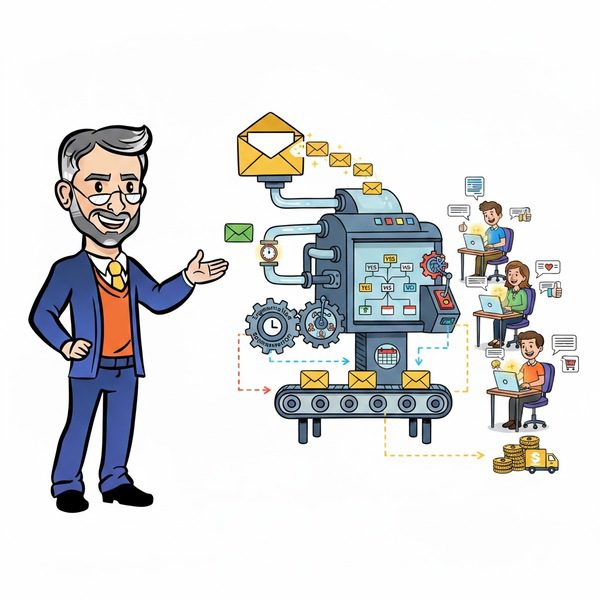
Strategic email marketing campaigns support long, complex industrial sales cycles by educating, de-risking, and staying top-of-mind between project milestones. Email marketing improves customer nurturing for 86% of marketers, and in industrial contexts, where deals stretch 6–24 months, nurture sequences are not optional.
Build specific nurture streams:
- New lead education: Introduction to your approach, relevant case studies, technical resources
- Project-based sequences: Tailored to “plant expansion,” “line upgrade,” or “equipment replacement” timelines
- Installed base campaigns: Cross-sell and upsell offers to existing industrial customers based on what they already own
Best practices for industrial email content: keep it technical yet readable, focused on solving plant problems, with clear next steps like calculators, case studies, or engineering consultations. 86% of marketers report improved customer nurturing through automation, which makes marketing automation essential for scaling email programs without losing personalization.
Segment lists by role, industry, and stage in the selling process to avoid generic blasts. A maintenance manager does not need the same email as a CFO.
Implementing marketing automation for manufacturing also helps businesses personalize communications and nurture prospects throughout lengthy sales cycles.
Trade Shows, Plant Visits, and Offline Industrial Marketing
Trade shows remain valuable for industrial purchases where physical inspection is critical. Industrial marketing often involves direct sales forces and technical presentations that simply cannot be replicated digitally. Seeing a machine run, touching the build quality, and talking with application engineers in person still closes deals.
The key is treating trade shows as part of an integrated campaign, not an isolated event:
- Pre-show: Email outreach and LinkedIn messaging to schedule booth meetings with potential clients
- On-site: Live demos, lead capture via digital tools, and focused conversations tied to specific pain points
- Post-show: Follow-up sequences routed through CRM, with leads scored and assigned to the sales team within 48 hours
Use physical collateral that reinforces core value propositions: application-specific one-pagers, updated product catalogs, and ROI case sheets with real dates and numbers. Sales and marketing must coordinate so booth interactions connect directly to pipeline and eventual industrial sales rather than ending up in a pile of unworked business cards.
Aligning Marketing and Industrial Sales Teams
Misalignment between marketing and industrial sales is one of the most expensive problems in the industrial space. Marketing generates leads that sales ignores. Sales complains about lead quality. Neither team knows what content works at which stage.
Fix this with practical alignment mechanisms:
- Shared definitions: Agree on what qualifies as MQL, SQL, and opportunity. Write it down.
- SLA on follow-up: Marketing delivers leads; sales follows up within an agreed timeframe.
- Regular pipeline reviews: Joint meetings to discuss lead quality, conversion rates, and what is working.
- Feedback loops: Sales shares objections, competitor messaging, and use cases; marketing turns that intelligence into content and campaigns.
- Sales enablement materials: Battlecards, slide decks, localized content for dealers, co-branded materials
Effective B2B industrial marketing blends digital tactics with traditional relationship-building. Marketing can support field sales and dealer networks with joint webinars, co-branded assets, and localized content that align with the overall marketing strategy. The sales process becomes more efficient when both teams operate from the same playbook.
A well-structured B2B sales funnel further strengthens sales alignment and improves lead conversion.
Measurement, KPIs, and Marketing Attribution in Industrial Companies
If you cannot measure it, you cannot improve it. Advertising in industrial markets should measure metrics such as lead-to-quotation rates and customer acquisition costs, not just impressions and clicks.
Key performance indicators for industrial marketing efforts:
| KPI | What It Tells You |
|---|---|
| Marketing-sourced pipeline | Revenue potential created by marketing |
| Opportunity-to-close rate by channel | Which channels produce winnable deals |
| Sales cycle length | Whether marketing is accelerating decisions |
| Cost per opportunity | Efficiency of marketing spend |
| Retention/expansion revenue | Impact of marketing on existing customers |
Use basic attribution approaches: first-touch shows what created awareness, last-touch shows what triggered action, and simple multi-touch models reveal the full picture. For industrial businesses with long cycles, multi-touch is usually most useful.
Moreover, measuring marketing ROI helps manufacturers connect marketing investments with qualified opportunities and revenue.
Companies using A/B testing improve marketing effectiveness significantly across landing pages, email subject lines, and ad creative. 74% of companies prioritize data-driven marketing approaches, and the ones that act on that data consistently outperform those that don’t.
Tie every report to executive questions: which marketing strategies are creating the most profitable, winnable opportunities, and in which markets?
Common Industrial Marketing Mistakes to Avoid
Before scaling your marketing budget, address these foundational issues:
- Relying only on trade shows and referrals. This leaves you invisible during the 60–80% of the buying journey that happens online. You miss demand from potential buyers who never walk into your booth. Expand into digital strategies to capture that research-phase traffic.
- Generic messaging that ignores buyer roles. Sending the same brochure to an engineer and a CFO wastes both their time. Tailor messaging by persona and segment. What matters to a maintenance manager is different from what matters to a procurement professional.
- Ignoring the installed base. Your existing industrial customers are your easiest revenue opportunity. Failing to market upgrades, service contracts, and replacement parts to them is leaving money on the table. Build customer upsell and cross-sell campaigns.
- Weak lead follow-up. A qualified lead that sits unworked for two weeks is a gift to your competitor. Set SLAs between marketing and sales, and track follow-up times in CRM.
- No connection between marketing activity and CRM data. If you cannot trace a website visitor to a quote request to a closed deal, you cannot measure marketing effectiveness. Connect your marketing channels to your CRM from day one.
- Dealers and distributors underutilizing digital channels. Many equipment dealers depend on OEM support but have minimal digital presence. Provide dealers with localized content, co-branded landing pages, and digital campaign support so they can generate high quality leads in their territories.
- Overinvesting before fundamentals are set. Spending on paid media when your website has no clear positioning, broken pages, or no CRM is like pouring water into a bucket with holes.
Emerging Trends in Industrial Marketing Strategies (2025–2027)
Several forces are reshaping the industrial sector and the marketing strategies that work within it:
AI-assisted search and buying. Research shows that 69% of technical buyers now use generative AI during the purchasing process. Industrial buyers are asking AI tools for vendor shortlists and product comparisons. Companies with strong, technically rich, and consistently trustworthy content are the ones that get recommended. AI-generated overviews favor depth and accuracy over marketing fluff.
Interactive digital tools. Configurators, ROI calculators, and digital twins are moving from experimental to expected. The global digital twin in manufacturing market was valued at $9.5 billion in 2025, with projections reaching $190 billion by 2035. Industrial marketers who offer interactive tools help buyers self-qualify and build internal business cases faster.
Connected equipment and IoT-driven marketing. Industrial companies are using data from connected equipment to power more targeted marketing-condition-based service campaigns, lifecycle upgrade recommendations, and predictive maintenance offers. This turns product data into a marketing channel.
Sustainability and ESG. Sustainability is becoming a real purchasing criterion, not just a checkbox. 57% of organizations cite sustainability as a key motivator in digital twin investments. Industrial buyers increasingly ask about energy efficiency, emissions, and circular design.
Better buyer experience. 85% of industrial buyers report frustration when buying online, and 75% would switch supplier for a better experience. Real-time inventory, accurate pricing, and simple checkout are becoming expectations, not differentiators.
Start by experimenting with one trend in a controlled, measurable way rather than trying to adopt everything at once.
When to Invest, How Long It Takes, and Signs Your Strategy Is Working
Set realistic expectations. Early leading indicators-more qualified inquiries from target industries, deeper conversations in plant visits, growing email engagement-typically appear within 3–6 months of implementing a digital marketing strategy. Full revenue impact usually aligns with your existing sales cycle: 6–18 months for capital equipment, sometimes longer for greenfield projects.
Signs your strategy is gaining traction:
- More RFQs from industries and plant types you are specifically targeting
- Potential buyers mentioning your content or website during discovery calls
- “You were recommended” mentions from prospects increasing
- Sales reporting higher quality conversations with marketing-sourced leads
- Shorter time from initial inquiry to technical evaluation
Industrial marketing should be treated as a revenue investment, not a discretionary cost center. Scale up when you see consistent lead quality and have the sales capacity to work new opportunities. Fix fundamentals first-clear positioning, functioning website, working CRM-before increasing spend on paid media or business promotion campaigns.

Why Choose a Specialized Industrial Marketing Partner
General marketing agencies struggle in the industrial sector. They don’t understand plant environments, technical buying committees, dealer networks, or the difference between selling a conveyor system and selling consumer goods. That gap shows up in weak content, misaligned campaigns, and wasted spend.
A specialized industrial marketing partner brings familiarity with the language engineers and procurement professionals use, experience translating complex specs into buyer-focused messaging, and proven digital strategies for complex B2B sales. They understand that your sales cycle might be 18 months and that a “lead” who downloads a whitepaper is not the same as one who requests a quote with application details.
Pro Equipment Marketing connects website development, SEO, paid media, content development, CRM, email marketing, and AI search optimization into a single coherent system that drives measurable pipeline for industrial companies. The team works directly with sales leaders, product managers, and dealer managers to align marketing strategies with revenue goals and on-the-ground realities-not just marketing vanity metrics.
Industry leaders in industrial marketing choose partners who understand their world. That means knowing the difference between an MQL from a plant manager evaluating a capital project and a student researching for a term paper. That distinction is everything.
Next Steps
Effective industrial product marketing in 2027 comes down to three things: a structured strategy aligned with how industrial buyers actually research and buy, tight coordination between marketing and your sales team, and disciplined measurement tied to revenue rather than impressions.
Start by auditing your current approach. Ask yourself:
- Does our website answer the questions buyers ask in RFIs?
- Can we trace a marketing touchpoint to a closed deal in our CRM?
- Are we visible during the 60–80% of the buyer’s journey that happens before they call us?
- Do our trade show leads get followed up within 48 hours?
- Is our content specific enough to matter to an engineer evaluating our equipment?
If the answer to any of those is “no” or “I’m not sure,” that is where to start.
Reach out to Pro Equipment Marketing for a marketing audit tailored to your equipment, your markets, and your sales process. Whether you are an OEM, a dealer, or a distributor, the goal is the same: turn marketing into a predictable driver of qualified leads, winnable opportunities, and long-term growth.
FAQs About Industrial Product Marketing
How is industrial product marketing different from other B2B marketing?
Industrial product marketing involves higher technical complexity, stricter safety and compliance requirements, longer asset lifespans, and larger deal sizes than most other B2B categories. Industrial products often involve complex purchasing decisions and require technical specifications that go far beyond a typical SaaS purchase.
This leads to more stakeholders per deal, extensive qualification steps (test data, certifications, pilot projects, reference site visits), and a heavier emphasis on proof. Where a SaaS buyer might trial software for free, an industrial buyer is committing to physical assets with real downtime consequences and capital budgeting cycles.
A typical buying journey for process equipment might start with a plant engineer recognizing a throughput bottleneck, followed by months of internal scoping, vendor research, RFQs, technical evaluations, reference checks, and finally a factory acceptance test. Industrial marketing must support every stage of that journey with the right content and interactions.
What are the most effective industrial marketing strategies right now?
The short list of high-impact tactics for industrial marketing success includes problem-focused SEO content, targeted PPC for high-intent queries, LinkedIn outreach to engineers and plant leaders, email nurturing with technical depth, and well-executed trade show programs with integrated pre- and post-show campaigns.
The best mix depends on deal size, market concentration, existing brand recognition, and whether you sell directly, through dealers, or both. Effective marketing strategy ties all channels back to CRM tracking so effectiveness can be measured by pipeline and revenue, not impressions.
Start with 2–3 core tactics done well rather than a scattered approach across too many marketing channels. Industrial marketers who focus deeply on a few areas consistently outperform those spreading budget thin across everything.
How do you generate qualified leads for industrial products?
Combine demand capture (search engine optimization, PPC, industrial directories) with demand creation (content marketing, webinars, LinkedIn thought leadership, dealer enablement) to fill the funnel at different stages. This approach lets you reach both active potential customers searching for solutions right now and passive ones who have not yet defined their problem.
Qualification criteria specific to industrial deals include: application fit, budget, timeline, plant conditions, regulatory constraints, and competitive landscape. Use forms, discovery calls, and technical questionnaires to generate high quality leads and qualify them without overwhelming buyers.
Log all qualification data into CRM for consistent scoring. Align lead definitions with sales so marketing-sourced qualified leads actually convert into opportunities instead of sitting unworked. This alignment is where most industrial firms lose the most value.
How can small or mid-sized industrial companies compete with large brands?
Smaller industrial firms can leverage real advantages: specialization in certain applications, faster technical support, custom engineering capabilities, and closer relationships with industrial customers. Large brands cannot match the agility and attention that a focused specialist provides.
Focus your marketing strategy on a narrow niche-specific industries, materials, or process problems-and build deep, credible valuable content around that niche. A well-optimized website, targeted content marketing, and focused outbound outreach can make a specialist visible even against global competitors with ten times your budget.
Capture and promote case studies and testimonials with detailed results. When a mid-size OEM can show that their equipment delivered 22% throughput improvement at a specific plant, that proof matters more to industrial buyers than a famous brand name. Brand visibility grows from demonstrated competence, not from the size of your ad spend. Tailored solutions for specific applications beat generic product lines in the eyes of expert buyers.
How do you measure ROI on industrial marketing efforts?
Track cost per lead, cost per opportunity, and marketing-sourced revenue over realistic timeframes that match your typical deal cycles. Industrial marketing emphasizes proving measurable value, and your measurement framework should reflect that.
Use CRM to link marketing touchpoints-content downloads, email marketing campaigns, event attendance-to actual opportunities and closed deals, even when the journey path is complex. The lifetime value of an industrial customer often spans years or decades of aftermarket revenue, so factor that into ROI calculations.
Combine quantitative data (pipeline value, win rates, cost per opportunity) with qualitative feedback (sales comments on lead quality, buyer references to your content during negotiations). Over time, improved pricing power, shorter sales cycles, and higher close rates are key indicators of strong industrial product marketing ROI.
How long does it take to see results from industrial marketing strategies?
Initial leading indicators-more relevant website inquiries, better engagement from target accounts, stronger dealer conversations-typically appear within 3–6 months of implementing changes. This is the phase where you see more of the right people visiting, downloading, and requesting information.
Full revenue impact usually aligns with existing sales cycle lengths: 6–18 months for capital equipment and complex systems, sometimes longer for greenfield or large-scale projects. Industrial product demand is often affected by trends in end markets and industries, which adds another layer of variability.
Look for step-by-step progress across the funnel: increased qualified traffic, more RFQs from target industries, improved opportunity conversion, and then business growth in closed revenue. Do not judge long-cycle marketing efforts solely on short-term deal closings-track stage-by-stage movement and pipeline velocity instead.