
Between 2020 and 2027, equipment manufacturers watched their buyers fundamentally change how they research, evaluate, and purchase capital equipment. What used to start with a phone call to a dealer or a handshake at a trade show now starts with a web search, an AI-assisted query, or a deep dive into technical content long before anyone picks up the phone. The prediction that 80% of B2B sales interactions will happen online by 2025 has largely come true, and the shift has only accelerated since.
OEM marketing – everything an original equipment manufacturer does to generate demand, support channel partners, and protect brand reputation – has moved from a support function to a growth driver. Whether you manufacture agricultural equipment, construction machinery, material handling systems, food processing lines, mining equipment, or warehouse automation, a digital OEM marketing strategy is no longer optional. It is the foundation your sales pipeline sits on.
This article covers what a modern OEM marketing strategy looks like in 2027: from digital marketing and lead generation to customer acquisition, content marketing, dealer enablement, key performance indicators, and after sales support. The goal is to give OEM executives and marketing teams a practical framework tied to pipeline and revenue – not vanity metrics.
Table of Contents
- What Is OEM Marketing in Industrial and Equipment Markets?
- Why OEM Marketing Is Unique: Long Cycles, Technical Buyers, and Channel Conflict
- Core Customer Needs Across OEM Buyer Journeys
- Key Elements of a Digital OEM Marketing Strategy
- Building Your OEM ICP, Personas, and Website Foundation
- SEO, Content Marketing, and Thought Leadership for OEMs
- Paid Media, Lead Generation, and Customer Acquisition
- Working with Dealers, Distributors, and Channel Partners
- After-Sales Support, Retention, and Revenue Expansion
- Key Performance Indicators and Engagement Metrics That Matter for OEMs
- Common OEM Marketing Mistakes and How to Avoid Them
- Why Choose Our OEM and Equipment Marketing Specialists
- Conclusion: Turning OEM Marketing Into a Predictable Growth Engine
- Frequently Asked Questions About OEM Marketing
What Is OEM Marketing in Industrial and Equipment Markets?
OEM marketing involves promoting parts, systems, and finished equipment to other businesses (dealers, distributors, integrators, and end-user fleets) rather than individual consumers. It is a business to business discipline where the target audience includes engineers, corporate buyers, operations leaders, and dealer principals.
Think of a hydraulic attachment OEM selling through skid steer dealers, a grain dryer OEM marketing through ag co-ops, or a conveyor OEM working with systems integrators. In each case, the manufacturer rarely sells direct. OEM marketing relies heavily on resellers and distributors for sales, which means every campaign, piece of content, and digital asset must serve both the OEM’s brand and the channel partner’s ability to close.
This is where OEM marketing diverges from standard B2B digital marketing. OEM marketing channels include trade shows and technical content rather than mass media advertising. It uses relationship-driven strategies rather than direct-to-consumer tactics. And digital marketing now underpins trade shows, referrals, and reps rather than replacing them-creating a hybrid approach where your website, content, and paid campaigns do the heavy lifting before a sales rep ever gets involved.
Why OEM Marketing Is Unique: Long Cycles, Technical Buyers, and Channel Conflict
OEM marketing sits at the intersection of complex buying teams, multi-step value chains, and deeply technical products. Several factors make it distinct from other forms of marketing.
Long sales cycles. The average B2B sales cycle lasts four to seven months, but capital equipment and engineered systems routinely stretch to six to twenty-four months. These cycles include RFQ stages, spec-in processes, procurement committee reviews, and financial approvals. OEM marketing often involves multiple decision makers in purchasing-engineers who specify, operations leaders who validate, procurement teams who negotiate, and finance or ownership who approve.
Technical complexity. OEM products often require deep technical knowledge for effective marketing. Spec sheets, CAD files, performance curves, integration diagrams, and compliance documentation are not optional extras; they are the content buyers need to move forward. Complex product information can overwhelm potential OEM customers if it is not structured clearly and presented at the right stage of the journey.
Channel conflict. OEMs depend on dealers, distributors, and integrators to reach end users. Pushing digital campaigns that generate leads can create tension if territory boundaries, lead ownership, and follow-up expectations are not clearly defined. Technical specifications and after sales support are essential value drivers in OEM marketing, and both OEM and dealer must align on how these are communicated.
Compliance and risk. Standards like ISO, CE, OSHA, food safety, and ATEX must be woven into marketing stories and online documentation, not buried in PDFs. Buyers who cannot quickly verify compliance will move to the next shortlisted supplier.
Core Customer Needs Across OEM Buyer Journeys

Understanding customer needs by role is the foundation for any digital OEM marketing strategy. Key buyer roles include:
- Engineers and specifiers – care about technical details, integration, and performance data
- Maintenance and operations managers – prioritize reliability, uptime, and serviceability
- Procurement and purchasing – focus on total cost of ownership, lead times, and vendor stability
- Finance and ownership – evaluate ROI, financing options, and long-term asset value
- Dealer sales reps – need selling tools, competitive comparisons, and quick access to specs
OEM marketing leverages digital content and technical resources to educate potential buyers across all these roles. In 2027, buyers expect transparent technical documentation online-drawings, manuals, application notes, and performance data-before they engage in direct contact with any sales team. Roughly 62% of the buying process happens online before the first vendor conversation, and 81% of industrial buyers have already formed a shortlist before speaking to anyone live.
Effective OEM marketing focuses on building strong partnerships and trust between businesses by mapping content to three stages: early-stage education, mid-stage evaluation, and late-stage risk mitigation. Each stakeholder enters and exits these stages at different points, which is why OEM content must be layered and role-specific.
Key Elements of a Digital OEM Marketing Strategy
Modern OEM growth requires an integrated digital marketing strategy tied to revenue, not a collection of random tactics. The key elements include:
- Ideal customer profile (ICP) and segmentation to define the right audience and niche markets
- Clear value propositions by segment reflecting product quality, reliability, and compliance
- Website as a demand-generation hub with spec libraries, quote tools, and dealer locators
- Content marketing that drives website traffic, educates buyers, and establishes brand authority
- SEO and search engine marketing to capture high-intent web searches
- Marketing automation and CRM alignment to track customer interactions from first touch to closed deal
- Account-based marketing (ABM), which is crucial for targeting high-value OEM prospects
A strong brand identity differentiates your company from competitors. Brand identity reflects the values, quality, and ideals of a company, and consistent brand identity builds trust with potential customers. Cohesive brand messaging enhances customer recognition and customer loyalty, while visual elements like logos enhance brand awareness significantly. These are not abstract ideas-they translate directly into whether an engineer trusts your technical content enough to put your equipment on a shortlist.
Furthermore, effective manufacturing branding strengthens market positioning and builds trust with technical buyers and channel partners.
One custom machinery and automation builder saw a 180% increase in qualified inquiries after investing in SEO, content, and improved quote-form UX over about eleven months. That kind of result comes from documented goals and a measurement plan before campaigns launch, not from sporadic marketing efforts.
Building Your OEM ICP, Personas, and Website Foundation
For OEMs with limited sales teams and long cycles, defining your ideal customer profile is the difference between marketing spend that generates pipeline and spend that generates noise.
Additionally, the International Trade Administration’s market research resources help manufacturers evaluate market opportunities and identify potential customers.
ICP examples:
- Regional ag dealers carrying 3–5 equipment lines who need a reliable OEM partner with strong co-op marketing support
- National rental fleets seeking standardized equipment with low maintenance and fast parts availability
- Specialty system integrators building turnkey lines for food processing or warehouse automation
Build personas for each key buyer: the specifying engineer who needs CAD downloads and integration guides, the fleet manager who cares about uptime percentages and service response times, the purchasing manager comparing total cost of ownership, and the dealer principal evaluating margin and marketing support from OEM partners.
A conversion-focused OEM website should include clear applications pages, industries served, a dealer locator, a spec-sheet library, quote and demo request forms, and logical navigation by equipment type and application. Prioritize mobile and desktop performance-field managers and service techs browse from job sites, and core web vitals directly affect organic search results. Fast load times and simple UX are not optional.
Similarly, website design for heavy equipment dealers prioritizes clear navigation, technical resources, and qualified lead generation.
SEO, Content Marketing, and Thought Leadership for OEMs
Organic search and content marketing are how modern buyers research problems and discover solutions before they ever reach out to your sales process.
Industrial SEO starts with the fundamentals: technical SEO (site speed, crawlability, structured data), on page SEO around real buyer phrases like “bulk material handling equipment for grain” or “electric excavator OEM,” and off page SEO through earned mentions in trade publications and industry directories. Use Google Search Console and Google Analytics to track which target keywords drive qualified traffic and which pages contribute to pipeline.
Content types that work for OEM marketers include:
- Application guides and sizing calculators
- Failure-mode explainers and ROI calculators
- Buyer’s checklists and commissioning how-tos
- CAD downloads, wiring diagrams, and technical specifications
- Customer case studies with real timelines and ROI numbers
Additionally, industrial inbound marketing attracts qualified buyers through educational content, search visibility, and targeted lead generation.
The data supports this: 94% of B2B marketers use articles or blog posts, 84% use videos for content marketing, and 78% use case studies in their content strategy. SEO improves visibility in organic search results, and SEO strategies include on page, off page, and technical SEO working together. Integrating SEO with SEM can increase clicks by 25%, making the combination especially powerful for OEMs competing in niche markets.
Thought leadership matters more than many OEMs realize. Research shows that 59% of industrial buyers reduced or ended work with an existing supplier after encountering a competitor’s thought leadership content. Publish content that demonstrates genuine expertise-not repackaged spec sheets-and you create a competitive moat around your brand reputation.
Paid Media, Lead Generation, and Customer Acquisition
OEMs should treat paid advertising as a precision tool to reach narrow technical audiences, not a volume play. SEM includes paid search advertising for immediate visibility, and Google Ads campaigns targeting high-intent relevant keywords like “OEM hydraulic power units for skid steers” or “industrial conveyor manufacturer” can deliver results quickly when aligned with strong landing pages.
For social media strategy, LinkedIn is the top platform for B2B engagement, and 80% of social media leads come from LinkedIn for B2B companies. In total, 93% of marketers use social media for audience reach, and social media advertising topped paid content distribution in 2020-a trend that has only grown. Social media allows direct communication with customers and potential customers, making it valuable for thought leadership, webinars, and product launches through targeted messaging.
Effective lead generation campaigns for OEMs use gated content, demos, virtual plant tours, and ROI tools as offers. The emphasis should be on generating high quality leads and sales qualified leads rather than raw lead counts. Nurturing flows via email marketing and marketing automation-sequences for new specifiers, dealer prospects, rental fleets, and existing customers considering an upgrade-keep your brand in front of the right audience through long sales cycles.
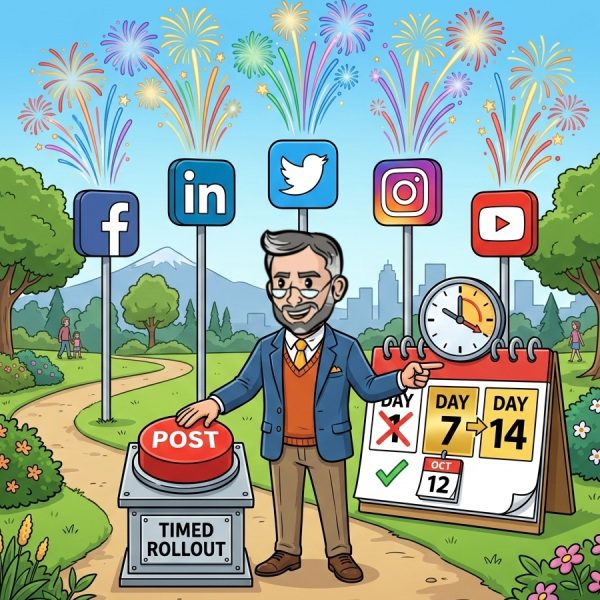
Moreover, marketing automation for manufacturing helps OEMs personalize communication and nurture prospects throughout lengthy sales cycles.
Working with Dealers, Distributors, and Channel Partners
Dealer and distributor collaboration is a central pillar of OEM marketing, not an afterthought. OEM marketing relies heavily on resellers and channel partners, and co-marketing programs expand reach and grow audiences for OEMs by leveraging partner customer bases.
Practical co-marketing programs include:
- MDF and co-op funds for shared campaigns
- Dealer microsites or landing pages co-branded with the OEM
- Templated Google Ads campaigns, email sequences, and social posts tailored for local dealers
- Co-branding and co-marketing materials that maintain consistent brand messaging
For example, co-op advertising allows OEMs and dealers to coordinate campaigns while maintaining consistent brand messaging.
OEMs must empower partners with tools and training for effective sales. Successful OEM partnerships often involve joint marketing and shared sales efforts, and strong relationships with channel partners enhance customer experiences for end users.
Common conflicts-overlapping territories, lead ownership, inconsistent messaging-require clear rules of engagement and transparent lead routing. Integrating dealer feedback into your marketing team’s content development improves messaging around customer needs and ensures that what marketing produces actually helps dealers close.
After-Sales Support, Retention, and Revenue Expansion
For OEMs, the marketing story does not stop at the sale. After sales support heavily influences renewals, upgrades, referrals, and customer loyalty. Showcase service capabilities as part of your own offerings: commissioning, training, remote monitoring, spare parts programs, and preventive maintenance plans all reduce perceived risk for buyers.
Proactive communication through lifecycle content marketing – service bulletins, upgrade campaigns, maintenance reminders – keeps customer relationships alive and creates upsell opportunities. Email marketing has a $36 average return for every $1 spent, making it one of the most cost-effective marketing channels available. Over 80% of manufacturing marketers use email newsletters, and email marketing delivers the most cost-effective ROI compared to other channels. Personalized emails can significantly increase open and click-through rates, and email marketing allows for tailored messages based on customer interests-such as sending maintenance tips for the specific equipment a customer owns.
Turn satisfied owners into advocates through testimonial campaigns, site-visit content, peer roundtables, and case-study collaborations. Strong after sales support improves engagement metrics like repeat site visits and email engagement, which directly increase customer lifetime value across personalized services and support programs.
Key Performance Indicators and Engagement Metrics That Matter for OEMs
OEM marketers must connect digital marketing to pipeline and revenue, not just website traffic and impressions. Here is a focused set of metrics worth tracking:
| Metric Category | Key Performance Indicators |
|---|---|
| Acquisition | Marketing-qualified leads, sales qualified leads, opportunity creation rate, cost per opportunity |
| Engagement | Time on technical content, repeat visits by accounts, configurator and demo usage, content downloads |
| Pipeline | Influenced pipeline, sourced pipeline, win rate of marketing-sourced deals, velocity by segment |
| Retention | Customer acquisition cost vs. customer lifetime value, aftermarket revenue, referral rate |
Metrics such as design-win rates and partner-sourced revenue are critical for measuring OEM marketing success, especially when a large share of revenue flows through dealers. Understand customer interactions across every touchpoint so you can tie marketing spend to real business growth.
Additionally, proper CRM setup for heavy equipment sales teams improves lead tracking, sales coordination, and performance measurement.
Set a small, focused dashboard. Tracking dozens of metrics dilutes attention. Pick five to seven that your marketing team reviews weekly and that leadership reviews monthly.
A structured approach to measuring marketing ROI connects marketing investments with qualified opportunities and revenue growth.
Common OEM Marketing Mistakes and How to Avoid Them
Many OEMs still rely heavily on trade shows, print catalogs, and word-of-mouth. These channels still matter, but they cannot carry the full weight of a modern marketing strategy alone.

Mistake 1: Over-focusing on features, underplaying outcomes. Buyers care about uptime, safety, throughput, and labor reduction-not just specs. Translate technical details into business outcomes from the customer’s perspective.
Mistake 2: Neglecting digital marketing basics. Poor website performance, no analytics tracking, inconsistent website content, and no documented digital OEM marketing strategy leave you invisible to the 62% of buyers who research online before reaching out. Monitor desktop performance and mobile responsiveness as baseline requirements.
Mistake 3: Ignoring data and key performance indicators. Without tracking, you cannot distinguish which marketing channels generate qualified leads from which ones waste budget. Use Google Analytics and CRM data to make decisions.
Mistake 4: Leaving dealers to figure out marketing themselves. Without structured support-templated campaigns, co-branded assets, lead routing, and shared data-dealers default to inconsistent messaging or no marketing at all. Invest in dealer enablement as a core program, not a side project.
Mistake 5: Treating paying customers as finished deals. Equipment with a ten- to twenty-year lifespan creates decades of aftermarket, upgrade, and referral opportunity. Ignoring key customers after the initial sale leaves revenue on the table.
Each of these is fixable within three to twelve months with focused effort and realistic budgets.
Why Choose Our OEM and Equipment Marketing Specialists
We work exclusively with equipment manufacturers, OEMs, dealers, distributors, and rental fleets. Our team understands the realities of long, technical sales cycles across the manufacturing industry-from agricultural and construction equipment to material handling, food processing, mining, and warehouse automation.
Our services map directly to what OEM marketing demands: website and conversion optimization, industrial SEO and search engine optimization, AI and local search visibility, paid search and social campaigns through advertising platforms, outbound prospecting, CRM and marketing automation setup, and performance analytics built around pipeline and revenue.
We connect digital marketing activity to real pipeline, dealer performance, and booked revenue. We collaborate with your internal sales, engineering, and dealer teams to ensure messaging is technically accurate, commercially compelling, and aligned with how your key customers actually buy. Every recommendation we make is built to generate leads, improve customer acquisition, and grow paying customers-not pad reports with vanity metrics.
Conclusion: Turning OEM Marketing Into a Predictable Growth Engine
OEM marketing in 2027 is a discipline defined by technical depth, channel complexity, and the absolute necessity of a cohesive digital marketing strategy. The manufacturers winning market share are the ones who align their website, content marketing, dealer programs, paid media, and after sales support into a single system that tracks meaningful KPIs tied to revenue.
If your current approach still depends primarily on trade shows, word-of-mouth, and hoping dealers will handle marketing on their own, you are leaving pipeline on the table. Audit where your leads actually come from, identify two to three high-impact initiatives, and commit to executing them over the next twelve months.
Ready to turn your OEM marketing into a predictable growth engine? Reach out to our team for a no-obligation strategy session focused on improving lead generation, customer acquisition, and dealer performance for your equipment business.
Frequently Asked Questions About OEM Marketing
How is OEM marketing different from marketing a standard B2B product?
OEM marketing operates through a multi-step value chain-OEM to dealer to end user-which means OEM marketers must speak to both channel partners and end users simultaneously, managing overlapping objectives and targeted messaging. The technical complexity is higher (CAD files, compliance documentation, integration requirements), asset life is longer, and the number of decision makers per deal is typically greater. This impacts channel mix, content depth, the sales process, and campaign structure significantly compared to standard B2B product marketing.
What should be the first step in creating a digital OEM marketing strategy?
Start with a clear baseline: audit your website performance, set up or verify analytics (Google Analytics, Google Search Console), review your CRM, and honestly assess where your qualified leads currently come from. Define your ICPs and segments, then align your website structure, core messaging, and top-funnel content around those segments. Choose one or two primary marketing channels-such as SEO and paid search-for the first six to twelve months instead of spreading your marketing spend too thin across other platforms.
Which digital marketing channels work best for OEM lead generation?
Search engine optimization and Google Ads are high-intent channels that reach engineering and operations teams actively searching for solutions with specific relevant keywords. LinkedIn and niche industry platforms work well for thought leadership, specifier education, and nurturing through long sales cycles. Email marketing, webinars, and application-focused content marketing tend to convert best for complex OEM solutions, especially when personalized to the recipient’s role and equipment interest.
How can OEMs measure the success of their digital marketing efforts?
Tie every digital touchpoint to CRM records so opportunities and wins can be traced back to campaigns, content, and channels. Track key performance indicators across the funnel: qualified website traffic, MQL to SQL rates, opportunity creation, win rates, and revenue influenced by organic search results and paid campaigns. Engagement metrics like content downloads, configurator use, and return visits from target accounts serve as leading indicators of pipeline health.
How do OEMs balance direct digital marketing with dealer relationships?
Establish clear lead routing rules, co-branded campaigns that send leads to specific dealers, and transparency on follow-up expectations. Segment messaging so OEM digital marketing focuses on education and solution positioning while dealers focus on local service and pricing. Sharing marketing insights and lead data with OEM partners and dealers builds trust and improves the overall customer experience, reducing channel conflict rather than creating it.
What role does after-sales support play in OEM marketing?
Strong after sales support-parts availability, service response, remote diagnostics, and training-is a key differentiator in equipment purchases. Marketing can showcase these capabilities through case studies, service metrics, and lifecycle programs, reducing perceived risk for potential customers evaluating your brand against competitors. Ongoing service touchpoints generate data and stories that feed content marketing, retention campaigns, and upsell initiatives, directly supporting brand visibility and supply chain confidence.