

The way construction equipment manufacturers attract, engage, and convert buyers has changed more in the last six years than in the prior two decades. Remote research, digital RFPs, and compressed evaluation windows now define how machines get sold.
Table of Contents
Introduction: Why Construction Equipment Marketing Must Evolve Now
Understanding the Modern Heavy Equipment Buyer Journey
Positioning and Messaging for Heavy Equipment Manufacturers
Website as a 24/7 Digital Showroom for Construction Machinery
SEO and Search Visibility for the Heavy Equipment Industry
Content Marketing That Reduces Risk for High-Stakes Purchases
Digital Advertising and Paid Lead Generation for Equipment Manufacturers
Social Media and Video: Showing Equipment in the Real World
Email, Nurturing, and Marketing Automation for Long Sales Cycles
Trade Shows, Dealer Networks, and Traditional Marketing – Rebuilt for 2026
Measurement, Analytics, and Proving Marketing ROI
Common Marketing Mistakes Heavy Equipment Manufacturers Should Avoid
When to Bring in a Specialized Heavy Equipment Marketing Partner
Why Choose a Specialized Heavy Equipment Marketing Agency
Conclusion and Next Steps
Frequently Asked Questions About Marketing for Construction Equipment Manufacturers
Introduction: Why Construction Equipment Marketing Must Evolve Now
After 2020, the heavy equipment industry’s buying process shifted hard. Fewer plant visits, fewer handshake deals at trade shows, and far more research done on screens. Decision makers now complete much of their evaluation before ever speaking to a sales representative. According to McKinsey’s 2025 research, buyers in construction and agriculture markets express the most dissatisfaction during the “identify and research” and “consider and evaluate” phases – largely because product specs, dealer transparency, and pricing information remain difficult to find online.
This guide is built for heavy equipment manufacturers, OEMs, and construction machinery brands selling through dealers, distributors, and rental companies. If your pipeline depends too heavily on trade shows, if inbound leads have gone flat, or if your leadership cannot tell which marketing strategies actually produce revenue – this playbook addresses those problems head-on.
What you will get: a step-by-step framework to align heavy equipment marketing with how contractors, fleet managers, and procurement teams actually buy in 2026. Digital marketing reaches a wider audience than traditional methods, but only when it is built around the way these buyers research, evaluate, and commit. Construction equipment manufacturers need targeted marketing strategies for high-value buyers, and effective digital marketing for equipment manufacturers focuses on educating buyers throughout the decision process – not broadcasting generic brand messages. We will cover content marketing that answers real jobsite questions, measurable digital campaigns, and improving conversion rates from website visit to RFQ.
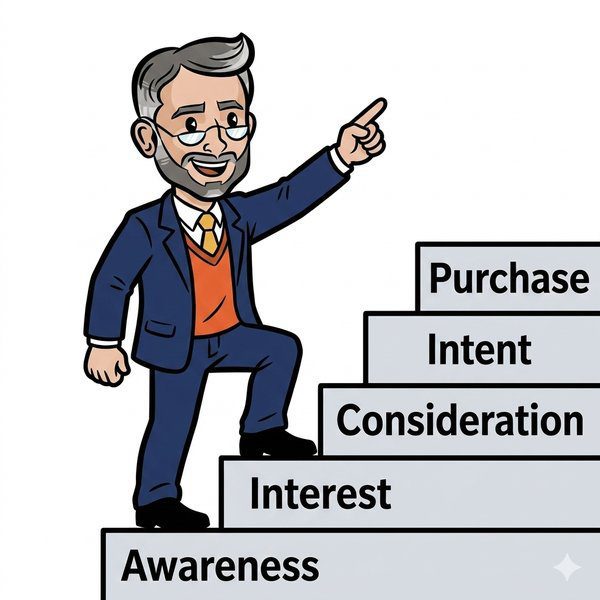
Understanding the Modern Heavy Equipment Buyer Journey
A typical 2026 buyer path looks like this: search engines first, then spec downloads, peer referrals, demo requests, and finally committee reviews that involve multiple departments. Project managers, estimators, and procurement teams research construction machinery online long before talking to a sales team. Buyers of construction equipment often require detailed technical specifications for evaluation, and they expect to find those specs without calling anyone.
Two buyer types dominate the market. Urgent, breakdown-driven buyers need a replacement excavator or dump truck this week – they prioritize availability, parts, and service response. Planned capex buyers are evaluating a new fleet for 2027 infrastructure projects – they care about total cost of ownership, emissions compliance, residual value, and long-term service coverage. Buying windows have shortened to 1–3 months from serious evaluation, per KHL Group research, meaning visibility before procurement is decisive.
Multiple decision makers are involved: operators care about comfort and visibility, safety managers about compliance, fleet managers about uptime and parts, and executives about ROI and financing. Trust is essential in high-value equipment purchases, emphasizing the need for proof points at every level. Manufacturers rely on dealer networks for selling and marketing their products, so digital touchpoints – website, social media, comparison content, customer success stories – must support this entire buying committee, not just one persona.
Positioning and Messaging for Heavy Equipment Manufacturers
Generic claims like “high quality” and “reliable” no longer differentiate heavy equipment manufacturers. Every competitor says the same thing. What separates winners in 2026 is specificity: which application is this machine built for, what does it deliver under real workloads, and what service infrastructure stands behind it.
Define your positioning around equipment fit. A 30-ton excavator marketed for mining has a different value story than the same tonnage class for utility trenching. Messaging for 20–35 ton excavators should emphasize power, ground pressure, and duty cycle endurance. Compact track loaders need to highlight maneuverability, transport ease, and attachment versatility. Telehandlers demand reach-versus-capacity data and indoor/outdoor performance. Account-Based Marketing targets personalized campaigns to decision makers in large firms, so messaging precision matters even more when pursuing enterprise fleet buyers. Influencer partnerships can help bridge the gap between specifications and real-world performance, particularly when operators share honest field experience.
Strong positioning must clearly answer for potential buyers:
- Which applications and industries is this machine designed for?
- What is its documented performance under realistic duty cycles?
- What are operating and maintenance costs per hour?
- What service network exists, and what are the response time SLAs?
- What operational proof (uptime data, delivery records) backs the claims?
Articulate real-world proof: uptime guarantees, average response times, parts availability commitments, and documented delivery performance by region. Specificity builds trust. Slogans do not.
Website as a 24/7 Digital Showroom for Construction Machinery
Your website is now the primary plant tour for heavy equipment companies. Potential customers visit it before they call, before they attend a demo, and often before they even know which brand they want. A strong website proves operational readiness for buyers – it signals that you are organized, transparent, and serious about earning their business.
Structure inventory pages and product pages by category (excavators, wheel loaders, cranes, telehandlers), manufacturer, application, and searchable filters: year, hours, capacity, powertrain, emissions tier. Digital showrooms and virtual demos allow buyers to evaluate machinery remotely, so every product page should include high-resolution photos, walkaround videos, full spec sheets, compatible attachments, warranty information, and a clear call to action for an RFQ, demo request, or financing inquiry.
High-resolution visuals increase buyer trust and engagement. Websites must provide clear pricing – or at minimum, pricing ranges and financing scenarios – to qualify leads instantly. Hiding everything behind “contact us” frustrates high intent buyers and increases drop-offs.
Websites should facilitate easy navigation for better user experience. Mobile-first design is non-negotiable in 2026. Many site visits come from jobsite trailers, service trucks, and field supervisors on tablets or phones. If images load slowly or menus are buried, you lose the visit. Strong UX and page layout directly improve conversion rates from visitor to enquiry, RFQ, or demo request. Use heatmaps and session recordings to identify where visitors drop off and fix those friction points.
SEO and Search Visibility for the Heavy Equipment Industry
SEO connects heavy equipment companies to real business outcomes: more qualified enquiries, more dealer leads, and better search visibility for new model launches. SEO ensures visibility when buyers search for specific equipment, and data-driven SEO ensures visibility for contractors searching for machinery locally.

Organize website architecture for SEO by equipment type, brand, and industry use case. A page for “excavators for road construction” performs differently than a generic excavators page. Long-tail keywords signal high purchase intent – queries like “30-ton excavator for sale Texas” or “Tier 4 emissions wheel loader for quarry” reflect buyers who are ready to evaluate.
On-page SEO essentials:
- Include model numbers in titles and H1 headings
- Present technical specifications in tabular form for easy comparison
- Use unique, detailed descriptions – they improve organic rankings far more than copied boilerplate
- Optimize metadata to enhance search engine visibility
- Implement structured data to help search engines understand your catalog
- Build internal links between related machines and application pages
Technical SEO matters too – page speed, crawlability, schema markup for product data, and mobile performance all affect rankings. Off-page SEO includes backlinks from trade associations, equipment forums, and industrial publications. Partner with dealer sites to cross-link product information.
Local SEO improves visibility in local search results for equipment companies. SEO improves visibility for local search results by ensuring each branch or dealer location has an optimized Google Business Profile with consistent name, address, and phone data. SEO helps equipment dealers rank for high intent searches like “heavy equipment dealer near me” or “construction equipment service near me.” Encourage customer reviews at the dealer level to strengthen local businesses in search results.
Content Marketing That Reduces Risk for High-Stakes Purchases
Content marketing in the heavy equipment industry must reduce perceived operational risk, not just fill a blog calendar. Content marketing builds trust by answering buyer questions quickly. Content marketing through technical guides builds trust among construction professionals. In high-consideration industries, content marketing builds trust because it demonstrates that you understand the problems your buyers face before they ever reach out.
Formats that work well for potential customers:
- Failure-prevention checklists for fleet managers
- Cost-per-hour comparisons across machine classes
- Productivity benchmarks with before-and-after data
- 3–5 minute jobsite case studies with real metrics (hours saved, fuel saved, maintenance costs)
- ROI calculators for new vs. used vs. lease scenarios
Effective content answers buyer questions quickly and clearly. Jobsite-first content helps reduce buyer hesitation. Comparison-style content influences buyer decision-making – especially during the evaluation phase when fleet buyers are narrowing options. High-resolution visuals and condition reports build buyer trust, and high-resolution visuals improve buyer trust in equipment listings.
Map content to buying stages: early research gets explainer articles (“how Tier 4 and Stage V emissions standards affect machine selection”), evaluation gets comparison guides and cost analyses, and the decision stage gets ROI calculators, financing options, and implementation timelines. Address topics contractors care about right now: fuel efficiency vs. electric alternatives, telematics ROI, and emissions compliance.
Digital Advertising and Paid Lead Generation for Equipment Manufacturers
Paid media accelerates demand that organic channels build over time. PPC advertising delivers immediate, highly targeted traffic. Search engine marketing is effective for heavy equipment companies because it captures buyers at the moment of intent – when someone searches “used 30 ton excavator for sale Dallas” or “concrete batch plant manufacturer USA,” they are not browsing. They are buying.
PPC advertising targets specific demographics for higher conversion rates, and paid advertising targets specific demographics for higher conversion rates across search engines and social platforms. Digital marketing is often more cost-effective than traditional methods when targeting is precise. Digital marketing increases sales by targeting specific demographics, but only when campaigns are built around the right queries and audiences.
Build paid social campaigns on LinkedIn targeting fleet managers, project directors, and procurement roles in the construction industry, mining, and infrastructure firms. Social media advertising allows businesses to reach a wider audience, and targeted ads on Meta can reach operators and field supervisors with visual equipment content. Paid demand generation budgets urgency and removes friction – especially when paired with offers like demo days, financing scenarios, or trade-in evaluations.
Every paid campaign needs tailored landing pages with clear offers. Landing pages must match the ad promise and include social proof, guarantees, and a simple conversion path. Track beyond clicks:
- Cost per marketing-qualified lead
- Cost per opportunity
- Opportunity-to-close rate
- Lead quality by channel
One case study illustrates this well: EquipmentWatch shifted from broad keywords to specialized ones aligned with its actual business, achieving a 407% increase in demo requests while spending 12% less. Conversion rates soared by 769%. That is what happens when digital advertising and lead generation are built around high intent traffic, not vanity impressions.
Social Media and Video: Showing Equipment in the Real World
Social media for heavy equipment is about proof of capability, not polished lifestyle branding. Social media marketing effectively reaches potential customers for equipment when the content shows real machines doing real work. Social media helps build brand awareness in the construction equipment market, and engaging content on social media can showcase equipment in action – which is exactly what skeptical buyers want to see.
Platform-specific guidance:
| Platform | Use Case |
|---|---|
| B2B credibility, case studies, fleet manager interviews | |
| YouTube | Long-form walkarounds, detailed spec reviews, maintenance tutorials |
| Instagram/TikTok | 20–40 second jobsite clips, cold-start tests, time-lapses |
Video content is becoming essential for equipment evaluation on social media. Video marketing is crucial for demonstrating heavy equipment capabilities that photos and spec sheets cannot convey. Film cold-start tests at −10°C, time-lapses of road rebuilds, side-by-side bucket cycle comparisons, and attachment change-overs. Social media advertising targets specific audiences with precision, so promote your best-performing organic videos to expand reach.
Use subtitles on every video – construction sites are loud. Reuse video across email campaigns, trade show loops, product pages, and sales decks. Social proof from operators and site supervisors speaking on camera influences skeptical repeat customers more than any corporate messaging ever will.
Email, Nurturing, and Marketing Automation for Long Sales Cycles
Heavy equipment sales cycles often range 9–18 months for planned purchases, making systematic nurturing essential. Email marketing nurtures leads over long sales cycles, and effective email campaigns keep your brand top-of-mind between the first spec download and the final purchase order. Email marketing can convert quotes into closed deals when sequences are built around the buyer’s actual timeline, not your promotional calendar.
Segment email lists by role (fleet managers vs. equipment dealers vs. rental partners), equipment category, and buying stage. Quality email content is more important than frequency – aim for 1–2 emails per month with genuinely useful updates: new attachments, software updates, safety bulletins, seasonal maintenance tips, and relevant customer success stories.
Example sequences:
- Post-trade-show follow-ups with case studies relevant to the prospect’s application
- Multi-email series for new model launches with escalating detail
- Drip campaigns for prospects who downloaded spec sheets, progressing from comparison content to financing options

Marketing automation platforms can trigger content based on behavior: visited certain product pages, watched a demo video, or requested a financing scenario. Automated emails can request customer feedback post-sale, strengthening relationships and generating testimonials. Automated lead routing increases closing rates for equipment sales by ensuring the right sales representative or dealer gets the lead within hours, not days. Customer relationship management integration is critical – without it, nurturing efforts and direct sales activity exist in separate silos.
Trade Shows, Dealer Networks, and Traditional Marketing – Rebuilt for 2026
Traditional marketing and trade shows like CONEXPO and bauma remain important for heavy equipment businesses. Live demonstrations at trade shows allow buyers to experience equipment firsthand, and nothing replaces the impact of seeing a machine run in person. But presence alone is not a strategy.
Treat trade shows as part of a system:
- Pre-event: Run targeted ads and send invitations to warm prospects 4–6 weeks before
- On-site: Capture leads with QR codes and tablets, not fishbowls of business cards
- Post-event: Launch automated follow-up sequences within 48 hours, segmented by interest
Support dealer networks with co-branded campaigns, shared content libraries, and joint webinars focused on local market needs. A well-structured equipment franchise marketing strategy helps manufacturers and multi-location dealer networks maintain consistent branding while adapting campaigns to local markets. OEM partners can strengthen dealer performance by providing localized landing pages, video libraries, targeted advertising, and CRM-integrated lead-sharing systems that connect marketing activity to equipment sales.
Integrate print, brochures, and field sales collateral with digital tracking: unique URLs, QR codes, and call tracking numbers. This turns traditional marketing from a cost center into a measurable marketing channel. Without tracking, you cannot distinguish a productive show from an expensive vacation.
Measurement, Analytics, and Proving Marketing ROI
Heavy equipment companies must move beyond vanity metrics – page views and social media likes – to revenue-connected KPIs. Performance marketing demands accountability.
Key metrics to track:
| Metric | Why It Matters |
|---|---|
| Cost per lead (by channel and product line) | Shows channel efficiency |
| Lead-to-opportunity conversion rate | Reveals lead quality |
| Opportunity-to-close rate | Connects marketing to closed deals |
| Average sales cycle length | Identifies pipeline velocity |
| Marketing-sourced pipeline | Quantifies marketing’s revenue contribution |
Connect marketing platforms to CRM systems so every RFQ, demo request, and dealer lead can be attributed back to specific campaigns. Build a unified dashboard showing performance by channel – SEO, paid search, social media, email marketing, trade shows – for quarterly reviews with sales leadership.
A practical example: in a Kubota dealer network case study, dealers participating in hyper-targeted, multi-channel campaigns (search, social, CTV, zip-code-level targeting) sold 22% more units year-over-year compared to non-participating dealers who saw a 4% decline – while the overall market dropped 2%. That is what disciplined measurement and spend reallocation look like in practice.
Common Marketing Mistakes Heavy Equipment Manufacturers Should Avoid
Even established OEMs make avoidable mistakes when developing their heavy equipment sales and promotional strategies. A more targeted approach to equipment marketing can help manufacturers improve lead quality, strengthen dealer relationships, and increase sales opportunities. Here are the most common mistakes and how to correct them:
- Hiding commercial details behind “contact us”: Publish response time commitments, parts availability windows, and at least pricing ranges. High intent buyers leave when forced to call for basic information.
- Treating every visitor the same: A fleet manager evaluating a $2M fleet purchase and an operator researching attachments need different content paths. Build application-specific pages and segment by role.
- Using generic stock photos: Potential buyers in this specific industry expect to see real machines in real conditions – dust, wear, attachments, jobsite constraints. Authenticity builds credibility.
- Relying solely on trade shows: One off campaigns and annual events create unpredictable pipeline. A steady flow of inbound leads requires year-round digital presence and online visibility.
- Copying SaaS or ecommerce playbooks: Vague messaging like “innovative solutions” fails in the construction industry. Buyers want operational proof, technical specifications, and documented performance – not taglines.
- Letting inventory pages go stale: Update listings weekly. Stale data destroys credibility and wastes online advertising spend driving traffic to outdated pages.
When to Bring in a Specialized Heavy Equipment Marketing Partner
Signs you need specialized help: stagnant lead volume despite spending more, equipment dealers and distributors asking for marketing support you cannot provide, or leadership unable to connect marketing spend to pipeline growth. If your marketing engine runs on guesswork, it is time for a change.
A specialized B2B marketing agency with expertise in equipment marketing understands the complexities of long sales cycles, technical content development, and dealer network relationships. From creating detailed spec sheets, case studies, and safety documentation to integrating CRM systems and marketing automation, these agencies align paid advertising and organic demand generation to attract qualified buyers while minimizing channel conflict.
An external partner complements internal teams: your people know the product and the field; the partner brings campaign strategy, technology, analytics, and process discipline. When evaluating a heavy equipment marketing agency, prioritize experience with equipment manufacturers, familiarity with construction and industrial buyers, and most importantly, the ability to connect marketing efforts directly to qualified leads, sales pipeline, and revenue rather than just traffic or followers.
Why Choose a Specialized Heavy Equipment Marketing Agency

Generalist marketing agencies struggle with the complexity of heavy equipment and construction machinery markets. They do not understand duty cycles, dealer channel dynamics, seasonal buying patterns, or why a fleet manager evaluates machines differently than a procurement director.
A specialist brings fluency in industry terminology, understanding of project cycles and seasonality, and comfort creating technical content that decision makers actually use. They connect website, SEO, paid media, social media, and email into one system that sales leaders can see reflected in their CRM – turning anonymous visitors into RFQs, demos, and dealer-ready qualified leads rather than just increasing traffic.
At Pro Equipment Marketing, we built our entire practice around this specific industry. We focus on revenue: building a marketing engine that produces a steady flow of qualified opportunities for heavy equipment manufacturers, not vanity metrics. If your current approach is not generating the pipeline your sales team needs, it is worth having a strategic conversation about what a focused, measurable system could look like for your business.
Conclusion and Next Steps
Modern marketing strategies help construction equipment manufacturers move more equipment, fill dealer pipelines, and support long-term customer relationships. The manufacturers winning in 2026 are not spending more – they are connecting every marketing dollar to pipeline and revenue through an integrated system: clear positioning, a strong digital showroom, targeted demand generation across the right marketing channels, and disciplined measurement that proves ROI.
Success in construction equipment marketing does not come from one off campaigns or a single tactic. It comes from aligning your digital marketing strategies with how buyers actually research, evaluate, and purchase heavy machinery – then measuring what works and doubling down.
Review this framework with your sales and dealer teams. Identify 2–3 initiatives you can implement in the next 90 days – whether that is rebuilding your product pages, launching a focused paid search campaign, or setting up post-trade-show automation. Then schedule a consultation or request an audit of your current heavy equipment marketing to see where the biggest revenue gaps are. The sooner you start building a system, the sooner your pipeline reflects it.
Frequently Asked Questions About Marketing for Construction Equipment Manufacturers
How is marketing for construction equipment manufacturers different from other B2B industries?
The heavy equipment industry involves high-ticket assets, strict safety and compliance standards, long evaluation cycles, and multiple stakeholders from operators to CFOs. Buyers care about uptime, jobsite performance, and lifecycle cost more than brand slogans. Marketing must provide proof, data, and real-life examples – not generic digital world tactics borrowed from other industries.
Which marketing strategies usually produce the fastest impact for heavy equipment manufacturers?
Tightening paid search around high intent keywords, improving key product pages with full technical specifications and clear CTAs, and following up trade show leads with structured email sequences can produce qualified leads within 60–90 days. SEO, content marketing, and dealer network enablement tend to build compounding gains over 6–18 months – both matter for heavy equipment sales.
What role does social media really play in heavy equipment marketing?
Social media is best used to show real machines at work, share customer success stories, and highlight service capability. It supports brand visibility, helps recruit skilled technicians and operators, and keeps your brand top-of-mind between major purchases. It is a credibility channel, not a direct sales channel for most construction equipment companies.
How much technical detail should product pages include?
Include full technical specifications, downloadable PDFs, compatibility notes for attachments, and links to safety and compliance documentation. Detailed information filters out poor-fit leads and attracts serious buyers, improving conversion rates and sales efficiency for your sales team. More detail means fewer unqualified calls and more meaningful conversations.
Are trade shows still worth it for construction equipment manufacturers?
Major events like CONEXPO and bauma can still be valuable, but only if integrated with pre-show campaigns, on-site lead capture, and post-show nurturing. Measure cost per opportunity and cost per closed deal from each show to decide future investment. Without that measurement, you are guessing – and guessing with six-figure booth budgets is expensive.
How can manufacturers support dealers and rental partners with marketing?
Create co-branded landing pages, localizable content packs, video libraries, and simple lead-sharing processes tied to CRM systems. Helping heavy equipment dealers with digital visibility, content, and campaign templates increases unit movement and strengthens long-term relationships. The stronger your dealer networks perform digitally, the more equipment you move.