
Equipment marketing is the process of generating demand, leads, and sales for equipment manufacturers, dealers, distributors, rental companies, and service providers. It combines strategies such as SEO, paid advertising, content, email, video, trade shows, and sales enablement to reach technical buyers, win quotes, and keep customers coming back for parts, service, and their next machine.
Equipment marketing is not ordinary B2B marketing with a picture of an excavator on it. The products are expensive and technical. Buying cycles also run for months, sometimes years. Purchases are signed off by committees of operators, engineers, finance leads, and owners. In addition, dealer territories and geography shape who can sell what, and where. And a large share of lifetime revenue arrives after the sale, through parts, service, rentals, and replacement units.
This guide covers how to build an equipment marketing strategy that accounts for all of that: who you are selling to, which channels work at each stage of the buying journey, how SEO, advertising, and content fit together, what a qualified equipment lead looks like, how AI search is changing discovery, and how to measure marketing by the revenue it produces rather than the traffic it attracts.
Table of Contents
- What Is Equipment Marketing?
- Why Marketing Equipment Is Different
- Understanding the Equipment Buyer Journey
- How to Build an Equipment Marketing Strategy
- 1. Define your ICP and market selection
- 2. Build buyer personas
- 3. Clarify your positioning
- 4. Segment by equipment and application
- 5. Set your geographic strategy
- 6. Select your channels
- 7. Design your lead generation system
- 8. Plan the sales handoff
- 9. Set up CRM and nurturing
- 10. Define measurement
- The Best Marketing Channels for Equipment Companies
- SEO for Equipment Companies
- Equipment Advertising & PPC
- Content Marketing for Equipment Companies
- Equipment Lead Generation
- Marketing Equipment Manufacturers vs. Dealers vs. Rental Companies
- How AI Is Changing Equipment Marketing
- How to Measure Equipment Marketing ROI
- Common Equipment Marketing Mistakes
- How to Choose an Equipment Marketing Agency
- Equipment Marketing FAQs
- Ready to Turn Your Marketing Into Predictable Equipment Sales?
What Is Equipment Marketing?
Equipment marketing is the discipline of promoting and selling machinery, equipment, and the services that support it. It sits inside B2B marketing, but it has its own buyers, its own sales motions, and its own economics.
The category includes several distinct types of businesses:
- Manufacturers and OEMs that design and build equipment and sell it directly or through a dealer network.
- Dealers that sell new and used equipment within a territory, usually alongside parts, service, and financing.
- Distributors that carry multiple brands or product lines and serve regional or vertical markets.
- Rental companies and rental fleets that monetize equipment through short- and long-term rentals, often with rent-to-own options.
- Parts and service businesses that keep installed equipment running through repairs, maintenance contracts, and aftermarket parts.
- Related equipment companies such as attachment makers, automation integrators, and used-equipment resellers.
The industries are just as varied: construction, agriculture, mining, material handling, forestry, waste and recycling, food processing, oil and gas, HVAC, water treatment, warehouse automation, and industrial fabrication, among others. Heavy equipment marketing, industrial equipment marketing, and machinery marketing are all subsets of the same discipline, and the core principles in this guide apply across them.
Why Marketing Equipment Is Different
Most marketing advice is written for software companies or consumer brands. As a result, if you apply it to equipment without adjustment, you get campaigns that generate clicks but not quotes. Here is what makes equipment different, and why each difference matters for your marketing.
High-ticket purchases
A single machine can cost tens of thousands to millions of dollars. Nobody buys a wheel loader from a banner ad. Instead, buyers need evidence, and they need to trust the seller as much as the product. Therefore, marketing has to build that trust over time rather than push for an instant conversion.
Long buying cycles
High prices lead to long cycles. A purchase may be planned around a budget year, a fleet replacement schedule, a new contract win, or the failure of an aging machine. For this reason, your marketing must stay visible and useful across many months, not just at the moment someone first searches.
Technical buyers
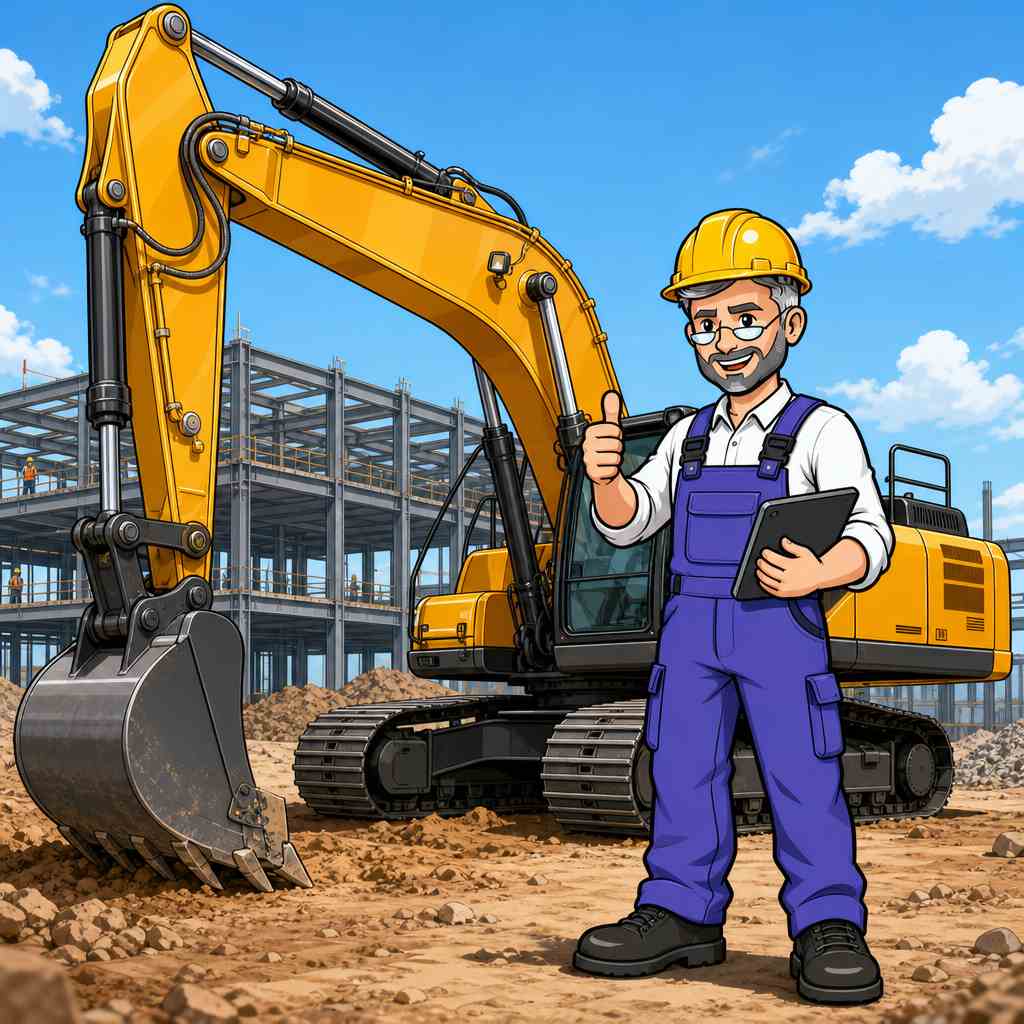
Equipment buyers know their jobs. Operators, maintenance managers, and engineers compare horsepower, lift capacity, cycle times, throughput, and compatibility with existing fleets. As a result, vague claims like “industry-leading performance” get ignored. In contrast, specific, accurate, application-focused information earns attention.
Multiple decision-makers
A typical purchase involves several people with different priorities. The operator cares about comfort and controls. Meanwhile, the maintenance lead cares about serviceability and parts availability. The finance team cares about total cost of ownership and financing terms. Finally, the owner cares about uptime and return on investment. For this reason, effective equipment marketing speaks to each of them.
Specifications and applications
Buyers rarely search for a product in isolation. Instead, they search for a solution to a job, for example moving material on a steep grade, handling a specific pallet weight, processing a certain tonnage per hour. Marketing that is organized around applications, not just product categories, matches how buyers think.
Financing
Financing, leasing, and rental options often decide whether a deal happens at all. Consequently, marketing that surfaces payment options, financing partners, and rent-to-own paths removes a major point of friction.
Dealer and distributor networks
Many manufacturers sell through dealers, which creates questions about who owns the lead, who follows up, and how co-op marketing dollars are spent. Dealers, meanwhile, must compete locally while representing brands that are also marketed nationally. In other words, lead routing and territory rules are marketing problems, not just sales problems.
Aftermarket parts and service
The machine sale is often the start of the customer relationship, not the end. Parts, service, maintenance contracts, and eventual replacement can generate more lifetime revenue than the original unit. That is why good equipment marketing treats every buyer as a long-term account.
Understanding the Equipment Buyer Journey
Every equipment purchase moves through a recognizable set of stages. Mapping your marketing to these stages is the single most useful thing you can do to stop wasting budget, because it tells you which message and which channel belong where.
| Stage | What the Buyer Is Doing | What Marketing Should Provide |
|---|---|---|
| 1. Awareness | Recognizing a problem or opportunity: a new contract, an aging fleet, a productivity bottleneck | Educational content, industry presence, social and video visibility |
| 2. Research | Searching for equipment types, applications, and possible suppliers | SEO-optimized category and application pages, buying guides, AI-search visibility |
| 3. Specification | Defining required capacity, size, features, and compatibility | Spec sheets, configurators, sizing tools, technical FAQs |
| 4. Comparison | Shortlisting brands, models, and suppliers | Comparison content, case studies, reviews, demo videos, TCO calculators |
| 5. Quote | Requesting pricing, availability, financing, and trade-in values | Clear RFQ forms, fast response, financing information, local dealer routing |
| 6. Purchase | Negotiating, approving, and taking delivery | Sales enablement materials, references, onboarding and training content |
| 7. Parts & Service | Maintaining and repairing the machine | Parts ordering, service scheduling, maintenance reminders, email nurture |
| 8. Replacement | Planning the next purchase or upgrade | Trade-in offers, upgrade campaigns, CRM-triggered outreach |
Notice that the journey loops. In fact, Stage 8 feeds back into Stage 1, and companies that market well to their existing customers shorten every future cycle. For that reason, we will refer back to these stages throughout this guide.
How to Build an Equipment Marketing Strategy
An equipment marketing strategy is a plan for which buyers you will pursue, what you will say to them, which channels you will use to reach them, and how you will turn interest into revenue. Here are the ten building blocks.
1. Define your ICP and market selection
Start with your ideal customer profile (ICP): the industries, company sizes, fleet sizes, regions, and use cases where you win most often and earn the best margins. To do this, look at your last 20 to 50 closed deals and find the patterns. Choosing a focused market is not limiting; it is how small and mid-sized equipment companies outcompete larger ones.
2. Build buyer personas
Document the roles involved in a typical purchase (owner, operations manager, fleet manager, maintenance lead, procurement, finance) and what each one needs to hear. In short, a persona should answer: what does this person worry about, what do they search for, and what proof convinces them?
3. Clarify your positioning
Why should a buyer choose you over the dealer down the road or the larger OEM? Strong equipment positioning is usually built on something concrete: uptime, parts availability, service response time, application expertise, financing flexibility, or a specific engineering advantage. By contrast, “Quality and service” is not positioning, because everyone claims it.
4. Segment by equipment and application
Organize your marketing by product line and by application. For example, a compact track loader sold to landscapers needs different messaging than the same machine sold to demolition contractors. In turn, segmentation determines your website architecture, your ad groups, and your content plan.
5. Set your geographic strategy
Decide where you can actually sell, deliver, and service. For example, dealers need tight local targeting. On the other hand, manufacturers need to balance national brand building with routing leads to the right dealer. As a result, geography should shape your local SEO, your ad targeting, and your trade show calendar.
6. Select your channels
Pick channels based on where your buyers are in their journey, not on what is fashionable. Most equipment companies need a mix of demand capture (SEO, Google Ads) and demand creation (LinkedIn, YouTube, email, trade shows). See the channel comparison in the next section for details.
7. Design your lead generation system
Decide what actions count as leads (quote requests, demo requests, rental inquiries, financing applications, parts orders) and build clear paths to each one on your website. In addition, every important page should have a relevant next step.
8. Plan the sales handoff
Agree with sales on what makes a lead qualified, who receives it, and how fast they must respond. A great lead that waits three days for a callback is often a lost lead. For this reason, define routing rules for territories and dealers before you launch campaigns.
9. Set up CRM and nurturing
Long cycles mean most leads are not ready to buy today. However, a properly configured CRM lets you track every contact, score engagement, and nurture prospects with relevant content until they are. Our guide to CRM setup for heavy equipment sales teams covers this in depth.
10. Define measurement
Decide up front how you will judge success. For equipment companies, that means qualified leads, quotes, pipeline, and revenue, not just traffic and clicks. We cover the full measurement framework later in this guide, too.
The Best Marketing Channels for Equipment Companies
No single channel does everything. Instead, the right mix depends on your market, your budget, and how mature your current marketing is. This table summarizes where each major channel fits.
| Channel | Best For | Buyer Stage |
|---|---|---|
| SEO | Capturing existing demand from buyers actively searching | Research / Quote |
| Google Ads | High-intent leads and quote requests | Quote |
| B2B targeting by role, industry, and company | Awareness / Research | |
| YouTube | Demonstrations, walkarounds, and applications in action | Research |
| Staying relevant through long sales cycles | Comparison | |
| Trade shows | Relationships, live demos, and key-account meetings | Comparison |
| Retargeting | Staying visible to past site visitors | Comparison |
A few practical notes on using this mix:
- Start with demand capture. If buyers are already searching for what you sell, SEO and Google Ads usually produce the fastest, most measurable returns.
- Layer in demand creation. LinkedIn, YouTube, and email build familiarity with buyers who are not searching yet, which pays off when they enter the research stage.
- Use outbound for named accounts. For high-value targets, AI-assisted outbound prospecting can open conversations before a buyer ever fills out a form.
- Connect every channel to the CRM. A channel you cannot tie to pipeline is a channel you cannot defend in a budget meeting.
SEO for Equipment Companies
Search engine optimization puts your equipment in front of buyers at the moment they are researching. For most equipment companies, it is the highest-leverage long-term channel, because equipment searches are high-value and digital competition in many equipment niches is still relatively low.
Effective equipment SEO targets several types of keywords:
- Category keywords: “skid steer loaders,” “industrial shredders,” “pallet jacks.”
- Model keywords: specific model numbers and series names, often searched by buyers who are close to a decision.
- Application keywords: “equipment for land clearing,” “conveyor for food processing,” “forklift for cold storage.”
- Industry keywords: “mining equipment suppliers,” “construction equipment for municipalities.”
- Comparison keywords: “[Brand A] vs. [Brand B],” “track loader vs. wheel loader.”
- Local and dealer keywords: “excavator dealer near me,” “equipment rental [city].”
In practice, each type maps to a page on your site. First, category pages capture broad research. Next, model pages capture comparison and purchase intent. Application and industry pages capture problem-led searches. Finally, location pages capture local demand. In contrast, a site that only has a product catalog will miss most of these opportunities.
For a deeper look, read our heavy equipment SEO guide, our equipment dealer SEO guide, or learn about our equipment SEO services.
Equipment Advertising & PPC
Equipment advertising buys visibility you cannot yet earn organically, and it does so quickly. When done well, it is the fastest way to generate qualified quote requests. However, when done poorly, it is the fastest way to spend money on irrelevant clicks.
- Google Ads (search): The workhorse of equipment advertising. Target high-intent searches for specific equipment types, models, rentals, and “for sale” queries. Use tight geographic targeting and strong negative keyword lists to filter out job seekers, students, and toy buyers.
- Google Shopping and Performance Max: Useful for parts, attachments, and inventory with clear pricing. Less effective for configured or quote-only equipment.
- LinkedIn Ads: The strongest platform for reaching buyers by job title, industry, and company size. Higher cost per click, but useful for large-ticket equipment and account-based campaigns.
- Meta (Facebook and Instagram): Works where appropriate, particularly for dealers, rental companies, agriculture, and owner-operators who use these platforms personally. Video and inventory ads perform best.
- Remarketing: Keeps your brand in front of visitors through a long research cycle. Segment audiences by the pages they viewed so the ad matches their interest.
- Equipment marketplaces: Listing sites such as MachineryTrader, IronPlanet, and EquipmentTrader reach buyers who are actively shopping. They are valuable for used inventory, but they also put you side by side with competitors on price, so treat them as one channel among several.
For more, see our guide to heavy equipment advertising, or explore our paid search and paid social services.
Content Marketing for Equipment Companies
Content is what your sales team would say if they could be in every buyer’s research session. For equipment companies, then, the most valuable content answers the specific questions buyers ask on the way to a purchase. Here are the content types that move equipment buyers forward.
Product and model pages
These are the foundation. Each model page should include full specifications, applications, photos and video, available configurations, financing options, related attachments, and a clear call to request a quote. In contrast, thin pages with a single paragraph and a PDF link rarely rank or convert.
Application pages
Explain how your equipment solves a specific job: “Compact Track Loaders for Land Clearing” or “Balers for Grocery Distribution Centers.” As a result, application pages match how buyers search and let you speak directly to their outcomes.
Comparison content
Buyers will compare you to alternatives whether you help them or not. Honest comparisons (model vs. model, buy vs. rent, new vs. used, electric vs. diesel) build credibility and capture high-intent search traffic.
Buying guides
“How to choose a forklift for your warehouse” or “What size excavator do I need?” content serves buyers in the research and specification stages and positions you as the expert before they ever contact a competitor.
ROI and TCO calculators
Interactive tools that estimate return on investment, total cost of ownership, fuel savings, or payback periods help buyers build the business case they need to get internal approval. In addition, they generate leads.
Spec sheets
Keep spec sheets on the page as indexable text, not only as downloadable PDFs. After all, search engines and AI systems can read HTML far more reliably, and buyers can compare specs without downloading files.
Videos
Walkarounds, operating demonstrations, maintenance tutorials, and customer jobsite footage show what text cannot. Video is also one of the most effective formats on YouTube, LinkedIn, and in sales follow-up. Learn more about our equipment video production.
Case studies
Real results from real customers, with numbers where possible (uptime gained, throughput increased, cost reduced), are among the most persuasive assets in the comparison stage.
FAQs
Answer the questions your sales and service teams hear every week. FAQs help buyers, reduce sales friction, and are strong candidates for featured snippets and AI-generated answers.
Equipment Lead Generation
Equipment lead generation is the process of turning interest from the right buyers into sales conversations. The key word is right. In other words, traffic is not a lead, and a form fill is not necessarily a lead either.
A qualified equipment lead generally meets most of these criteria:
- Fit: The company matches your ICP in industry, size, and location (and is within your territory or a dealer’s territory).
- Need: They have a defined equipment requirement or application.
- Authority or influence: The contact is involved in the purchase decision.
- Timing: There is a realistic purchase, rental, or replacement window.
- Budget path: They can fund the purchase through capital budget, financing, leasing, or rental.
- Action: They have taken a meaningful step, such as requesting a quote, booking a demo, asking about availability, or applying for financing.
Common equipment lead types, from strongest to weakest intent:
- Quote requests (RFQs) and “check availability” inquiries
- Demo, site visit, or test drive requests
- Financing applications and trade-in valuations
- Rental inquiries
- Phone calls from product or location pages
- Calculator, spec sheet, or buying guide downloads
- Newsletter and content subscribers
All of these have value; however, they need different follow-up. A quote request should reach a salesperson within hours. On the other hand, a buying guide download should enter a nurture sequence. Otherwise, treating every lead the same either overwhelms sales with tire-kickers or lets hot leads go cold.
This distinction is central to how we work. At Pro Equipment Marketing, we measure success in revenue generated, not in clicks or rankings. For tactics by business type, read our equipment dealer lead generation playbook or our guide to lead generation in long-cycle industries.
Marketing Equipment Manufacturers vs. Dealers vs. Rental Companies
The fundamentals are shared, but priorities change depending on where you sit in the equipment ecosystem.
| Business Type | Primary Marketing Goal | Key Channels & Tactics | Common Challenge |
|---|---|---|---|
| Manufacturers / OEMs | Build brand preference and generate demand for the dealer network | National SEO, application content, LinkedIn, trade shows, dealer co-op programs | Routing leads to dealers and proving which marketing drove sales |
| Dealers & Distributors | Win local deals and grow parts and service revenue | Local SEO, Google Ads, inventory pages, Google Business Profile, email | Standing out from other dealers carrying similar brands |
| Rental Companies | Maximize fleet utilization and repeat rentals | Local search, Google Ads, fast online booking, account-based outreach to contractors | Competing on availability and speed, not just price |
We go deeper into each in our vertical guides, including marketing for construction equipment manufacturers, forklift dealer marketing, construction equipment digital marketing for dealers, OEMs and rental fleets, and equipment franchise marketing.
How AI Is Changing Equipment Marketing
In 2026, buyers do not just type keywords into Google and click blue links. They read AI Overviews at the top of search results, ask ChatGPT, Perplexity, Gemini, and Copilot to recommend suppliers, and use AI assistants to compare specifications. Consequently, if your company is not part of those answers, you are invisible at a critical point in the research stage.
Here is what that means for equipment companies:
- AI Overviews and AI search: Google increasingly answers equipment questions directly. Pages that give clear, well-structured answers are more likely to be cited, and being cited is now a form of visibility in its own right.
- Entity authority: AI systems build an understanding of which companies are associated with which equipment, industries, and regions. Consistent information about your company across your website, directories, Google Business Profile, industry associations, and press builds that association.
- Citations and mentions: Being referenced by trade publications, industry sites, dealer directories, and customer reviews increases the chance that AI tools recommend you.
- Structured content: Clear headings, tables, FAQs, and schema markup make your pages easier for AI systems to parse and quote.
- Original expertise: AI tools can summarize generic content from anywhere. Your advantage is information only you have, which is exactly what Google’s guidance on helpful, people-first content rewards: real application data, field experience, customer results, and specific answers from your engineers and service techs.
- Product data: Complete, accurate, text-based specifications, model names, and compatibility details give AI systems the facts they need to recommend your equipment for a specific requirement.
- Comparisons: Buyers ask AI tools to compare options. Publishing fair, detailed comparison content increases the odds your products appear in those answers.
Optimizing for this new kind of discovery is often called answer engine optimization (AEO) or generative engine optimization (GEO). Importantly, it builds on good SEO rather than replacing it. Learn more in our guide to AEO, GEO and AI outbound prospecting for equipment manufacturers, or see our AEO/GEO services.
How to Measure Equipment Marketing ROI
Traffic, impressions, and rankings are useful diagnostics, but they are not results. Equipment marketing should be measured by its contribution to pipeline and revenue. These are the metrics that matter:
| Metric | What It Tells You |
|---|---|
| Qualified leads | How many leads meet your fit and intent criteria, not just total form fills |
| RFQs (quote requests) | Volume of high-intent buying signals |
| Cost per qualified lead | Marketing efficiency by channel and campaign |
| Demo requests | Buyers moving from comparison toward commitment |
| Pipeline generated | The dollar value of opportunities created from marketing |
| Quote-to-close rate | Lead quality and sales effectiveness combined |
| Revenue | Closed equipment sales attributed to marketing |
| Customer acquisition cost (CAC) | Total sales and marketing cost to win a new customer |
| Parts and service revenue | Post-sale value generated by retention marketing |
| Marketing-influenced revenue | Deals where marketing touched the buyer at any stage, not just the first or last click |
To track these, connect your website forms, call tracking, and ad platforms to your CRM, and make sure sales records the outcome of every opportunity. Otherwise, without that loop, you are guessing. Our article on how equipment companies should measure marketing ROI lays out a complete revenue-first framework.
Common Equipment Marketing Mistakes
These are the mistakes we see most often when equipment companies come to us. Fortunately, most of them are fixable within a quarter.
- Generic messaging. “Quality equipment, unbeatable service” describes everyone. Lead with specific, provable advantages.
- Thin product pages. A photo, a paragraph, and a PDF link will not rank and will not convince a technical buyer.
- No application pages. Buyers search for solutions to jobs. If you only list products, you miss most problem-led searches.
- Marketing specs instead of business outcomes. Specs matter, but buyers approve purchases based on uptime, productivity, and cost. Translate features into results.
- Ignoring SEO. Relying only on paid ads and referrals means paying for every visitor forever while competitors build lasting organic visibility.
- Depending entirely on trade shows. Trade shows build relationships, but they happen a few times a year. Buyers research every day.
- Poor follow-up. Slow responses to quote requests are one of the most common and costly leaks in the equipment funnel.
- Weak attribution. If you cannot connect marketing activity to revenue, you cannot tell which spend to increase and which to cut.
- Neglecting existing customers. Parts, service, and replacement sales are often the most profitable revenue available, yet many companies market only to new prospects.
- Outdated websites. Slow, hard-to-navigate sites that do not work on a phone lose buyers, especially those searching from a jobsite. See our guide to high-converting website design for equipment dealers.
How to Choose an Equipment Marketing Agency
Many equipment companies reach a point where they need outside help. The right partner can accelerate results; on the other hand, the wrong one can burn a year of budget on activity that never reaches the sales team. Here is what to look for in an equipment marketing agency.
- Industry expertise. Do they already understand equipment categories, dealer networks, rental models, and aftermarket revenue? Or will you spend months educating them?
- Knowledge of technical buyers. Can they write accurately about specifications and applications, and speak to engineers, operators, and finance teams?
- Connection to CRM and pipeline. Do they report on qualified leads, pipeline, and revenue, or only on traffic and clicks? Can they set up and manage your CRM so attribution actually works?
- SEO capability. Can they build category, model, application, and local pages that rank, and do they understand AI search?
- Paid media skill. Can they run Google Ads and LinkedIn campaigns that filter out irrelevant traffic and focus on high-intent buyers?
- Content expertise. Can they produce buying guides, comparison content, case studies, and video that technical buyers respect?
- Understanding of long-cycle B2B sales. Do they plan for nurturing, multiple decision-makers, and months-long cycles, or do they expect instant conversions?
- Transparency. Will you own your accounts, data, and content? Are reports clear about what is working and what is not?
Pro Equipment Marketing is a revenue-focused consultancy built specifically for equipment manufacturers, dealers, and related businesses across more than 18 industries. We combine SEO, AEO/GEO, paid search, CRM management, web development, and AI outbound prospecting into one system designed to produce qualified pipeline. Explore our equipment marketing services.
Equipment Marketing FAQs
What is equipment marketing?
Equipment marketing is the process of generating demand, leads, and sales for equipment manufacturers, dealers, distributors, rental companies, and service providers. It uses channels such as SEO, paid advertising, content, email, video, trade shows, and sales enablement to reach technical buyers across long purchase cycles.
How is equipment marketing different from general B2B marketing?
Equipment purchases are higher in value, more technical, and involve longer cycles and more decision-makers than most B2B purchases. Equipment marketing also has to account for dealer networks, financing, territories, and the large share of revenue that comes from parts and service after the sale.
What is the best marketing channel for equipment companies?
There is no single best channel. For most equipment companies, SEO and Google Ads deliver the most measurable results because they capture buyers who are already searching. LinkedIn, YouTube, email, and trade shows then support awareness and nurturing across the longer buying cycle.
How long does equipment SEO take to work?
Most equipment companies see early movement within three to six months, with more significant gains over six to twelve months. Of course, timelines depend on your current site, your competition, and how much content and technical work is needed. Similarly, niches with low digital competition often move faster.
How much should an equipment company spend on marketing?
Budgets vary widely by company size, growth goals, and market. Rather than starting with a percentage of revenue, work backward from targets: how many deals you need, your quote-to-close rate, and how many qualified leads that requires. After that, fund the channels most likely to produce those leads at an acceptable cost.
How do dealers and manufacturers share leads?
Manufacturers typically route leads to dealers by territory using CRM rules or a dealer locator. In addition, the best programs agree on response-time expectations, provide feedback on lead outcomes, and use co-op marketing funds to support local campaigns that complement national brand marketing.
Do trade shows still matter for equipment marketing?
Yes. Trade shows remain valuable for live demonstrations, relationship building, and meeting key accounts. However, they work best when combined with digital marketing: promoting your booth beforehand, capturing contacts in your CRM, and following up quickly afterward.
How do I generate more equipment leads from my website?
Build detailed model and application pages, place clear quote and demo calls-to-action on every important page, add financing information, make the site fast and mobile-friendly, and respond to inquiries quickly. After that, track which pages and sources produce qualified leads and invest in more of what works.
How is AI search affecting equipment marketing?
Buyers increasingly get answers from AI Overviews and AI assistants instead of clicking through search results. Equipment companies that publish clear, structured, expert content, keep product data complete and consistent, and earn mentions from credible industry sources are more likely to be cited and recommended in those answers.
Should I hire an equipment marketing agency or build an in-house team?
Many equipment companies use both: an internal marketer who knows the products and customers, and a specialized agency that brings SEO, paid media, CRM, and web expertise. In particular, an agency is often the faster option when you need a full range of skills without hiring several specialists.
Ready to Turn Your Marketing Into Predictable Equipment Sales?
If your website brings in traffic but not enough quotes, or you cannot tell which marketing is producing revenue, we can help. Pro Equipment Marketing builds equipment marketing systems measured by one thing: revenue generated.
Book your free strategy consultation and we will review your current marketing, identify where leads are leaking out of your funnel, and show you the highest-impact opportunities to grow.