
Table of Contents
What a Warehouse Automation Marketing Agency Actually Does
Who Needs a Specialized Warehouse Automation Marketing Partner
Why Marketing Warehouse Automation Is Different from Generic B2B
Core Marketing Strategy for Warehouse Automation Vendors
Turning Automation Case Studies into Lead Engines
SEO and AI Search Visibility for Warehouse Automation
PPC, Paid Social, and Outbound for High-Value Automation Deals
Content That Actually Sells Automation Technology
CRM, Lead Nurturing, and Long-Cycle Sales Support
Measuring Marketing’s Impact on Operational Technology Sales
Common Marketing Mistakes Warehouse Automation Companies Make
How to Choose the Right Warehouse Automation Marketing Agency
Why Choose Our Agency for Warehouse Automation Marketing
Next Steps: Turn Your Warehouse Automation Expertise into Predictable Revenue
Warehouse Automation Marketing FAQs
What a Warehouse Automation Marketing Agency Actually Does
A warehouse automation marketing agency works with vendors, integrators, and software providers who sell complex solutions like automated storage and retrieval systems, automated sortation systems, conveyor and sortation systems, shuttle systems, autonomous mobile robots, and warehouse management system platforms. The buyers for these solutions span operations, IT, finance, safety, and HR. The agency’s job is to reach all of them with messaging that converts.

This is not a generic B2B marketing shop. The agency understands the difference between a shuttle-based AS/RS and a goods-to-person AMR deployment. It knows the realities of automated warehouses launched between 2018 and 2026, including integration complexity with legacy WMS and ERP systems, commissioning timelines, and go-live risk. A warehouse management system (WMS) is essential for automation, and the marketing must reflect that technical depth.
Core services include industrial SEO and AI search optimization, lead-generation-focused website builds, paid search and LinkedIn campaigns targeting “warehouse automation” and “automated warehouse” intent, email nurturing sequences built around ROI data, and CRM plus marketing automation tailored to 12-to-24-month sales cycles. Warehouse automation involves converting operational challenges into clear business benefits, and the marketing must do the same. The goal is measurable revenue: pipeline sourced, influenced deals, and shorter time-to-close on projects that range from $250K to $25M or more. Marketing for warehouse automation must focus on risk mitigation, clear ROI, and technical credibility; promoting warehouse automation solutions requires a specialized B2B marketing approach.
Who Needs a Specialized Warehouse Automation Marketing Partner
OEMs, integrators, software providers, and robotics startups selling into automated warehouses and supply chain technology all share a common problem: their products are difficult to market without deep domain knowledge.
The buyers who benefit most from a specialized partner fall into a few profiles. Founders and CEOs of robotics startups building goods-to-person AMR systems need to establish credibility with 3PLs and retail distribution centers. VPs of Sales at established material handling integrators combining AS/RS, automated sortation systems, conveyors, and software need consistent lead generation. Marketing leaders at WMS and warehouse management system vendors must explain software-plus-hardware integrations and ROI against legacy systems. Business development heads at top warehouse automation companies want to expand into verticals like cold chain, pharmaceuticals, or e-commerce fulfillment. Warehouse automation sales involve multiple stakeholders including CFOs, CTOs, and Operations Managers, meaning every piece of marketing must speak to multiple concerns at once.
The pain points are consistent: over-reliance on trade shows (MODEX, ProMat) and word-of-mouth; difficulty explaining automation technologies and operational performance to non-technical executives; and long evaluation cycles from 2021 through 2026 where deals stall in due diligence. Trade shows play a role in promoting warehouse automation technologies, but they produce unpredictable lead flow at high cost. Warehouse automation deals involve high capital expenditures, long sales cycles, and complex stakeholder buy-in. Warehouse automation solutions often require extensive research and internal approval from decision-makers. These organizations sell projects ranging from $250K conveyor retrofits to $25M+ fully automated facilities, making precise targeting and qualification essential.
Why Marketing Warehouse Automation Is Different from Generic B2B
Selling a $50/month SaaS tool involves a single buyer, a free trial, and a credit card. Selling a $5M automated storage and retrieval system means rewiring a customer’s entire network of distribution centers. The marketing for each cannot look remotely alike.
Specific complexities make warehouse automation marketing a different discipline. First, buying committees include operations directors, IT leaders, finance teams, safety officers, and HR. Each has different objections and different definitions of success. Second, multi-site implications across the supply chain mean the buyer must evaluate whether the solution performs consistently across all DCs, with standardized installation and predictive maintenance protocols. Third, implementation risk is real: downtime during commissioning, go-live delays, and integration with legacy WMS/ERP systems can stall or kill a deal. Implementing warehouse automation requires a project plan that accounts for all of these variables. B2B marketing for warehouse automation needs to consider the high upfront costs and integration complexity that define every transaction.
Proof of operational performance matters more than feature lists. Saying “robotic picking” is less persuasive than “mispick rate dropped from 1.8% to 0.3%, order cycle time halved.” Automated systems can reduce labor costs by up to 60%. Warehouse automation improves order accuracy to 99.99%. Automation can increase throughput capacity by 300%. These are the numbers that move deals forward. Long sales cycles in warehouse automation can often last from six to eighteen months.
Between 2020 and 2025, labor shortages, e-commerce fulfillment surges, and two-day shipping expectations pushed operators toward automated systems. U.S. warehouse wage inflation hit 7-9% in 2024, making ROI conversations more urgent and payback calculations more favorable.
Core Marketing Strategy for Warehouse Automation Vendors
Here is the blueprint for a warehouse automation marketing strategy in 2026.
The key pillars break down as follows:
- Audience and account definition: identify priority verticals including 3PLs, omnichannel retailers, grocery DCs, cold storage operators, and manufacturers. Account-Based Marketing (ABM) targets high-value enterprise accounts with personalized messaging matched to each vertical.
- Positioning: differentiate based on what your system actually does. High-density automated storage solves different problems than high-throughput sortation systems. Messaging should anchor on operational performance, safety, space utilization, and uptime.
- Offer strategy: design audits, facilities simulation studies, and ROI models serve as lead magnets that attract qualified prospects rather than tire-kickers.
Marketing agencies should use multi-channel strategies tailored to the specific roles within the buying committee. The funnel works in three stages. Awareness content covers trends like labor costs, e-commerce spikes, and available automation technologies. Consideration content compares automation options: AS/RS versus AMR versus shuttle systems, including integration stories with WMS and WES.

Decision-stage content delivers custom business cases, pilot proposals, and facility-specific ROI calculators. Demonstrating clear business outcomes is essential when marketing automation solutions to decision-makers. Promotional campaigns for warehouse automation should use omnichannel trade show strategies to extend the reach of in-person events into digital follow-up.
Turning Automation Case Studies into Lead Engines
Most warehouse automation companies underuse their best marketing asset: the projects they have already completed. Case studies with real operational performance data are the single most effective content type for six- and seven-figure deals.
A strong case study includes: baseline metrics before automation (throughput, labor hours, mispick rate, space utilization), scope of the project (technologies deployed, integration details with WMS, WES, or PLC systems), and quantified results measured 6 to 24 months after go-live. The numbers do the selling. Autonomous mobile robots automate picking and replenishment tasks; showing exactly how much they improved picks per labor hour closes deals faster than any feature sheet. Using visuals and demonstrations can effectively communicate the value of automation technologies during the buyer’s evaluation.
The examples from global leaders illustrate what “good” looks like. Amazon’s Kiva system uses 200,000 robots across 175 centers. Walmart’s Alphabot achieves 10x faster order picking. DHL’s LocusBots reduce walking time by 50% in warehouses. FedEx processes 50,000 packages per hour with 99.5% accuracy. Zara’s facility can distribute globally within 24 hours. Home Depot’s system handles 100,000 SKUs with 99.7% accuracy. Your own case studies may be smaller in scale, but the same structure applies: baseline, scope, result.
A specialized agency repackages these case studies into long-form articles, ROI calculators built from real project data, webinar breakdowns featuring facility managers, vertical-specific landing pages (grocery DC, cold chain, e-commerce fulfillment), and email drip sequences that move prospects from general interest to technical deep dives.
SEO and AI Search Visibility for Warehouse Automation
In 2026, buyers research “warehouse automation,” “top warehouse automation companies,” and “automated warehouse ROI” through both traditional Google Search and AI-powered overviews. High-intent search engine optimization is essential for capturing active demand in warehouse automation.
Industrial SEO for automation differs from standard B2B SEO in several ways. Content must be deeply technical, target long-tail keywords by vertical, capability, certification, and geography, and serve buyers at different stages of a 12-to-24-month journey. Target terms include “warehouse management system integration,” “automated storage design for cold chain,” “automated sortation systems for 3PLs,” and “retrieval systems AS/RS cost.” Educational authority in warehouse automation marketing builds trust with prospective buyers; content should answer common buyer questions regarding warehouse automation purchases.
Website structure matters. Build solution pages organized by technology (AS/RS, autonomous mobile robots, conveyor and sortation systems), pages by application (e-commerce fulfillment, cold storage, micro-fulfillment), and pages by buyer role (operations directors, CFOs, supply chain VPs). The global warehouse automation market hit approximately $29.98 billion in 2026, yet 80% of warehouses remain manual. That gap represents organic search demand waiting to be captured.
For AI search experiences, content must clearly answer questions, include real numbers and named examples, and demonstrate expertise. Pages missing baseline performance data, certifications, or specifics about integration perform poorly in AI overviews. The goal: become the source AI systems confidently cite when a VP of Supply Chain asks, “Which warehouse automation companies solve my throughput problem?”
PPC, Paid Social, and Outbound for High-Value Automation Deals
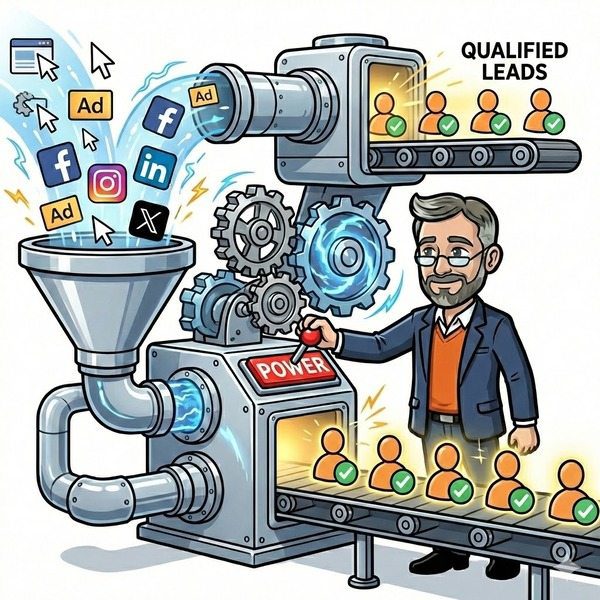
When individual deals are six or seven figures and the total addressable buyer pool is measured in thousands rather than millions, paid search and LinkedIn are precision tools rather than broad-reach channels.
Paid search campaigns should target queries like “warehouse automation ROI,” “automated warehouse design firms,” “AS/RS integrators in [region],” and competitor-aligned terms. Each campaign directs traffic to tightly aligned landing pages, not generic homepages. Cost per lead runs higher than most B2B categories, but lead value justifies the spend when qualification happens early.
LinkedIn and outbound sequences target job titles like Director of Distribution, VP Supply Chain, and Head of Logistics. Content offers include 2025 warehouse automation benchmarks, operational performance playbooks, and demand forecasting guides. A practical outbound sequence: first message points out 2024-2025 labor costs and space constraints with a specific data point; second message shares a case study showing throughput improvements; third message invites the prospect to a 30-minute automation strategy session. Sales-marketing alignment is important for following up with leads showing active buying signals, ensuring no high-intent prospect falls through the cracks.
Content That Actually Sells Automation Technology
Warehouse automation buyers do not need more buzzwords. They need clear explanations of risk, integration, timelines, and outcomes. Creating educational content is crucial for supporting long sales cycles in warehouse automation marketing.
Content types that move pipeline:
- “What Is Warehouse Automation?” guides that define automated storage and retrieval systems (AS/RS), conveyor and sortation systems, shuttle systems, automated guided vehicles, collaborative robots, and vision systems with operational context rather than dictionary definitions.
- Mid-funnel comparisons of different automated systems: AMR versus shuttle versus manual processes, with real throughput and labor data.
- WMS/WES integration deep dives explaining how a warehouse management system connects to robotic picking, automated packaging, and sortation systems at the PLC level.
- Operator-focused how-tos such as “Launching a phased automation program in an existing DC” covering receiving, put-away, picking, packing, replenishment, and returns.
- Board-ready ROI briefs showing CAPEX, payback period, risk mitigation, and operational costs for specific system types.
Content should address how digital automation uses software to minimize manual workflows. RFID technology (radio frequency identification) automates inventory tracking and data collection. Voice-directed picking systems improve order accuracy to 99.9%. Collaborative robots reduce walking time by 50% in warehouses. Automated storage and retrieval systems (AS/RS) enhance inventory management. Warehouse automation can achieve 85% space utilization efficiency. At peak capacity, automated warehouses can process 416,000 packages per hour.
Machine learning and artificial intelligence drive modern automated warehouses through slotting optimization, demand forecasting, computer vision for quality control, and predictive analytics for routing. Voice technology and mobile devices support manual-to-automated transition workflows. Content that explains how these work in practice differentiates your solution from competitors who list features without context.
CRM, Lead Nurturing, and Long-Cycle Sales Support
A warehouse automation deal often takes 9 to 24 months and passes through multiple champions and skeptics. Lead nurturing systems can help keep warehouse automation prospects engaged throughout these lengthy sales cycles. Automation can reduce labor costs associated with manual tasks, but proving that to a CFO takes patience and structured communication.
The CRM pipeline for automation should reflect real stages: discovery, data collection, design study, proposal, simulation, executive review, and implementation planning. Each stage maps to specific content and outreach. Lead nurturing campaigns segment by prospect type (3PL, retailer, manufacturer), deal size, technology interest (WMS versus full facility automation with automated workflows), and behavior triggers (case study downloads, ROI calculator usage, webinar attendance).
Attribution models must connect marketing touchpoints to revenue across long, multi-contact journeys. A case study downloaded in month two, a webinar attended in month seven, and an ROI calculator used in month twelve all contribute to the closed deal. Without multi-touch attribution, marketing’s contribution to automation investments stays invisible to leadership.
Measuring Marketing’s Impact on Operational Technology Sales
Leadership teams at warehouse automation companies want clear links between marketing spend and booked projects. Success metrics in warehouse automation should focus on the quality of leads and revenue impact, not impressions or click-through rates.
Key metrics to track:
| Metric | What It Measures |
|---|---|
| Marketing Qualified Accounts (MQA) | Accounts showing buying intent across multiple contacts |
| Opportunities in target verticals | Pipeline in food & beverage, pharma, 3PL, retail |
| Pipeline value | Dollar value of automation projects marketing influenced |
| Average sales cycle length | Time from first touch to closed deal |
| Win rate (marketing-involved) | Close rate on deals where marketing engaged early |
Multi-touch attribution across 6 to 18 months tracks content-assisted revenue, case study-assisted opportunities, and webinar follow-up performance. One automation vendor shifted its messaging in 2024 from “advanced robotics platform” to “operational performance gains: 92% accuracy improvement, $750K/year labor savings.” Pipeline value increased by 40% and average sales cycle dropped from 18 to 12 months. That is what measurable marketing impact looks like.
Common Marketing Mistakes Warehouse Automation Companies Make
These mistakes come from real-world automation vendors, not theory.
Relying solely on trade shows and RFPs. Trade shows cost $50K-$200K per event. Lead flow is unpredictable, and follow-up cycles drag. Build a parallel digital pipeline that generates inbound demand between events.
Websites that speak only in engineering jargon. A site full of specs about PLC integration and servo drive torque ratings fails to connect with the CFO or VP of Operations evaluating the initial investment. Rebuild key pages around business outcomes: labor costs reduced, throughput improvements achieved, space constraints solved.
Case studies with no baseline data. Without “before” metrics, a case study is an advertisement. Add order cycle time, picks per labor hour, mispick rate, and inventory control accuracy before automation. Then show the after.
Ignoring SEO for core terms. Many automation companies have weak organic presence. Research shows industrial automation firms in the robotics vertical hold a median of just 206 organic keywords. Building keyword-rich content by vertical and technology closes that gap over 6 to 12 months.
Generic messaging that ignores risk. Buyers worry about downtime, integration time, and transition periods. Training requirements for new systems are often underestimated; comprehensive training programs should be part of the implementation narrative. Address these concerns directly in marketing copy rather than pretending they do not exist.
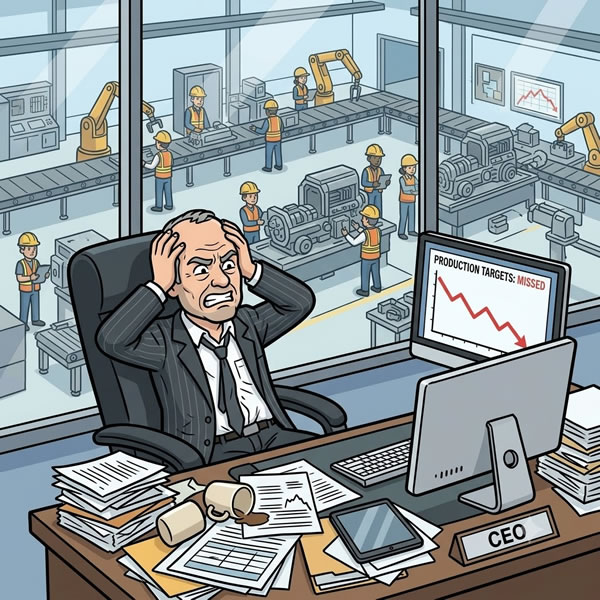
One integrator (anonymized) shifted messaging from “innovative robot features” to “92% accuracy improvement leading to $750K/year labor savings.” Their pipeline value increased 40% and sales cycle dropped by six months.
How to Choose the Right Warehouse Automation Marketing Agency
Many agencies claim industrial or B2B expertise but lack deep knowledge of automated warehouses and supply chain operations. The warehouse automation market includes global leaders like Daifuku, the world’s largest warehouse automation supplier by revenue, and Dematic, which generates US$3.2 billion in annual revenue. Specialists like Geek+ focus on goods-to-person and sorting AMRs. Vanderlande focuses on food retail and ecommerce automation. Swisslog is a major integrator of AutoStore systems. KNAPP is a pioneer in shuttle-based goods-to-person systems. Your agency must understand how to position against and alongside companies at this level.
Selection criteria that matter:
- Demonstrated experience with warehouse automation or material handling equipment brands, with case studies showing results for AS/RS, AMRs, or sortation systems
- Technical understanding of WMS, WES, automated sortation systems, and integration complexity with existing WMS and ERP platforms
- Ability to discuss operational performance metrics: throughput, accuracy, labor hours, space utilization
- Strong technical content creation for scalable solutions across multiple systems and multiple vendors
- Proven attribution and reporting practices connecting marketing to pipeline and revenue
- Comfort with long sales cycles and high-touch outbound aligned with sales teams
Questions to ask in a discovery call: “How would you market a new shuttle-based automated storage system to grocery DCs?” “How do you handle long, engineering-heavy sales cycles in your campaigns?” “What content do you build to support late-stage technical buyers?”
Seek a partner who talks confidently about both marketing tactics and automation project realities: integration timelines, commissioning, ramp-up, and operational readiness.
Why Choose Our Agency for Warehouse Automation Marketing
Our agency focuses on industrial and equipment marketing, with a large share of clients in warehouse automation, material handling equipment, and related sectors. We work with OEMs, integrators, and software vendors who sell automated storage, automated sortation systems, conveyor and sortation systems, and warehouse management system platforms. We understand the difference between an ai driven automation pitch and a proven technologies deployment story.
What sets us apart: we translate complex automation technology into financial and operational value that resonates with CFOs, operations directors, and supply chain VPs. We build revenue-linked reporting tied to pipeline and closed deals, not vanity metrics. Our services span SEO and AI search optimization (including ai powered search visibility), CRM and marketing automation implementations, paid campaigns focused on qualified opportunities, and content strategies that leverage automation expertise for competitive advantage.
One automation integrator came to us dependent on two annual trade shows for 70% of their pipeline. Over 18 months, we built an inbound content engine targeting key verticals, launched ABM campaigns on LinkedIn, and implemented a CRM pipeline with behavior-based nurturing. The result: trade show dependence dropped to 30% of pipeline, overall qualified opportunities increased by 55%, and average sales cycle shortened by four months. That is the kind of outcome we pursue for every client selling warehouse automation solutions in this rapidly evolving market.
Next Steps: Turn Your Warehouse Automation Expertise into Predictable Revenue

Your technology solves real problems: labor costs, space constraints, throughput bottlenecks, manual labor in repetitive tasks across distribution centers. The gap is not your product. It is whether the right decision-makers find you, understand your value, and move through evaluation fast enough to keep your pipeline full.
We invite you to schedule a strategy session where we review your current marketing, website, and pipeline for warehouse automation offerings. In that first conversation, we will cover your target markets (3PL, retail, manufacturing), audit your current messaging around warehouse automation and operational performance, and discuss realistic growth targets for the next 12 to 24 months.
Marketing is not fluff for companies selling warehouse automation. It is the missing system that connects your technology to the right decision-makers at the right time. If your pipeline depends on the next trade show or the next referral, reach out and let us build something more predictable. We help warehouse automation companies optimize warehouse operations, efficiently manage their go-to-market, and turn warehouse inventory of expertise into qualified, closeable revenue.
Warehouse Automation Marketing FAQs
These FAQs are based on real questions from warehouse automation executives between 2021 and 2026.
How is marketing for warehouse automation different from marketing standard SaaS?
Warehouse automation deals are multi-million-dollar, involve safety and operational risk, and require buy-in from cross-functional teams (operations, IT, finance, HR). A SaaS product typically sells to a single buyer with limited physical risk and shorter time to value. Marketing automation technology requires content that addresses integration complexity, downtime risk, labor costs, and operational disruption across the supply chain.
How long does it take to see results from a warehouse automation marketing program?
Lead indicators like content downloads, site traffic to key pages, and initial qualified inquiries appear in 3 to 6 months. Full revenue impact typically takes 9 to 18 months, matching the sales cycle of the underlying automation investments. ROI timelines for automation projects typically range from 18 months to 5 years, and the marketing must work within that reality.
Can marketing really influence complex, engineer-led automation sales?
Yes. Technical buyers still rely on external content (case studies, comparison guides, integration examples) to build internal business cases. Strong marketing equips champions with the ROI briefs and operational performance data they need to win executive approval. It shortens education time and reduces the number of calls sales engineers must make before a prospect reaches the proposal stage.
What role do case studies and ROI proofs play in warehouse automation marketing?
They are the central decision tools. CFOs and operations executives use them to evaluate payback periods, risk mitigation, and productivity gains across real facilities. Initial investment for AS/RS systems ranges from $1M to $5M. Annual ROI can be calculated as (annual net benefit / initial investment) x 100. Total cost of ownership includes integration fees and ongoing maintenance. Hidden costs can add up to 40% of the initial investment. Without this level of specificity, case studies lose credibility.
Do we need to invest in both SEO and paid ads for warehouse automation?
SEO captures steady demand over time for terms like “warehouse automation,” “automated storage systems,” and “warehouse management system integration.” Paid search and social accelerate reach into specific segments, regions, or competitive terms. Voice technology systems, for example, have a payback period of 12-24 months; content targeting that keyword captures buyers at the right stage. Both channels serve different functions, and cutting either leaves gaps in coverage.
How does a marketing agency work with our in-house engineers and sales team?
Through discovery workshops that extract technical knowledge, translating that into business outcomes buyers care about. The agency co-creates sales-enablement content, sets up feedback loops on lead quality from sales, and refines messaging based on which content drives efficient workflows in the sales process. Engineers provide the expertise; the agency turns it into pipeline.