
This guide is built for heavy equipment manufacturers, dealers, rental companies, and service providers looking for revenue-focused marketing strategies that produce real pipeline, not vanity metrics.
Table of Contents
Introduction: What a Heavy Equipment Marketing Agency Actually Does for Your Business
How Heavy Equipment Buyers Really Research Vendors in 2026
Where Heavy Equipment Marketing Usually Fails
Core Marketing Strategy for Heavy Equipment Companies
Search Engine Marketing: Owning the Research Phase
Content Marketing That Speaks Your Buyer’s Technical Language
Social Media Marketing and Email: Nurturing Long Sales Cycles
Website and Conversion Optimization for Heavy Equipment Companies
Choosing the Right Heavy Equipment Marketing Agency
What Heavy Equipment Clients Should Know Before Getting Started
Why Choose a Specialized Heavy Equipment Marketing Partner
Ready to Build a Heavy Equipment Marketing Strategy That Works?
FAQs About Heavy Equipment Marketing Agencies
Introduction: What a Heavy Equipment Marketing Agency Actually Does for Your Business
A heavy equipment marketing agency is a specialized B2B firm focused on promoting machinery across construction, mining, agriculture, material handling, waste, and other industries. It exists because generic digital marketing services fail this audience. Heavy machinery purchases typically involve multiple decision-makers and significant capital investment, and the marketing that supports those purchases needs to reflect that complexity.
Consider the difference between 2015 and today. A decade ago, a fleet manager looking for a 50-ton excavator or a 600 kW generator would flip through catalogs, call a dealer, or wait for the next trade show. In 2026, heavy equipment buyers increasingly research online before contacting vendors. They compare specs, read case studies, and even use AI tools to summarize vendor capabilities before picking up the phone. Digital marketing increases visibility for heavy equipment companies, but only if it speaks the technical language buyers expect.
A specialized equipment marketing agency focuses on what matters: more rental contracts, more machines sold, more service agreements, and stronger dealer networks. Nearly half of all businesses prioritize new customer acquisitions, but in the heavy equipment industry, customer acquisition without long-term relationships between manufacturers, dealers, and customers leads nowhere. Whether you’re an OEM, a heavy equipment dealer, a distributor, or a rental fleet provider, the right agency connects marketing activity directly to pipeline and revenue. This guide covers exactly how: from search engine marketing and content marketing to social media, email, outbound strategies, and what to look for in an equipment marketing agency.

How Heavy Equipment Buyers Really Research Vendors in 2026
Picture a fleet manager in Texas who needs four articulated dump trucks within two weeks. He opens Google on his phone, types a query, scans a few results, then asks ChatGPT to compare three manufacturers on payload, fuel economy, and dealer service coverage in his region. Within 30 minutes, he has a shortlist. If your company wasn’t visible in those results, you never existed.
This is the research phase for buyers across the heavy construction equipment market. Before making contact, they try to answer specific questions:
- Is this machine available in my service territory with local parts and service support?
- Does it fit my application (terrain, duty cycle, emissions compliance)?
- What are the total cost of ownership, financing, and rental terms?
- What certifications, safety record, and warranty does the vendor offer?
The people doing this research span several roles. Fleet managers care about uptime and cost per hour. Construction superintendents need delivery timelines and site fit. Plant or maintenance managers evaluate safety standards and repair access. Procurement leaders at mining or industrial companies run formal vendor risk assessments before approving large capital purchases.
What ties them all together is comparison behavior. Buyers open multiple tabs, sometimes with AI-generated summaries alongside vendor websites. If your site is vague, missing equipment specifications, or unclear about where you operate, you get filtered out before a conversation ever starts. Search engines and AI models increasingly surface companies with detailed spec sheets, case studies, and clear service regions. Structured, information-rich content is no longer optional.
Where Heavy Equipment Marketing Usually Fails
Most heavy equipment companies have strong word of mouth and solid dealer relationships. But when inbound leads stall and the website collects dust, it’s usually because of avoidable mistakes. Here are the patterns that show up again and again:
- Equipment listed without specs. Pages that say “powerful” and “reliable” without showing capacity, emissions data, attachments, or duty cycles. Buyers need numbers, not adjectives.
- Unclear service territory. If a potential customer can’t tell whether you serve their region, they move on.
- Certifications missing or buried. Safety standards, emissions compliance, and quality certifications should be visible upfront, not hidden in a PDF three clicks deep.
- No application-specific content. A wheel loader page that doesn’t explain how it performs in quarry, landfill, or roadbuilding applications misses the buyer’s real question.
- Weak visibility on search engines. If you don’t rank for your own model names combined with location and application terms, competitors fill the gap.
- Social media that looks like a brochure feed. Just product photos with no real jobsite context, operator stories, or measurable project outcomes.
- Underestimating long sales cycles. Heavy equipment deals often take 30 to 180 days or more. Without consistent nurturing content and follow-up, leads go cold between the first visit and the final purchase decision.
A specialized equipment marketing agency is designed to reverse these issues by treating your digital presence as a qualification tool, not an online brochure.
Core Marketing Strategy for Heavy Equipment Companies
A marketing strategy for a heavy equipment business must start from revenue goals, not channels. Instead of asking “should we do more Google Ads?” the first question should be: “Do we want to increase skid steer rentals by 20% in the Midwest by Q4 2027, or add 30 qualified leads per month for a new wheel loader line?” Customized marketing strategies are necessary due to the complexity of equipment specifications and buyer intent.
A practical framework looks like this:
- Diagnose: Audit your website, search rankings, content assets, dealer network, and historical sales data. Identify gaps.
- Design: Map heavy equipment digital marketing strategies to product lines, geographies, buyer personas, and sales stages. Define KPIs like quote requests, demo bookings, rental reservations, and RFQ submissions.
- Deploy: Launch campaigns, publish content, improve SEO, activate paid advertising, and enable dealers.
- Optimize: Use analytics and CRM feedback to shift budget toward what produces pipeline and closed revenue.
Agencies target niche buyers such as contractors and fleet managers to optimize marketing budgets. A focus on reaching qualified opportunities, rather than just generating leads, enhances marketing effectiveness. Integrated marketing strategies combine digital tactics with traditional outreach like trade shows and field demos.
In the first 60 to 90 days of working with a heavy equipment marketing agency, expect to define target segments and geographies, prioritize product lines, set measurement plans, and integrate tracking with your CRM. One example: RPM Machinery used this approach to generate $2.5 million in marketing-attributable revenue with a return on ad spend of roughly 11.5×.
Search Engine Marketing: Owning the Research Phase
Search engine marketing is often the highest-ROI channel for heavy equipment companies because it captures buyers already searching for specific machines and services. When someone types “crawler crane rental Houston” or “aggregate crusher manufacturer Midwest,” they’re signaling real intent.
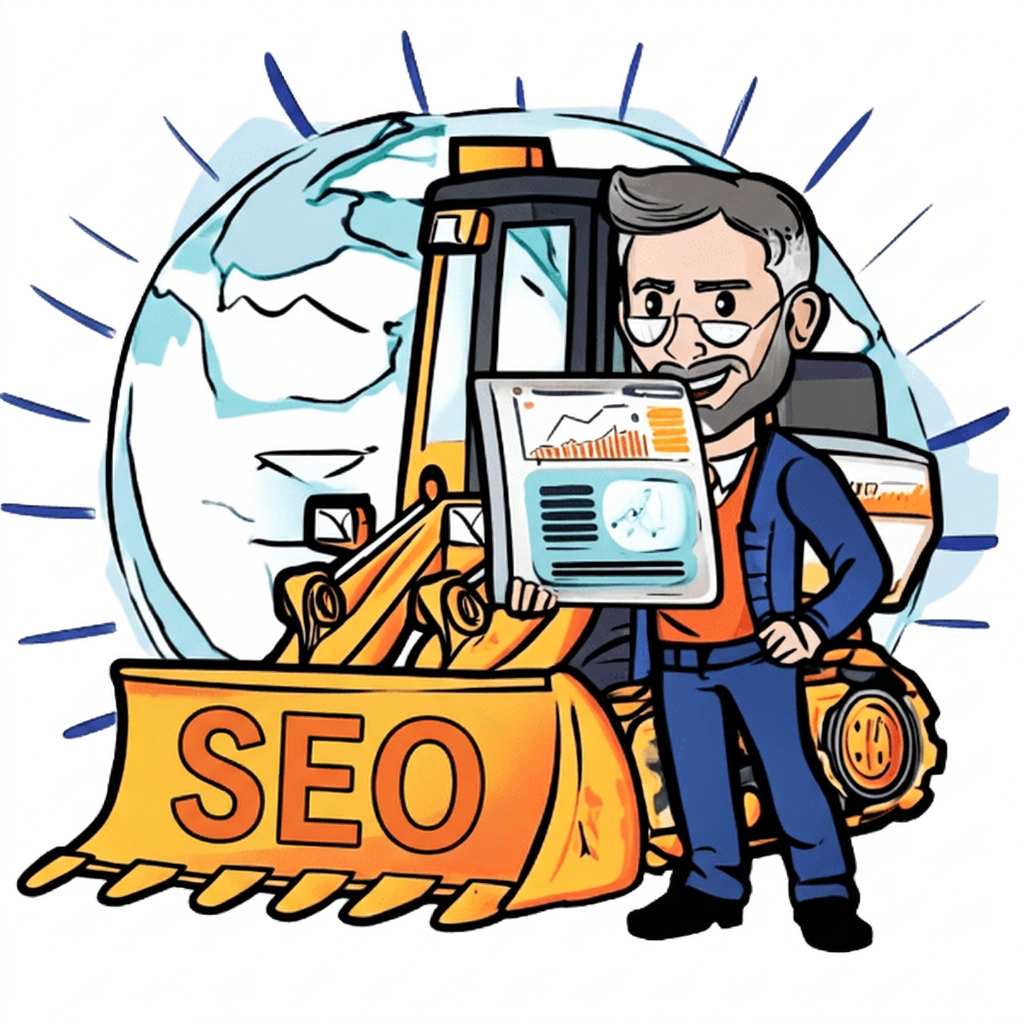
Search engine optimization is the foundation. SEO remains widely used among smaller businesses: BrightLocal’s 2025 research found that 89% of surveyed SMBs invested in SEO, while the same proportion invested in local SEO. SEO helps heavy equipment dealers capture high-intent traffic by targeting queries that combine product, location, and application. Effective SEO increases visibility in local search results, which is critical for dealers and rental companies with defined territories. Industrial equipment SEO should focus on detailed equipment pages with full specs, application pages by industry, location pages for each service territory, and technical content that answers niche questions. Companies with optimized Google Business Profile listings attract more leads, making local SEO a priority for any heavy equipment dealer or rental company.
Paid search delivers faster results. PPC ads average a return of $2 for every $1 spent, but heavy equipment campaigns require discipline: structure campaigns by product line and region, use negative keywords to filter unqualified clicks, add call extensions and lead forms, and build landing pages with clear CTAs like “Request a Quote” or “Check Availability.” A competent agency connects SEM performance to real outcomes—dealer inquiries, rental reservations, parts and service requests—not just click-through rates.
Content Marketing That Speaks Your Buyer’s Technical Language
Content marketing establishes authority in the heavy equipment sector. Before a sales conversation happens, your content is the proof of capability that convinces engineers, safety managers, and finance teams to put you on the shortlist. Content marketing must address the detailed specifications that heavy equipment buyers expect before engaging sales. Technical literacy is essential for content creators in heavy equipment marketing to translate engineering data into language that resonates with fleet managers, superintendents, and procurement leaders.
Key content types that move the needle:
- Detailed spec sheets with performance curves, fuel and emissions data, duty cycles, and attachment compatibility.
- Application guides by industry: roadbuilding, landfill, quarry, warehouse automation, mining.
- Case studies structured around real projects: year, location, equipment used, problem, solution, and measurable outcomes like reduced downtime or fuel savings.
- Maintenance articles and safety explainers that demonstrate service expertise.
- ROI calculators or TCO comparisons that help buyers justify the purchase internally.
Content marketing includes blogs, whitepapers, and videos for education, and nearly half of businesses using content marketing prefer blogging as their primary format. Engaging content drives brand awareness and sales in heavy equipment when it reflects real-world usage from recent projects rather than generic stock scenarios. Heavy equipment marketing agencies build brand credibility through educational content and case studies. Technical content creation is crucial for appealing to fleet managers and contractors who need specifics, not slogans.
Social Media Marketing and Email: Nurturing Long Sales Cycles
While heavy equipment is a serious B2B purchase, buyers still spend time on LinkedIn, YouTube, and occasionally Facebook and Instagram. Social media marketing helps heavy equipment companies reach new customers and keeps your brand visible between the moment a buyer first notices you and the day they finally sign a purchase order.
Effective social media marketing for heavy equipment should include:
- Short project videos of machines at work on real jobsites from 2023 to 2026
- Before-and-after site transformation photos
- Operator tips and safety highlights
- New machine walk-throughs and field tests
- Tagged locations and partner shout-outs to contractors and rental partners
Engaging content on social media can showcase heavy equipment in action, and social media advertising allows targeting specific demographics effectively. Social media marketing can enhance brand reputation and recognition across the heavy equipment industry. Agencies also help businesses recruit skilled talent through improved employer branding and digital presence.
For email marketing, segment newsletters for owners, fleet managers, and service managers. Cover maintenance reminders, new model launches, seasonal rental promotions, and trade-show follow-up sequences. Marketing automation is critical for managing leads during the lengthy decision cycles in heavy machinery purchases. Long sales cycles in heavy equipment often require lead nurturing and CRM integration strategies, and an equipment marketing agency should help set up workflows that nurture leads for months across multiple quarters or fiscal years.
Website and Conversion Optimization for Heavy Equipment Companies
Your website must act as a digital sales engineer. It needs to quickly tell visitors what you offer, where you operate, and why you’re a safer, more capable choice than competitors. Website design strongly influences perceived credibility; Stanford research found that visual design factors were the most frequently cited considerations when people evaluated a site’s credibility. If your site looks like it was built in 2012, potential customers will question whether your equipment and service are current, too. Agencies focus on optimizing websites to help customers easily find equipment information and services.
Essential elements:
- Clear navigation by equipment type and industry application
- Prominent service territory maps or dealer locator listings
- Downloadable spec PDFs and high-resolution images or video
- Visible certifications and safety badges with issuer information
- Fast paths to “Check Availability,” “Request a Quote,” or “Find a Dealer”
- Accessible phone, chat, and mobile friendly contact options
Mobile usability matters more than most equipment companies realize. Superintendents and project managers research from phones and tablets on jobsites. Page speed and simple forms with few fields reduce friction and increase website visits that convert.
For conversion rate optimization, A/B test CTA placement, quote form layouts, and copy around value propositions like uptime guarantees, response times, and safety records. Track which pages drive the most qualified leads. A heavy equipment marketing agency should connect website analytics with CRM data so leadership can see which channels and pages generate closed deals, not just traffic.
Choosing the Right Heavy Equipment Marketing Agency
Many agencies claim B2B expertise, but few have hands-on experience with heavy equipment, long RFQ processes, and dealer networks. Here’s what to evaluate:
- Demonstrated work with heavy equipment manufacturers, construction equipment companies, or equipment dealers
- Understanding of long, technical sales cycles and how industrial equipment manufacturers sell through demos, bids, and RFPs
- Ability to discuss equipment specifications, applications, and service models fluently
- Willingness to tie their work to pipeline and revenue, not impressions
Ask for case studies with concrete metrics: qualified demo request increases, rental inquiry growth in a target state, or higher parts and service renewal rates. Ask how they handle multi-location SEO, how they support dealers, how they report performance, and how they integrate with existing CRM or ERP systems. Favor deep industrial and equipment expertise over flashy creative with no track record in the heavy equipment sector.
What Heavy Equipment Clients Should Know Before Getting Started
Marketing success depends as much on client readiness as on agency skill. Before engaging an agency, prepare by:
- Clarifying target markets and priority product lines
- Aligning sales team goals with marketing objectives
- Gathering existing assets: spec sheets, brochures, photos, videos, and case studies
- Ensuring access to your website CMS, analytics, and CRM
Expect a discovery phase covering buyer personas (fleet manager, superintendent, plant engineer, purchasing leader), historical sales data from 2021 to 2025, and current win/loss insights. Identify internal subject-matter experts—service managers, application engineers, senior sales reps—who can provide stories and technical input for content marketing.
You don’t need everything perfect on day one. But the more transparent and collaborative you are, the faster your heavy equipment marketing efforts produce measurable results.
Why Choose a Specialized Heavy Equipment Marketing Partner
Working with a team that already understands construction equipment, mining machinery, agricultural equipment, and material handling eliminates the months of ramp-up that a generalist agency needs. A specialized partner brings:
- Proven results with heavy equipment manufacturers, industrial equipment manufacturers, and equipment suppliers
- Comfort with technical content that fleet managers and engineers actually read
- Alignment with sales teams and dealer networks, not just a marketing silo
- A focus on pipeline and revenue rather than vanity metrics like impressions or follower counts
A strong equipment marketing agency collaborates directly with leadership, sales, and service teams. It manages complex B2B funnels, long buying cycles, and multifaceted equipment portfolios that span sales, rental, and service. This is not a full service agency that dabbles in equipment on the side. Specialized heavy equipment marketing expertise is a competitive advantage that compounds over time. Web design, technical audits, sales enablement, and lead generation all perform better when the team behind them knows the difference between a track loader and a skid steer.
Ready to Build a Heavy Equipment Marketing Strategy That Works?
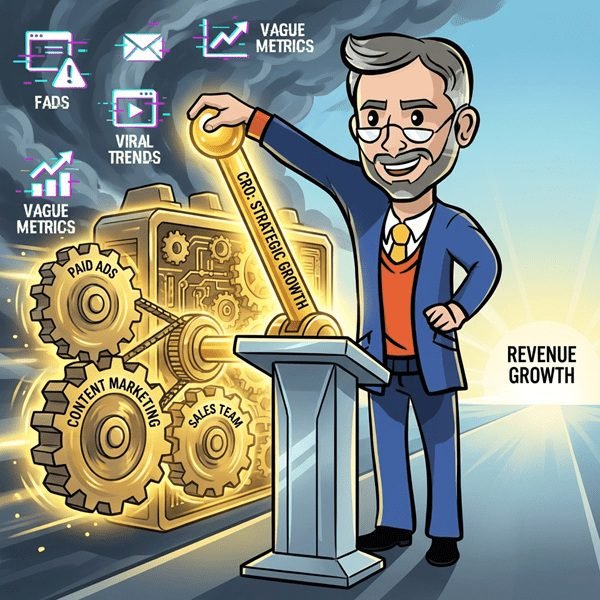
Heavy equipment marketing must be precise, transparent, and aligned to how buyers research today. The companies gaining ground in 2026 are the ones whose digital presence answers technical questions, proves regional service capability, and makes it easy for potential customers to take the next step. A specialized heavy equipment marketing agency accelerates that shift.
Start by auditing your current website and digital presence. Clarify your revenue goals and the priority machines or services you want to push. Then schedule a conversation with a team that understands your equipment business, your sales cycle, and the pressure to turn marketing into measurable business growth.
The goal is not more traffic. It’s more qualified opportunities for sales, rentals, and service across your heavy equipment portfolio. Partner with experts who know this industry, respect the complexity of your company and your buyers, and deliver the measurable results that justify every dollar you invest.
FAQs About Heavy Equipment Marketing Agencies
How is a heavy equipment marketing agency different from a general B2B agency?
A specialized agency understands specs, load charts, duty cycles, service contracts, dealer agreements, and safety regulations. This industry fluency shortens onboarding and produces better messaging. Specialized agencies know how heavy equipment manufacturers and dealers sell—through demos, bids, municipal RFPs, and large infrastructure projects—and tailor marketing strategies accordingly. A general B2B shop may treat machines like generic products, missing the application nuances that actually drive deals. A distinct brand identity in this space requires more than surface-level creative work.
How long does it take to see results from heavy equipment marketing?
Expect 60 to 90 days to stabilize campaigns and fix major website issues. SEO and content marketing gains typically solidify in three to six months. Full pipeline impact on large capital equipment usually takes 6 to 12 months. Faster wins come from paid advertising campaigns, retargeting, and basic conversion fixes. Longer-term plays include authority-building content and improved search rankings for high-value terms. If your average deal closes in 90 to 180 days, marketing impact on booked revenue will logically lag initial lead improvements. Long term success requires patience matched with consistent execution.
Which marketing channels work best for heavy equipment companies?
Search engine marketing (SEO and PPC) captures the highest-intent traffic. Content marketing builds trust with a specific audience of engineers and procurement leaders. Email marketing and marketing automation nurture leads across long cycles. Social media—especially LinkedIn and YouTube—supports awareness and trust. Trade shows, field demos, and local businesses relationships still matter, but a modern strategy uses digital channels to warm prospects before events and continue helping businesses after. The best mix depends on whether you focus on manufacturing, distribution, rental, or service, and on your target geographies. Traditional marketing methods alone no longer deliver the pipeline that equipment companies from other industries have come to expect.
How do you measure ROI on heavy equipment marketing?
Tracking data and ROI in marketing is essential for verifying contribution to sales and revenue from campaigns. Connect website forms, calls, and chat to a CRM. Tag campaigns and report on opportunities and revenue influenced by each marketing strategy. Typical KPIs include qualified leads by product line, quote and demo requests, rental inquiries, cost per opportunity, and marketing-sourced revenue. Only 15% of marketers measure success by leads generated—most still rely on softer metrics. Proper attribution across long, multi-touch sales cycles is crucial, and a capable agency helps set up dashboards that your sales team and leadership actually use to make decisions.
Can a heavy equipment marketing agency support dealer networks and distributors?
The right agency builds dealer locator tools, co-branded campaigns, template landing pages, and shared content libraries that help equipment dealers market more effectively in their local markets. Support includes regional campaigns, localized search engine marketing, Google Business Profile optimization, and training or playbooks that help dealers align with the manufacturer’s broader brand. This approach improves consistency, lead quality, and reporting across dealers, which is critical for growth planning across construction equipment businesses and rental companies.
Is heavy equipment social media marketing really worth it?
Social media marketing rarely generates immediate million-dollar purchases, but it builds trust and ongoing visibility with operators, foremen, and managers spending time on these platforms daily. Focus on real machines at work, project outcomes, operator stories, and safety culture rather than generic promotional posts. When combined with strong content and search engine visibility, social media keeps your brand in the conversation when buyers build shortlists. It also supports employer branding and helps generate leads indirectly by reinforcing credibility that buyers confirm during their research phase.