

This guide covers strategy, execution, realistic timelines, and frequently asked questions for OEMs, dealers, rental fleets, and distributors ready to turn search into a revenue channel.
Table of Contents
Introduction: Why Heavy Equipment SEO Matters More Than Ever in 2026
How Heavy Equipment Buyers Actually Use Search Engines
Three Core Stages of the Heavy Equipment Buying Journey
The Competition Problem: OEMs, Marketplaces, and How Smaller Brands Can Still Win
Designing an SEO Strategy for Heavy Equipment and Industrial Companies
Keyword Research for Heavy Equipment: From High Intent Keywords to Spec-Based Searches
Local SEO for Dealers, Rental Yards, and Service Locations
Building Content That Matches How Industrial Buyers Research
Technical SEO for Large Equipment Catalogs and Dealer Sites
Using Data, AI, and Marketing Channels Around SEO (SEM, Social Media Marketing, Email)
Key Factors That Determine SEO Results for Heavy Equipment Companies
When SEO Is the Right Investment vs. Paid Ads, Trade Shows, and Referrals
Common Heavy Equipment SEO Mistakes (and How to Avoid Them)
Why Choose a Specialized Heavy Equipment SEO Partner
Next Steps: Turning Heavy Equipment SEO into Predictable Revenue
FAQs About Heavy Equipment SEO
Introduction: Why Heavy Equipment SEO Matters More Than Ever in 2026
Most equipment research now starts on search engines, AI Overviews, and generative tools like ChatGPT and Perplexity. A significant number of B2B researchers use search to research purchases, and the heavy equipment industry is no exception. Buyers compare three to four vendors before picking up the phone, and if your website isn’t in that shortlist, your sales team never gets the chance to compete.
Heavy equipment SEO is fundamentally different from general digital marketing. Heavy equipment sales and rentals involve high-dollar values, long B2B buyer journeys that stretch six to eighteen months, and deeply technical specifications that must be accurate down to the operating weight and fuel burn rate. Generic SEO tactics may not be effective for heavy equipment businesses operating in this environment.
This article is written specifically for industrial companies: OEMs, dealers, rental fleets, and distributors. You will learn how to improve lead quality, not just traffic, by targeting high intent keywords and local SEO. Because in this space, qualitative leads and conversions are more important than traffic volume.
How Heavy Equipment Buyers Actually Use Search Engines
The path from first Google search to signed purchase order is long and nonlinear. A fleet manager might start with a query like “best 30 ton excavator for pipeline work,” spend a week reading spec sheets, compare fuel consumption across brands, then search for a local dealer who can arrange a demo and financing.
Heavy equipment purchases involve extensive research and comparisons before buying. Buyers look for load capacity, operating weight, fuel burn, telematics integration, financing options, and service intervals. They perform ten to twenty searches across weeks or months, and the search behavior often involves multiple stakeholders: project managers, fleet managers, and finance teams each running their own queries.
Here is the critical point for heavy equipment companies: most of this research happens before the sales team ever receives a call or RFQ. Successful SEO captures users when they are actively searching, meeting them at the moment they need answers, not after they have already chosen a competitor.

Three Core Stages of the Heavy Equipment Buying Journey
SEO for heavy equipment must align content with three distinct stages of the buying journey, because each stage uses different keywords and demands different content.
Awareness stage. Buyers search broad, problem-defining queries: “how to size a wheel loader for quarry production,” “rental vs purchase bulldozer,” or “difference between tier 4 vs tier 4-f engines.” Publish educational content to attract buyers at this stage. Guides, explainer articles, and short-form video content work well here.
Consideration stage. Queries become brand- and model-specific. Buyers compare options: “Komatsu PC210 vs Cat 320 fuel consumption,” “budget comparison new vs used wheel loader.” Create comparison guides for buyers in the consideration stage, including side-by-side specs, total cost of ownership analysis, and attachment compatibility.
Decision stage. Buyers at the decision stage know precisely what machinery they need. Searches reflect urgency and commercial intent: “Caterpillar 320 GC excavator for sale in Dallas,” “crane rental near me,” “telehandler dealership near me with service.” Product pages, RFQ forms, and location-specific landing pages convert these searches into deals.
The Competition Problem: OEMs, Marketplaces, and How Smaller Brands Can Still Win
Broad terms like “excavator for sale” are dominated by OEMs and marketplaces with millions of monthly organic visits. A term like “heavy equipment for sale” generates over 200,000 monthly searches globally, but the competition from national aggregators makes it nearly impossible for a regional dealer to crack the first page.
Meanwhile, 96.55 percent of pages receive no organic traffic from Google at all. That stat cuts both ways: most of your competitors’ pages are invisible too, which means a focused SEO strategy that targets niche angles can leapfrog generic competition.
Instead of chasing vanity traffic, industrial equipment companies should focus on model-specific, industry-specific, and geo-specific terms:
- “Used Volvo L90H wheel loader Denver”
- “Asphalt milling machine rental Nashville TN”
- “Underground mining scooptram service Nevada”
- “Electric warehouse forklift for food processing“
A focused heavy equipment SEO strategy built around these terms improves lead quality and ROI because it attracts buyers who are ready to act, not casual browsers.
Designing an SEO Strategy for Heavy Equipment and Industrial Companies
Think of SEO strategy as a twelve- to eighteen-month roadmap tied directly to pipeline and revenue, not a marketing experiment.
Start by aligning SEO goals with sales priorities. Are you trying to move new machines, increase rental utilization, sell parts, or grow service contracts? Each goal requires different keyword targeting and page types. Map high intent keywords to specific funnel stages and assign them to the right page types: product pages for decision-stage searches, service pages for maintenance and repair queries, landing pages for geographic targeting, and resource content for awareness-stage education.
Prioritize around specific models, applications (quarry, roadbuilding, agriculture, demolition), and locations. Integration with CRM and advanced analytics is essential so that closed deals can be traced back to the specific pages and queries that started the conversation. When your marketing efforts connect to revenue attribution, you can invest with confidence.
Keyword Research for Heavy Equipment: From High Intent Keywords to Spec-Based Searches
Keyword research for equipment companies must go beyond generic volume metrics. Many businesses target low-value keywords instead of high intent ones, wasting months of SEO efforts on terms that generate traffic but no pipeline.
Model-specific keywords convert better than general terms. Target long-tail keywords focused on specific model numbers and capabilities:
- “Boom lift rental Charlotte 60 ft”
- “Tracked crusher for sale Ontario”
- “Forklift fleet maintenance contract Houston”
- “2024 John Deere P-Tier excavator specs”
Spec and application-based phrases are equally valuable: “15 ton rough terrain crane,” “low ground pressure dozer for wetlands,” and “electric warehouse forklift for food processing” all signal a buyer who has done their homework.
Group terms by model, industry, and geography to build keyword clusters instead of isolated pages. Targeted intent keywords indicate strong interest and readiness to act, so structure your content creation around those clusters to generate high quality leads rather than empty traffic.
Local SEO for Dealers, Rental Yards, and Service Locations
Local SEO is often the highest-converting channel for heavy equipment dealers and rental providers. Contractors frequently search near a job site or depot, and proximity matters for delivery logistics, emergency service, and parts availability. Local SEO drives geographically relevant leads that convert faster because they match immediate, real-world needs.
Google Business Profile optimization drives geographically relevant leads. Manage local listings and optimize your profiles with correct categories (equipment dealer, equipment rental, repair service), accurate service areas, current photos, hours, and detailed service offerings.
Each dealership branch should have its own dedicated landing page with location-specific content: inventory highlights, service capabilities, staff contacts, and directions. This approach supports local visibility for field-driven searches like “hydraulic breaker repair near me” or “telehandler rental today.”
Consistent NAP (name, address, phone) data across platforms is foundational for local SEO. Ensure accuracy in industry directories, manufacturer “find a dealer” listings, and directory listings across the web. Local SEO helps local businesses appear in nearby searches and map pack results, which often outperform organic listings for equipment-related queries. Optimize for local SEO for regional job site searches to capture contractors in the field. Before you bring in help with search, see what to expect from a marketing agency for equipment manufacturers.
Building Content That Matches How Industrial Buyers Research
Content for the heavy equipment industry must be technical, practical, and written in the language of operators and fleet managers. Publishing only promotional content limits audience engagement. Instead, build your content marketing around what buyers actually need at each stage.
Key page types include:
- Detailed product pages with complete technical specifications, compatible attachments, and common failure modes
- Application pages for specific use cases (bridge construction, mining, recycling, food processing)
- Comparison guides with side-by-side spec tables
- TCO calculators and maintenance checklists
- Case studies with real projects, dates, and outcomes
Publishing detailed technical content increases authority and trust. Educational content fosters long-term buyer trust and credibility, especially during six- to eighteen-month purchase cycles where the buyer returns to your site multiple times.
Seventy percent of B2B buyers watch videos during the purchase path, and videos can enhance engagement and demonstrate equipment value in ways that photos and text alone cannot. Demo walkarounds, operator tips, and project recaps work well across heavy equipment websites and social media posts.
Structure content with clear headings, bullet lists, and FAQs so it serves both human readers and search engines. This content quality signals relevance for organic search and increases the likelihood of appearing in AI-generated summaries.
Technical SEO for Large Equipment Catalogs and Dealer Sites
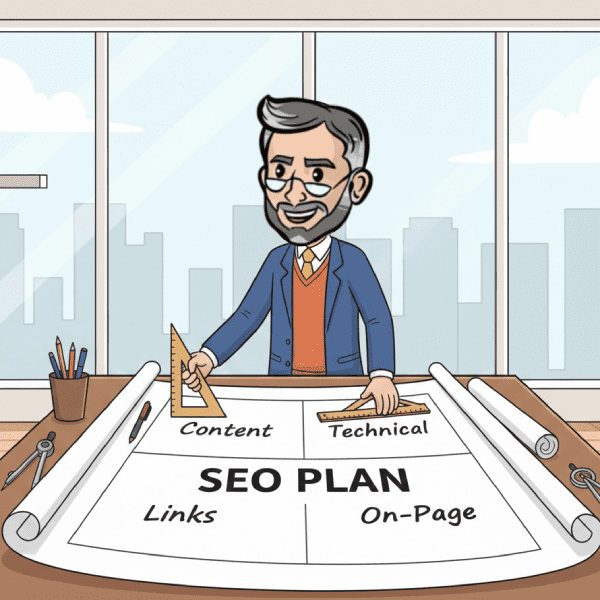
Many heavy equipment websites struggle with crawl issues, slow page loads, and duplicate manufacturer content. Poor website structure hinders search engine crawling and ranking, and these technical problems often block results long before content becomes a factor.
For sites with hundreds or thousands of SKUs, implement clean site architecture to enhance inventory visibility:
- Clear category hierarchy across multiple categories (excavators, loaders, cranes, attachments)
- Proper facet filtering that doesn’t create thousands of duplicate URLs
- Pagination rules that allow search engines to crawl deep into inventory pages
Core Web Vitals targets matter: LCP under 2.5 seconds, INP under 200 milliseconds, CLS under 0.1, especially on inventory and search results pages. User experience must be mobile-first and fast for equipment searches, since field buyers and project managers check options from tablets and phones on site.
Handle inventory changes properly: use canonical tags and noindex rules for sold units, and apply structured data (Product, LocalBusiness) to active listings. Implementing structured data helps improve search visibility and supports rich results in both traditional and AI-powered search. Avoid duplicating manufacturer text for product descriptions. Replace boilerplate OEM copy with unique, value-adding content tailored to your target audience.
Using Data, AI, and Marketing Channels Around SEO (SEM, Social Media Marketing, Email)
Organic search works best when combined with paid search, remarketing, social media marketing, and email nurturing for more predictable demand.
Use paid search (SEM) for extremely competitive transactional queries where SEO hasn’t yet gained traction, like “crane rental Chicago same day” or “excavator financing.” CPCs in the heavy equipment space can reach thirty to fifty dollars per click for high intent searches, making long-term SEO investment critical to reducing acquisition costs.
Social channels like LinkedIn and YouTube amplify SEO content. Share demo videos, operator tips, and project recaps as social media posts to build brand awareness and drive traffic back to optimized pages. AI SEO tools help with clustering keywords, identifying content gaps, and analyzing which topics generate the best lead quality.
Tie SEO activity to email nurturing for long sales cycles: downloadable spec sheets, inspection checklists, and financing guides keep your brand in front of heavy equipment buyers throughout their research process. This combination of digital marketing strategies creates multiple touchpoints across months-long buying journeys.
Key Factors That Determine SEO Results for Heavy Equipment Companies
The same SEO checklist yields different results depending on several critical variables:
- Keyword specificity and buyer intent: Targeting “30 ton articulated truck rental Phoenix” outperforms “trucks for sale” every time
- Technical accuracy and depth of content: Equipment specs must be correct, detailed, and current
- Authority signals: High-authority backlinks from trade publications, operator forums, and industry sources enhance domain credibility for heavy equipment sites
- Freshness: Remove sold units, update financing offers, add 2026 model-year changes, and refresh case studies quarterly
Analytics should track meaningful engagement metrics tied to business outcomes: RFQ submissions, phone calls, demo requests, and closed revenue, not just pageviews. A generic “equipment for sale” page will always underperform a cluster of model-specific, location-optimized pages with real equipment specs and photos.
SEO is not a one-time project. Treat it like ongoing operational maintenance, similar to fleet service intervals. Regular updates signal relevance to search engines and keep your online visibility strong in competitive markets.
When SEO Is the Right Investment vs. Paid Ads, Trade Shows, and Referrals
Digital marketing increases sales more than traditional methods for most heavy equipment businesses, but SEO is a long game. SEO can take three to six months to show noticeable results, with more predictable lead flow arriving at nine to eighteen months for competitive segments.
SEO makes the most sense when you are:
- Launching into a new territory or adding a product line
- Rebuilding an aging website that generates little organic visibility
- Over-reliant on a single channel (trade shows, one OEM relationship, referrals)
- Looking to stabilize deal flow between seasonal spikes in the construction industry or agriculture
Digital marketing is often more cost-effective than traditional marketing over time. The right approach is usually a hybrid: an SEO foundation for long-term compounding returns, targeted PPC on the most competitive high intent keywords to capture immediate demand, and retargeting plus outbound prospecting to maximize touchpoints across the funnel.
Common Heavy Equipment SEO Mistakes (and How to Avoid Them)
Use this as a checklist to self-diagnose underperforming SEO efforts:
- Bundling all inventory onto one page. This is damaging. Create dedicated pages for each equipment category and core models to improve keyword targeting and relevance.
- Ignoring local SEO and Google Business Profile. Ignoring local SEO leads to missed high-converting traffic from “near me” and map-pack searches that your competitors are capturing.
- Copying manufacturer descriptions word for word. Duplicate content gets devalued by search engines. Rewrite specs with localized value and application context.
- Slow, clunky mobile experience. Heavy equipment sites often perform poorly on mobile devices, driving away field buyers and project managers checking options from a job site.
- Targeting low-value keywords. Chasing broad terms that bring unqualified traffic wastes your digital marketing services budget and frustrates the sales team.
- Publishing only promotional content. Mix in educational guides, comparison content, and technical resources to attract buyers across all funnel stages.
Why Choose a Specialized Heavy Equipment SEO Partner
Heavy equipment marketing demands a partner that understands industrial decision cycles, technical language, and the OEM-dealer-rental ecosystem. A generalist SEO agency rarely grasps how rental utilization targets, dealer network dynamics, and capital equipment sales cycles shape the right SEO strategies.
At Pro Equipment Marketing, we translate complex specs and engineering language into search-friendly, buyer-friendly content that ranks and converts. Our digital marketing services integrate SEO with outbound prospecting, CRM setup, marketing automation, and revenue attribution, so you see how search engine rankings connect to closed deals, not just traffic dashboards. We report on pipeline and revenue because that is what matters to owners, presidents, and sales leaders responsible for growth.
Next Steps: Turning Heavy Equipment SEO into Predictable Revenue
The heavy equipment companies winning in 2026 are treating SEO as a revenue system: high intent keywords, local SEO dominance, technically accurate content, and ongoing site maintenance working together to generate leads month after month.
Here is a simple thirty- to sixty-day action plan:
- Audit your current site for technical issues, duplicate content, and missing location pages
- Map your highest-value keywords to existing pages and identify gaps
- Prioritize the top ten revenue-driving opportunities based on search volume, intent, and your margins
- Build an internal rhythm: monthly content releases, quarterly technical reviews, and ongoing Google Business Profile updates
If you are ready to turn your website into a predictable source of qualified leads and revenue, reach out to Pro Equipment Marketing. Request a site audit, discuss your current strategy, or let us build a revenue-focused SEO roadmap designed for the way heavy equipment buyers actually search in 2026.

FAQs About Heavy Equipment SEO
These answers address the most common questions from equipment manufacturers, dealers, and rental providers evaluating search engine optimization as a revenue channel.
How long does heavy equipment SEO take to generate real opportunities?
Expect one to three months of groundwork (technical fixes, site structure, initial content). Ranking shifts typically appear at three to six months. Consistent qualified leads and measurable pipeline impact usually arrive at six to twelve months. In highly competitive metro areas or for national heavy equipment manufacturers competing against major OEMs and marketplaces, category dominance can take twelve to eighteen months. Speed depends on your current domain authority, content volume, and the strength of your competition.
Do heavy equipment companies really need separate pages for each model?
Yes, for core models and high-revenue machines. Dedicated pages for each equipment model improve keyword targeting by allowing deeper specs, photos, application notes, and calls-to-action like “request quote” or “schedule demo.” For low-volume models with minimal search demand, grouping them into category pages is efficient. The goal is to match the page structure to how buyers search, not to your internal inventory database.
What kind of keywords produce the best lead quality for equipment companies?
High intent keywords that combine model, application, and location produce the strongest results: “2024 skid steer rental for snow removal Cleveland,” “hydraulic excavator service contract Houston.” Focus on terms tied to clear commercial intent: “for sale,” “for rent,” “dealer,” “service,” “repair,” “financing.” Informational queries like “how to choose the right compactor for asphalt” are valuable for early-funnel content marketing and generate leads over time through nurturing.
How important is local SEO for dealers and rental providers?
For most dealers, rentals, and service shops, local SEO drives the majority of profitable deals. Contractors search near job sites or depots: “dozer rental Phoenix AZ,” “emergency excavator repair near me.” Strong Google Business Profiles, authentic reviews, and dedicated location pages can outrank national players for local queries. Local SEO ensures visibility for contractors looking for nearby machinery or services.
Can SEO help with used equipment, parts, and service contracts?
SEO is highly effective for used machines, parts, rebuilds, and long-term maintenance agreements. Create dedicated sections for used inventory, OEM and aftermarket parts, and service programs with clear, search-focused language. Example queries that generate qualified inquiries: “used articulated truck 40 ton,” “hydraulic hose repair 24/7,” “loader undercarriage rebuild Dallas.”
How do AI search and generative engines change heavy equipment SEO?
Clear, structured, technically accurate content is more likely to be cited in AI Overviews and generative answers. Use straightforward headings, FAQs, and descriptive copy that directly answers questions about equipment specs, applications, and pricing ranges. Strong traditional SEO foundations, including E-E-A-T signals, structured data, and internal linking, also support visibility in emerging AI-driven search experiences. Effective SEO and AI SEO are not competing strategies; they reinforce each other.