
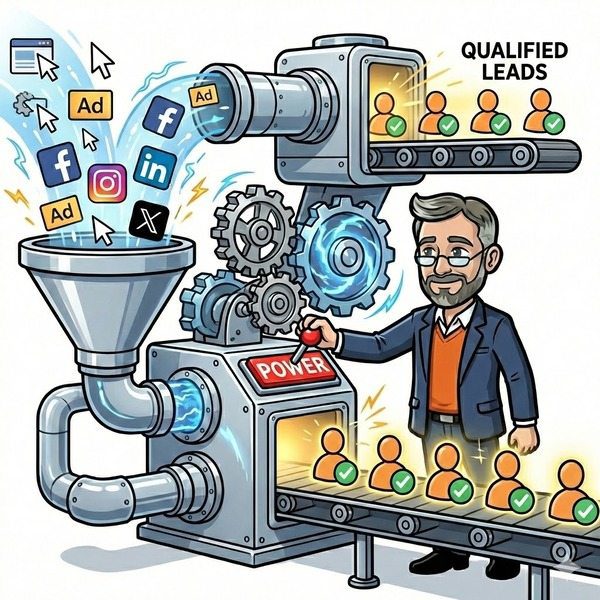
Table of Contents
Why Agricultural Equipment Marketing Must Go Digital Now
How Modern Farmers Buy Agricultural Machinery
Digital vs. Traditional Ag Equipment Marketing
Core Digital Marketing Strategies for Ag Equipment Dealers
Website & SEO: The Digital Foundation for Agricultural Equipment Marketing
Content Marketing: Build Trust and Educate Farmers
Digital Advertising: Put Your Ag Equipment in Front of Ready Buyers
Email, CRM, and Long-Cycle Lead Nurturing
Using Data and Analytics to Improve Marketing ROI
Common Agricultural Equipment Marketing Mistakes to Avoid
Why Choose Our Team for Agricultural Equipment Marketing
Take the Next Step With Your Agricultural Equipment Marketing
Frequently Asked Questions About Agricultural Equipment Marketing
Why Agricultural Equipment Marketing Must Go Digital Now
The sales environment for large agricultural equipment is expected to decline due to economic challenges, high interest rates, and capital constraints that shape agricultural purchasing strategies. Farmers are scrutinizing every decision and demanding proof of cost-effectiveness before signing a purchase order. That means your marketing efforts need to work harder than ever to earn attention and trust.
Here is the reality: digital marketing is essential as over a third of farmers use digital channels for research, and USDA data shows 85% of U.S. farms now have internet access with 50% using it to purchase agricultural inputs. Farmers are comparing a “used 2023 John Deere S780” or researching “strip till bar for 2,000 acre corn operation” on Google and YouTube in the evenings. Agricultural machinery companies and ag equipment dealers who still depend only on auctions, radio, and farm shows are losing visibility to digital-first competitors.
This article is a practical digital marketing playbook for long, complex sales cycles and high-ticket agricultural machinery. Agricultural equipment marketing, as we define it, is the coordinated use of website, search engine optimization, content marketing, email marketing, CRM systems, and digital advertising to turn online attention into iron moved off the lot.
How Modern Farmers Buy Agricultural Machinery
Consider a 2026 buying journey for a $300,000 self-propelled sprayer. A farm operator notices rising input costs and wonders if a newer machine could cut per-acre application expense. That evening, they search “best sprayer with GPS auto rate for corn” and start watching YouTube comparisons. Farmers conduct extensive research before major purchases, and this research phase alone can stretch months.
The journey follows clear digital stages. Problem awareness starts on Google and YouTube. Solution research moves to brand and dealer websites for specs and pricing. Evaluation involves downloading PDFs, reading reviews, watching field demonstrations, and consulting peers. Farmers prefer to see tangible proof of performance through field demonstrations and video content for purchase decisions. Final selection depends on local dealer proximity, financing options, and service capacity.
Peer recommendations significantly influence farming equipment purchases. Facebook groups, farm forums, WhatsApp chats, and X threads shape opinions throughout this process. Social media marketing builds brand recognition among more farmers every year. Marketing strategies must support decision timelines of 6 to 18 months with ongoing education, not one-off price blasts. Farmers may take months to decide on equipment purchases, and your marketing messages need to stay useful throughout.
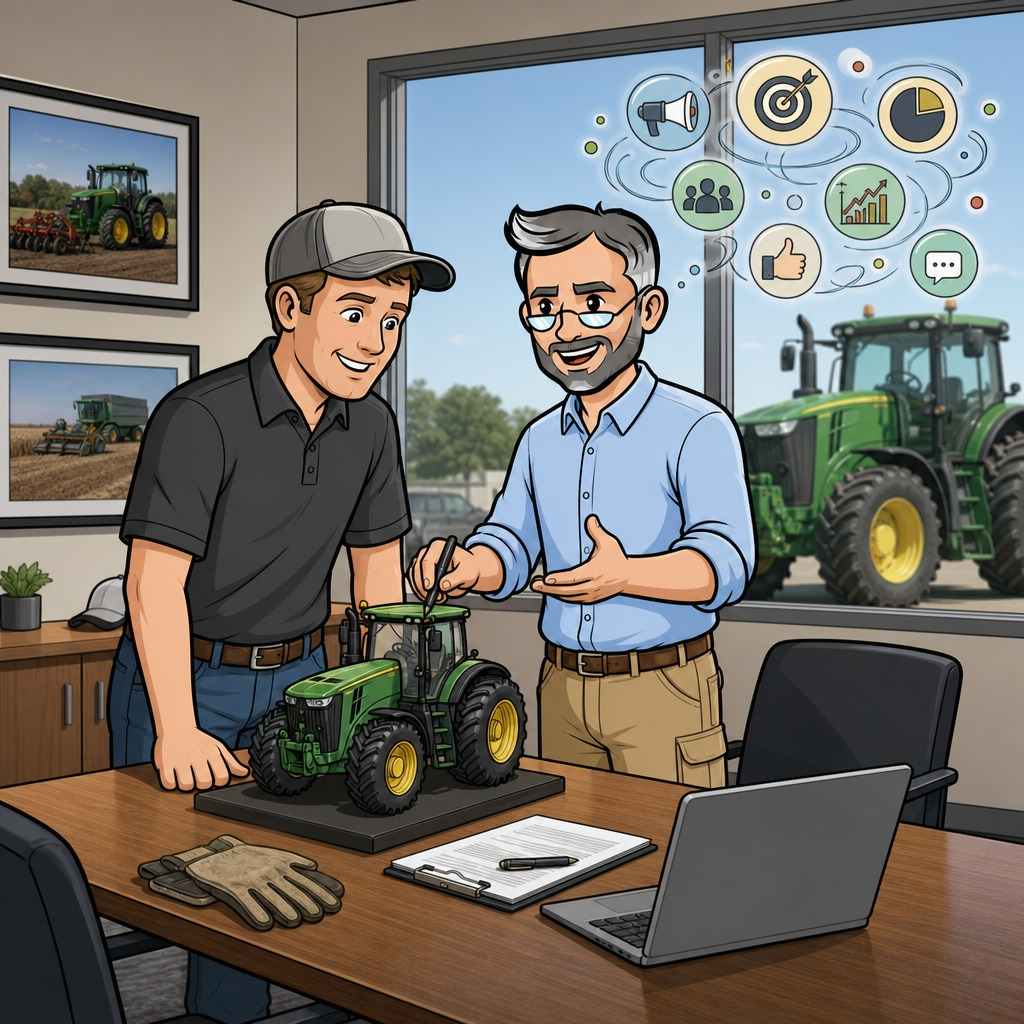
Digital vs. Traditional Ag Equipment Marketing
The old playbook still matters. Effective agricultural equipment marketing requires a presence at regional trade shows like Farm Progress Show, print ads in Farm Journal, radio spots, and field days. These channels build credibility through personal engagement. But marketing should incorporate both digital and traditional relationship-building strategies. Dealers must balance online visibility with personal engagement to secure sales.
Digital marketing strategies add what traditional channels cannot: precise attribution. Digital marketing ROI can be traced down to specific campaigns, keywords, or dealer locations, something print and radio rarely provide. A Kubota dealer using hyperlocal search campaigns saw a 157% year-over-year increase in conversions with a 28% decrease in cost-per-click by tailoring ad groups to specific geographies.
Blended campaigns multiply impact. A spring planting clinic promoted via Facebook Events and email campaigns drives attendance and captures leads digitally. A harvest demo series filmed on video becomes SEO content that generates organic traffic for months. A “0% financing on planters” offer supported by Google Ads reaches high intent buyers at the exact moment they are searching. Digital is the always-on backbone that keeps a dealer visible between farm shows and winter meetings.
Core Digital Marketing Strategies for Ag Equipment Dealers
This section outlines the essential digital marketing building blocks for agriculture equipment dealers and smaller manufacturer marketing teams. The core pillars are:
- Website and search engine optimization as the discoverable foundation for all equipment sales
- Content marketing to educate farmers and build authority throughout long buying cycles
- Email and CRM to nurture leads across months of deliberation
- Digital advertising through search and social media to capture ready buyers
- Analytics to track campaign performance and focus spend on what converts
These pillars must work together. Content fuels SEO and organic traffic. SEO and ads drive lead generation. CRM and email nurture those leads through long cycles. Analytics keeps budgets pointed at measurable ROI. Marketing strategies are increasingly focusing on ROI-driven messaging, and every tactic should connect to pipeline and revenue.
Website & SEO: The Digital Foundation for Agricultural Equipment Marketing
Your website is the digital lot for agricultural machinery, and SEO determines whether potential buyers ever find it. In 2026, 58% of agricultural website traffic comes from mobile devices, so fast load times on weak rural connections and responsive design are non-negotiable. 70% of agriculture equipment dealers were prioritizing SEO by 2025, and those who have not started are already behind.
Ag-specific keyword research should target geo-modified, long-tail terms. Think “used 2024 Case IH Magnum 340 for sale in Nebraska” or “compact tractor with loader for 50 acre hay farm.” These terms capture potential customers with real purchase intent. On-page optimization for inventory pages means unique titles and H1s, detailed specs, application notes by crop and acreage, internal links to financing and service pages, and dedicated landing pages for each product category.
Local SEO is critical for agriculture equipment dealers. Farmers are 2.7 times more likely to trust a complete Google Business Profile, so optimize every location with hours, service offerings, and photos. Create localized landing pages for each store and key service areas like “Central Kansas hay equipment dealer.” Consistent name, address, and phone citations across directories strengthen local visibility. Use schema markup for products and local business where it supports rich results. Monitor search consoles to see which ag equipment queries drive impressions and leads, then expand website content around those themes. SEO is critical for attracting high intent buyers who are actively searching for farm equipment.
Content Marketing: Build Trust and Educate Farmers
Content marketing is how agricultural machinery companies and dealers build trust by answering real farmer questions before the sales call. Content that answers farmers’ questions builds trust before sales conversations even happen. Content marketing can increase online leads by up to 55%, making it one of the highest-return investments for ag equipment marketing.
Effective content includes equipment comparison guides and maintenance checklists. Plan content to match the buying journey: early-stage pieces like “how to reduce fuel use in tillage operations,” mid-stage comparisons like “vertical till vs no-till for corn on corn,” and late-stage content like “demo the 2025 vertical till tool in eastern Illinois.” Sustainability messaging in equipment marketing highlights reduced fuel consumption and lower operational costs, topics that resonate with farmers and agricultural businesses who base purchases on utility and return on investment.
Use plain farmer language, real numbers showing fuel savings or hours saved, and show both pros and cons to build trust. Farmers prefer video content for purchase decisions, so film walkarounds and field tests. Distribute content on your website first for SEO value, then repurpose into email newsletters, Facebook posts, and short YouTube clips. Strong content creation gives your sales team tools to send in follow-up, like linking a “How to choose a 12-row vs 16-row planter” article to a prospect considering an upgrade. Combine maintenance guides, pre-planting checklists, and financing explainers all serve as helpful content that supports the customer experience.
Digital Advertising: Put Your Ag Equipment in Front of Ready Buyers
Digital advertising through search, display, and social channels offers precision targeting, speed, and measurable digital marketing ROI for high-value ag equipment. Farm equipment PPC advertising can generate high-intent leads quickly. Pay per click campaigns on Google capture searches like “buy 2025 Gleaner combine near Fargo” or “used strip-till bar with fertilizer delivery.” Matching these to specific landing pages is critical for conversion rates.
Structure campaigns by separating new equipment, used equipment, service, and parts. Align ad groups with brand, model, and job type such as planting, spraying, or hay. Use geo targeting by realistic trade area, typically 100 to 200 miles around each store, adjusted for population density and crop mix. Facebook is the strongest platform for agricultural buyers, making paid social media ads essential. Run promotions like “0% for 36 months on round balers” or “combine winter service specials” to drive customer engagement.
Agreements on flexible financing and service options lower purchase barriers for farmers, so feature those in your advertising. Track everything with lead forms, phone-call tracking, and UTM tags so every campaign ties back to leads, quotes, and closed deals in CRM. Demonstrating operational outcomes is increasingly important in equipment sales, and your digital advertising should highlight real performance data.
Email, CRM, and Long-Cycle Lead Nurturing
In agricultural equipment, many buyers take 6 to 24 months from first inquiry to signed purchase order. Email marketing is the most cost-effective tool for lead nurturing across these cycles. Email keeps relationships alive without constant sales calls, and segmentation improves email marketing effectiveness for agricultural equipment dealers by matching content to specific interests.
Track key data in CRM systems: farm size, primary crops, preferred brands, existing equipment fleet, last purchase date, and current equipment interests. Build segmented email programs: one stream for row-crop producers, another for cattle and hay operations, another for small acreage or hobby farms. Tailor messaging to each segment with relevant content. Specific email examples include quarterly “Planting Prep” series, “In-Season Sprayer Support” tips, post-harvest inspection offers, and “3-year ownership cost breakdown” comparisons for specific tractors.
CRM systems connect marketing data to sales pipelines. When a farmer clicks a specific equipment email multiple times, that triggers alerts for your sales team to follow up. Marketing efforts must align with seasonal agricultural buying cycles, so plan nurture sequences around pre-plant, in-season, harvest, and off-season windows. Every email should help a farmer maintain equipment better, make a more confident purchase, or save money. Email marketing nurtures leads throughout long agricultural sales cycles and drives repeat business when done consistently.

Using Data and Analytics to Improve Marketing ROI
Data is how ag equipment marketers move from “we think this works” to “we know this campaign sold three used combines.” Analytics tools track cost per lead by channel, quote rate, close rate, revenue per campaign, and lifetime value by customer segment. Dealerships should review campaign performance monthly to catch underperforming spend early.
Connect website analytics, ad platforms, and CRM so that a search term like “used 40-ft air seeder” can be tied all the way to a specific deal. Run simple experiments: A/B test landing page headlines, test different financing messages, adjust geo-targets based on lead quality data. Conduct quarterly reviews aligned with farming seasons to re-allocate budget toward channels and marketing messages that actually move equipment. Predictive analytics and real time data from connected platforms give marketing teams actionable insights to improve cost efficiency across every campaign.
Common Agricultural Equipment Marketing Mistakes to Avoid
Many agriculture industry marketers are stretched thin and still learning digital strategies, so missteps are normal but fixable. Here are the most common:
- Treating the website like a static brochure with outdated inventory and no lead capture forms. Fix: add simple quote request forms and “call now” buttons on every inventory page.
- Ignoring mobile users when 58% of agricultural website traffic comes from mobile devices. Fix: test your site on a phone over a rural connection and optimize accordingly.
- Relying only on branded keywords like “John Deere dealer” while ignoring generic and competitor terms that potential customers actually search. Fix: expand keyword targeting to include category and application terms.
- Failing to capture leads from used inventory pages, where buyers are often closer to purchase. Fix: add lead forms, email alerts for new arrivals, and call tracking numbers.
- Running untracked promotions through print ads or radio with no way to measure results. Fix: use unique phone numbers, UTM-tagged URLs, and CRM tracking for every campaign.
- Publishing generic, jargon-heavy content that never addresses real farmer questions about uptime, resale value, total cost of ownership, or public relations around sustainability. Fix: write FAQ content addressing top objections and real ownership concerns.
Not integrating CRM with marketing leads to lost follow-up, poor segmentation, and no clear view of which channels generate real sales opportunities.
Why Choose Our Team for Agricultural Equipment Marketing
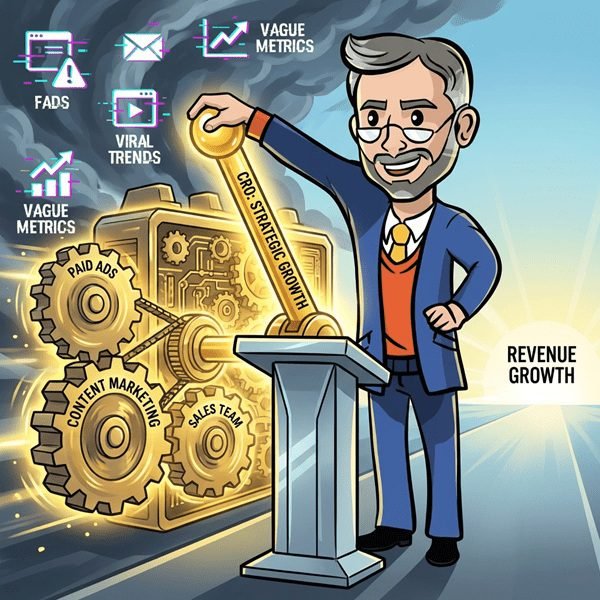
We are a revenue-focused partner that specializes in equipment manufacturers and dealer networks, including agricultural machinery. Trust and expertise from local dealers are critical in agricultural equipment marketing, and we build digital strategies that reinforce that local credibility rather than replace it.
Our hands-on experience with long, technical B2B sales cycles means we understand the difference between a vanity metric and a qualified opportunity. Our services include search engine optimization and local SEO for multi-location dealers, conversion-focused website design, digital advertising for high-value machinery, CRM implementation, and marketing automation. Every campaign connects to leads, quotes, and closed deals across new, used, rentals, and service. We help agriculture equipment dealers build trust with farmers through content marketing, video walkarounds, and education-first campaigns. Whether you are an OEM, regional dealer group, or independent dealership, we unify digital strategy while respecting local market trends and nuances. Large agribusinesses and single-location dealers alike benefit from our focus on pipeline and revenue over impressions and clicks, giving you a real competitive edge.
Take the Next Step With Your Agricultural Equipment Marketing
Most agricultural equipment marketing is still behind where farmer behavior already is. That gap is your opportunity for success.
Start by auditing your digital presence. Search for your own dealership and core equipment in Google. Test your mobile site. Review whether you can track which channels generate real quotes. Gather your last 12 months of sales by channel, identify priority product lines like planters, sprayers, or hay tools, and define your target regions.
Dealers and manufacturers who build strong digital marketing systems now will hold a durable competitive edge as younger, digitally native farmers take over purchasing decisions. If you are ready to connect your marketing to measurable pipeline and revenue, schedule a strategy call to review your website, SEO, content, advertising, and CRM setup specifically through the lens of agricultural machinery sales.
Frequently Asked Questions About Agricultural Equipment Marketing
These are real, practical questions ag equipment leaders ask before investing in digital marketing.
How is agricultural equipment marketing different from other B2B marketing?
Ticket sizes are higher, buying groups are more complex involving owners, operators, agronomists, and bankers, and sales cycles run 6 to 18 months or longer. Farmers and agricultural businesses base purchases on utility and return on investment, making trust, education, and demonstrating operational outcomes far more critical than quick promotions. Government agencies and lenders also play a role in financing decisions that other B2B sectors rarely face.
How long does it take to see results from digital marketing for ag equipment?
Expect 3 to 6 months for SEO momentum and organic traffic growth. Paid ads can generate leads immediately but improve with optimization over 60 to 90 days. Full pipeline impact across long farm purchasing cycles typically takes 6 to 18 months. Adoption of precision agriculture technologies is driven by cost reduction and efficiency gains, and marketing that highlights these outcomes accelerates results.
Which digital channels usually produce the best leads for farm equipment dealers?
High-intent search through Google PPC and SEO typically drives the most sales-ready leads. Social media, particularly Facebook, supports awareness, customer engagement, and re-engagement. Email campaigns and content marketing nurture leads through long decision cycles. AI tools are becoming essential for the personalization of marketing strategies in agriculture, and AI-powered advisors help nurture leads in crowded markets. Generative AI creates personalized conversations at scale for farmers, and AI-driven content improves customer engagement. AI tools also enhance keyword targeting for agriculture marketing strategies.
How should agriculture equipment dealers budget for digital marketing?
Allocate a fixed percentage of annual marketing budget or gross margin to digital. Protect a baseline SEO and content investment year-round, and reserve flexible budget for seasonal campaigns and inventory pushes. Market trends and new challenges like shifting commodity prices may require quarterly adjustments. The goal is to focus spend where you see measurable ROI and build authority over time.
Can digital marketing help sell used agricultural equipment faster?
Absolutely. Optimized inventory pages with detailed specs, geo-targeted ads, and email alerts for used arrivals consistently shorten time-to-sale for trade-ins and fleet rotations. Used equipment pages often attract buyers closer to purchase, making them high-priority for lead generation and conversion rate optimization.
How do we measure digital marketing ROI in the agriculture industry?
Connect leads, quotes, and closed deals back to campaigns using CRM, call tracking, and tagged forms. Compare gross margin from sold equipment against media and agency spend. This gives you true cost per lead and revenue per campaign visibility, something traditional marketing channels like trade shows and print ads rarely provide.