
Table of Contents
Why Agricultural Equipment Needs Its Own Marketing Approach
From Traditional Ag Advertising to Digital-First Agriculture Marketing
What an Agricultural Equipment Marketing Agency Actually Does
Defining Your Ideal Ag Clients and Buying Committees
Brand Development for Agricultural Equipment Manufacturers and Dealers
Building a High-Converting Website for Agricultural Equipment
Industrial Equipment SEO and AI-Driven Search Visibility
Paid Search and Social Advertising That Actually Moves Iron
Content, Video, and Storytelling for Technical Ag Equipment
Dealer Network, Franchise, and Rental/Fleet Marketing Support
CRM, Marketing Automation, and Long Sales-Cycle Nurturing
Common Mistakes When Hiring an Agriculture Marketing Agency
How to Choose the Right Agricultural Marketing Agency for Equipment
When It’s Time to Bring in an Agricultural Equipment Marketing Agency
Why Choose Our Agriculture Marketing Agency for Equipment Growth
Next Steps: Talk with an Agricultural Equipment Marketing Specialist
Frequently Asked Questions About Agricultural Equipment Marketing Agencies
Why Agricultural Equipment Needs Its Own Marketing Approach
Most agricultural marketing agencies built their reputations around crop inputs, food brands, or consumer perception of farming. Those skills matter, but they don’t translate directly to selling a $450,000 combine or a fleet of self-propelled sprayers. An agricultural equipment marketing agency operates in a fundamentally different lane: high-dollar transactions, long decision cycles, complex dealer networks, seasonal buying windows, and decision makers who need hard proof before they write a check.
Since roughly 2018, modern agriculture has accelerated its shift toward precision farming, telematics, GPS guidance, and variable-rate technology. Farmers now conduct digital research well before a dealer visit. They compare specs on mobile devices, watch field demos on YouTube, and evaluate total cost of ownership before ever stepping foot on a lot. Effective marketing strategies require deep agronomic intelligence and the ability to speak to farmers, fleet managers, co-ops, and lenders with technical, ROI-driven messaging that generic ag marketing simply cannot deliver.
The agriculture industry rewards specificity. Equipment manufacturers and dealers don’t need prettier brochures. They need marketing that ties directly to quote requests, demo bookings, financed units, and measurable growth in their pipeline.
From Traditional Ag Advertising to Digital-First Agriculture Marketing
In the 1990s, a full-page spread in a regional farm magazine and a 30-second spot on farm radio was the playbook. In 2026, a buyer researching loaders or planters is pulling up spec sheets on a smartphone in the cab, comparing three brands before lunch. The shift is real, but so is the fact that legacy channels still hold value for certain segments.
Older producers in farming communities still rely on face-to-face dealer relationships, print publications, and local field days. Trade shows remain crucial for agricultural equipment marketing effectiveness, particularly for relationship-building with established operators. But younger decision-makers prefer digital marketing strategies: online demos, walk-around videos, comparison guides, and spec sheets they can download instantly.
The practical answer is that agencies must balance traditional and digital marketing techniques rather than choosing one over the other. A blended campaign might place a print ad in a regional magazine with a QR code linking to a video demo landing page. After a field day, attendees get retargeted with email sequences linking to dealer inventory. Digital campaigns extend the reach of in-person events, and in-person events give digital campaigns authenticity that pure online programs lack.
A modern agriculture marketing agency should plan integrated campaigns aligned to the growing season, tying pre-plant promotions to harvest-readiness messaging with coordinated touchpoints across every channel. Dealers who carry several OEM brands can use our checklist for picking a marketing agency for equipment dealers.

What an Agricultural Equipment Marketing Agency Actually Does
Vague promises don’t move iron. Here are the concrete services a specialized agency delivers for equipment manufacturers, OEMs, dealers, distributors, franchisors, and rental/fleet providers:
- Website development for OEMs and dealers – inventory-heavy sites with searchable listings, spec sheets, trade-in forms, finance calculators, and dealer locators optimized for rural mobile users.
- Industrial equipment SEO – targeting high-intent queries like “used John Deere 8R tractors in Iowa” or “best grain cart for 12-row combine,” with content hubs covering maintenance, buyer guides, and comparisons.
- AI search optimization and GEO/AEO – structuring content so AI-powered search experiences surface trustworthy answers about harvesting equipment, sprayers, and planters.
- Paid search and social advertising – Google Ads, Meta, YouTube, and LinkedIn campaigns targeting producers by crop, geography, and equipment type, including remarketing to visitors who evaluated inventory.
- CRM and marketing automation setup – capturing leads from RFQs and demo requests, routing to dealer partners, building drip sequences for service reminders and trade-up offers.
- Outbound prospecting – account-based marketing strategies are essential for targeting large commercial operations, co-ops, and custom applicators with direct outreach for demos and lease options.
- Content and video production – walk-around videos, field trial footage, operator training clips, and ROI calculators that provide actionable insights.
- Analytics and attribution – dashboards connecting marketing activity to pipeline: demo bookings, quote requests, units financed, and parts sales, not just clicks and impressions.
Effective marketing strategies for agricultural equipment focus on proving ROI and building visibility. Strong agricultural marketing agencies can support the entire ecosystem, from the OEM headquarters to the smallest independent dealership, with unified measurement and consistent messaging.
Defining Your Ideal Ag Clients and Buying Committees
Equipment purchases rarely involve a single decision maker. A combine acquisition might require sign-off from the farm owner, the operations manager reviewing uptime data, the agronomist evaluating header compatibility, and a lender structuring the financing. A grain handling cooperative buying telehandlers needs deliberation over parts availability, maintenance labor, and fuel efficiency across its board.
This complexity means an agricultural marketing agency must help segment audiences carefully:
- By farm size: small family operations, mid-market row-crop farms, large-scale commercial producers
- By crop mix: corn and soybeans, specialty crops, mixed livestock-and-grain
- By region: Midwest, Plains, South, Delta, and beyond into global markets and areas like Latin America and South America
- By technology adoption: innovators running full precision farming stacks versus conservative operators who prefer proven, simple machines
Developing 3 to 5 buyer personas sharpens every downstream decision. A “Midwest row-crop innovator” responds to YouTube demos and telematics data. A “Plains conservative cow-calf operator” trusts dealer relationships and farm voice referrals from neighbors. A “custom applicator in the Delta” needs self-propelled sprayer comparisons with nozzle controller specs. Each persona drives different content, channels, and offers.
Understanding these buying committees and the distinct strengths each stakeholder brings to the table is what separates equipment-focused ag marketing from generic agricultural communications.
Brand Development for Agricultural Equipment Manufacturers and Dealers
Paint color and horsepower used to carry equipment brands. In 2026, farmers value reliability and ROI above all else. Trust is critical for farmers when making high-value agricultural equipment purchases, and brand development must communicate uptime, resale value, service network, and total cost of ownership.
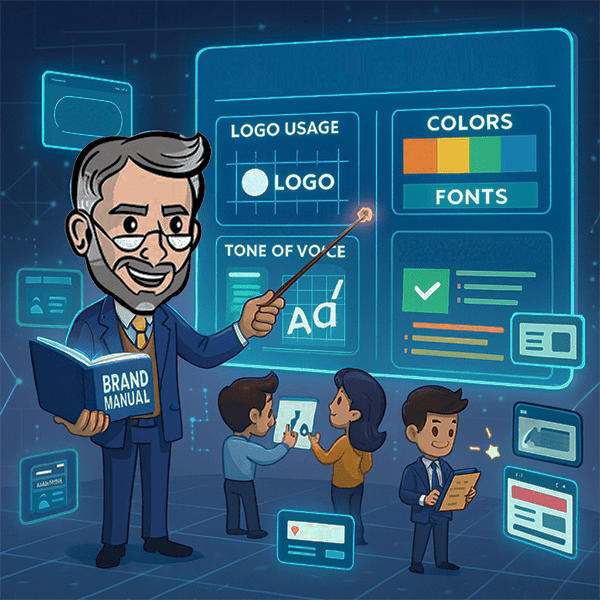
A structured brand audit starts with dealer interviews to understand how the brand is being presented at the local level. Farmer feedback through surveys and focus groups reveals perceptions of quality and support. Competitive benchmarking against players like John Deere and other global OEMs identifies where the brand has genuine differentiation.
Deliverables from this process include:
- A clear positioning statement (e.g., “most reliable high-horsepower tractors with region-based service”)
- A messaging framework built around core pillars: uptime, service, parts, ROI, operator comfort
- Visual identity and tone of voice that speak farmer language—”hours till harvest,” “reduced tillage,” “field length”
- Internal brand adoption materials so dealer sales teams present features and financing consistently
Successful agricultural brands communicate purpose and sustainability alongside performance. Effective brand stories engage farmers and agribusinesses alike by connecting equipment capability to real operational outcomes. Authenticity is prized by today’s agricultural consumers, and successful agricultural brands communicate with clarity and conviction rather than hollow claims.
Brand development tied to measurable results means tracking quote win-rate improvements, higher-margin equipment package sales, and stronger resale values driven by brand perception.
Building a High-Converting Website for Agricultural Equipment
For many equipment buyers, the website is the first yard walk. They want to browse inventory, check hours, compare specs, and evaluate financing before driving two hours to a dealer lot. Digital marketing agencies specializing in agriculture should understand rural demographics, including the reality that many farming audiences access sites on mobile devices over slower rural connections.
Must-have elements for an equipment-focused site:
- Searchable inventory filtered by equipment type, horsepower, model, condition, and geography
- Downloadable brochures and spec sheets
- Finance calculators that compare lease versus buy scenarios, fuel savings, and depreciation
- Trade-in forms that capture leads with equipment to trade
- Clear calls to action on every page: “Talk to Your Local Dealer,” “Request a Quote,” “Schedule a Demo”
Interactive tools help demonstrate ROI for agricultural equipment purchases and keep buyers engaged longer than static pages. Application-based pages—like “Equipment for 2,000–5,000 Acre Corn and Soybean Farms” or “Sprayers for Custom Manure Applicators”—align the site with how real operations think about their needs.
Optimizing for mobile in rural America means compressed images, fast load times, click-to-call buttons, and downloadable content for low-bandwidth scenarios. Every UX decision should tie back to lead quality and conversion rate optimization, not just aesthetics.
Industrial Equipment SEO and AI-Driven Search Visibility
Farmers and ag buyers search with specificity: “used strip-till bar near Nebraska,” “best grain cart for 12-row combine,” or “vertical tillage vs. disk ripper.” These queries reveal intent, and the equipment companies that show up for them capture the pipeline.
Keyword strategy for agricultural equipment should layer:
- Equipment type, brand, model, and capacity
- Geography (state, region, county)
- Condition (new, used, certified pre-owned)
- Problem solved (compaction, residue management, labor shortages, crop protection)
Agencies should optimize for search engines and AI tools to reach modern agricultural buyers. That means technical SEO—schema markup for products, dealer locations, and FAQs—combined with content marketing through buyers’ guides, maintenance tips, and comparison articles. Educational content positions brands as trusted advisors in equipment marketing, answering questions buyers are already asking.
Local SEO is important for capturing buyers searching for nearby agricultural dealers. Dealer-specific landing pages with accurate NAP data, geo-modified keywords, and Google Business Profile optimization ensure visibility when a producer searches “tractor dealer near me.”
AI search optimization means structuring content so platforms like Google AI Overviews and conversational AI can surface concise, trustworthy answers. Pages like a “2026 Guide to High-Speed Planters for 15-Inch Soybeans” with embedded contact CTAs serve both traditional search and AI-driven discovery.
Paid Search and Social Advertising That Actually Moves Iron
Paid media is critical for time-sensitive campaigns: year-end tax purchases, pre-season equipment orders, and manufacturer retail programs with tight windows. Seasonal timing in marketing improves relevance for agriculture-related purchases, and paid channels let you reach the right buyers at exactly the right moment.
An agricultural marketing agency uses multiple channels strategically:
- Google Search Ads for high-intent queries like “new combine dealers in Kansas” or “skid steer rental near me”
- YouTube for video reviews and operator demos
- Facebook and Instagram for showcasing field trials, demo days, and community engagement
- LinkedIn for reaching fleet managers, cooperative boards, and industry stakeholders at larger operations
Campaign types that work include search campaigns on commercial-intent terms, remarketing to visitors who viewed combine inventory, social promotion of upcoming field days, and geo-targeting to specific counties and crop-growing regions.
Budget realities matter. Industry data shows agricultural display CPC has risen from roughly $0.42 to $0.86 year over year, with CPMs climbing from $5.02 to $6.85. But well-optimized campaigns can achieve cost per acquisition under $30 compared to an industry average around $75. Even modest monthly ad spends deliver when tightly targeted to specific crops, counties, or dealer areas of responsibility.
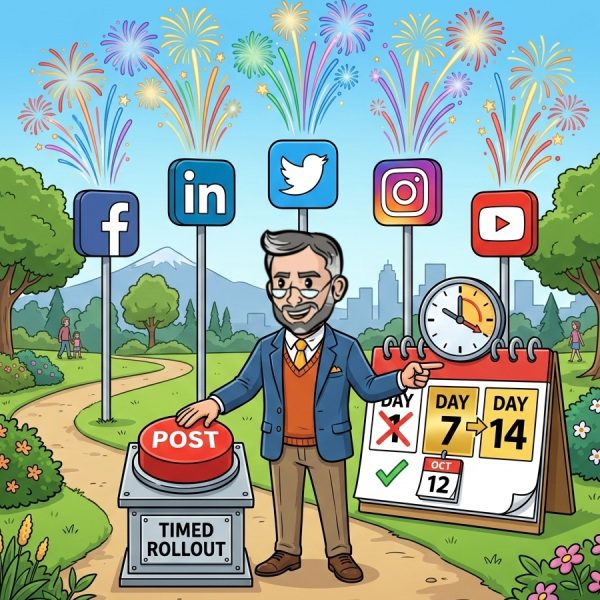
Creative should include clear offers—0% financing for 36 months, pre-pay discounts, extended warranty—and consistent brand messages from earlier brand strategy work.
Content, Video, and Storytelling for Technical Ag Equipment
Complex equipment requires more than glossy brochures. Farmers appreciate detailed performance data and case studies for equipment decisions. They want to see a machine working in conditions similar to theirs, hear from operators they trust, and evaluate real numbers before committing.
Video marketing is highly effective for agricultural equipment due to its visual nature. Core content types include:
- Walk-around videos showing machines in the field with feature-by-feature discussion
- “Day in the life” field demos: how a planter performs in wet soil, how a header handles tough residue
- Operator training clips for nozzle controllers, telemetry dashboards, and guidance systems
- Troubleshooting guides for common harvesting equipment issues
- ROI calculators with yield, labor, and fuel assumptions
Storytelling enhances brand trust in agriculture marketing. A Western Kansas operation that shortened harvest by two days with a new header is a story that sells. A Wisconsin dairy solving labor gaps with a mixer wagon upgrade, reducing manual feeding time by four hours daily, is proof that resonates with farming communities. Authentic storytelling connects agricultural brands with consumers emotionally, and content marketing should address operational challenges faced by farmers with specifics, not generalities.
Storytelling in agriculture simplifies complex innovations for audiences. Successful agencies translate technical advances into human stories—explaining what variable-rate technology means for a producer’s bottom line, not just how many sensors are on the toolbar. Agencies excel at translating technical advances into human stories that make precision farming tangible.
A strong agriculture marketing agency repurposes one field day into multiple assets: long-form video, short social clips, blog posts, email campaigns, and dealer sales tools. Effective campaigns showcase purpose, sustainability, and shared progress rather than just product specs.
Dealer Network, Franchise, and Rental/Fleet Marketing Support
Dealer and channel marketing is vital in agricultural equipment marketing. OEMs depend on dealer networks to convert leads into sales, and if messaging, offers, or branding are inconsistent across locations, brand equity erodes and leads disappear. Agencies need to provide localized marketing support to independent equipment dealerships so every location benefits from central strategy while maintaining local relevance.
A specialized agricultural marketing agency creates turnkey campaign kits:
- Templated ads, landing pages, and email sequences dealers can localize with their name, region, and inventory
- Social media post templates aligned to seasonal campaigns
- Co-branded collateral that maintains core messaging while adding dealer-specific details
MDF (market development funds) and co-op advertising programs are frequently underutilized. Central marketing should help dealers deploy those dollars with trackable ROI—pipeline metrics broken down by dealer and territory.
For rental and fleet providers, the tactics shift toward promoting seasonal rental packages, service contracts, and trade-up paths for high-hour machines. Key metrics for fleets are downtime, utilization, and cost per hour, and marketing materials should speak that language.
Unified measurement across the network—pipeline by dealer, territory performance, and model-level demand signals—feeds valuable resources back to the OEM for inventory and product decisions.
CRM, Marketing Automation, and Long Sales-Cycle Nurturing
Long decision cycles characterize the purchasing process for agricultural equipment. A $200K to $800K purchase doesn’t close in one touch. Research, on-farm demos, bank approvals, and board discussions can stretch across seasons. Positive word-of-mouth is a strong B2B marketing tool, but it still takes structured follow-up to convert interest into a signed deal.

A specialized agriculture marketing agency sets up CRM systems to track contacts by operation size, acreage, equipment fleet, crop mix, and renewal dates. Interaction history—trade-ins, service records, demo attendance—becomes the foundation for personalized outreach.
Automated nurture sequences do the heavy lifting:
- Lead capture from spec downloads triggers drip campaigns customized by crop type and region
- Service reminders go out when scheduled maintenance or warranty expiration approaches
- Trade-up offers activate when a machine reaches certain hours or age thresholds
- Example: a 90-day nurture for strip-till prospects who downloaded a guide, or a 12-month upgrade path for self-propelled sprayer owners tied to new nozzle or rate controller technology
Connecting CRM data to revenue is non-negotiable. Define opportunity stages—lead, quote request, demo, finance or lease, sale—and record win/loss reasons. Attribution models should tie content, ads, shows, and outreach back to closed deals so every marketing dollar is accountable.
Common Mistakes When Hiring an Agriculture Marketing Agency
Misalignment between agency capabilities and ag clients’ needs is the primary reason marketing budgets underperform. Here are the errors that cost equipment companies the most:
- Hiring generalist agencies with no ag experience – They don’t speak technical specs or understand farmer pain points. Look for case studies with equipment manufacturers, heavy machinery, and pipeline metrics.
- Focusing only on brand without demand generation – A beautiful identity means nothing if the pipeline is empty. Include SEO, paid media, and content marketing from day one.
- Ignoring dealer input – Top-down strategy that neglects local market dynamics and dealer challenges leads to campaigns that look great at HQ but fall flat in the field. Involve dealers in messaging and creative review.
- Underinvesting in analytics and attribution – Spending money without tracking what leads to deals. Set up dashboards that connect marketing activities to pipeline and closed revenue.
- Chasing trends without a foundation – Viral social content or flashy tech without basics like site speed, spec sheets, and dealer locators. Secure fundamentals first.
- Removing key resources in website redesigns – Redesigns that cut spec sheets, equipment history, or dealer location info that farmers relied on. Map content loss risk before any migration.
- Treating all agricultural marketing as the same – The landscape includes agencies like AdFarm, one of North America’s largest agricultural marketing agencies, Meyocks with over 30 years of experience in agri-marketing, AgCulture specializing in digital-first marketing for agtech startups, Elevation Marketing focusing on B2B marketing for agribusinesses, and 6 Seeds Consulting using AI for consumer research in agriculture. Each has a different focus. The mistake is assuming any agriculture marketing agency automatically understands the technical complexity, dealer networks, and market dynamics of selling heavy equipment.
How to Choose the Right Agricultural Marketing Agency for Equipment
This is a selection process, not a pitch. The goal is to find the right fit so your budget actually drives revenue.
Evaluate three dimensions:
- Specialization: Do they have direct experience with agricultural equipment, heavy machinery, and long sales cycles? Can they demonstrate industry expertise with crop input companies, seed companies, or equipment dealers?
- Approach: Are they focused on demand generation and performance marketing, or only brand building? Do they tie strategy to pipeline metrics?
- Cultural fit: Are they comfortable on shop floors and at field days? Do they understand practical experience in rural America, or are they strictly a boardroom agency?
Questions to ask on discovery calls:
- Show me examples of equipment campaigns you’ve run for OEMs, dealers, or fleet providers, with metrics
- How do you measure success beyond impressions? What’s your cost per quote request, close rate, revenue per campaign?
- How do you support dealer networks? Do you provide localization, creative templates, and measurement by territory?
Align agency size with your own. Small to mid-market equipment manufacturers and dealer groups should seek partners that won’t treat them as filler accounts. Request one or two relevant case studies with data—lead volume, cost per opportunity, close-rate lift—and speak with at least one reference in the agriculture industry.
When It’s Time to Bring in an Agricultural Equipment Marketing Agency
Common trigger points include flat unit sales despite product improvements, dealer complaints about weak marketing support, or overreliance on one or two big shows and referrals for the entire pipeline. When the sales team is building their own brochures, messaging varies wildly across dealer networks, and key equipment categories have poor visibility in search, the status quo is costing money.
Signs that DIY or generic agencies aren’t enough:
- Lead quality is low, with website forms generating tire-kickers rather than qualified buyers
- Digital campaigns exist but nobody can connect them to actual deals
- Your brand shows up inconsistently across agricultural associations, dealer websites, and social channels
- Competitors in crowded markets are outranking you for your own product categories
Organizational readiness matters. Leadership must support investment in a hybrid digital and traditional program, allocate realistic budgets, share sales data openly, and be willing to adjust long-held tactics.
Many successful ag clients start with a focused pilot—one crop region, one product line, or one dealer network—before scaling what works. Timing often aligns with model launches, new territory expansions, or generational transitions in ownership. Creative development and campaign development built around these moments create natural momentum.
Why Choose Our Agriculture Marketing Agency for Equipment Growth
We built our practice around industrial and equipment marketing, with deep experience supporting agricultural equipment manufacturers, OEMs, dealers, distributors, franchisors, and rental/fleet providers. We aren’t a general ag marketing shop that dabbles in machinery. Equipment is our core.
What sets us apart:
- Revenue-focused strategy – every campaign ties digital marketing and ag marketing directly to pipeline metrics, not vanity numbers
- Long sales-cycle expertise – we understand that agricultural businesses operate on seasonal rhythms and multi-stakeholder buying committees
- Full-spectrum capabilities – equipment manufacturer SEO, AI search optimization, paid media tuned to rural audiences, CRM implementation, and conversion optimization for inventory-heavy sites
- Dealer-level support – we provide campaign kits, localized landing pages, and measurement by territory so your dealer networks perform alongside your brand
Our partnership style is straightforward: transparent reporting, regular strategy reviews, collaboration with sales leaders and dealer principals, and willingness to visit farms and dealerships for real-world insight. We’ve worked with agricultural brands and ag brands across the agri food sector, from emerging new brand launches to established equipment lines serving the agricultural landscape nationwide.

The result is more qualified leads, better support for your dealers, and more predictable revenue instead of one-off spikes around a single trade show.
Next Steps: Talk with an Agricultural Equipment Marketing Specialist
If you recognized your situation in the sections above—flat unit sales, inconsistent dealer support, or a pipeline that depends on one or two shows—the next step is a working conversation, not a pitch.
Schedule a short consultation to review your current agricultural marketing mix, dealer feedback, and sales bottlenecks. Come prepared with recent sales data, sample campaigns, a list of key equipment lines, and your top two or three growth priorities for the next 12 to 24 months.
Treat the call as a working session aimed at clarifying whether a specialized agriculture marketing agency is the right fit and what a phased plan could look like. Reach out through our website form, phone, or email to begin designing an equipment marketing program that supports both your brand and your dealers with measurable growth built to last.
Frequently Asked Questions About Agricultural Equipment Marketing Agencies
What is the difference between an agricultural marketing agency and an agricultural equipment marketing agency?
A generic agricultural marketing agency typically focuses on crop inputs, commodity markets, animal health brands like Merck Animal Health, consumer perception of farming, or thought leadership for organizations like Bayer Crop Science and other crop input companies. Their strength is often public relations, media relations, and connecting agricultural products to consumers alike.
An agricultural equipment marketing agency is built specifically around selling and renting machinery. Equipment campaigns handle higher ticket prices, financing structures, resale value considerations, and dealer enablement, requiring fundamentally different strategies than promoting seed, food brands, or sustainable agriculture initiatives.
How long does it take to see results from digital marketing for ag equipment?
Set realistic expectations. Early wins from paid search and remarketing typically appear within 60 to 90 days: more quote requests, demo bookings, and qualified traffic. SEO and content marketing compound over 6 to 12 months, building real time insights and steady organic pipeline.
Sales cycles for high-value machines can span multiple seasons. The goal is steady growth in qualified opportunities and dealer quotes—meaningful connections with buyers, not overnight spikes.
What budget should we expect for an agriculture marketing agency partnership?
Budget scales with geography, product lines, and channel complexity. Mid-market equipment manufacturers and regional dealer groups typically invest in programs that cover SEO, paid media, content creation, and CRM setup as a coordinated system.
It’s better to run a focused, measurable program in one region or product line than spread too thin. A pilot approach lets you validate what works before scaling investment.
Can an agriculture marketing agency support both our corporate brand and our dealers?
Absolutely. Centralized brand strategy and creative development can coexist with localized dealer execution through playbooks, templates, and shared digital assets. For example, a corporate-led campaign sets the messaging framework while local dealers personalize landing pages, offers, and follow-up sequences, maintaining consistent agricultural communications while adapting to their market.
Do we still need farm shows and print ads if we invest heavily in digital marketing?
Yes. Farm shows, plot days, and print remain important for relationship-building and visibility, especially among the agricultural community and established operators. They become far more effective when integrated with digital touchpoints.
Use digital marketing to invite targeted prospects to in-person events. After the show, follow up with remarketing, email sequences, and dealer outreach. The combination amplifies both channels.
How do we know if our current agricultural marketing is really working?
Monitor these specific metrics:
- Qualified leads by source
- Quote volume per territory
- Conversion rates from website forms to sales calls
- Cost per opportunity by channel
- Win/loss reasons in your CRM
A performance-focused agriculture marketing agency sets up dashboards linking marketing activities directly to pipeline and closed revenue. If your current setup can’t tell you which campaigns generated which deals, that’s your answer.