
This guide to farm equipment marketing covers every channel and tactic that moves the needle for dealers and manufacturers in 2026. Jump to the section that matters most to your business right now.
Table of Contents
Introduction: Why Farm Equipment Marketing Has Changed Forever
Understanding Today’s Farm Equipment Buyer Journey
Local SEO Foundations for Farm Equipment Dealers
Keyword Research That Matches How Farmers Actually Search
Mobile-Friendly Dealer Websites and Inventory Experience
Paid Search (PPC) for High-Intent Farm Equipment Leads
Geo-Targeted Advertising for Realistic Dealer Territories
Content Marketing That Builds Farmer Trust Over Long Sales Cycles
Video Marketing for Farm Equipment Demonstrations and Walkarounds
Social Media Marketing for Modern Ag Buyers
Email Marketing to Nurture Long-Term Equipment Leads
CRM, Lead Management, and Aligning Sales With Marketing
Measuring Digital Marketing ROI for Farm Equipment
Common Farm Equipment Marketing Mistakes to Avoid
Integrating Digital and Traditional Sales Channels
When to Bring in a Specialist Equipment Marketing Partner
Why Choose a Specialized Equipment Marketing Partner
Next Steps: Build or Upgrade Your Farm Equipment Marketing System
FAQs About Farm Equipment Marketing
Introduction: Why Farm Equipment Marketing Has Changed Forever
A midwestern farm equipment dealership with three locations watched walk-in traffic decline roughly 30% between 2022 and 2025. During that same period, online leads through its website doubled. The owner didn’t sell fewer tractors or combines; the path buyers took to the lot just moved through Google, YouTube, and email before anyone set foot on gravel.
This pattern is not unusual. Farmers conduct extensive research before contacting salespeople. They compare equipment dealers across multiple states, download spec sheets, read forums, and watch walkaround videos before ever picking up the phone. Digital marketing increases brand awareness and lead generation in ways that a roadside sign or print ads alone cannot match anymore.
This article breaks down practical digital marketing strategies that produce measurable equipment sales for ag equipment manufacturers and agriculture equipment dealers. You will learn how to combine local search engine optimization, pay per click advertising, content marketing, email marketing, CRM systems, and analytics into a connected farm equipment marketing system. Every section is built around the same question: does this tactic help sell equipment?
Understanding Today’s Farm Equipment Buyer Journey
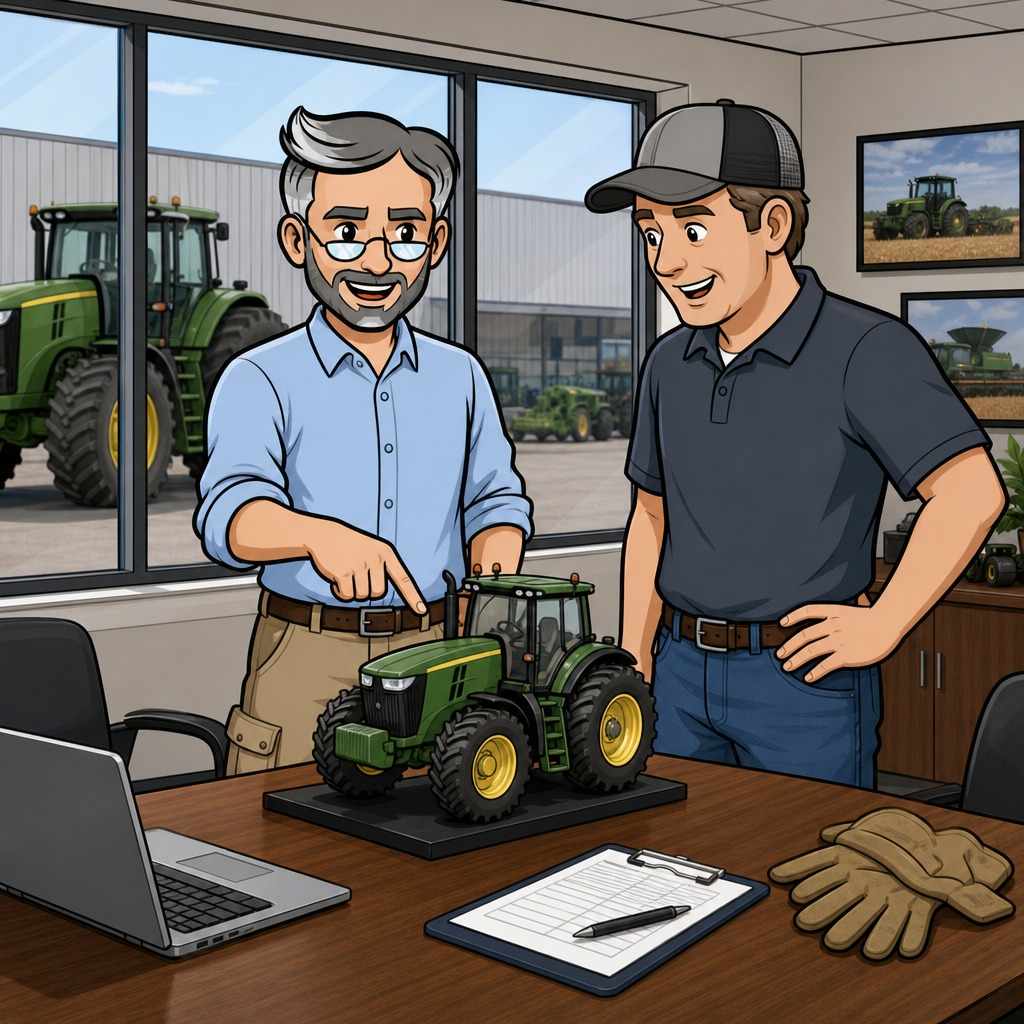
A typical 2026 buyer path looks like this: social media discovery (a friend shares a video of a new planter), Google search for specs and pricing, dealer website visit to check inventory, email or text inquiry, in-person inspection or demo, and finally financing discussions. The entire arc can stretch from a few weeks for a used skid steer to 18 months for a fleet of precision ag planters. Long sales cycles can last months or years, and your marketing must cover every stage.
Common research behaviors include:
- Comparing equipment type by horsepower range (150-250 HP row-crop tractors vs. sub-compact utility models)
- Reading user forums and Facebook groups for operator reviews
- Watching YouTube demonstrations to see field performance
- Downloading spec sheets and comparing operational costs per acre
- Checking dealer reviews and asking neighbors who they trust
Farmers prioritize durability and return on investment when purchasing equipment. High upfront costs hinder agricultural machinery purchases, so buyers want proof that a machine will hold up and pay for itself. Integration complexity affects connectivity between old and new machinery, adding another layer of research before commitment.
Agricultural marketing must address different needs for various farm sizes. Younger operators inheriting small farms expect a digital-first experience. Large commercial operations send procurement teams who compare operating cost data across brands. Custom applicators care about precision agriculture data and uptime. Each segment requires different messaging, content, and offers.
Local SEO Foundations for Farm Equipment Dealers
Local SEO is the fastest path to qualified leads for high-value agriculture equipment. When a buyer searches “used 2023 Case IH Magnum 340 near Topeka, KS,” the dealer that appears in the local map pack gets the call. SEO attracts high-intent buyers to farm equipment websites, and local SEO makes businesses 2.7 times more reputable to customers compared to those with weak or missing local profiles.
Over 70% of agriculture equipment dealers prioritize SEO, and for good reason: SEO helps drive organic traffic for farm equipment dealers without the recurring per-click cost of paid ads. A large Southeastern multi-state dealer with 30 locations increased organic clicks 481% between Q4 2024 and Q1 2026 by fixing its local presence, building city-specific content, and improving technical SEO.
Google Business Profile essentials:
- Accurate name, address, and phone number (NAP) for every location
- Hours that reflect seasonal operations (extended during planting and harvest, reduced in winter)
- Product categories that match your inventory (tractors, combines, sprayers, balers)
- Inventory photos updated regularly
- Monthly posts about promotions, new stock arrivals, or dealership events
On-page SEO must-haves for dealer websites:
- Location-specific title tags (e.g., “Used John Deere Tractors in Topeka, KS”)
- Schema markup for dealerships and individual products
- Dedicated landing pages for each geographic area served (“Farm Equipment Dealer in York, NE”)
Mistakes that cost dealers leads:
- Using a single generic “Locations” page for multi-lot operations instead of individual pages per location
- Outdated hours that don’t reflect harvest-season schedules
- Missing click-to-call buttons on mobile
- Inconsistent addresses across directories (different suite numbers, abbreviations, or zip codes)
- Listing inventory only in PDFs or images that search engines cannot crawl
Keyword Research That Matches How Farmers Actually Search
Keyword strategy must reflect real-world phrases. Many farmers search “low hour 8R tractor in Iowa” or “2024 John Deere S780 combine Kansas City,” not “agricultural machinery procurement solutions.” The gap between how marketing teams describe equipment and how buyers search for it is where organic traffic gets lost.
Optimizing for keywords improves visibility in search results, but only if those keywords match actual farmer language. Build separate keyword groups by intent:
| Keyword Category | Example Phrases | Typical CPC Range |
|---|---|---|
| New equipment specs | “2025 Fendt 1050 Vario price” | $15-$40 |
| Used equipment search | “used 150 HP tractor Iowa” | $8-$22 |
| Parts and service | “planter repair near me” | $5-$15 |
| Comparison/spec queries | “Case IH 9250 vs John Deere S780” | $12-$35 |
| Precision ag technology | “GPS guidance system for planter” | $15-$40 |
Long-tail, geo-modified keywords convert at higher rates because they signal a buyer who has narrowed the field. “Used 250 HP tractor” is informational; “used John Deere 8R 250 near Des Moines” is someone ready to drive to your lot.
Sources for uncovering real farmer language: Google Search Console “Queries” report, Google autocomplete suggestions, “People also ask” boxes, farming subreddits and Facebook groups, and your own dealer CRM notes. One dealer discovered that buyers searched “hoses” while the website listed the same product under a different internal part name. That mismatch cost months of missed traffic.
Mobile-Friendly Dealer Websites and Inventory Experience
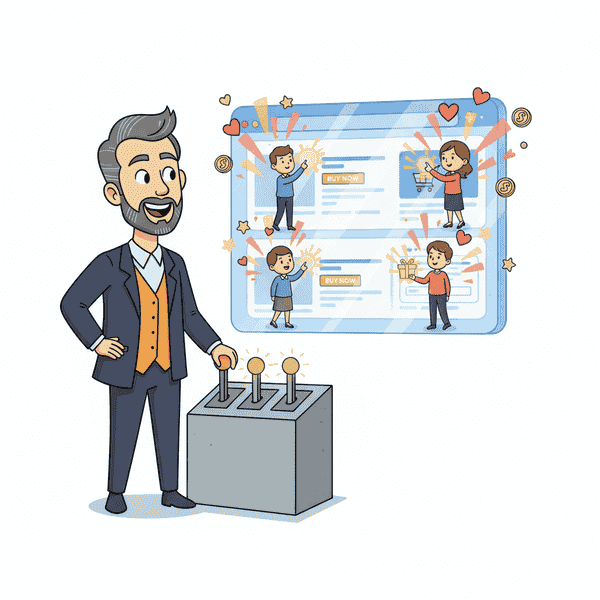
More than half of farm and ag-related searches happen on mobile devices. Many buyers check equipment listings from the cab during a break, from the shop between jobs, or from the kitchen table after dinner. If your website doesn’t load and function on a phone, you lose those buyers before they ever see your inventory.
Non-negotiables for a dealer website:
- Page speed under 3 seconds, even on 4G or rural LTE connections
- Inventory filters by HP, hours, price, make, model, and distance from the buyer
- Tap-friendly phone and text buttons on every listing
- Visible contact forms that don’t require scrolling past three screens of text
- Equipment listed as crawlable product pages, not PDFs or image-only listings
Common UX failures include inventory pages that time out on slow rural connections, contact forms buried in footer links, and no way to search inventory by location at multi-lot dealers. A used forklift dealer that rebuilt its site for mobile speed and technical SEO saw dominant local rankings across a 32-mile radius with an average position of 1.34 for its target keywords.
Monthly mobile audit checklist:
- Load your homepage and two inventory pages on a phone using 4G
- Search for a specific equipment type from your phone’s browser
- Tap the call button and confirm it rings the right number
- Submit a lead form and verify it reaches the CRM
- Check that inventory filters work on a touchscreen
Paid Search (PPC) for High-Intent Farm Equipment Leads
PPC advertising generates high-intent leads quickly. When a buyer searches “buy 2025 Fendt tractor finance,” they are close to a purchase decision. PPC delivers immediate visibility for farm equipment dealers, putting your inventory in front of high intent buyers at the moment they are ready to act.
The average cost per click in Google Ads was $5.26 in 2025 across all industries, but ag and heavy equipment keywords run higher. Spec-query and comparison keywords for combines and tractors typically cost $12-$35 per click. Even at those rates, a single closed sale on large equipment producing $50,000 in gross margin justifies months of ad spend.
Core PPC campaign structure:
- By brand: Separate campaigns for John Deere, Case IH, Kubota, AGCO, Fendt, and others
- By equipment type: Tractors, combines, sprayers, planters, balers, precision ag
- By intent: Buy-now terms (“for sale,” “price,” “finance”) vs. research terms (“review,” “vs.,” “specs”)
- By inventory status: New equipment vs. used equipment vs. rentals
PPC campaigns should align with buyer intent levels. A “compare” keyword gets a spec-sheet landing page; a “buy” keyword gets an inventory listing with financing options. Negative keyword lists filter out hobby farm, toy, and irrelevant searches to focus spend on commercial prospects.
Must-track conversions:
- Phone calls from ads (use call tracking numbers)
- Quote request form submissions
- “Save this listing” or “schedule a showing” actions
- Contact forms tied to specific inventory pages
PPC benchmark data shows lead-to-RFQ conversion rates of 4.2%-8.5% for farm equipment manufacturers. Even a modest 5% conversion rate on 40 monthly leads yields two solid sales opportunities per month.
Geo-Targeted Advertising for Realistic Dealer Territories
Geo-targeted ads show to farmers within a realistic driving distance instead of wasting budget on buyers three states away who will never visit your lot. Effective farm equipment marketing uses tight geo targeting around actual draw radius, typically 60-150 miles depending on population density and the competitive landscape.
Targeting strategies:
- Radius targeting centered on each dealership location
- County-level targeting that respects OEM territory agreements
- ZIP code targeting to minimize overlap between nearby dealers in the same brand network
Adjust bids and messaging by zone. Core counties (within 60 miles) get your strongest offers: specific inventory, financing rates, free delivery. Secondary markets (60-150 miles) get awareness messaging with spec content and brand-level offers. This approach prevents budget waste while still building your sales pipeline in outer-ring areas.
Combine geo-targeted search ads with localized social ads and landing pages that reference the buyer’s region. Include dealer reviews and local customer testimonials on those pages. A regional CAT dealer combined geo-targeted search and earned media content to build visibility in both standard search results and AI-powered overviews, producing a measurable lift in local leads.
Content Marketing That Builds Farmer Trust Over Long Sales Cycles
Content marketing is how dealers and manufacturers stay top-of-mind over multi-season buying cycles. Farmers prefer practical content over promotional messages. A maintenance checklist for combine maintenance before harvest, a total cost of ownership comparison between two tractor models, or a model-year change guide for a popular planter line all earn trust that a banner ad never will.
Content marketing can increase online leads by 55% compared to traditional outbound methods. Content marketing builds trust and authority with farmers because it answers the questions they are already asking. Digital content must demonstrate practical ROI for equipment purchases; a piece explaining how the right sprayer boom width reduces passes per field by 20% and cuts fuel costs is more useful than a brochure listing nozzle specs.
Sales messages should focus on actual results rather than just machinery specifications. Show what the equipment does for the operation, not just what it is.
Content formats that perform well:
- Combine maintenance checklists by model and season
- “3-year total cost of ownership” comparisons for competing tractor lines
- Model-year change guides highlighting what is new and what carried over
- Precision agriculture integration guides (GPS, variable rate, data platforms)
- Smart farming and sustainable farming technology overviews
Precision agriculture content ranks faster because of lower competition and strong buyer intent. In one benchmark, precision ag content reached page one in 30-50 days. Utilizing technology and precision agriculture can enhance equipment marketing efforts across your entire content library.
Distribution matters as much as creation. Publish blog posts on your dealer website, send highlights via email newsletters, build YouTube playlists organized by equipment type, and repost in Facebook farm groups where your potential buyers already spend time. Content creation without distribution is a warehouse full of parts nobody knows about.

Video Marketing for Farm Equipment Demonstrations and Walkarounds
Video is the most helpful content type for farmers’ decisions. Over 50% of farmers use YouTube during their research process, and video content is the most helpful for farmers’ purchase decisions because it shows equipment working in real conditions, not just sitting in a studio.
Field demonstrations build trust and confidence among prospective buyers. Agricultural buyers value hands-on demonstrations and real-world performance evaluations, and video is the closest thing to being in the cab without driving to the dealership.
High-impact video types:
- 5-10 minute equipment walkarounds showing key features and wear points
- In-field demos during planting and harvest with real operators
- “Operator’s-eye view” cab tours showing controls, displays, and visibility
- Short service explainer clips (how to grease a planter, check hydraulic fluid, adjust row units)
Simple production process:
- Use a modern smartphone with an external clip-on microphone for clear audio
- Shoot in natural light; early morning or late afternoon works best
- Have a knowledgeable salesperson or service tech walk through the machine
- Keep it authentic; scripted perfection is less credible than a real person pointing out real features
Publish to YouTube for long-term search visibility. Embed videos on inventory pages and dedicated landing pages. Cut longer videos into 30-60 second clips for Instagram Reels, Facebook, and TikTok. A single field demo shot during harvest can produce four or five pieces of video content across platforms.
Social Media Marketing for Modern Ag Buyers
Facebook is the strongest platform for reaching agricultural buyers. YouTube dominates for in-depth demos and tech content. Instagram and TikTok are growing among younger operators and work well for shop-floor content and new equipment arrivals. Social media marketing builds brand recognition among farmers, even when it doesn’t produce direct sales on the platform itself.
Word-of-mouth validations from satisfied customers can drive sales in agriculture. Peer recommendations carry significant weight in farming communities. Social media is where those recommendations happen at scale.
Practical social calendar:
| Day | Content Type | Platform |
|---|---|---|
| Monday | Weekly inventory spotlight with photos | Facebook, Instagram |
| Wednesday | Seasonal service reminder or tip | Facebook, YouTube Shorts |
| Friday | Customer success story with a real local farm | Facebook, Instagram |
| As needed | Live Q&A during planting/harvest season | Facebook Live, YouTube |
| Monthly | Behind-the-scenes service work or shop tour | Instagram Reels, TikTok |
Generic corporate posts underperform. Authentic shop-floor content, honest discussions about financing, parts availability, and downtime build authority and trust. A post showing a technician replacing a clutch on a 6-year-old tractor with a caption about parts lead times is more engaging than a stock photo with a tagline.
Email Marketing to Nurture Long-Term Equipment Leads
Email marketing nurtures leads over long sales cycles. Many buyers browse your inventory, download a spec sheet, or request a quote, then go silent for months. Email keeps relationships alive without constant cold calls. Email marketing is cost-effective for maintaining customer relationships and keeps your dealership top-of-mind when the buyer is finally ready to act.
Segmentation strategies:
- By equipment interest: row-crop tractor vs. hay equipment vs. precision ag
- By farm size: small farms vs. large commercial operations
- By purchase stage: research, spec review, or ready to trade
- By geography: tailor messaging by region, crop type, and seasonal timing
A welcome sequence introduces new leads to your dealership. After a quote request, send a welcome email with dealership info and a relevant inventory link. Follow with education-focused messages (maintenance tips, technology integration updates), seasonal service offers, and reminders about aging quotes or upcoming price changes.
Segmented emails improve open rates and customer loyalty. Sending the same promotional blast to every contact on your list creates unsubscribes. Mixing inventory highlights with helpful content (such as pre-season maintenance checklists or market trends in used equipment pricing) prevents your email campaigns from becoming noise.
Industry practitioners report open rates of 15-30% when segmentation is done well; generic blasts often fall below 10%.
CRM, Lead Management, and Aligning Sales With Marketing

A CRM is not optional for equipment dealers and OEMs with sales cycles that stretch across seasons. Spreadsheets and notebooks lose revenue opportunities because no one can track where a lead came from, what equipment they looked at, or when to follow up.
Must-capture CRM fields:
- Source channel (PPC, SEO, email, social, trade shows, referral)
- Campaign and keyword that generated the lead
- Equipment type and whether new, used, or rental
- Estimated budget and trade-in details
- Expected purchase window
- Stage (research, spec review, ready to buy)
Connect website forms, chat, call tracking, and email marketing into one CRM so every digital touchpoint ties back to closed deals. Strong dealer relationships are vital for accessing local farming markets, and post-sale support and service availability are crucial selling points for farmers. Your CRM should track service interactions alongside sales interactions because a parts customer today is a new equipment buyer next year.
Sales-marketing alignment practices:
- Weekly pipeline reviews between sales managers and marketing
- Agreed definition of “qualified lead” so sales doesn’t waste time and marketing doesn’t waste budget
- Shared dashboards showing cost per quote, close rate by channel, and campaign performance
- CRM updates when leads change stages, so nurture leads accurately with the right email sequences
Measuring Digital Marketing ROI for Farm Equipment
Digital marketing strategies must connect to revenue, not just clicks, impressions, or likes. Measurable ROI is what separates a real marketing system from a collection of activities.
Core metrics for farm equipment marketing:
- Cost per qualified lead (CPL)
- Appointment or demo set rate
- Quote/RFQ rate
- Close rate by channel
- Gross margin per sold unit by campaign
- Lifetime value (including service, parts, and repeat purchases)
Benchmarks for context: qualified dealer leads via SEO cost $180-$420 each. The same lead quality from a trade show costs $1,200-$5,000. PPC lead-to-RFQ conversion runs 4.2-8.5%, while organic content converts to RFQ at 8.5-16.2% (though organic leads are often earlier in the funnel).
Example scenario: A dealer spends $6,000 per month on PPC targeting spec-query keywords. At an average cost per lead of $150, that produces 40 leads. With a 5% RFQ conversion rate and a 20% close rate, that yields 2 equipment sales per month. If each sale carries $50,000 in gross margin, total monthly revenue from PPC is $100,000 against $6,000 in spend. That is $16.67 returned for every $1 invested.
Attribution lag is real. A buyer may click an ad in March and close in October. Use Google Analytics 4, CRM integrations, call tracking, and UTM parameters on every ad, social post, and email to connect the first touchpoint to the final handshake.
Common Farm Equipment Marketing Mistakes to Avoid
Most dealers are busy running operations. Marketing pitfalls tend to be predictable, and most are fixable within a month.
| Mistake | Fix |
|---|---|
| Neglecting Google Business Profile (stale info, no photos, wrong hours) | Assign one person to update GBP monthly per location |
| Running generic ads without specific equipment offers | Build ads around model, year, HP, and price |
| Sending the same email to all contacts | Segment by equipment interest, farm size, and purchase stage |
| No lead source tracking | Add UTM parameters and call tracking to every campaign |
| Over-reliance on trade shows and referrals only | Maintain year-round digital marketing alongside events |
| Stopping campaigns in the off-season | Use slow months to nurture leads and build content for spring |
| Under-investing in website and content | Treat the website as your best salesperson; it works 24/7 |
| Ignoring print ads entirely | Use print ads to drive traffic to digital (QR codes, URLs) |
Strategic errors are just as costly. Pausing all marketing efforts after harvest means competitors fill the gap. When the next buying season starts, your dealership has lost mindshare and search engine rankings that take months to rebuild.
Integrating Digital and Traditional Sales Channels
Effective agricultural marketing involves both traditional outreach and digital strategies. Farm equipment marketing works best when digital channels support, not replace, traditional sales methods like farm visits, demos, and local events.
Connecting trade shows and field days with digital tactics:
- Send pre-event email invites to your segmented list
- Run geo-targeted social ads to farmers within 100 miles of the event
- Place QR codes at your booth linking to inventory pages or a demo sign-up form
- Follow up with a post-event nurture sequence in email
Flexible financing options can help remove barriers to equipment purchases. Feature financing calculators on your landing pages and mention pre-approved rates in event follow-ups. Dealer network coordination matters too. OEMs that provide co-branded content, shared landing pages, and co-op ad dollars help local dealers fill gaps in their marketing efforts.
Example workflow: A field demo sign-up form feeds directly into the CRM, triggers a confirmation email with location details, sends a reminder the morning of the event, and surfaces the attendee as a hot lead for the sales rep to follow up with the following week. That is the digital and traditional channel working together, not apart.
When to Bring in a Specialist Equipment Marketing Partner
Many agriculture equipment dealers and manufacturers hit a ceiling when managing advanced digital marketing in-house. A shortage of skilled technicians limits electric tractor adoption; similarly, a shortage of skilled digital marketers limits online marketing performance. Regulatory compliance varies across different markets, adding complexity to multi-state campaigns.
Signs it is time to seek outside help:
- Website leads have plateaued despite increasing spend
- No clear attribution from marketing activity to equipment sales
- Branding is inconsistent across dealer locations
- CRM is underutilized or disconnected from marketing
- You are spending money on online marketing but cannot tie it to revenue
A B2B equipment-focused marketing consultancy understands agricultural machinery, long sales cycles, and dealer-distributor dynamics. Look for a partner with proven case studies in ag or heavy equipment, the ability to connect marketing to the sales pipeline, and comfort working with both corporate teams and individual dealer locations. Industry experts in this space should be able to show you cost per lead, cost per quote, and close rates from real campaigns, not just impressions.
Why Choose a Specialized Equipment Marketing Partner
Working with a marketing partner that focuses on equipment, manufacturing, and long-cycle B2B sales eliminates the learning curve that general-purpose agencies require. A specialized partner understands the difference between selling equipment to a fleet operation and selling consumer goods online.
Look for capabilities that match the complexity of this industry: multi-location dealer marketing, inventory feed handling, search engine optimization and AI search optimization, paid search and social advertising, CRM implementation, email marketing, video content production, and analytics that tie campaigns to pipeline and revenue. The right partner understands precision farming technology content, the seasonal rhythms of agriculture, and the competitive landscape between OEMs and their dealer networks.
The goal is not more clicks or higher impressions. The goal is more qualified leads, more quotes, more sold units, and a clear line from every marketing dollar to revenue. A revenue-focused consultancy measures success by the same numbers your sales team does: deals closed and margin earned.

Next Steps: Build or Upgrade Your Farm Equipment Marketing System
Farm equipment marketing in 2026 demands a connected system: local SEO, PPC, content, email, CRM, and clear analytics all working together. No single tactic carries the load alone. Market research, expert insights, and the latest technology in predictive analytics and autonomous machinery will keep changing what right buyers expect from dealers and manufacturers.
30-60-90 day action roadmap:
- Days 1-30: Audit and fix your Google Business Profile for every location. Run a basic SEO audit on your website. Set up conversion tracking (call tracking, form tracking, UTM parameters). Build authority by publishing one piece of helpful content.
- Days 31-60: Launch a PPC campaign targeting your top 10-15 high-intent keywords. Start a segmented email list with a welcome sequence for new leads. Review your website for mobile speed and inventory UX issues.
- Days 61-90: Begin a content calendar (blog posts, videos, social posts). Record your first batch of equipment walkaround videos. Hold your first sales-marketing pipeline review meeting.
Audit your current digital presence today. Identify your 2-3 biggest gaps. Maybe it is no conversion tracking, a poor mobile experience, or zero email nurturing. Fix those first, then expand.
If you are ready to stop guessing and start building a farm equipment marketing system that connects every digital touchpoint to real equipment sales, schedule a consultation or request a marketing assessment. The dealers pulling ahead in 2026 are the ones treating marketing as a revenue engine, not an expense line.
FAQs About Farm Equipment Marketing
These questions come up in nearly every conversation with equipment dealers and OEMs exploring digital strategies for their ag equipment business.
How much should a farm equipment dealer budget for digital marketing each year?
Most dealers allocate 3-8% of gross revenue to marketing, with the digital share growing each year. A single-location dealer doing $5 million in annual revenue might spend $150,000-$400,000 on total marketing, with 40-60% of that going to digital channels (SEO, PPC, content, email). High-ticket agricultural machinery justifies more investment per lead than low-cost consumer products because the margin on a single combine sale can cover a full year of ad spend.
Which digital marketing channel usually drives the fastest equipment sales?
PPC advertising delivers immediate visibility for high-intent queries. Buyers searching for specific models, financing terms, or “for sale” phrases are closest to purchase. Local SEO queries with geo modifiers (“near me” or city/county names) also convert quickly. Content marketing and email marketing are better at nurturing long-term sales opportunities and driving repeat purchases. The best results come from running both channels together.
How long does it take to see results from farm equipment SEO?
Local SEO changes (Google Business Profile fixes, NAP consistency, local landing pages) can impact rankings in 2-3 months. Competitive national agriculture equipment keywords may take 6-12 months. Precision agriculture content often ranks faster, reaching page one in 30-50 days due to lower competition and strong commercial intent. Consistent content publication, link building, and technical fixes accelerate results compared to a one-time website redesign.
Do small, single-location dealers really need sophisticated digital marketing?
Yes, but right-sized. Even single-location equipment dealers need a strong Google Business Profile, basic search engine optimization, a clean mobile-friendly website, and a simple email list. Small farms and their operators still search Google before calling. Focus on foundational tactics and local dominance: own your town, county, and the 60-mile radius around your lot. You do not need complex national campaigns to drive meaningful lead generation.
How can manufacturers support their dealer network with digital marketing?
Provide co-branded landing page templates, shared content libraries (maintenance guides, spec sheets, comparison tools), ad creative for local PPC, and co-op marketing dollars. Centralized analytics and CRM standards help the entire network understand digital marketing ROI across territories. Industry associations and other organizations often offer frameworks for this type of coordination. Manufacturers that invest in dealer support through digital strategies see stronger sell-through and better data on what drives equipment sales at the local level.
What metrics matter most for measuring digital marketing ROI in ag equipment?
Focus on cost per qualified lead, cost per quote, close rate by channel, and revenue per campaign. These tell you whether marketing is producing qualified leads that turn into sold equipment and service contracts. Impressions, clicks, and followers are useful diagnostic numbers, but they are not the finish line. Connect your ad platforms, analytics, and CRM so managers can see which tactics produce actual sales opportunities and closed deals. Cost effectiveness improves when you measure the full funnel, not just the top.