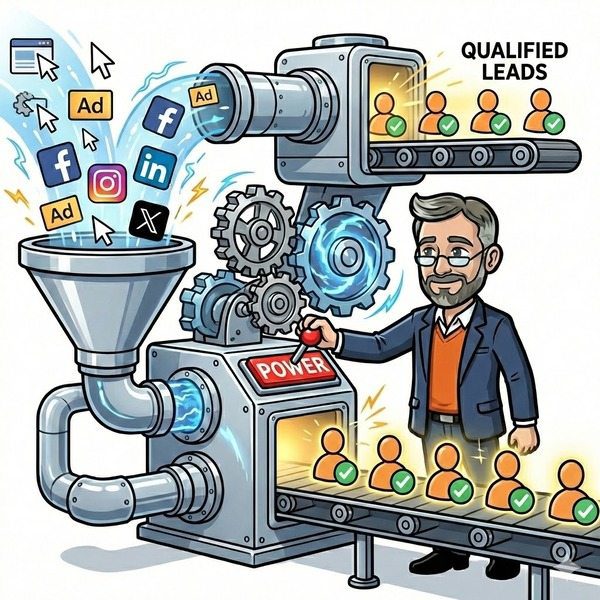
This guide is built for equipment dealers who want more qualified leads, stronger customer retention, and measurable revenue growth in 2026 and beyond. It covers every channel that matters for construction, agricultural, industrial, and rental equipment dealerships.
Table of Contents
Introduction: Why Digital Marketing Matters for Equipment Dealers in 2026
What Makes Equipment Dealer Marketing Different From Generic B2B Marketing
Building a Strong Digital Foundation for Your Equipment Dealership
SEO and Local Search: Getting Your Equipment Dealership Found First
Paid Media for Equipment Dealers: PPC, Local Ads, and Social Campaigns
Email Marketing, Audience Segmentation, and Customer Satisfaction Surveys
Content and Video Marketing That Builds Trust With Equipment Buyers
Analytics, CRM, and Proving Marketing ROI for Equipment Dealerships
Why Choose Pro Equipment Marketing
Next Steps: Build a Sustainable Equipment Dealer Marketing Strategy
FAQs: Common Questions About Equipment Dealer Marketing
Introduction: Why Digital Marketing Matters for Equipment Dealers in 2026
Contractors compare excavator specs on their phones between job sites. Farmers conduct extensive research before major equipment purchases, watching YouTube demos and reading comparison guides weeks before calling a salesperson. Fleet managers pull up dealer reviews and check parts availability online before they ever visit a lot. Equipment buyers perform rigorous online research before contacting a dealer, and if your dealership is invisible during that process, you lose.
In 2026, equipment dealers that rely only on word-of-mouth, yard visibility, and trade shows are losing deals to competitors with stronger digital marketing strategies. One 30-location ag and construction dealer saw +481% click growth over 15 months after investing in a real equipment dealership marketing strategy. That kind of gap is hard to close once a competitor opens it.
Equipment dealers sell complex, high-ticket products with long sales cycles and local service requirements. That makes a focused digital marketing approach and consistent customer retention effort absolutely critical. This article covers building a digital foundation, search engine optimization and local search, paid advertising, email marketing, customer satisfaction surveys, content and video, analytics, and how to choose the right marketing partner.
What Makes Equipment Dealer Marketing Different From Generic B2B Marketing
Equipment dealers operate at the intersection of high capital expense, local service dependency, and multi-stakeholder buying committees. A generic B2B marketing playbook will waste your budget because it ignores territory rules, OEM co-op programs, and the reality that your sales team fields inquiries from operators, procurement managers, and owners simultaneously.
Key differences that shape your equipment dealership marketing strategy:
- Long buyer journeys: A signed deal on an excavator, combine, or telehandler often takes 3 to 12+ months from first search to purchase order. Decision makers include operators, maintenance supervisors, and financial stakeholders.
- Territory constraints: Most equipment dealership transactions come from within a 50 to 150 mile radius due to haul costs, service logistics, and OEM territory rules. Marketing efforts must be geo-focused.
- Multi-brand realities: Many dealers carry multiple OEMs with different brand guidelines and co-op programs. Your distributor’s marketing plan has to build your dealership identity alongside brand-specific promotions.
- Service, rentals, and parts revenue: Aftermarket revenue often determines profitability. Marketing must promote service contracts, PM programs, and rental options alongside new equipment.
- Audience complexity: You need smart audience segmentation because a small concrete contractor, a municipal buyer, and a 500-acre row crop farmer all speak different languages and care about different specs. Flexible financing options can attract more buyers in the equipment market, but only if you present them to the right segment.
Building a Strong Digital Foundation for Your Equipment Dealership
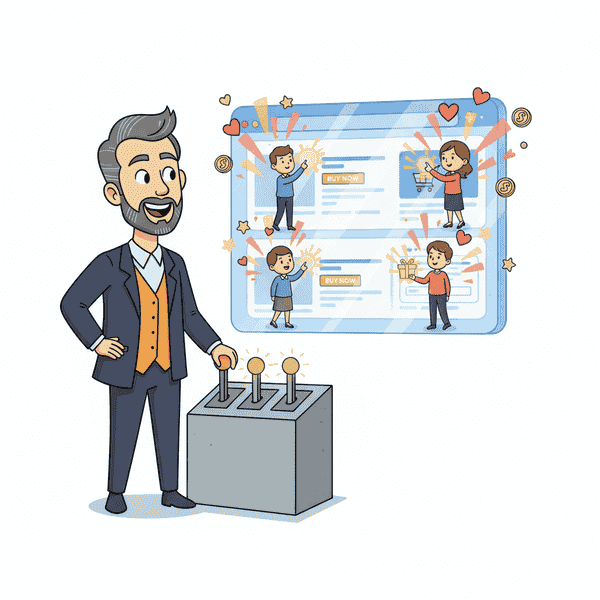
Before scaling ads or email campaigns, dealers need a website and tech stack that actually converts visitors into leads and phone calls. With 58% of agricultural website traffic expected from mobile devices by 2026, a mobile-first, fast-loading site is non-negotiable.
What a modern equipment dealership website should include:
- Transparent online inventories that include detailed specifications and current availability, updated regularly
- Clear photos of equipment, which improve buyer trust and decision-making
- “Request a quote,” trade-in forms, financing information, service request forms, and rental inquiry options
- Search and filter tools that work smoothly on phones and tablets from a job site or tractor cab
- CTAs tailored to different buyer intents: “Schedule a demo,” “Check availability,” “Book service,” “Request parts,” with both form and click-to-call options
Every form submission and phone call should flow into a CRM or lead management system from day one. Without that integration, you lose inquiries and cannot accurately attribute revenue to your marketing efforts later.
SEO and Local Search: Getting Your Equipment Dealership Found First
Local search visibility is crucial for equipment dealers. When a contractor searches “used excavator for sale near me” or a farmer searches “tractor repair” plus their county, being in the top local map pack and organic results wins calls and lot visits. Effective SEO helps your site appear prominently for relevant searches.
Keyword strategy: Long-tail keywords convert better and cost less to rank for. Target high-intent, geo-modified phrases like “used wheel loader for sale Dallas,” “combine header repair Iowa,” or “electric forklift rental Phoenix.” These purchase-intent queries deliver more traffic that actually converts than broad terms.
On-page SEO basics: Optimize title tags and H1s for each equipment category and location. Build internal links between model pages and service pages. Use schema markup for products and local businesses. Maintain clean URL structures so search engines can crawl your inventory efficiently. Tracking conversion rates is essential for optimizing SEO strategies over time.
Local SEO priority: Local SEO includes claiming your Google Business Profile and managing reviews. A complete Google Business Profile makes businesses 2.7 times more reputable in the eyes of potential customers. For each location, maintain accurate NAP data, hours, brands carried, service listings, and photos of your yard and showroom. Post promotions and respond to reviews consistently. Maintaining updated Google Business Profiles enhances local dealer visibility and feeds your sales funnel with high-intent leads.
Build location-specific pages for every major service area, combining brand names, equipment types, service and rental info, and local proof points. One forklift dealer in Houston dominates the local map pack across a 32-mile radius by maintaining this kind of structured local presence for every target keyword.
Paid Media for Equipment Dealers: PPC, Local Ads, and Social Campaigns
PPC advertising generates high-intent leads quickly for dealerships, providing immediate visibility compared to SEO strategies that compound over months. When your target audience is actively searching, paid advertising puts you in front of them today.
Search PPC strategy: PPC campaigns should be structured around buyer intent levels. Separate campaigns by category and intent: “buy skid steer,” “rent scissor lift,” “backhoe repair service.” Search ads should target high-intent buyers actively looking to purchase equipment, with ad copy and landing pages tightly matched to those searches. The average cost per click in Google Ads was $5.26 in 2025, but because equipment leads are high value, carefully controlled CPCs can still deliver strong ROI.
Geo-targeting: Geo-targeted PPC ads reach farmers and contractors within a realistic driving distance. Focus ad spend within your actual service and sales territory and adjust bids by distance rather than wasting budget on out-of-area traffic.
Seasonal planning: Front-load budgets around construction seasons, planting and harvest windows, and fiscal year-end purchasing cycles. Use historical sales data to time your PPC campaigns for maximum impact, especially with the economy potentially tightening.
Paid social: Social media platforms can be used to reach B2B equipment customers effectively. Use Facebook, Instagram, and LinkedIn for trade-in events, rental specials, and service packages, targeting by job title (construction project manager, farm owner, plant engineer) and location. Social media marketing and social media posts showcasing inventory or service capabilities drive awareness during the research phase of the buyer journey. Measure cost per lead and cost per opportunity from each channel to control your ad spend.
Email Marketing, Audience Segmentation, and Customer Satisfaction Surveys
For equipment dealers, email marketing and conducting customer satisfaction surveys are the backbone of customer retention and repeat purchase growth. These aren’t glamorous channels, but they’re where dealer customers generate the most predictable revenue.
Building and maintaining lists: Capture emails from website forms, trade shows, service counters, rentals, and parts orders. Up to 30% of email lists go bad each year, so clean your lists regularly to protect deliverability and engagement.
Audience segmentation: Segmented email lists improve engagement and relevance. Segment by equipment ownership, industry (construction, agriculture, industrial), fleet size, purchase history, and lifecycle stage (prospect, current customer, dormant customer). Personalized content tied to what someone actually owns or has serviced converts far better than generic blasts.
Email campaigns that work: Targeted email marketing can drive customer retention and loyalty. Emails remind customers of products and services offered, keeping your dealership top of mind. Email marketing nurtures leads over long sales cycles, and frequent emails reduce customer temptation to seek alternatives. Effective email campaigns for dealers include new and used inventory spotlights, seasonal maintenance reminders, service specials, and financing options tailored to the recipient’s segment. Automated maintenance alerts based on operating hours improve customer retention by delivering value rather than just promotions. Proactive customer engagement through these touchpoints can increase the lifetime value of equipment customers.
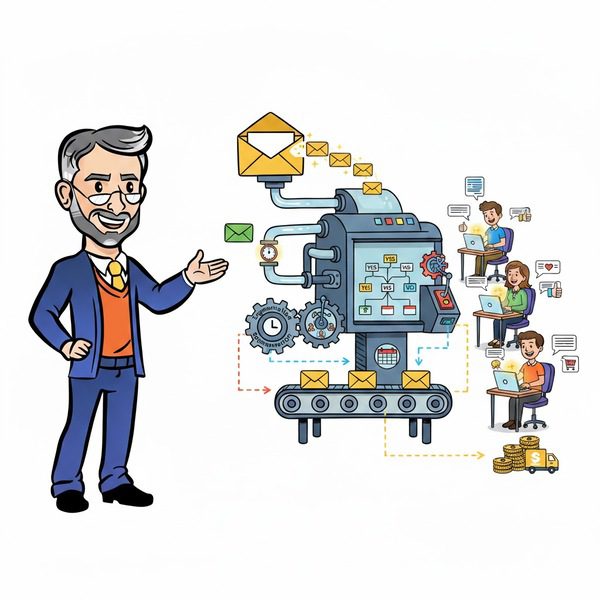
The numbers back this up: email marketing yields a 4,300% return on investment. Customers on email lists buy 2 to 3 times more often, and email marketing boosts purchase frequency by 2 to 3 times. Retention increases as customers purchase 2.9 times more equipment in year three. Dealers see a 4,300% ROI from email campaigns when they commit to consistent, segmented outreach. That is where customer revenue significantly increases.
Customer satisfaction surveys: Customer satisfaction surveys boost retention by 20 to 30%. Regular feedback surveys help uncover hidden customer service gaps, including several unfriendly accounting processes, slow service turnaround, or communication breakdowns that cause churn. A survey revealed at one dealership that billing confusion was the primary reason customers leave. Fixing that single issue helped increase retention and stopped them from losing customers.
Digital marketing increases customer retention by 20% to 30% when paired with structured surveys. Dealers who prioritize customer retention through customer satisfaction surveys understanding see measurable lifts in repeat purchase frequency and customer revenue. Without surveys, you are guessing why dealer customers churn.
Content and Video Marketing That Builds Trust With Equipment Buyers
Content marketing builds trust by answering customer questions first. Building content around buyer questions establishes dealerships as experts in a competitive landscape where potential customers are comparing three or four dealers simultaneously.
Content types that perform: Effective content marketing includes equipment comparison guides and checklists, such as “2026 compact track loader comparison” or “new vs. used telehandler breakdown.” Total cost of ownership articles, safety checklists, and seasonal maintenance tips all drive more traffic and nurture leads effectively. Content like maintenance tips outperforms promotional dealership messages because it delivers value before asking for a sale. Industry news roundups and financing explainers round out a strong content calendar.
Video marketing: Video content significantly influences farmers’ purchase decisions and is equally powerful for construction and industrial buyers. Video marketing effectively showcases equipment performance through yard walkarounds, operator-view demos, and service bay explainers. Demonstrating machinery in real-world conditions builds credibility with buyers in a way that spec sheets alone cannot. Publish long-form videos on YouTube for searchability, then repurpose clips for social media posts and embed them into relevant inventory and landing pages to lift conversion rates. Customer testimonials on video add another layer of trust.
Content and video fuel email campaigns and social media schedules, creating an integrated equipment dealership marketing approach rather than isolated tactics. Effective marketing for equipment dealers requires a multi-channel approach where content, video, email, and search reinforce each other.
Analytics, CRM, and Proving Marketing ROI for Equipment Dealerships
In 2026, equipment dealers cannot afford “spray and pray” marketing. Analytics and CRM integration are required to see which efforts produce quotes, deals, and current customers who keep coming back. Customer relationship management systems can enhance marketing efforts by connecting every lead to its source and outcome.
Analytics setup: Use Google Analytics with tag management for form submissions and click-to-call tracking. Add call tracking numbers for major campaigns. Set unified goal tracking for lead volume, demo requests, service bookings, and rental contracts. Measuring success requires tracking real pipeline metrics, not just impressions.
CRM integration: Every lead from PPC, organic search, email marketing, social media, and phone calls should be tracked with source, campaign, and outcome. This lets you see true cost per opportunity and cost per sale so your sales team and marketing team are working from the same data. Provide insights back to campaigns by identifying which audience segments and equipment categories produce the highest-margin deals.
Review rhythms: Monthly or quarterly, compare performance across channels. Identify which PPC campaigns, email campaigns, or content pieces drive the highest-value qualified leads and generating leads at the lowest cost. Reallocate budget toward what works. Use audience segmentation data from the CRM to refine targeting based on actual deal outcomes, not assumptions.
Why Choose Pro Equipment Marketing

Pro Equipment Marketing focuses exclusively on industrial, construction, agricultural, and specialty equipment dealers and distributors. We understand long sales cycles, OEM territory rules, co-op programs, and the balance between promoting brands and building your dealership identity.
Our services span website design for equipment dealers, SEO and local search, paid search and social campaigns, email marketing, content and video production, CRM setup and optimization, and conversion rate optimization. Every activity connects to leads, opportunities, and closed revenue through dashboards and regular review calls, not vanity metrics.
We have deep experience with multi-location dealer groups, including standardized reporting, consistent branding, and location-level campaign tailoring. For one client, a regional equipment dealer group, we helped increase qualified leads by more than 3x within 12 months while reducing cost per opportunity across all locations. Crucial information like this drives every recommendation we make.
Next Steps: Build a Sustainable Equipment Dealer Marketing Strategy
Equipment dealer marketing in 2026 demands an integrated digital marketing strategy across SEO, paid media, email, content, video, and CRM. One-off tactics do not compound. Consistent, measured execution does.
A prioritized action plan to get started:
- Audit your current digital presence: website speed, inventory pages, Google Business Profile for each location, analytics, and attribution setup
- Fix foundational issues: GBP accuracy, structured data, mobile usability, CRM and call tracking
- Launch or refine local SEO, then layer in PPC campaigns, structured email marketing, and content over the next 3 to 6 months
- Involve both your sales team and service leaders when designing campaigns so marketing messages match on-the-ground realities
Schedule a strategy call with Pro Equipment Marketing to audit your current digital marketing and identify the fastest path to more qualified leads and stronger customer retention. Dealers who invest now in this infrastructure will be better positioned through future market cycles, competitive landscape shifts, and whatever the industry throws at them next.
FAQs: Common Questions About Equipment Dealer Marketing
These are the questions owners, general managers, and sales leaders at equipment dealerships ask most often about digital marketing.
How much should an equipment dealership budget for digital marketing?
Equipment dealers in growth mode typically allocate 8 to 12% of gross revenue to marketing, with 85 to 95% of that going to digital channels. Budget should scale with ticket size, territory count, and margin goals. A single-location dealer and a 20-location dealer network need very different spending levels, but both benefit from treating marketing as a revenue investment rather than an expense line.
Which digital marketing channel usually works best for equipment dealers?
No single channel wins alone. A crucial strategy combines local SEO, paid search, email marketing, and content marketing. For new equipment, SEO and PPC drive awareness and lead capture. For used equipment and rentals, Google Ads and inventory-specific landing pages convert fastest. For service and parts, email marketing and Google Business Profile visibility keep frequent purchases flowing.
How long does it take to see results from a new digital marketing strategy?
PPC and Google Business Profile optimization can deliver quick wins in 30 to 90 days. SEO and content marketing typically show measurable lead-generation impact by 6 months, with the channel often becoming dominant at 12 to 18 months. The sales cycle for heavy equipment means patience and consistent execution are essential.
How do customer satisfaction surveys actually help marketing?
Surveys tie directly to lower churn, higher review scores, and more effective email marketing and retention campaigns. They reveal friction points like billing confusion or slow service response that cause customers to leave. Fixing those issues improves retention rates and generates more positive reviews that strengthen your local search visibility.
What if our dealership doesn’t have an internal marketing team?
Many heavy equipment dealers and construction equipment dealers operate without dedicated marketing staff. Partnering with a specialist agency that understands equipment dealership realities, including OEM co-op programs, territory constraints, and long sales cycles, lets you implement a full digital marketing strategy without building an internal team from scratch. We recommend implementing a phased approach starting with foundational items like website, GBP, and CRM, then layering in SEO, paid media, and content.
What role does social media marketing play for equipment dealers?
Social media posts showcasing inventory, service capabilities, and customer success stories keep your dealership visible during the research phase. LinkedIn reaches decision makers and purchasing managers, while Facebook and Instagram work well for local contractors and farmers. It is an essential part of staying relevant throughout the buyer journey.