
Table of Contents
Introduction: Why Construction Equipment Needs a Specialized Marketing Agency
How a Construction Equipment Marketing Agency Actually Helps
Understanding Today’s Construction and Heavy Equipment Buyer
Core Marketing Strategy for Construction Equipment Brands
Search Engine Optimization and Search Engine Marketing for Heavy Equipment Companies
Digital Marketing Strategies Beyond Search: Social, Email, and Outbound
Website and Web Development for Construction Equipment Firms
Content Marketing That Reduces Risk for Equipment Buyers
Common Mistakes Heavy and Construction Equipment Companies Make in Marketing
When It’s Time to Hire a Construction Equipment Marketing Agency
Why Choose Pro Equipment Marketing as Your Construction Equipment Marketing Agency
How Our Process Works for Construction Equipment and Heavy Machinery Clients
Next Steps: Work With a Construction Equipment Marketing Agency That Understands Revenue
FAQs: Construction Equipment Marketing Agency Insights
Introduction: Why Construction Equipment Needs a Specialized Marketing Agency
Construction and heavy equipment buyers have changed how they purchase. By 2026, the majority of fleet managers, procurement leads, and construction superintendents start their buying journey online, checking equipment specifications, comparing uptime records, reviewing rental availability, and evaluating service support before they ever pick up the phone. Heavy equipment purchases involve high costs and long decision timelines, which means buyers want clarity and confidence before committing.
A construction equipment marketing agency exists to bridge the gap between how these buyers research and how most equipment companies actually market themselves. Unlike a general marketing agency, a specialized partner understands the technical language, long B2B sales cycles, and complex dealer-to-OEM relationships that define this industry. Industry expertise helps differentiate these marketing strategies from what a generic agency can offer.
Most construction machinery businesses still depend heavily on referrals, word of mouth, and trade shows. Their websites are outdated. Inventory sits invisible to online searchers. Lead flow is inconsistent. A construction equipment marketing agency creates promotional campaigns for equipment manufacturers and dealers that fix exactly these problems.
This article walks through the specific digital marketing strategies—search engine optimization, search engine marketing, social media marketing, content marketing, and web development—that increase qualified leads, not just website traffic.
How a Construction Equipment Marketing Agency Actually Helps
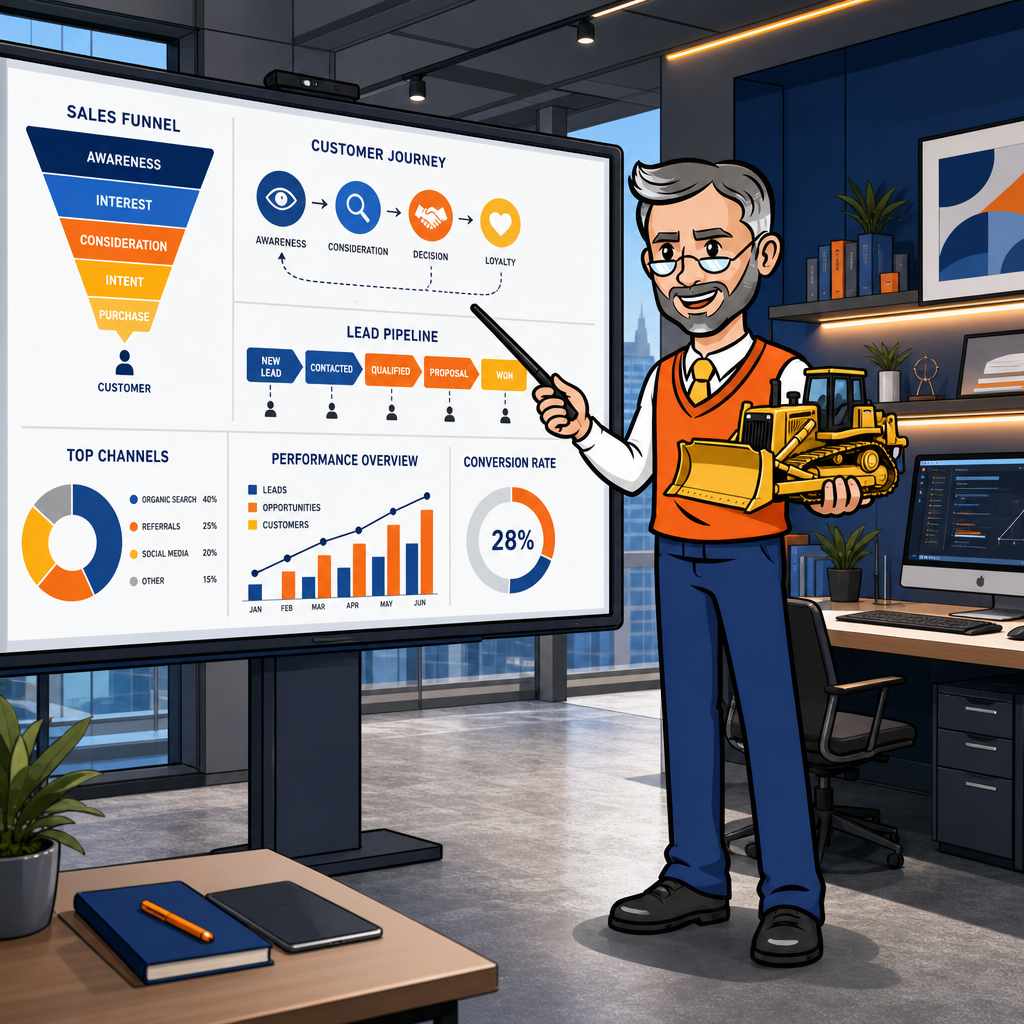
A specialized marketing agency acts as a revenue partner for construction equipment companies, not a vendor that delivers reports nobody reads. The agency translates field knowledge—machine classes, jobsite applications, attachment compatibility, transport constraints—into a clear marketing strategy that attracts fleet managers, project managers, and procurement teams searching for solutions right now.
Core outcomes an agency should deliver:
- More RFQs and bids from projects that match your equipment and service capability
- Better rental fleet utilization, especially filling idle units during shoulder seasons
- Higher-margin equipment sales with shorter decision cycles, because buyers arrive pre-educated
- Stronger dealer networks supported by consistent local marketing
Digital marketing increases sales for heavy equipment companies when it connects the right machines to the right buyers at the right moment. Lead generation campaigns capture high-value prospect data and route it to your sales team, not a junk inbox. Expertise in equipment marketing generates higher-quality leads because the messaging, targeting, and qualification criteria are built around actual buying triggers.
As a practical example, consider a dealer with a static inventory page that lists machines with stock photos and no specs. A specialized agency turns that page into a spec-driven lead generator—complete with operating weight, hydraulic flow, transport dimensions, and attachment options—so buyers can self-qualify and submit informed quote requests. Marketing agencies also support manufacturers by helping to optimize dealer marketing efforts across multiple locations and territories.
Understanding Today’s Construction and Heavy Equipment Buyer
Buyer behavior in the construction industry has shifted dramatically since 2020. Today’s buyer expects the same level of detail and transparency they experience in consumer purchases, applied to a $250,000 excavator or a six-month crane rental. They compare equipment specifications, read reviews, evaluate service networks, and check financing options before engaging a salesperson. AI-assisted search and voice queries like “which excavator for utility trenching near me” are now standard research behaviors.
Heavy equipment companies are evaluated on three things before a buyer submits an inquiry:
- Capability – Does the machine fit the job, terrain, and regulatory requirements?
- Availability – Is it in stock, available for rent, or scheduled for delivery?
- Risk reduction – What is the uptime history, parts/service support, and warranty?
B2B strategies target decision-makers like contractors and project managers, but not all decision-makers care about the same things. Fleet and equipment managers focus on uptime and total cost of ownership. Construction superintendents care about machine fit and safety. Maintenance managers evaluate parts availability and service response. Procurement leads look at pricing, warranty, compliance, and financing.
Specialized agencies translate technical specifications into clear benefits for buyers by tailoring digital journeys around these personas instead of treating everyone as a generic “contractor.” Digital marketing increases sales by targeting specific demographics within each persona group, ensuring the right content reaches the right person at the right time.
Core Marketing Strategy for Construction Equipment Brands
A strong marketing strategy for construction equipment brands moves beyond scattered tactics into an integrated system. An experienced equipment marketing agency can connect SEO, paid advertising, content, and sales enablement into one coordinated strategy. Too many companies investing in marketing treat each channel as a silo: a Google Ads campaign here, an occasional email blast there, a trade show booth once a year. That approach wastes money.
Start by mapping your equipment categories—excavators, aerial lifts, crushers, compact machinery, material handling systems—to specific markets and applications like site prep, road building, utility work, mining, and demolition. Agencies conduct market research to identify profitable customer segments within those intersections, then prioritize where margins are highest and competition is lowest.
The channels should match intent levels:
| Intent Level | Channels | Goal |
|---|---|---|
| High (ready to buy/rent) | Search engine optimization, search engine marketing, email, outbound | Demand capture |
| Mid (evaluating options) | Content marketing, social media marketing, video | Demand creation |
| Low (building awareness) | Display advertising, digital advertising, trade publications | Brand visibility |
Agencies filter advertising to reach niche B2B buyers through trade publications and industry-specific platforms rather than broad consumer channels. And while traditional marketing methods like trade shows still have a role, trade shows require pre-show promotions and post-event lead nurturing to deliver meaningful ROI. They cannot be your only demand engine.
Search Engine Optimization and Search Engine Marketing for Heavy Equipment Companies
Search engine optimization and search engine marketing work together to capture high-intent demand from buyers actively looking for equipment, parts, rentals, and service. SEO increases visibility for heavy equipment companies online over the long term, while paid search (SEM) delivers immediate results for urgent needs.
Practical SEO tactics for construction equipment companies:
- Build dedicated equipment pages for each model and category with clear specs, attachments, compatibility notes, and application guidance
- Create location pages for every dealer branch or rental yard with unique local content about regional terrain, job types, and transport considerations
- Develop knowledge content targeting questions like “emissions compliance by state” or “hydraulic flow vs. pump size for trenching attachments”
- Focus keyword research on long-tail keywords for better targeting—phrases like “compact track loader rental for winter utility work” convert at far higher rates than broad terms
Local SEO helps construction equipment companies reach nearby customers who are ready to act. Optimizing your Google Business Profile enhances local search visibility and helps your branches appear in local search results when contractors search “heavy equipment rental near me.” Local SEO also improves visibility for heavy equipment companies across multiple service territories when each location has distinct, relevant content.
High-quality backlinks from industry publications, equipment associations, and project case studies improve search engine rankings for equipment websites and build domain authority over time. Marketing agencies optimize websites for equipment-specific searches by implementing structured data, fixing technical issues, and building content architectures that match how buyers actually search.
Search engine marketing (PPC) for heavy equipment:
Paid advertising through Google Ads is particularly effective for urgent, high-intent needs: same-day rentals, emergency repair, peak-season equipment availability. PPC ads average a return of $2 for every $1 spent, making them a reliable channel for immediate lead generation. Build ad groups around phrases like “near me,” “today,” “emergency,” and specific model numbers. Use tight geotargeting around your dealer locations and service territory to avoid wasting spend on buyers you cannot serve.
Digital Marketing Strategies Beyond Search: Social, Email, and Outbound
Search engine optimization and search engine marketing are powerful, but they are not sufficient alone for the long, complex sales cycles common in the heavy equipment industry. Construction equipment businesses need multiple touchpoints to nurture potential customers from first awareness through final purchase.
Social media marketing:
Social media marketing increases brand awareness among equipment buyers when it showcases real machines on real jobsites—not polished stock photography. Video marketing is essential for showcasing heavy machinery features, and video content showcases equipment performance and technical advantages in ways that spec sheets cannot. Post walkaround clips, operator tips, before-and-after project photos, and quick maintenance demonstrations. Social media advertising effectively reaches potential customers in construction through platforms like LinkedIn (for procurement and fleet managers), YouTube (for operators and project leads), and Instagram (for visual impact). One equipment dealer generated over 45,000 social and video views alongside their email campaigns by keeping content authentic and field-focused.
Email marketing:
Effective email marketing keeps construction equipment brands top-of-mind throughout long procurement cycles. Segment your lists by buyer type: purchasers, renters, service/parts customers. Send inventory “hot lists,” seasonal work reminders, service interval alerts, and financing promotions. Email marketing helps maintain connections with past clients and prospects, turning one-time buyers into repeat customers. Email marketing can keep you top-of-mind with potential customers without being intrusive—if the content is relevant. Long sales cycles are nurtured through automated email sequences that deliver the right information at each stage. Nurturing campaigns aid in maintaining contact during long procurement cycles where months may pass between initial inquiry and final decision.
Outbound and account-based marketing:
For large construction firms, mining companies, infrastructure projects, and government entities, inbound alone will not reach the buying committee. Outbound strategies—AI-assisted prospecting, account-based outreach, direct access to decision-makers—are essential. Account-Based Marketing generated $325,000 in closed business for one client by targeting specific high-value accounts with personalized messaging and coordinated multi-channel touchpoints.
Website and Web Development for Construction Equipment Firms
Your website should function as a digital yard and a qualification tool, not an online brochure. When a fleet manager or procurement lead lands on your site, they need to find answers fast, or they leave for a competitor who makes it easier.
What a conversion-focused equipment website needs:
- Fast performance: pages loading in under three seconds, especially equipment pages with images and spec tables
- Mobile-friendly design, because many visits happen from jobsites on phones
- Clear calls to action on every page: “Get a Quote,” “Check Inventory,” “Schedule Service,” “Book a Rental”
- Structured inventory pages with filters by application, equipment categories, dimensions, and transport class
- Custom WordPress development or purpose-built platforms that support the complexity of equipment listings
Quality content builds trust and credibility with potential customers. Include downloadable tech sheets, coverage maps, certifications, and lists of project types served. Your landing pages should provide enough detail that buyers can self-qualify before reaching your sales team.
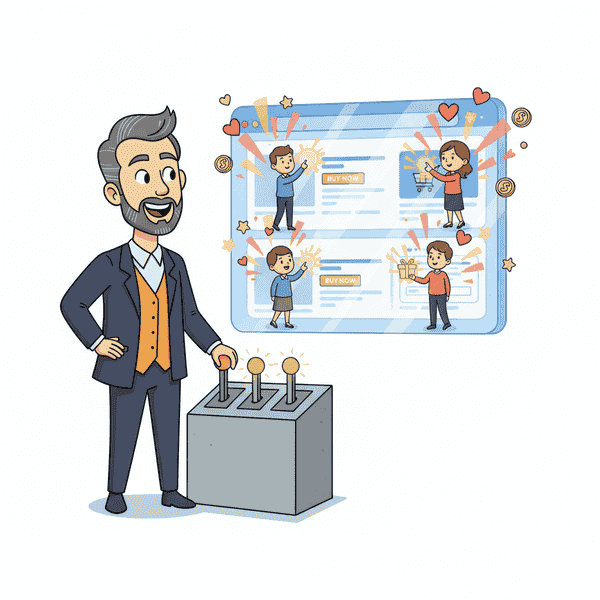
Web development should integrate with CRM and marketing automation so that every inquiry, quote request, and inspection form is tracked through the full sales funnel. Without this integration, you lose visibility into which channels drive revenue and which waste budget.
Content Marketing That Reduces Risk for Equipment Buyers
In the heavy construction equipment market, buyers face real operational risk with every purchase or rental decision. Content marketing addresses customer pain points and questions effectively by providing answers before a salesperson is ever involved. Effective content marketing supports decision-making in high-stakes purchases where the wrong machine choice can cost tens of thousands in downtime.
Concrete content types that work:
- “Equipment fit” guides that match machine classes to specific job types and terrain
- Comparison articles (e.g., “skid steer vs. compact track loader for winter utility work”)
- Lifecycle cost explainers showing total cost of ownership beyond sticker price
- Safety and inspection checklists that demonstrate compliance knowledge
- Technical content creation that builds engineering credibility for buyers evaluating precision equipment
Content should focus on reducing buyer uncertainty in equipment choices. Jobsite-first content answers buyer questions and builds trust because it comes from real operational experience, not generic blog topics that any AI tool could generate. Draw from your service managers, operators, and project leads for insights that cannot be found in a product brochure.
This type of content also supports both search engine optimization and AI-driven search experiences. When your content is detailed, specific, and grounded in real operations, it earns search visibility and online reputation that generic pages never will.
Common Mistakes Heavy and Construction Equipment Companies Make in Marketing
Many heavy equipment marketing programs fail quietly, even when budgets are being spent. Here are the most common mistakes:
- Treating machines like consumer products. Focusing on features and glossy images instead of uptime, job application fit, and total operating cost. Fix: use job-based messaging, before-and-after comparisons, and TCO calculators.
- Hiding critical information behind “contact us” forms. Buyers want to know transport size, power, weight, and emissions tier before calling. If specs are missing, they leave. Fix: publish detailed equipment specifications and alternatives openly.
- Ignoring service territory and local context. Not differentiating content by region or listing service areas. Fix: build location pages with regional proof, real jobsite photos, terrain notes, and regulatory context to boost local visibility.
- Using generic claims without proof. “Industry-leading uptime” means nothing without data, operator testimonials, or third-party validation. Fix: collect and publish real reviews, certifications, and case studies.
- Measuring vanity metrics instead of revenue impact. Tracking website traffic, social followers, and impressions without connecting them to pipeline. Fix: tie KPIs to the metrics that matter—RFQs, quote requests, booked rentals, and closed deals.
- Neglecting online visibility in favor of referrals alone. Word of mouth is valuable but unpredictable and unscalable. Fix: complement referrals with a digital presence that captures demand 24/7.
A specialized construction equipment marketing agency helps you recognize and fix these issues with a clear, data-driven plan.
When It’s Time to Hire a Construction Equipment Marketing Agency
Not every company needs a marketing agency right away. But certain signals mean DIY tactics or generic partners are holding your growth back:
- Inbound leads have plateaued despite a strong local reputation
- Your sales team spends too much time chasing unqualified web leads
- Trade shows deliver diminishing returns year after year
- You have no clarity about which marketing channels actually produce revenue
- You are expanding into new geographies, opening branches, launching new equipment lines, or supporting a growing dealer network
Timing matters. Companies investing in new territories or product launches need digital marketing strategies in place before the first unit ships, not after.
An experienced construction equipment marketing agency will quickly audit your current efforts, set realistic KPIs, and build a 6–12 month plan tied to pipeline and booked revenue. Agency analysis tracks advertising spend and leads through to sales revenue, so every dollar is accountable. The goal is to generate leads that turn into contracts—not just clicks that look good in a dashboard. For a closer look at OEM and co-op requirements, see how to choose a marketing agency for equipment dealers.
Why Choose Pro Equipment Marketing as Your Construction Equipment Marketing Agency
Pro Equipment Marketing is a revenue-focused B2B equipment marketing consultancy built for industrial, manufacturing, and heavy equipment brands. We do not dabble in construction—it is core to what we do.
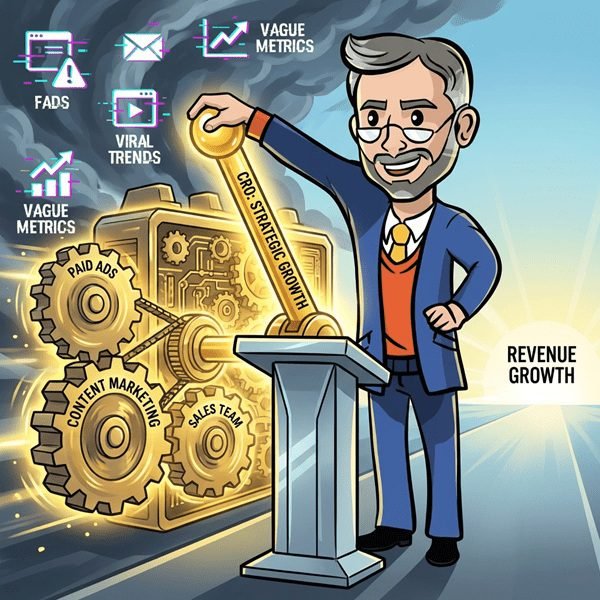
Services built for construction equipment companies:
- Web development and custom WordPress development optimized for equipment listings
- Search engine optimization and AI-oriented search optimization
- Paid search, Google Ads, and social media advertising
- AI-assisted outbound prospecting and account-based marketing
- CRM implementation, marketing automation, and conversion rate optimization
- Email marketing, video marketing, and content marketing
- Graphic design, web design, and landing page optimization
We work with equipment manufacturers, OEMs, heavy equipment dealers, distributors, franchisors, and rental companies across construction, material handling, mining, waste and recycling, and warehouse automation. Unlike agencies serving other industries that happen to take on an equipment client, we understand the nuances of dealer networks, channel agreements, long technical sales cycles, and customer acquisition in the heavy equipment business.
Our differentiator is simple: we connect marketing activity to measurable pipeline and revenue. We support both marketing inbound and outbound lead generation. We are a full service agency for equipment brands that want growth they can measure.
How Our Process Works for Construction Equipment and Heavy Machinery Clients
Phase 1: Diagnostic We interview your sales and service leaders, review your current digital assets, map your equipment lines, and analyze historical lead sources and close rates. This gives us a clear picture of where opportunities are being missed.
Phase 2: Strategy and Build We define buyer personas, design website and web development improvements, set up tracking and attribution, and configure search engine optimization and paid media campaigns. Everything is built to match your equipment categories, service territory, and revenue goals.
Phase 3: Optimization Monthly and quarterly reviews drive continuous improvement. We test messaging, landing pages, and digital advertising performance. We align marketing strategies with seasonality, project cycles, and dealer network feedback. The result is a system that gets smarter and more profitable over time.
Next Steps: Work With a Construction Equipment Marketing Agency That Understands Revenue
The construction equipment companies winning right now treat marketing as a revenue system, not a cost center. Every month without a clear digital strategy is another month of leads going to competitors who showed up first in search engine results.
If you are ready to generate leads that convert into bids, rentals, and long-term contracts, reach out to Pro Equipment Marketing for a diagnostic audit. We will show you exactly where your digital presence stands today and build a plan to move it forward.
FAQs: Construction Equipment Marketing Agency Insights
These FAQs address common questions heavy equipment and construction brands ask before choosing a marketing partner.
What does a construction equipment marketing agency do differently from a general B2B agency?
A specialized agency understands equipment categories, applications, safety and compliance constraints, and long buying cycles. This shapes everything from keyword research to lead qualification. Campaigns are designed around real triggers—project awards, breakdowns, seasonal work—rather than generic “always on” tactics. The content focuses on uptime, service support, and jobsite application fit, which general agencies simply cannot produce without deep equipment knowledge.
How long does it take to see results from heavy equipment marketing?
Paid search and paid advertising can drive inquiries within weeks. Search engine optimization and content marketing for heavy equipment companies typically build meaningful traction over three to nine months. Rentals and short-term service work show impact faster than multi-million-dollar capital equipment sales. Track early indicators like qualified form fills, quote requests, and booked demos alongside long-term revenue metrics.
Which digital marketing channels work best for construction and heavy equipment?
High-intent search (SEO and SEM) is usually the primary driver of bottom-funnel qualified leads, especially for rentals, service, and parts. Social media marketing and email marketing are strong for nurturing relationships with contractors, project owners, and fleet managers over time. Outbound and account-based tactics are often essential for targeting large construction firms, industrial plants, local businesses, and government or infrastructure buyers.
How do you measure ROI on construction equipment marketing campaigns?
Measurement should connect ad spend and content efforts to pipeline stages: inquiries, qualified opportunities, quotes, and closed deals. CRM and call tracking attribute leads from search engine optimization, search engine marketing, online advertising, and social media back to revenue and margin. Track specific profit centers—sales, rentals, parts, service—so you can see where marketing services are most effective and adjust spend accordingly.
Can a marketing agency help both dealers and manufacturers at the same time?
Yes. An experienced agency can support OEMs, distributors, and equipment dealers with coordinated strategies as long as territories, messaging, and lead-routing rules are clearly defined. This includes creating dealer locator systems, co-branded landing pages, and localized content that respects channel agreements. Clarity on who owns which lead types—by geography, industry segment, or equipment line—is crucial to protect relationships across dealer networks.
Is social media really useful in the heavy equipment industry?
Social media marketing is effective when it showcases real machines, projects, operators, and service teams instead of generic stock images. Short, captioned jobsite clips, before-and-after project photos, and quick maintenance tips resonate with field crews and construction brands alike. Social is rarely the sole lead driver for a heavy equipment business, but it works well when connected to campaigns, email sequences, and search visibility—building brand visibility and trust that pay off during the decision stage.