
Table of Contents
Introduction: What Equipment Franchise Digital Marketing Actually Needs to Do
The Business Model Behind Equipment Franchise Growth
Core Principles of Franchise Digital Marketing for Equipment Brands
Building a High-Performing Website and Location Experience
Local SEO and GEO/AEO: Making Every Territory Discoverable
Paid Search and Paid Social: Turning Budget into Booked Rentals and Quotes
Content Marketing That Moves Real Equipment Deals Forward
Email Marketing and Marketing Automation Across the Network
Customer Relationship Management (CRM) and Lead Routing for Multi-Location Equipment Franchises
Marketing Systems, Playbooks, and Enablement for Franchisees
Common Equipment Franchise Digital Marketing Mistakes to Avoid
How to Choose the Right Franchise Marketing Partner for Equipment Brands
Why Choose Us as Your Equipment Franchise Marketing Partner
Next Steps: Build a Digital Marketing System for Sustainable Equipment Franchise Growth
FAQs: Equipment Franchise Digital Marketing
Introduction: What Equipment Franchise Digital Marketing Actually Needs to Do
Equipment franchise digital marketing in 2026 is no longer optional. If your franchise network still depends primarily on trade shows, referrals, and OEM relationships to fill the pipeline, you are leaving revenue on the table. With 40% growth in digital channels reported across franchise marketing in recent years, the shift is well past the early-adopter phase.
What makes franchise digital marketing unique in the equipment world is its dual mandate. You need campaigns and systems that simultaneously support franchise development—selling territories and recruiting prospective franchisees—and drive local revenue at every branch through rentals, sales, and service. These are fundamentally different funnels with different audiences, timelines, and conversion events.
This article gives you a practical framework for equipment franchise digital marketing: channel-by-channel guidance across search engine optimization, paid ads, email marketing, content marketing, and customer relationship management. You will also learn how to evaluate and choose a franchise marketing partner who actually understands multi-location equipment operations, long sales cycles, and the realities of $150K telehandlers and $500K processing lines.
The Business Model Behind Equipment Franchise Growth
The equipment franchise model typically works like this: an OEM or master franchisor holds the brand, product standards, and systems. Regional franchisees operate local sales, rental, and service operations within defined territories. The franchisor wants brand penetration and unit count. Franchisees want profitable local deal flow, fleet utilization for rentals, and a healthy backlog for capital equipment sales.
This split creates two funnels that franchise marketing must serve at once:
- Franchise sales funnel: Awareness among franchise candidates, discovery days, territory awards. Digital marketing impacts franchisee recruitment and profitability at every stage. Since 73% of franchisees find opportunities online, your franchise development marketing must be visible where candidates are searching.
- Local customer funnel: Specifiers, contractors, and fleet managers moving from research to quote requests, demos, rental reservations, and repeat accounts.
Typical deal cycles vary wildly: same-day for construction equipment rentals, 3–18 months for new capital machines in material handling or industrial processing. Franchise systems generate leads through centralized marketing efforts, but the conversion and follow-up happen locally. This means your digital marketing strategies need different campaigns, content offers, landing pages, and measurement for each funnel.
Core Principles of Franchise Digital Marketing for Equipment Brands
Four principles govern effective franchise digital marketing for equipment brands:
Brand consistency with local relevance. Effective digital marketing requires balancing brand authority with localized execution. Corporate messaging, visual identity, and positioning must stay consistent, but each franchise location needs city-level content, local fleet imagery, and territory-specific offers. One-size-fits-all national campaigns almost never work for a multi-location equipment network where one branch rents boom lifts to construction crews and another sells forklifts to warehousing operations.
Measurable pipeline impact. Vanity metrics kill credibility. Every channel should tie back to quote requests, demo bookings, rental reservations, and ultimately invoiced revenue. This requires unified tracking: UTMs, call tracking, CRM integration, and clear attribution by location and channel.
Repeatable franchise marketing systems. Standardized assets—landing page templates, ad copy frameworks, email sequences—that can be localized by city, industry, or fleet mix. Without this, you get chaos: one franchisee running DIY Google Ads on “excavator rental” at $40 CPC with no conversion tracking while another does nothing at all.
Long-term competitive advantage. SEO builds long-term competitive advantages for franchises that invest consistently. Franchises with a strong online presence attract higher-quality leads than those relying purely on traditional marketing or word of mouth.
Building a High-Performing Website and Location Experience

Your corporate website is the central hub for the brand. But each franchise location needs its own optimized presence, either as a dedicated location page or a microsite within the main domain.
Every location page should include:
- City and state in the H1 heading
- Inventory focus (skid steers, aerial lifts, forklifts, etc.)
- NAP (name, address, phone) info and service radius
- Quote request forms segmented by machine type
- Click-to-call and click-to-text buttons
- A “request a demo” or “book a site visit” option
Create location-specific landing pages to capture local search demand for equipment. This is where web development meets franchise strategy: each page must feel local while staying on-brand.
For equipment franchises, consider live or synced inventory widgets, rental reservation forms, and online scheduling for service appointments. Superintendents searching on a phone at a job site need sub-2-second load times and mobile-first design. If your site takes five seconds to load, they will call your competitor instead.
On the technical side, the website must tie into your franchise digital marketing systems: unique call tracking numbers per location, form submissions feeding directly into a shared CRM, and UTM parameters on every campaign link so you can attribute leads accurately.
Local SEO and GEO/AEO: Making Every Territory Discoverable
Local SEO is non-negotiable for equipment franchises in 2026. Equipment buyers often search with geographical intent—queries like “boom lift rental Dallas” or “forklift repair near me.” Local SEO drives foot traffic to franchise locations and directly influences rental and service revenue.
Start with the basics for each location:
- Google Business Profile: Optimizing Google Business Profiles increases local visibility. Choose correct categories (e.g., “equipment rental agency,” “construction equipment supplier”), add service areas, upload photos of actual fleet, and keep hours updated.
- On-page content: Build service-area pages by metro, industry vertical pages (construction, agriculture, warehousing), and use geo-modified keywords throughout.
- Directory citations and NAP consistency: Ensure name, address, and phone are identical across all local listings management platforms.
Reviews are critical. 86% of consumers read reviews before choosing a local business. Franchise systems should manage online reviews for better recruitment and customer trust alike. Managing online reviews influences franchisee perceptions significantly, so respond professionally to every review—positive or negative. Reputation management software helps track reviews across platforms so nothing slips through.
For AI search readiness, structure content so it surfaces in AI Overviews and chatbot responses. More than three-quarters of commercial buyers now use AI-driven tools to research equipment. Include FAQ sections with clear, direct answers, use schema markup for LocalBusiness and FAQ, and write content that answers specific questions like “What size lift do I need for a 40-foot ceiling?” This is where answer engine optimization and generative engine optimization intersect with local search visibility.
Paid Search and Paid Social: Turning Budget into Booked Rentals and Quotes
Paid advertising allows precise targeting based on demographics, geography, and search intent, making it one of the fastest ways to generate leads for equipment franchises.
Run targeted Google Ads using specific equipment keywords to improve conversion rates. Focus on high-intent terms: “telehandler rental near me,” “used wheel loader for sale Houston,” or “construction forklift with operator.” Use geo-targeted PPC advertising to capture local commercial intent traffic, with tight radius targeting around each branch location.
For franchise networks, campaign structure matters. A corporate-controlled master account with location-level campaigns prevents budget waste and internal competition between nearby franchisees. Use territory exclusions and negative location targeting so two branches are not bidding against each other for the same zip codes.
Use paid social campaigns to target contractors and industry professionals through Meta and LinkedIn. Social media advertising on LinkedIn is particularly effective for franchise development marketing—reaching prospective franchisees and B2B buyers in specific industries like warehouse automation or material handling. Social media builds communities and engages prospective franchisees when you run awareness campaigns for new store launches or vertical-specific content.
Use retargeting to re-engage visitors who showed interest in specific equipment but did not convert on their first visit. Every paid campaign should point to a location-level landing page with clear CTAs and conversion tracking—not the homepage. Online advertising without proper landing pages and tracking is just expensive brand awareness.
Content Marketing That Moves Real Equipment Deals Forward
Content marketing in the equipment space is fundamentally different from consumer content. Your audience includes technical buyers who need safety and compliance information, total cost of ownership analysis, and used-versus-new comparisons before they will pick up the phone.
Specific content formats that work for B2B equipment franchise businesses:
- Application guides (“Which lift do I need for a 4-story facade project?”)
- Comparison charts (rent vs. buy, new vs. reconditioned)
- Productivity and ROI calculators
- Jobsite safety checklists by equipment type
- High-utility content like maintenance guides builds trust in the equipment sector
High-quality video content showcases machine capabilities and reassures buyers. Publish video content to demonstrate equipment performance and reliability. Video can show machine capabilities, ease of operation, and customer success stories, all in formats that work on YouTube, product pages, and social media.
Educational posts help clients understand equipment before considering a purchase, which shortens sales cycles and improves lead quality. Social media can showcase customer success stories to humanize the brand and build credibility across franchise locations.
For franchise networks, corporate creates master content templates and assets. Franchisors often provide pre-created marketing content for franchisees, who then localize it with regional project examples, local customer spotlights, and territory-specific case studies. Distribution spans blog posts optimized for search engines, gated guides for email capture, YouTube embeds on product pages, and content snippets for social media management and email newsletters.
Email Marketing and Marketing Automation Across the Network
Email marketing serves two distinct roles in equipment franchise systems: nurturing local customer relationships and running franchise development drip sequences for candidates.
Email marketing is a cost-effective way to engage customers across the entire franchise network. Structure lists by geography, industry vertical (concrete contractors, landscapers, warehousing operations), and lifecycle stage (prospect, active renter, dormant account).
Concrete campaign examples that drive results:
- Rental return follow-ups with feedback requests and rebooking offers
- Seasonal fleet campaigns (snow equipment availability, aerial lift peak-season pricing)
- Service reminder emails tied to maintenance schedules
- Reactivation flows targeting accounts inactive for 6–12 months
Automated email marketing nurtures leads with personalized communication at scale. Segment automated email campaigns to different buyer personas to increase engagement—a concrete contractor does not need the same message as a warehouse manager. Automation can streamline follow-up communications with customers after a rental or purchase, reducing the manual burden on local staff.
For franchise development, email sequences guide candidates from initial inquiry through webinars, FDD review, and discovery days. Positive franchisee testimonials embedded in these sequences improve recruitment quality. Privacy and compliance matter here: maintain proper opt-in practices, clarify national versus location-level branding, and define franchisees’ responsibilities within corporate email marketing systems.
Customer Relationship Management (CRM) and Lead Routing for Multi-Location Equipment Franchises
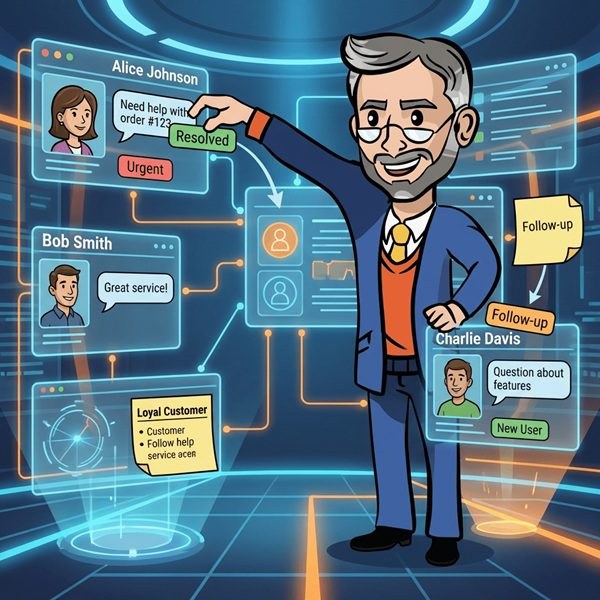
A shared CRM is the backbone of modern franchise digital marketing. Without a single source of truth for leads, opportunities, and accounts across locations, you cannot measure what is working or hold anyone accountable.
Practical CRM requirements for equipment franchises include tracking by unit type, quoting history, rental frequency, industry vertical, and multiple contacts per account. Equipment deals are rarely single-contact—you might have the site superintendent, fleet manager, and procurement officer all involved.
Lead routing rules should auto-assign website and ad leads to the correct franchisee based on zip code, product interest, or form selection. Speed matters: set SLAs for response time. A six-figure equipment inquiry that sits in a queue for 48 hours is a lost deal.
Marketing automation and CRM alignment enables email sequences triggered by lifecycle stage, automated tasks for sales reps when a lead hits a scoring threshold, and lead scoring based on behaviors like viewing a product page or downloading a spec sheet. Reporting dashboards should show pipeline by location, quote volume, win rate, and revenue attributed to each digital marketing channel. Ideally, connect CRM data to your ERP or rental management system for full revenue attribution.
Marketing Systems, Playbooks, and Enablement for Franchisees
A complete franchise marketing system gives every location a repeatable playbook rather than a blank canvas. This includes standardized ad templates, email sequences, social media calendars, local SEO checklists, and launch kits for new locations or product lines.
Franchisors provide marketing training to support franchisee success, including recurring webinars, onboarding sessions, and easy-to-follow SOPs for executing local campaigns. Without this enablement, even the best marketing strategy dies at the local level.
Budget models vary across franchise organizations, but the most effective systems separate:
- National ad fund: Corporate-managed campaigns for brand awareness and franchise development
- Co-op funds: Required contributions from franchisees for regional or local marketing support
- Optional local add-ons: Additional budgets franchisees can invest for incremental growth
Governance is essential. Define who can change what—ad copy, landing pages, social media posts, email templates. Ensuring brand consistency while giving franchisees enough flexibility to be locally relevant is the central tension in every franchise marketing system. A marketing platform that centralizes approvals, budget tracking, and performance reporting makes this manageable.
Common Equipment Franchise Digital Marketing Mistakes to Avoid
No separation between corporate and local campaigns. When franchise development ads and local customer campaigns share budgets and targeting, both suffer. Separate them from day one.
Franchisees running untracked ads. A branch spending $3,000 a month on search engine marketing with no call tracking, no UTMs, and no CRM integration is burning money. This is one of the most common—and most expensive—problems in franchise networks.
Ignoring content marketing entirely. Relying only on paid ads makes your cost per lead entirely dependent on auction prices. Content and organic search build long-term equity. High-ticket equipment decisions require trust that a Google Ad alone cannot build.
Weak CRM and lead follow-up. Leads from digital advertising that sit in an inbox or spreadsheet for days represent lost six-figure deals. If your CRM is not connected to your website and ad systems, you are leaking revenue.
Broken brand consistency across franchise locations. Different logos, different messaging, different quality levels across franchise brands confuse buyers and erode trust. Corporate branding standards exist for a reason.
Neglecting online reputation. Franchise systems should respond professionally to negative reviews. Ignoring your online reviews means ignoring the 86% of consumers who read reviews before purchasing. Reputation management is not optional.
How to Choose the Right Franchise Marketing Partner for Equipment Brands
Equipment franchises benefit from a specialized franchise marketing agency rather than a generic local shop. A partner who understands long sales cycles, fleet utilization metrics, and the politics between franchisors and franchisees will outperform one who treats your business like a restaurant chain.
Evaluation checklist:
- Proven experience in industrial, manufacturing, or equipment sectors
- Ability to implement and manage CRM and marketing automation
- Transparent reporting tied to pipeline and revenue, not just clicks
- Comfort with multi-location structures and franchise operations
- Understanding of both franchise sales and local customer acquisition
Ask potential partners: How do you handle lead routing across territories? How do you measure revenue attribution? How do you manage corporate versus local campaigns? How do you support franchisee onboarding?
Contrast short-term “lead sellers” with long-term strategic partners who build franchise marketing systems—not just campaigns. A top franchise marketing supplier builds infrastructure that scales. Gather case studies, references, and consider a pilot program before committing your marketing spend to any franchise marketing partner. Look for a certified franchise sales organization mindset: systematic, measurable, and built for franchise growth.
Why Choose Us as Your Equipment Franchise Marketing Partner
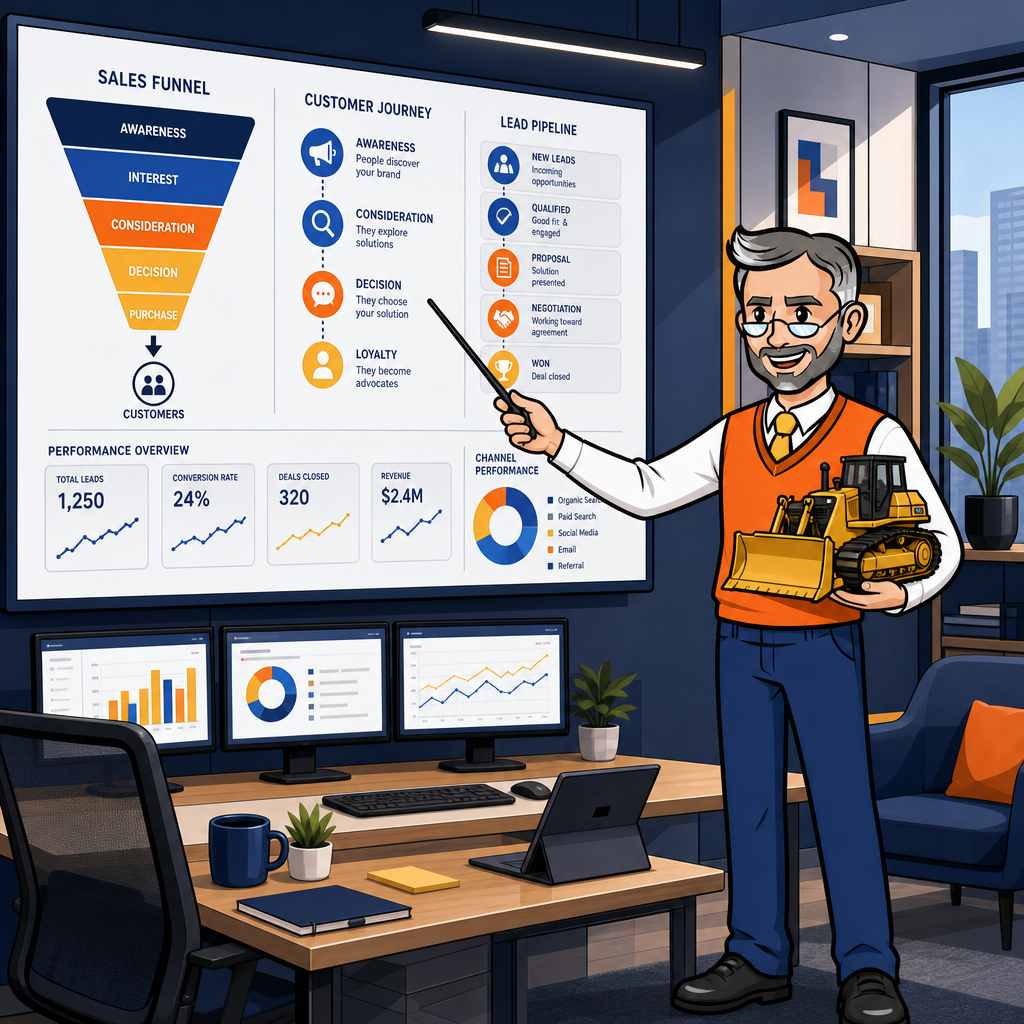
We are a B2B equipment-focused revenue consultancy built specifically for manufacturers, OEMs, dealers, distributors, franchisors, and rental providers. Our focus is tying digital marketing directly to pipeline and revenue—not delivering reports full of impressions and click-through rates.
We bring deep experience across franchise networks and dealer operations, with capabilities spanning industrial SEO, local SEO, GEO and answer engine optimization, paid search and social for rentals and sales, CRM implementation, marketing automation, and multi-location analytics. We understand personal branding for franchise development as well as creative strategy for local franchise marketing.
Whether you are a multi-state rental franchise looking to increase quote volume, an OEM-backed dealer network standardizing websites and lead routing, or a specialty equipment franchisor improving franchisee recruitment through influencer marketing and video marketing, we build systems that scale from 10 locations to 200. We work with both emerging franchise companies and mature franchise organizations expanding nationally.
Next Steps: Build a Digital Marketing System for Sustainable Equipment Franchise Growth
Equipment franchise digital marketing is not about running some ads and hoping for calls. It is about building an integrated system—local SEO, paid media, content marketing, email marketing, CRM, and franchise marketing systems—that connects every franchise location to measurable revenue. Direct mail and traditional marketing still have a role, but digital channels are where your buyers and franchise candidates start their journey today.
Before reaching out, gather your current site analytics, a list of franchise locations, your top revenue goals, and your key product or rental categories. This gives us what we need to run a meaningful audit.
Request a consultation or marketing audit to identify the fastest path to more qualified pipeline across your equipment franchise network. The franchise brands winning in 2026 are not guessing—they are operating scalable, measurable digital marketing engines that support every location and drive predictable franchise growth.
FAQs: Equipment Franchise Digital Marketing
What is the difference between franchise marketing and digital marketing for a single equipment dealer?
Franchise marketing serves dual objectives: franchise development (recruiting and awarding territories) and local customer acquisition across multiple franchise locations. A single dealer focuses almost entirely on local rentals and sales. Franchise digital marketing adds complexity through territories, corporate branding standards, co-op funds, centralized franchise marketing systems, and reporting that spans dozens or hundreds of locations. It requires a coordinated marketing strategy and technology stack that can scale.
Which digital marketing channels usually generate the best ROI for equipment franchises?
Paid search and local SEO are typically the primary revenue drivers for high-intent equipment rentals and used equipment leads. Email marketing supports repeat rentals and service revenue cost-effectively. Content marketing moves complex, high-value machine deals forward. LinkedIn works well for B2B franchise development marketing and reaching prospective franchisees. Social media management supports brand awareness and community building. The best mix depends on your segment—construction, agriculture, warehouse automation—and the maturity of your franchise system.
How long does it take to see results from franchise digital marketing in the equipment space?
Expect 30–60 days for paid search and digital advertising to generate qualified form fills and calls. Local search marketing typically takes 3–6 months to significantly improve rankings. Content marketing compounds over 6–12 months. Existing brand strength, website health, CRM adoption, and data quality will accelerate or slow outcomes. Focus on trends in quote volume, pipeline value, and booked revenue rather than clicks and impressions.
How should equipment franchises use content marketing for both customers and franchisee recruitment?
For customers: application guides, how-to videos, safety checklists, ROI calculators, and maintenance tips. For franchise candidates: franchise opportunity pages, investment overviews, franchisee stories, and “day in the life” content. The International Franchise Association and similar organizations often highlight that digital marketing franchise opportunities attract stronger candidates when supported by genuine content. Plan both content tracks together so content creation supports overall franchise growth.
What role does email marketing play in equipment franchise growth?
Structured email marketing programs—onboarding sequences, nurture flows for capital projects, win-back campaigns for dormant accounts—outperform one-off blasts. Corporate provides master campaigns while franchisees localize subject lines, offers, and sender names. For franchise development, email sequences guide candidates from initial inquiry through webinars, FDD review, and discovery days. This is inbound marketing at its most efficient for multi location businesses.
How much should an equipment franchise system invest in digital marketing?
Realistic ranges fall between 2–5% of system-wide revenue, or a fixed per-location baseline plus variable growth budgets. Separate corporate franchise development budget from local customer acquisition budgets, even if managed centrally. Performance marketing spend should be guided by data: cost per opportunity, cost per closed deal, and lifetime value by equipment category. Avoid benchmarking against Thrive Internet Marketing Agency or other generalist agencies—equipment franchise economics are different.
How can equipment franchises measure the real impact of digital marketing on revenue?
Core metrics include qualified leads, quote requests, demo requests, rental reservations, and pipeline value by channel and location. Connect website and ad data to your CRM and, ideally, to ERP or rental software to tie marketing touchpoints all the way through to invoiced revenue. Hold monthly or quarterly reviews with both corporate and franchisees to interpret data and adjust campaigns. An entrepreneur top franchise supplier mindset means treating measurement as a competitive advantage, not an afterthought.