
Table of Contents
Introduction: Why Digital Marketing Matters for Equipment Dealers Now
How Equipment Buyers Actually Shop in 2026
Building Your Online Foundation: Website and Conversion Strategy
Local SEO Tactics: Being the Dealer That Actually Shows Up
SEO for Equipment Dealers: From Keywords to Qualified Traffic
Paid Search and PPC: Turning High-Intent Searches into Sales Quickly
Social Media Marketing for Equipment Dealers: Beyond “Just Posting”
Content Marketing: Educating Buyers and Nurturing Long Sales Cycles
Email Marketing and Automation: Nurture Leads Without Overloading Sales
Aligning Digital Marketing with Your Sales Process
Measuring Success: From Clicks to Revenue
Common Equipment Dealer Digital Marketing Mistakes to Avoid
When to Bring in a Specialized Equipment Marketing Partner
Why Choose Our Team for Equipment Dealer Digital Marketing
Next Steps: Build a Digital Marketing Strategy That Matches Your Territory
FAQs About Equipment Dealer Digital Marketing
Introduction: Why Digital Marketing Matters for Equipment Dealers Now
The U.S. construction equipment market exceeded $60 billion in 2024, with the agriculture equipment market topping $50 billion. Both are growing at 4-5% annually through 2029. That growth means more competitors, more noise, and more buyers doing their homework online before they ever call a dealership.
Contractors comparing 2024-2026 excavator models, farmers researching precision ag attachments, fleet managers pricing telehandler rentals; all of them start with a search engine. If your equipment dealership does not appear during that research phase, a competitor fills the gap. Effective digital marketing strategies focus on high-intent lead generation, turning that online research into qualified leads, demo requests, and service appointments rather than just website impressions.
Trade shows, print ads, and radio still play a role. But those channels fire a few times a year. Digital marketing campaigns run 24/7, compounding your digital presence across every stage of the buyer journey. For dealers serving construction, ag, material handling, rental, and specialty equipment buyers with long sales cycles, that always-on visibility is no longer optional.
This playbook covers how to build a practical marketing strategy, prioritize channels (search engine optimization, PPC, social media marketing, email marketing), and measure results in dollars and deals.
How Equipment Buyers Actually Shop in 2026
The modern equipment buyer follows a multi-touch path. McKinsey’s off-highway equipment research breaks it into four phases: identify and research, consider and evaluate, buy and order, then use and maintain. Buyer frustration is highest in the first two phases, where they struggle to compare features, find transparent pricing, and identify nearby dealers with the right inventory.
A typical path looks like this: a contractor searches “used 2023 skid steer for sale near me,” reads a few spec comparison articles, watches a YouTube walkaround, checks dealer inventory pages, then submits a quote request or calls. Along the way, that buyer may also search “telehandler rental Dallas” or “John Deere vs Case IH 2025 tractor comparison.” Each touchpoint is a chance to gain or lose the sale.
Mobile and field-based research accelerates this. Project managers search from job sites on tablets. Farmers check prices from the cab. Slow, cluttered dealer websites lose potential customers at the first tap; analysis of dealer sites shows that once page load exceeds three seconds, roughly 40% of mobile visitors leave before inventory images even appear. A solid digital presence also supports existing customers looking for parts, service scheduling, and financing information, not just new equipment sales.
Building Your Online Foundation: Website and Conversion Strategy
Your website is the digital storefront and the first sales engineer most buyers encounter. It works around the clock, and it needs to perform like it.
The pages that matter most:
- Searchable inventory with filters (year, hours, brand, price range), split between new equipment, used, and rental listings
- Service and parts pages with clear calls to action (“Schedule service,” “Order parts”)
- Financing information with transparent pricing options
- Location pages for each branch with maps, hours, and local contact info
- Individual inventory pages for each machine, complete with specs, photos, and condition details
Clear calls to action should be present on every page of the website. Detailed equipment inventory listings build buyer confidence and reduce friction. Detailed condition reports on used machines eliminate guesswork and build trust. Using transparent pricing and financing options improves the buying experience at a stage where McKinsey found satisfaction is lowest.
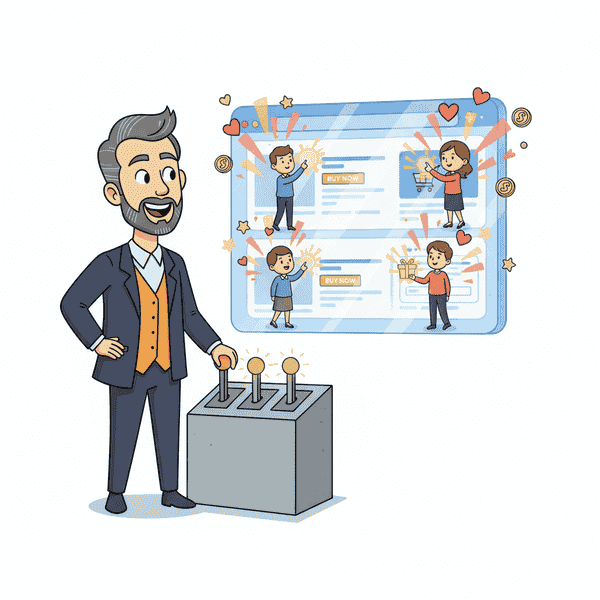
For lead capture, forms with 4-6 fields outperform generic “message” boxes. Include fields for equipment type, timeline, budget range, and intended application. These qualify the lead before it reaches your sales teams.
Fast loading speeds enhance both user experience and SEO rankings. One heavy equipment site cut load time from 16 seconds to under 3 seconds after fixing JavaScript rendering issues, canonical tags, and image compression. The result: 180 keywords at position one and nearly 500 in the top 10. Technical basics like clean URL structures, proper heading hierarchy, schema markup for products and local business, and Google Analytics tags should be in place from day one.
Trust elements close the gap between browsing and buying: OEM logos, warranty information, dealer certifications, and customer testimonials tied to real outcomes (e.g., “reduced downtime on a 50-machine fleet”).
Local SEO Tactics: Being the Dealer That Actually Shows Up
Local SEO is how your equipment dealership appears in Google Maps and the local pack when someone searches “excavator dealer near me” or “forklift repair Houston.” For high-value equipment, where buyers need to visit a lot or schedule service within a realistic radius, local SEO can be among the highest-value digital channels available.
Optimizing for local SEO helps rank in map results for nearby buyers. The foundation is your Google Business Profile. A complete Google Business Profile increases customer trust by 2.7 times compared to an incomplete one. Active Google Business Profiles outperform neglected ones in local search consistently.
Here is what a fully optimized profile includes:
| Element | What to Include |
|---|---|
| NAP data | Exact name, address, phone on every listing |
| Categories | Primary: “Construction equipment supplier.” Secondary: “Equipment rental agency” |
| Hours | Include seasonal adjustments |
| Products/services | List equipment lines, service offerings, rental options |
| Photos | Yard, showroom, recent deliveries, service bays |
| Posts | Weekly updates on new inventory, promotions, industry news |
Local SEO tactics include optimizing Google Business Profiles and citations across directories, OEM dealer locators, and industry sites. Customer reviews heavily influence local organic ranking and buyer trust. Reviews that mention specifics (“fast boom lift repair,” “great combine service”) carry more weight than generic praise. Reputation management is important for establishing local credibility, and monthly review requests tied to closed work orders keep fresh feedback flowing.
Localized landing pages multiply your reach. Pages like “Used wheel loaders in Kansas City” or “Forklift rental service in Dallas-Fort Worth” with unique website content and location-specific details capture searches that generic pages miss. In one case, category-specific landing pages increased conversion rates 3.4 times compared to sending traffic to a homepage. Using local keywords improves visibility for nearby customers across both map and organic results.
Local SEO includes managing citations and customer reviews on an ongoing basis. When you add new brands or product lines, update your profile and location pages the same week.
SEO for Equipment Dealers: From Keywords to Qualified Traffic
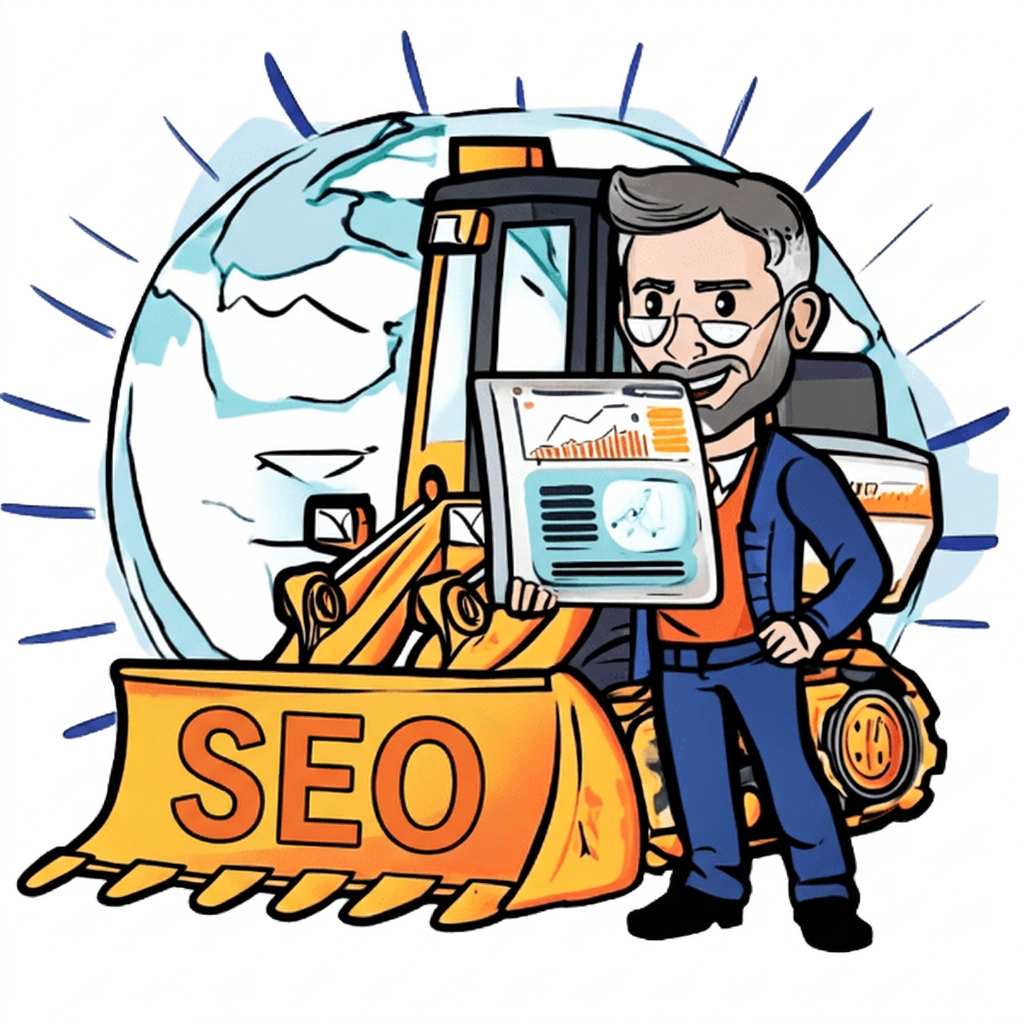
Vanity SEO chases broad keywords like “construction equipment.” An equipment-specific SEO investment targets searches that indicate buying intent and drives sales-ready traffic.
Search engine optimization is critical for contractors and farmers who research purchases online before contacting a dealer. Effective SEO uses high-intent, long-tail keywords for visibility. Using long-tail keywords improves visibility for specific searches like “2025 Kubota SVL97-2 for sale Texas” or “compact track loader for residential site work.”
Keyword research for dealers should segment by:
- Make, model, and year (“2024 Cat 320 excavator”)
- Application (“asphalt paver for highway work,” “reach forklift for warehouse”)
- Intent modifiers (“for sale,” “dealer,” “rental,” “financing”)
- Geography (“near me,” city, state)
Optimizing product pages with targeted keywords boosts search rankings. Structure your site so each major model or category has its own page with specs tables, pricing guidance, photos, and internal links to related attachments, rentals, or service plans. Individual inventory pages improve search relevance and can track user interest at the machine level.
Content types that support SEO and buyer education include comparison articles (“telehandler vs. rough terrain forklift”), ownership cost breakdowns, financing guides, “buy vs. rent” decision posts, and maintenance checklists. These address the research phase questions where McKinsey found buyer frustration is highest.
Common technical SEO problems on dealer sites: duplicate inventory pages (same machine listed in multiple categories), thin manufacturer copy with no local context, and slow image-heavy galleries without lazy loading or compression. Fixing these issues drove one equipment site from minimal organic traffic to nearly 1,900 qualified monthly visitors.
SEO should be tied to measurable outcomes: form fills, calls, quote requests, and showroom visits.
Paid Search and PPC: Turning High-Intent Searches into Sales Quickly
PPC ads target high-intent prospects effectively and can put your dealership at the top of Google search within days. Paid advertising generates immediate visibility for equipment dealers who need pipeline now, not six months from now.
Google Ads average cost per click was $5.26 in 2025. For equipment where a single closed deal is worth $18,000 to $240,000 or more, that cost is minor. One B2B equipment distributor ran Google Ads campaigns with an average cost per lead of $94, generated 215 qualified leads, and built $2.8 million in pipeline value within 90 days.
Structure your PPC campaigns by:
- New vs. used equipment
- Sales vs. rental
- Brand families (Deere, Cat, Kubota, Case)
- High intent keywords (“buy,” “dealer,” “for sale,” “rental near [city]”)
Each ad should point to a tightly matched landing page with relevant inventory, pricing ranges, financing options, and a clear form or phone CTA. Sending paid traffic to a generic homepage kills conversion rates. Landing pages with category-specific content convert at multiples of homepage traffic.
Local Services Ads can generate high-quality leads at lower costs for service-oriented searches. Remarketing can help keep dealerships visible during long purchase cycles by re-engaging visitors who browsed inventory but did not convert.
Optimize continuously: build negative keyword lists, A/B test ad copy and headlines, compare lead form submissions vs. phone calls, and pause digital advertising campaigns that do not produce qualified leads. One equipment parts provider improved conversion rates by 75% and reduced cost per lead by 23% through disciplined campaign optimization.
Social Media Marketing for Equipment Dealers: Beyond “Just Posting”
Equipment buyers are on social media. Contractors scroll Facebook between jobs. Fleet managers check LinkedIn. Farmers watch YouTube walkaround videos before visiting a lot. Social media platforms allow real-time customer engagement that static websites cannot replicate. Facebook is the strongest platform for OPE dealer marketing, though YouTube and LinkedIn also deliver results depending on your target audience.
A practical organic strategy includes regular posts: walkaround videos of new inventory, before-and-after job site photos, delivery highlights, maintenance tips, employee spotlights, and customer success stories. High-quality video marketing enhances trust in equipment buying decisions. Video content showcasing equipment in real work conditions is especially valuable because it shows buyers what spec sheets cannot.
Social media advertising can micro-target specific niches for better results. Run social ads targeting by job title (project manager, fleet manager, farm operator), interests (construction, agriculture, material handling), and geography around your dealership locations. Social campaigns that perform well include trade-in promotions, year-end Section 179 tax savings pushes, new model launches, and seasonal rental offers.
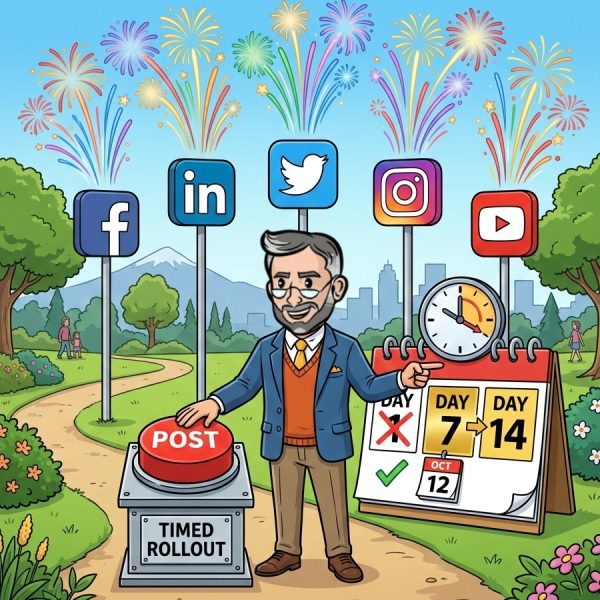
Measure clicks to inventory, quote requests, and lead forms, not likes and followers. Coordinate your social media marketing with PPC campaigns and email marketing so messaging and timing are consistent across channels.
Content Marketing: Educating Buyers and Nurturing Long Sales Cycles
Content marketing for equipment dealers answers real customer questions across buying cycles that stretch 60 to 180 days. Content marketing should aim to establish dealership expertise and build authority. Content marketing builds authority by addressing customer pain points during the research and evaluation phases.
Content ideas grounded in field realities:
- Application guides (“Best compact track loader for residential site work”)
- Cost-of-ownership calculators covering fuel, maintenance, and resale value
- Spec comparison charts between competing models
- Financing explainer articles
- Case studies featuring local contractors or farms
Formats that work well include in-depth blog posts, downloadable checklists, spec sheets, and video walkthroughs repurposed as articles. Content supports sales teams directly; a rep can send a prospect a link to “5 questions to ask before renting a crane” instead of writing a custom email from scratch.
Publish on a simple editorial calendar: two substantial pieces per month addressing recurring sales objections and seasonal topics for your territory. That same content powers email newsletters, social media posts, and remarketing campaigns to nurture leads who are not ready to buy immediately.
Email Marketing and Automation: Nurture Leads Without Overloading Sales
Email marketing nurtures leads over long sales cycles effectively. For equipment dealers, where deals take months and service revenue recurs for years, email is the backbone of staying in front of buyers without burning out sales reps.
Build and segment your lists: prospects, current customers, past customers, rental contacts, service-only contacts. Tag each by industry, equipment type, and buying stage. Segmented email campaigns provide targeted information to different customer types. Segmented email lists improve engagement and conversion rates because a farmer shopping for a combine does not need forklift content.
Core email flows to set up:
| Flow | Trigger | Content |
|---|---|---|
| Welcome sequence | New lead form submission | Intro to dealership, top inventory, financing overview |
| Research-phase nurture | Downloaded spec sheet or guide | Comparison articles, ROI calculators, personalized content by category |
| Quote follow-up | Quote requested, no response in 48 hours | Recap of quote, related machines, customer testimonials |
| Post-delivery onboarding | Machine delivered | Maintenance schedule, parts ordering, warranty details |
| Service reminders | Hours-based or seasonal triggers | Upcoming maintenance, inspection scheduling |
Email reminders can fill service calendars weeks in advance. Automated maintenance alerts enhance after-market CRM strategies by triggering outreach based on usage data or seasonal intervals. Email marketing and CRM automation can engage past customers effectively, turning one-time buyers into repeat service and parts revenue.
One B2B equipment distributor ran a 10-email nurture sequence over 60-180 days and achieved 38% average open rates, building $2.8 million in pipeline from that sequence alone. Every email should offer clear value (tips, checklists, financing insights, industry news) rather than pure promotions.
Aligning Digital Marketing with Your Sales Process
Equipment dealer digital marketing only pays off when it connects to how the sales team and service team actually work leads. Without alignment, marketing generates inquiries that pile up unanswered, and internal trust erodes.

Start with shared definitions for qualified leads. Agree on what information marketing must capture (budget, timeline, use case, geography) before passing to sales. Leads contacted within five minutes are eight times more likely to convert. Lead response time impacts conversion rates at every level; this is especially true for rental and urgent service inquiries.
Implement a CRM that both marketing and sales use, with attribution fields (source, campaign, keyword) and pipeline stages specific to equipment deals: inquiry, needs analysis, site visit, quote, negotiation, closed. Without this, you cannot connect marketing efforts to revenue.
Run regular feedback loops between marketing and sales. Monthly or quarterly reviews of lead quality, common objections, and which digital marketing campaigns drive the best opportunities keep both teams calibrated. Encourage sales reps to use marketing content in their outreach: recommended articles, videos, and calculators matched to each buying stage accelerate deals and reduce repetitive one-off emails.
Measuring Success: From Clicks to Revenue
Measuring success for equipment dealer digital marketing requires looking past clicks and impressions. A $200,000 equipment sale closed from a single Google search makes vanity metrics irrelevant.
Track lead volume and quality to measure marketing success. Core metrics every dealer should monitor:
- Number of leads and qualified leads by channel
- Cost per lead by channel (helps allocate marketing budgets effectively)
- Number of opportunities and close rate
- Average deal size
- Revenue per channel (machine sales, rental, service)
Use Google Analytics to measure campaign performance effectively. Pair it with call tracking for phone leads, CRM dashboards for pipeline visibility, and UTM parameters on every campaign. Calculate ROI by comparing revenue from digital leads against marketing costs over 3-12 month windows, matching the length of your sales cycle.
Measure service and rental revenue from digital channels separately from machine sales. These lines of business respond to different campaigns and have different conversion timelines. A simple monthly or quarterly reporting rhythm, where leadership reviews performance, reallocates budget, and sets new objectives based on real data, keeps your marketing approach accountable.
Common Equipment Dealer Digital Marketing Mistakes to Avoid
Many dealers underperform not because of lack of spend but because of strategic missteps. In industry surveys, increasing budgets has not matched increasing confidence; dealers report low clarity on whether digital marketing leads to actual sales versus just more traffic.
Common mistakes:
- Treating the website as a static brochure without searchable inventory, service CTAs, or lead forms
- Sending all paid traffic to the home page instead of matched landing pages
- Ignoring local SEO; dealers who haven’t claimed or updated their Google Business Profile lose the local pack to competitors
- Running generic digital advertising without clear offers or audience segmentation
- Relying entirely on OEM co op funds and creative that does not reflect actual local inventory, pricing, or the dealer’s value proposition
- Running disconnected campaigns across vendors and locations with no unified reporting
- Failing to follow up leads quickly, letting response times stretch to hours or days
Fix the highest-impact issues first. Optimizing your Google Business Profile and cutting lead response time to under five minutes will produce results faster than adding a new channel.
When to Bring in a Specialized Equipment Marketing Partner
Many dealers reach a point where internal staff cannot keep up with website changes, SEO, paid ads, content, and reporting. The competitive landscape keeps moving, and falling behind compounds quickly.
Signs it is time to get help: inconsistent lead flow despite budget, no clear attribution from marketing spend to closed deals, an outdated website, an underused CRM, or stalled digital marketing efforts. A partner that focuses on industrial and equipment marketing brings familiarity with long sales cycles, complex technical products, and the dynamics between dealers and manufacturers.
A good partner ties their work to specific business outcomes (qualified leads, pipeline, measurable ROI) rather than just traffic numbers. Evaluate partners based on experience with equipment categories similar to yours and the ability to integrate with your existing sales and CRM systems.
Why Choose Our Team for Equipment Dealer Digital Marketing
We are a B2B industrial and equipment marketing consultancy built for one outcome: connecting your marketing spend to pipeline and revenue. Our team works exclusively with equipment manufacturers, dealers, distributors, and rental fleets, giving us deep familiarity with the buying journeys, technical products, and dealer-OEM dynamics that general agencies miss.
Our experience spans agricultural equipment, construction equipment, heavy machinery, material handling, waste and recycling, warehouse automation, and specialty equipment dealers. We build dealer websites with searchable inventory and conversion-focused design. We run local SEO and paid ads in competitive territories. We set up CRM and marketing automation that connects every lead to a source and every campaign to a revenue number.
Our marketing approach starts with discovery and an audit of current digital marketing efforts, defines a clear marketing strategy tied to growth targets, then moves to implementation, testing, and iteration using real data.

Dealers we work with typically see measurable improvements in lead volume, cost per lead, and pipeline velocity within the first 90 days. Engagement can start small with an audit, pilot campaigns, or a website rebuild and expand as results and trust grow.
Next Steps: Build a Digital Marketing Strategy That Matches Your Territory
Equipment dealer digital marketing works when website, local SEO, PPC, social, content, and email marketing are integrated around clear revenue goals. No single channel carries the weight alone. The dealers generating more sales from digital are the ones who connect every campaign to a pipeline number and review performance monthly.
Pick one or two high-impact priorities to act on in the next 30 days. Fix your Google Business Profile. Upgrade your lead forms to capture equipment type and timeline. Add basic conversion tracking so you know which marketing solutions are producing deals. These steps cost little but compound fast.
Ready to build a marketing strategy that matches your territory, your inventory, and your growth targets? Schedule a consultation to audit your current digital marketing efforts or discuss a tailored plan for generating more qualified leads in your specific region and equipment category. The right approach will help you nurture leads over long cycles, stabilize revenue beyond word-of-mouth and trade shows, and compete in your local markets with confidence.
FAQs About Equipment Dealer Digital Marketing
How much should an equipment dealer budget for digital marketing?
Most equipment dealers allocate 2-5% of annual revenue, though this varies by territory size, mix of new vs. used vs. rental, and growth targets. The more useful frame is cost per qualified lead and cost per closed deal. A dealer spending $5,000/month on Google Ads that generates $300,000 in pipeline is investing wisely; a dealer spending $2,000/month with no tracking has no idea. Tie budgets to revenue goals and adjust based on data, not arbitrary percentages.
Which digital marketing channel usually produces the most qualified leads?
For most equipment dealers, local SEO and well-structured Google Ads search campaigns generate the strongest sales-ready inquiries. Email marketing and retargeting play major roles in nurturing leads across long purchase cycles. The best-performing channels vary by market and offering, so dealers should test, track by channel, and reallocate based on cost per lead and close rate rather than assumptions.
How long does it take to see results from SEO versus PPC?
PPC campaigns can produce leads within days of launch. SEO typically builds over 3-9 months depending on competition, current site strength, and the size of your SEO investment. Run both together: PPC for immediate pipeline, SEO as a long-term asset that compounds traffic and lowers cost per lead over time.
Do equipment dealers really need to be on social media?
Yes. Decision makers in construction, agriculture, and material handling spend time on social media platforms daily. Social media marketing showcases real machines, jobs, and service work in ways static sites cannot. Prioritize the strongest platform for your buyers (usually Facebook and YouTube; sometimes LinkedIn and Instagram for fleet decision makers), then scale based on results and click through rates to inventory.
What is the difference between website traffic and qualified leads?
Traffic counts visits. Qualified leads are people who express real buying or service intent by filling out forms, calling, or booking service appointments with key details captured (equipment type, budget, timeline). Equipment dealer digital marketing strategy should always prioritize generating and nurturing leads over increasing raw traffic. More traffic without conversion tracking is just a bigger number on a dashboard.
How do I know if my digital marketing efforts are working?
Track leads by source in a CRM. Review monthly reports on pipeline and revenue from each channel. Compare results to marketing spend. Consistent growth in qualified leads, opportunities, and closed deals tied back to specific campaigns is the clearest sign of success. If you cannot connect a campaign to a closed deal, your tracking needs work before your budget needs an increase.