
Table of Contents
Why Heavy Equipment Companies Need Strategic Digital Marketing
Understanding the Modern Heavy Equipment Buyer Journey
Core Heavy Equipment Marketing Services We Provide
Digital Marketing Strategies for Equipment Dealers and Manufacturers
Search Engine Optimization for Heavy Equipment Visibility
Local SEO and Google Business Profile for Equipment Dealers
Paid Search and Paid Social Advertising for Heavy Equipment
Content Marketing That Supports Buyers’ Research
Email Marketing and CRM-Driven Lead Nurturing
Optimizing Websites and Equipment Listings for Conversions
Leveraging Data, Analytics, and the Competitive Landscape
Common Mistakes Heavy Equipment Companies Make in Digital Marketing
Why Choose Our Heavy Equipment Marketing Services
How Our Heavy Equipment Marketing Process Works
Call to Action: Start Growing Revenue with Heavy Equipment Marketing Services
Frequently Asked Questions About Heavy Equipment Marketing Services
Why Heavy Equipment Companies Need Strategic Digital Marketing
Construction equipment buyers don’t wake up and call a dealer. They spend weeks, sometimes months, researching online. They compare specs, evaluate dealers, read reviews, explore financing options, and shortlist vendors before picking up the phone. 2025 research places first seller contact at around 61% of the way through the buying process. That means if your company isn’t visible during those research weeks, you’re not in the conversation when the purchase decision happens.
The days when trade shows, print ads, and word-of-mouth referrals were enough to fill a pipeline are behind us. Those channels still matter, but they’re no longer the primary way buyers research and shortlist heavy equipment dealers. Digital marketing is now the dominant channel for discovery, evaluation, and initial contact. The numbers back it up: digital marketing for heavy equipment is projected to grow 21.41% annually through 2035, and over 151,000 new construction machines were financed in 2025 alone. The demand is massive, and the companies capturing it are the ones with strong digital presence.

Strong online visibility combined with brand credibility now directly impact equipment sales, rentals, and service revenue. Marketing in heavy equipment requires a specialized approach because the products are complex, the deal sizes are large, and the buyers are sophisticated. Heavy equipment marketing strategies must focus on generating qualified leads, not just traffic. Consider this: one regional dealer increased qualified inquiries by more than 500% after modernizing their website and launching targeted digital marketing strategies in early 2025. Their web traffic surged, cost per lead dropped below $300, and the average lead value exceeded $100,000. That’s the kind of impact a well-executed strategy delivers.
Understanding the Modern Heavy Equipment Buyer Journey
Heavy equipment buyers don’t follow a straight line from ad to purchase. They move through a multi-step research process that might start with a search like “best compact excavator for utility work” and end months later with a phone call about a specific model at a specific dealer. Understanding this journey is what separates effective equipment marketing from wasted budget.
Awareness stage: Early-stage buyers are exploring what’s available. They search for equipment types, applications, and capabilities. Think queries like “track loader vs skid steer for landscaping” or “types of excavators for residential demolition.” At this stage, buyers are consuming educational resources, comparison guides, and application stories. They aren’t ready for a sales call, but they are forming impressions about which brands and dealers have expertise.
Consideration stage: Now buyers research is getting specific. They’re comparing brands and models: “Volvo L90H vs CAT 950 wheel loader” or reading spec sheets and cost-of-ownership analyses. They visit manufacturer sites, equipment listings on marketplaces, and dealer websites. Heavy equipment purchases often require input from multiple stakeholders, so procurement teams, fleet managers, and operators may all be evaluating different criteria. Heavy equipment companies benefit from transparent pricing and clear data at this stage because it shortens the evaluation cycle.
Decision stage: Buyers in heavy equipment deal with high price points and long sales cycles. At the decision stage, searches become hyper-specific: “used CAT 320 dealer Denver” or “rent mini excavator Atlanta pricing.” These serious buyers want local availability, financing options, service support, and fast responses. Digital marketing must support all three stages with the right content, spec sheets, comparison tools, and clear calls to action tied to real inventory. Miss any stage and you lose the deal to a competitor who didn’t.
Core Heavy Equipment Marketing Services We Provide
We operate as a revenue-focused partner for equipment manufacturers, OEMs, heavy equipment dealers, and rental fleets. Every service we deliver ties back to pipeline and closed deals. Pro Equipment Marketing generated over 7.8 million leads in five years for companies across the construction, agricultural, and material handling sectors. That’s not a vanity number. It represents real sales conversations that started because the right digital marketing activities were in place.
Here’s what that looks like in practice:
- Search engine optimization adapted for large equipment catalogs, long-tail model searches, and regional competition
- Paid search and paid social advertising structured around equipment types, brands, and high intent keywords
- Website and conversion optimization built to function as a digital showroom with real inventory, detailed specs, and frictionless lead capture
- AI and local search optimization ensuring visibility in both traditional search engines and generative AI platforms
- Content marketing that answers technical buyer questions and builds authority through the research phase
- Email marketing and CRM automation designed for long sales cycles and segmented audiences
- Outbound prospecting supported by data and account-based targeting
A robust optimized organic search presence ensures steady inquiry volumes even during seasonal slowdowns. Successful heavy equipment marketing relies on trust and data transparency, which means every tactic we deploy is measured against qualified leads, pipeline value, and revenue. Digital tools allow targeting specific regional territories in heavy equipment marketing, so whether you serve three counties or thirty states, we build campaigns that match your actual footprint.
Digital Marketing Strategies for Equipment Dealers and Manufacturers
This section is a practical overview of digital marketing strategies that consistently move the needle for construction equipment and other heavy machinery sectors.
Search engine marketing combines SEO and paid search to capture demand at every stage. Targeting “used Komatsu dozer for sale in Houston” captures a buyer who’s ready to act, while ranking for “best dozer for pipeline work” catches someone still in the research phase. The difference in cost per lead between these approaches is significant, and a smart strategy uses both.
Equipment listings optimization means treating every inventory page like a conversion tool. Clear titles, complete specs, high quality photos, and location data turn passive browsers into active leads. Optimizing listings across your own website and industry specific directories ensures potential buyers find your machines no matter where they search.
Content and email marketing work together to nurture relationships over months. Targeted inbound strategies attract genuine fleet managers and contractors, while email sequences keep your brand top of mind during long evaluation periods. Account-based marketing targets specific high-value accounts in heavy equipment, allowing you to focus resources on the deals that matter most.
CRM-driven outbound campaigns fill gaps that inbound alone can’t cover, especially when launching new product lines or entering new territories. Utilizing trade shows supports dealer networks and creates business opportunities, but the follow-up and nurture happen digitally.
These strategies differ slightly for OEMs, rental houses, and independent equipment dealers. An OEM might prioritize brand launches and dealer enablement. A rental house needs fast-cycle campaigns for utilization. An independent dealer needs local dominance and inventory visibility. The fundamentals are the same; the execution adapts.
Search Engine Optimization for Heavy Equipment Visibility
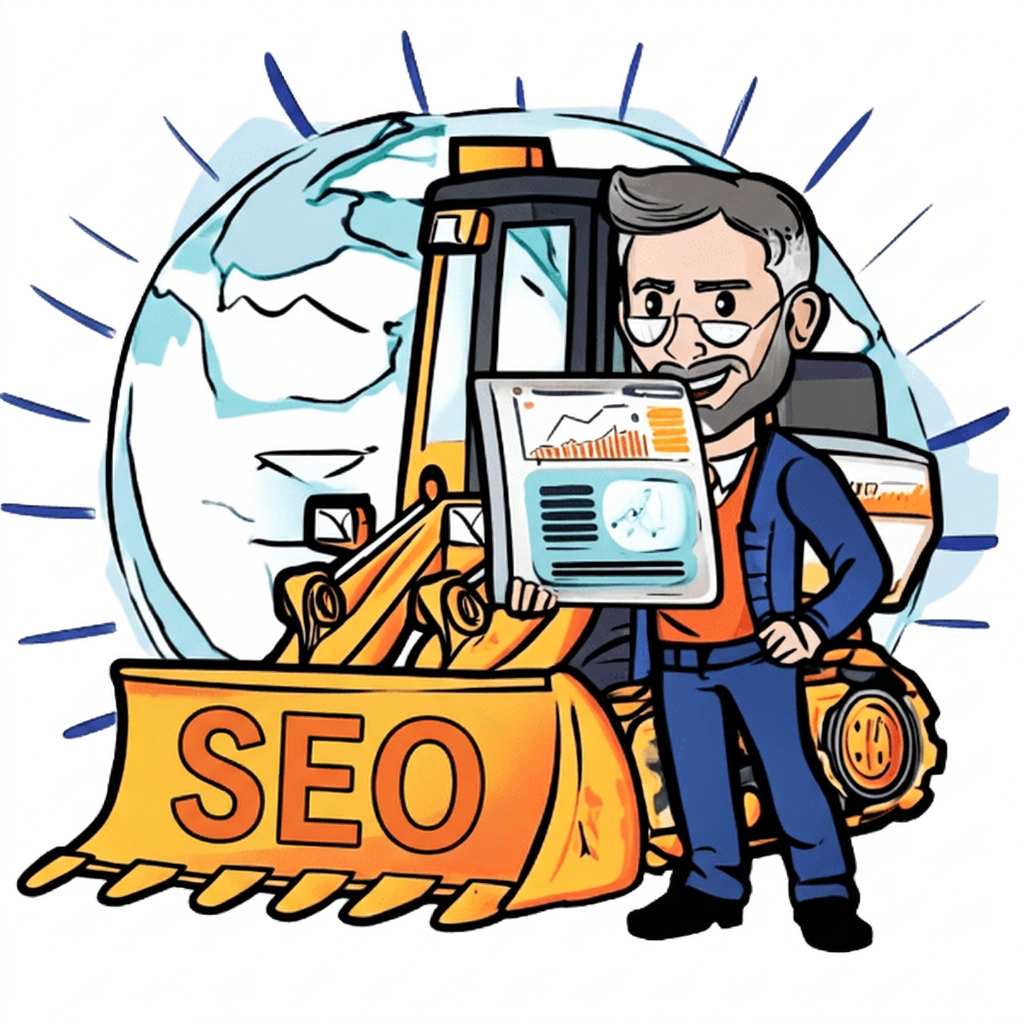
In a competitive market where multiple dealers sell similar machines in the same region, SEO determines who gets found first. SEO generates 41% conversion rates from leads to marketing-qualified leads, making it the highest-quality lead source for most heavy equipment companies. That conversion rate is dramatically higher than paid social or display advertising because organic search captures people actively looking for specific equipment.
SEO supports both early stage buyers researching “best compact excavator 2026” and late-stage serious buyers searching “CAT 320 excavator dealer near Denver.” The challenge is that equipment marketing must handle thousands of model-level pages, changing inventory, and detailed specs without creating duplicate or thin content. Get it wrong and search engines penalize you. Get it right and you build a compounding asset that generates leads month after month.
Specialized heavy equipment SEO focuses on ranking for buyer-intent searches, not generic terms that waste budget. SEO generates the highest quality leads for equipment marketing because it connects you with people who already have a problem your equipment solves.
Keyword Research for Equipment Marketing
Keyword research for the heavy equipment industry starts with mapping keywords to buyer intent stages. Awareness-stage keywords include phrases like “types of wheel loaders” or “excavator vs backhoe for trenching.” Consideration-stage queries get brand-specific: “Volvo L90H specs” or “John Deere 333G review 2026.” Decision-stage searches add location, price, or dealer language: “2024 Volvo L90H wheel loader for sale in Phoenix.”
The best keyword insights come from your own organization. Mine your dealer inventory for make, model, year, and hour combinations. Pull language from your sales team conversations, parts catalogs, and service tickets. These terms reflect how real buyers search for specific equipment. High intent keywords drive quality leads in equipment marketing, and the most valuable ones are often long-tail phrases your competitors haven’t thought to target.
Here’s an example keyword cluster for construction equipment:
- “compact track loader for landscaping” (awareness)
- “Bobcat T76 vs CAT 259D3” (consideration)
- “used Bobcat T76 low hours Texas” (decision)
- “compact track loader rental rates Dallas” (decision, rental)
- “Bobcat T76 maintenance schedule” (post-sale, service)
On-Page SEO for Equipment and Category Pages
Structure equipment category pages to mirror how buyers research: type → brand → model → application. An H1 like “Compact Excavators for Sale” leads to subcategories by brand, then individual model pages with complete specs, application notes, and related machines. This hierarchy helps both search engines and website visitors navigate logically.
Title tags and meta descriptions should include manufacturer name, model, application, and location where relevant. A title like “2026 CAT 320 Excavator | Specs, Price & Availability | [Dealer City]” hits all the signals buyers and search engines need. Headers should follow the same pattern, breaking content into scannable sections.
Every model page should include clear spec sections, FAQs addressing common questions (“What’s the dig depth on the CAT 320?”), and internal links to financing, service, and related machines. These elements support both SEO and conversions by answering questions that would otherwise require a phone call.
Technical SEO for Dealer and Manufacturer Websites
Heavy equipment sites face specific technical challenges. Inventory pages generated dynamically from feeds often load slowly, create crawl issues, or produce near-duplicate URLs. Since 63% of web traffic originates from mobile devices, poor mobile performance directly costs you leads. Fast load times improve conversions more than fancy graphics, so prioritize speed over visual complexity.
Use structured data to boost visibility and conversion rates. Product schema, LocalBusiness schema, and Organization markup help search engines understand your inventory and display rich results. XML sitemaps should be updated automatically when inventory changes, and URL structures need to be clean and hierarchical rather than auto-generated strings of numbers.
Regular technical audits are essential, especially when inventory feeds or listing platforms are integrated. One dealer discovered that their dynamically generated equipment listings were creating thousands of thin pages that diluted their SEO authority. After consolidating URLs, adding canonical tags, and implementing proper schema markup, their organic traffic increased over 30% in four months and lead volume followed.
Local SEO and Google Business Profile for Equipment Dealers
Local SEO drives the majority of inbound calls and lot visits for regional construction equipment dealers and rental yards. When a contractor searches “excavator dealer near me” or “equipment rental [city name],” the local pack results determine who gets the call. Local SEO improves visibility for heavy equipment companies in exactly these moments.
Heavy equipment service areas tend to span multiple counties or even multiple states, which requires careful geo-targeting. City and region-focused landing pages, each with unique content about local projects, service capabilities, and available inventory, help you rank across your actual territory. Optimize your website for local searches with relevant keywords tied to the specific cities and counties you serve.
Optimizing Google Business Profile enhances local search results significantly. Complete your profile with accurate service descriptions, yard photos, equipment images, service hours, and customer reviews. Reviews are especially powerful for other local businesses evaluating dealer trustworthiness. Consistent name, address, and phone (NAP) citations across industry specific directories, dealer locators, and local business listings reinforce your local visibility and brand credibility.
Paid Search and Paid Social Advertising for Heavy Equipment
Paid search through Google Ads and Bing captures immediate, high-intent demand while SEO builds momentum. PPC advertising captures immediate visibility for competitive keywords that would take months to rank for organically. Paid search strategies target high-intent buyers effectively when campaigns are structured around specific equipment types, brands, and purchase-intent phrases.
Structure campaigns around equipment categories and high intent searches. A campaign targeting “rent mini excavator Atlanta” or “buy used wheel loader Chicago” performs dramatically better than one targeting generic “construction equipment.” One equipment company cut their cost per conversion by 53%, dropping from over $400 to $188, simply by restructuring campaigns around specific models and locations and adding negative keywords to eliminate unqualified clicks.
Social media advertising targets specific audiences effectively through platforms that match your buyer profile. LinkedIn is effective for reaching construction professionals, fleet managers, and municipal procurement officers. Facebook builds local awareness for equipment dealers, especially for promoting open houses, service specials, and new arrivals. Social media content should feature equipment in action, and video content on social media showcases equipment capabilities in ways static ads cannot. Paid social works best for retargeting website visitors, promoting new model launches, and driving demo requests rather than expecting impulse purchases.
Align every ad with landing pages showing real inventory, detailed specs, and clear calls to action like “Request a Quote” or “Check Availability.” Disconnect between ad promise and landing page experience is where most paid advertising budgets get wasted. Targeted ads pointing to generic homepages lose potential customers at the last step.
Content Marketing That Supports Buyers’ Research
Content marketing in the equipment space means creating guides, comparison articles, application stories, and maintenance tips that answer the questions buyers actually ask. Content marketing must double as education to mitigate buyer hesitation, especially for purchases that can exceed six figures. Heavy equipment marketing should include educational content to establish expertise and differentiate from competitors who only post product catalogs.
Content marketing builds authority and captures early-stage traffic from buyers who aren’t ready to buy but are actively researching. Educational content nurtures leads through the buyer’s research phases, keeping your brand present during months-long evaluation cycles. Content marketing answers technical questions buyers actually ask, like “What size excavator do I need for a 20-foot basement dig?” or “How does a compact track loader compare to a skid steer on soft ground?”
Strong topics include “How to choose the right excavator size for a city sewer job,” “2026 compact track loader comparison for landscaping contractors,” or “Total cost of ownership: owning vs. renting a wheel loader.” These aren’t fluff pieces. They’re high value content that positions you as a trusted advisor.
Formats beyond blog posts matter. Downloadable checklists, spec comparison tables, and short explainer videos embedded on key pages all drive engagement. Video content showcases equipment capabilities better than text descriptions alone, and video marketing builds trust by showcasing equipment in action. Trust-building methods include customer testimonials and case studies published alongside educational content to reinforce credibility.
Email Marketing and CRM-Driven Lead Nurturing
Email marketing nurtures relationships during long equipment purchase cycles where deals can take three to twelve months and involve multiple stakeholders. It’s one of the highest-ROI channels available because you’re speaking directly to people who’ve already expressed interest. Email marketing can nurture leads over long equipment purchase cycles without the ongoing cost of paid advertising.
Build segmented lists within your CRM: prospects in the research phase, active quotes, rental customers, service customers, and parts buyers. Segmented email lists improve engagement and open rates significantly compared to blasting your entire database with the same message. Each segment has different needs and different buying signals, so the messaging should reflect that.
Useful email flows include:
- Welcome sequences that deliver valuable content and set expectations
- Equipment alerts triggered when new or used inventory matching a prospect’s interest arrives
- Maintenance and service reminders that generate repeat business and customer retention
- Post-sale follow-ups that drive parts orders, service appointments, and referrals

Email campaigns should mix educational content with promotional messages. Effective email marketing provides value without aggressive selling. Market updates, safety tips, financing offers, and application case studies keep subscribers engaged. Email marketing can increase customer retention and loyalty when every message is genuinely useful rather than a generic newsletter that damages brand credibility.
Optimizing Websites and Equipment Listings for Conversions
Effective heavy equipment websites serve as sales tools with detailed product pages, not digital brochures. Your website is your 24/7 showroom, and it’s most effective when it prioritizes inventory visibility, speed, and simple conversion paths. Every equipment listing needs a clear title including brand, model, year, hours, and location. Complete detailed specs, high quality photos from multiple angles, and short walkaround videos give potential buyers the confidence to take the next step.
Conversion optimization tactics should reduce friction at every step. Short forms with only essential fields, click-to-call buttons, and CTAs like “Request Inspection” or “Get Financing Options” placed near key specs capture interest at peak engagement. Proactive dealerships use data to trigger alerts for targeted promotions, such as notifying website visitors when a machine they viewed drops in price or when similar equipment arrives in inventory.
One mid-sized dealer improved their inventory pages by adding complete specs, multiple equipment photos, and a simplified “Request Quote” form directly below key specifications. Within 90 days, lead volume increased by over 40% while unqualified inquiries dropped because the listing quality pre-qualified buyers before they ever filled out a form.
Leveraging Data, Analytics, and the Competitive Landscape
Serious equipment marketing requires tracking the full sales funnel from first click to closed deal and beyond. Vanity metrics like impressions and page views don’t tell you whether marketing is generating revenue. What matters is cost per qualified lead, quote-to-close rate by channel, pipeline value, and lifetime value from repeat service and parts purchases. SEO generates 41% conversion rates for B2B leads, but you only know that if you’re tracking properly.
Key metrics to monitor across multiple channels:
| Metric | Why It Matters |
|---|---|
| Cost per qualified lead | Measures efficiency of each channel |
| Quote-to-close rate | Shows lead quality by source |
| Pipeline value | Total dollar opportunity in play |
| Service revenue influenced | Marketing’s impact beyond initial sale |
| Email engagement by segment | Indicates nurture effectiveness |
Monitor the competitive landscape by tracking competitor inventory, pricing, and presentation across major equipment marketplaces. This intelligence informs your own positioning, helps you adjust strategies, and reveals gaps in the market you can exploit. Use dashboards connecting website analytics, ad platforms, and CRM data so every marketing decision is based on real revenue impact, not guesswork.
Common Mistakes Heavy Equipment Companies Make in Digital Marketing
Treating the website like a brochure. Too many heavy equipment dealerships post a homepage, an “About Us” page, and a phone number, then wonder why website visitors don’t convert. Your site needs real inventory with complete specs, clear CTAs, and fast load times on mobile. Without these, you’re invisible to buyers who expect a digital showroom experience.
Ignoring local SEO. If your Google Business Profile is incomplete, you have no city-level landing pages, and your NAP citations are inconsistent across local businesses and directories, you’re giving away local search results to competitors. One dealer added service area pages and fully optimized their profile. Within three months, local pack appearances doubled and inbound calls increased by over 35%.
Sending generic email blasts. Blasting your entire list with the same monthly newsletter destroys engagement. Segment by buyer type, equipment interest, and stage in the sales funnel. Relevant, targeted communication outperforms generic messages by multiples.
Underinvesting in content. Without valuable content answering buyer questions, you lose early stage buyers to competitors who publish guides, comparisons, and application stories. Content builds the trust that eventually converts to sales conversations.
Focusing on clicks instead of qualified leads. Running paid ads on broad keywords like “heavy equipment” generates clicks but not deals. Narrow your focus to specific models, applications, and locations. Adjust bids based on lead quality, not click volume. Digital marketing for heavy equipment can increase sales by targeting specific demographics, but only if those demographics match your actual right buyers.
Why Choose Our Heavy Equipment Marketing Services
We specialize in the heavy equipment industry and adjacent sectors: construction equipment, agricultural machinery, material handling, mining, waste and recycling, and warehouse automation. This isn’t a sideline for us. We’ve worked with manufacturers, OEMs, rental providers, and multi-location equipment dealers through market cycles, supply chain disruptions, and technology shifts since before 2020.
Our focus is connecting marketing activities to pipeline and revenue. Every campaign we build is measured against qualified leads generated, deals influenced, and service revenue driven. We understand long, technical sales cycles where a single deal can be worth six or seven figures and take months to close. We know how to support both inbound lead generation through SEO, content, and paid search, and outbound prospecting through CRM-driven campaigns targeting potential customers in specific territories.
The results speak for themselves. Across engagements, we’ve delivered cost-per-lead reductions exceeding 50%, qualified lead increases of 300% or more within 12 months, and measurable pipeline growth that clients can trace directly to specific marketing solutions. We don’t report on impressions and call it success. We report on the actionable insights that help your sales team close more deals.
How Our Heavy Equipment Marketing Process Works
Our process follows a clear path designed to fit existing sales workflows rather than disrupt them:

- Discovery and goals: We meet with owners, sales leaders, and marketing teams to understand your equipment lines, service areas, competitive landscape, and revenue targets. We define what success looks like in concrete terms.
- Audit and strategy: We evaluate your current website, SEO, paid campaigns, content, CRM, and local presence. We identify gaps and opportunities, then build a strategy document prioritizing the highest-impact actions.
- Quick wins: Within the first 30-60 days, we fix immediate issues: site speed problems, incomplete Google Business Profile listings, broken inventory pages, or wasted ad spend. These deliver early momentum.
- Core campaign build-out: We launch SEO, content, paid search, email flows, and any other services agreed upon in the strategy. Each campaign is built around specific equipment categories or territories, like prioritizing a “2026 compact track loader launch” or “increasing used construction equipment inventory turns.”
- Optimization and scaling: As data comes in, we adjust bids, refine targeting, test landing pages, and double down on what’s working. This phase is ongoing and iterative.
- Reporting and review: Monthly performance reports connect marketing activities to pipeline and revenue. We review together, discuss what’s working, and adapt the plan based on real results.
Call to Action: Start Growing Revenue with Heavy Equipment Marketing Services
The heavy equipment market rewards companies that show up where buyers are already looking. More qualified inquiries, stronger brand credibility, and a clear connection between marketing efforts and revenue are achievable with the right partner and the right approach.
If you’re an equipment manufacturer, OEM, construction equipment dealer, rental fleet, or distributor looking for predictable growth, we’d like to hear from you. Schedule a consultation, request a digital marketing audit, or share your goals and problem areas, and we’ll put together a tailored proposal focused on practical recommendations.
There’s no obligation and no hard sell. Just a straightforward conversation about where your marketing stands today and what it would take to turn it into a reliable source of qualified leads and revenue.
Frequently Asked Questions About Heavy Equipment Marketing Services
These questions come directly from conversations with equipment dealers, manufacturers, and rental companies evaluating their marketing efforts. Each answer is written to stand on its own and help you make a confident decision.
What are heavy equipment marketing services, exactly?
Heavy equipment marketing services are a combination of SEO, paid ads, website optimization, content marketing, email marketing, and CRM work designed specifically for selling, renting, and servicing construction equipment and related machinery. These services typically cover both digital marketing and sales enablement, from the first click a buyer makes to a signed deal and ongoing service work.
The difference between generic B2B marketing and equipment-specific campaigns is significant. Generic agencies don’t understand equipment listings, model-level SEO, dealer network dynamics, or how to market rentals alongside sales. A complete service package for a mid-sized regional dealer might include website redesign with dynamic inventory pages, local SEO across their service territory, Google Ads campaigns targeting specific models and buyer types, content development for key equipment categories, and email automation for lead nurture and service reminders.
How long does it take to see results from digital marketing for heavy equipment?
Paid search and paid social campaigns can generate leads within weeks of launch. SEO and content marketing typically build momentum over three to twelve months depending on competition and existing website authority. Quick wins often come from fixing obvious issues: improving site speed, updating poor equipment listings, or completing a missing Google Business Profile.
Long sales cycles in the construction industry affect perceived speed of results. A lead generated in March might not close until September. That’s why tracking leading indicators like qualified inquiries, demo requests, and quote volume is essential alongside closed revenue. The heavy equipment business rewards patience backed by disciplined measurement.
What budget should an equipment dealer or manufacturer allocate to marketing?
Rather than quoting exact prices, think in terms of your revenue goals and deal sizes. A small single-location dealer might start with a focused investment in website refresh, local SEO, and a modest paid search budget. A larger multi-location group will need always-on paid search, ongoing content marketing, video production, and marketing automation, which requires a more substantial commitment.
Tie budget decisions to concrete targets: more rental utilization, more leads for specific product lines, or market share gains in core territories. Campaigns can start focused on one key product line or region and expand as ROI is proven. The key is matching investment to the value of the deals you’re pursuing. When average deal values reach five or six figures, even a few additional qualified leads per month can justify significant marketing effort.
How are marketing results measured in the construction equipment industry?
CRM integration is essential to trace leads from first touch through quotes, demos, and final sales. Key metrics include cost per qualified lead, pipeline created, quote volume, close rate by channel, and lifetime value from repeat service and parts revenue.
Relying solely on vanity metrics like impressions or generic website traffic doesn’t reflect real deals. Monthly or quarterly review calls should walk through these numbers to refine digital marketing strategies over time, adjust strategies based on what’s working, and reallocate budget toward the channels producing the best qualified leads.
Can digital marketing really help with rentals, service, and parts, not just equipment sales?
Absolutely. Digital marketing can be tailored to drive rentals, service appointments, and parts orders, which often have shorter cycles and higher margins than equipment sales. Campaigns promoting seasonal rentals, inspection packages, preventive maintenance services, or common wear parts can generate consistent service revenue year-round.
Email marketing and local SEO are especially effective for repeat service and parts business. Service reminders triggered by purchase date or usage milestones keep customers coming back. Balancing big-ticket sales campaigns with ongoing revenue from service and parts marketing creates a more predictable and resilient heavy equipment business.
What should we prepare before engaging a heavy equipment marketing agency?
Gather current website and analytics access, a list of key equipment lines, service areas, and any existing equipment listings or brochures. Clarify internal sales targets, ideal customer profiles (contractors, municipalities, industrial plants), and historical marketing performance. Understanding which equipment types generate the most revenue and which territories are underserved helps prioritize from day one.
Involve both sales and service leaders to align marketing with how deals are actually worked in the field. Having at least basic CRM or lead tracking in place will speed up implementation and reporting. If you don’t have a CRM yet, that’s fine. We can help set one up as part of the engagement.