
Table of Contents
Introduction: What a Waste Equipment Marketing Agency Actually Does
Why Waste & Recycling Equipment Sellers Need a Specialist Marketing Agency
From Hauling Mindset to Manufacturing & Equipment Sales Funnel
Core Digital Marketing Services for Waste Equipment OEMs & Dealers
Building a Revenue-Focused Marketing Strategy for Waste Equipment
Waste Equipment Lead Generation: From Clicks to Qualified RFQs
SEO & Search Engine Optimization for Waste & Recycling Equipment
Paid Media, Landing Pages & Conversion Optimization for Waste Equipment
Content Marketing That Sells Complex Waste Equipment
Websites, UX, and Graphic Design for Waste Equipment Brands
Common Mistakes Waste Equipment Companies Make with Marketing
How to Choose the Right Waste Equipment Marketing Agency
Why Choose a Revenue-Focused Waste Equipment Marketing Partner
Next Steps: Turn Your Waste Equipment Expertise into a Predictable Deal Pipeline
FAQs: Waste Equipment Marketing Agency & Digital Lead Generation
Introduction: What a Waste Equipment Marketing Agency Actually Does
You build balers that produce 98% pure commodity bales, optical sorters that detect PET from HDPE at line speed, and shredders that chew through C&D waste all day. Yet your pipeline depends on the same handful of trade show conversations and referrals you had five years ago. A waste equipment marketing agency promotes manufacturers, distributors, and dealers of waste machinery through focused digital marketing strategies designed to reach decision makers who actually buy capital equipment.
The waste equipment sector includes various machinery such as compactors, balers, sorting systems, MRF lines, transfer station equipment, and waste-to-energy technology. Heavy equipment purchases involve multiple decision makers and long consideration periods, often stretching 9 to 24 months through committee-based buying processes involving Operations Managers, Plant Managers, Solid Waste Directors, procurement teams, and Sustainability Leaders.
This article walks through how a specialist marketing agency uses search engine optimization, Google Ads, email marketing, content marketing, landing pages, and graphic design to generate qualified plant and municipal opportunities instead of low-value junk leads.
Why Waste & Recycling Equipment Sellers Need a Specialist Marketing Agency
Traditional sales relied on trade shows, dealer visits, and cold calls. In 2026, over 70% of industrial equipment buyers conduct research online long before talking to a salesperson, and many never attend a trade show until they already have a shortlist. Meanwhile, 55% of packaging and processing OEMs have just one or two people handling all marketing. That gap between buyer expectations and internal capacity is where a specialist marketing agency fills in.
Waste management is a distinct B2B industry with unique terminology and regulations. Selling an MRF optical sorter or a twin-shaft shredder is nothing like promoting residential trash pickup. Generic marketing services or local web designers fail in this niche because they do not understand throughput, bale purity, contamination specs, uptime requirements, or safety and compliance constraints. These agencies understand the niche mechanics, heavy-equipment buying cycles, and regulatory landscape that shape how waste management companies evaluate suppliers.
Specialized agencies translate technical machinery specifications into compelling commercial benefits. Instead of a spec sheet that says “60 TPH throughput,” they frame the conversation around recovered commodity value, labor reduction, and payback period. A professional digital presence enhances brand credibility for waste equipment manufacturers. These agencies focus on high-intent B2B traffic like waste facility owners and municipal directors, and they can connect marketing strategies to measurable revenue outcomes: RFQs submitted, spec packages requested, on-site demos booked, and bid invitations received.
Consider a baler manufacturer repositioned from “trash equipment” to “profit recovery systems.” That single messaging shift moved the conversation from cost to value, opening doors with recycling plant buyers who previously overlooked the brand.
From Hauling Mindset to Manufacturing & Equipment Sales Funnel
Many waste operators and OEMs think like haulers even when they are running a manufacturing or engineering business. Their marketing reflects it: branding centered on tons hauled instead of tons of recyclables recovered, equipment promoted by spec sheets alone, and no clear ROI messaging for buyers. Content and campaigns must support different stages of the B2B buying journey for waste equipment, not just announce product availability.
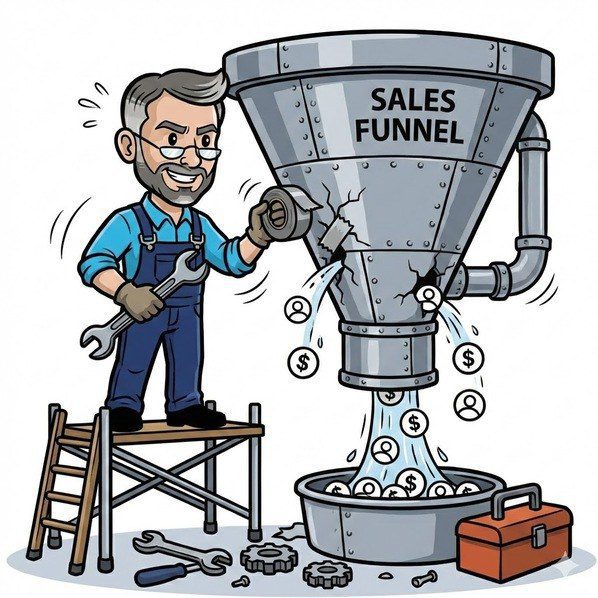
Waste equipment purchases require a focus on technical benefits and ROI for customers. Buying decisions in waste management are influenced by operational requirements and equipment uptime, not just sticker price. A waste equipment marketing agency reframes the story around throughput gains, labor reduction, energy savings, and commodity revenue. Waste management marketing includes digital and traditional strategies working together across a structured funnel:
- Problem awareness – content addressing high contamination, aging equipment, or rejected bales
- Technical discovery – whitepapers, spec comparisons, engineering webinars
- Configuration and selection – ROI calculators, line layout tools, model comparisons
- RFQ and site assessment – formal quote requests, plant visits, design conversations
- Committee approval – compliance documentation, total cost of ownership analysis, financing
Chasing “zero waste” as a marketing slogan sounds good but rarely closes deals. Demonstrating optimum recovery and profit per waste stream through each stage of this funnel does.
Core Digital Marketing Services for Waste Equipment OEMs & Dealers
A specialist agency orchestrates multiple digital marketing services into one coherent strategy tied to sales outcomes, not isolated tactics running in silos. For waste management clients, credibility is judged by digital presence: can a buyer find case studies, technical resources, and proof you understand their operation?
Here is what that service stack looks like in practice:
| Service | Purpose in Waste Equipment Sales |
|---|---|
| Search engine optimization | Improves website visibility in search results so buyers find your equipment pages |
| Google Ads / pay per click advertising | Drives targeted traffic to websites quickly for high-intent equipment searches |
| Content marketing | Builds trust and educates potential customers through technical guides and case studies |
| Email marketing | Nurtures leads and fosters customer relationships across long sales cycles |
| Social media marketing | Helps waste management companies engage audiences on LinkedIn and industry platforms |
| Landing pages and web design | Converts visitors into RFQs with focused, relevant content |
| Graphic design | Communicates complex system benefits visually to non-engineering stakeholders |
Every campaign must distinguish between high-value commercial and industrial deals and low-margin consumer calls. A specialist marketing agency builds that filter into every channel so your sales teams only see opportunities worth pursuing.
Building a Revenue-Focused Marketing Strategy for Waste Equipment
Start with revenue goals, not vanity metrics. “Add 10 new MRF line opportunities totaling $5M in pipeline by Q4 2026” is a strategy. “Get 1,000 more website visitors per month” is not.
Research target audience and competition for effective marketing. The process looks like this: develop a marketing plan outlining goals and channels, then conduct research into target verticals such as material recovery, C&D recycling, organics processing, scrap metal, and plastics. Interview actual Plant Managers, Solid Waste Directors, and procurement teams to understand purchase triggers and objections. Research and analysis are crucial for effective waste management marketing because without them, you are guessing.
Define ideal customer profiles with specifics: facility throughput in tons per day, material mix, existing equipment age, and current pain points like contamination rates, labor shortages, or rejected loads. Then build planning elements:
- Clear positioning statements (e.g., “maximum uptime, lowest lifecycle cost”)
- Key differentiators mapped against other waste management companies
- Prioritized marketing channels by buyer behavior
- Budget ranges for 6 to 12 months with seasonal and fiscal-year considerations
- KPIs tied to leads, pipeline value, and closed deals
A waste equipment marketing agency helps businesses generate awareness, leads, and sales by aligning every campaign to a concrete calendar. Municipalities typically budget in Q3–Q4 or early calendar year, so content and paid campaigns should ramp ahead of those windows.
Waste Equipment Lead Generation: From Clicks to Qualified RFQs
There is a massive gap between a “lead” that is a homeowner needing trash pickup and a high-intent opportunity from an MRF operator planning a $2M retrofit. SEO and targeted advertising can help waste equipment manufacturers generate qualified leads, but only if keywords, landing pages, and follow-up are engineered for the right buyer.
Specific lead generation tactics for equipment sales include targeted Google Ads campaigns around terms like “cardboard baler for distribution center,” “MRF upgrade consulting,” or “industrial shredder for plastics recycling.” PPC advertising drives targeted traffic to websites, but negative keyword lists are absolutely essential to filter out residential waste, junk removal, and consumer queries that waste money.
Dedicated landing pages for each equipment family (balers, compactors, shredders, sorting systems, conveyors) should include clear CTAs: “Request Plant Assessment,” “Upload Line Layout,” or “Schedule Engineering Review.” Waste equipment marketing emphasizes educational content and targeted accounts for lead generation, and agencies support sales teams by providing lead generation campaigns and sales materials that move prospects from curiosity to RFQ.
Outbound and account-based prospecting also plays a role. Use CRM and marketing automation to build lists of regional MRFs, private haulers, and materials recovery plants, then reach decision makers via email marketing and LinkedIn campaigns. Waste equipment marketing agencies streamline sales processes by providing educational digital touchpoints at every stage.
One heavy equipment dealer went from roughly two qualified equipment leads per year to three to four per week through product-line segmentation, territory-specific pages, and coordinated paid and organic campaigns. Google Ads cost per lead came in under $300 for deals averaging $100,000 each. That is what focused lead generation looks like.
SEO & Search Engine Optimization for Waste & Recycling Equipment
Specialized engine optimization for waste equipment is different from local SEO for hauling services. The focus is national or regional industrial buyers with technical intent, not someone searching “trash pickup near me.” SEO improves website visibility in search engine results, putting your equipment in front of the buyers who matter.
Keyword research is essential for effective SEO strategies. Priorities include terms like “single stream MRF equipment,” “paper baler maintenance,” “waste-to-energy boiler feeding systems,” and “optical sorter for PET and HDPE.” Meta descriptions help optimize search engine rankings by giving search engines and users a clear summary of each page. SEO techniques include keyword research and meta descriptions working together with strong on-page content.
On-page tactics that move the needle:
- Detailed product and application pages with downloadable spec sheets
- FAQ sections answering common engineering and procurement questions
- Internal linking between equipment pages, industries served, and case studies
- Alt text on diagrams and line layout images
Backlinks are crucial for improving website authority in SEO, especially from trade publications, industry association directories, and technical content partnerships. Optimizing websites improves search engine rankings significantly over time, and optimizing websites can increase customer discovery of services that would otherwise remain invisible.

Technical SEO matters too: fast-loading spec sheets, mobile-friendly layouts for engineers reviewing equipment on-site, and schema markup for products and FAQs to win rich results and visibility in AI-powered overviews. The goal is always people-first content that helps plant managers understand real trade-offs between designs.
Paid Media, Landing Pages & Conversion Optimization for Waste Equipment
Paid search and paid social are powerful when combined with specialized landing pages and CRM-driven follow-up. Without that combination, you are paying for clicks that never become conversations.
Google Ads strategy should separate campaigns for equipment buyers from general waste service terms. “Auto-tie baler for corrugated” and “transfer station compactor specs” attract your target audience. “Trash removal” and “garbage pickup” do not. Negative keywords are your first line of defense against wasting budget on user clicks that will never convert.
Landing page best practices for waste equipment:
- Single clear offer with relevant content for the equipment category
- Short but specific copy addressing both financial and operational benefits
- Technical imagery, process diagrams, and application examples
- Forms tailored to B2B: facility type, throughput, material types handled
- A well-optimized website enhances user experience and engagement
A/B testing in 2026 should compare headlines focused on cost savings versus uptime, CTAs for plant assessment versus quote request, and proof elements like video walkthroughs versus ROI calculators. Website optimization improves user experience and search visibility across every test variant.
Remarketing and email marketing sequences nurture visitors still early in the design or RFP phase. Content marketing educates customers about services offered through downloadables like “2026 MRF Upgrade Checklist” that lead back to consultative conversations.
Content Marketing That Sells Complex Waste Equipment
Long sales cycles in waste and recycling make content marketing essential for staying in front of buyers across months or years of planning. Content marketing builds trust and educates potential customers who are not ready to buy today but will be specifying equipment in six to eighteen months.
Key content types that generate leads for waste management solutions:
- Before/after case studies showing bale purity improvements, labor cost reductions, and payback timelines
- Video walkthroughs comparing compaction technologies or showing MRF line retrofits
- Technical guides on optimizing commodity grades, maintenance schedules, or contamination reduction
- Operator interviews sharing lessons learned from real installations
Content should speak to multiple roles: maintenance teams want ease of service, operations want throughput and uptime, finance wants payback period and total cost, and sustainability officers want diversion rates and ESG reporting data.
Regular newsletters and targeted email marketing campaigns keep prospects engaged. Email marketing builds relationships with potential customers through monthly “plant upgrade insights,” project spotlights, and commodity pricing impact breakdowns. Social media marketing reaches large audiences quickly, especially on LinkedIn where you can reach decision makers at waste management companies directly. Content should be optimized for distribution across marketing channels: LinkedIn posts, industry association newsletters, and search-optimized blog posts for ongoing organic traffic.
Websites, UX, and Graphic Design for Waste Equipment Brands
In 2026, the website is often the first “sales engineer” a buyer meets. Website optimization is crucial for attracting potential customers who are evaluating multiple suppliers simultaneously. Operational pain points in the waste and recycling equipment sector include long sales cycles and capital expenditures, and the website must address both.
A waste equipment marketing agency designs websites for complex product lines with clear navigation by material stream, equipment type, and industry. Fast access to spec sheets and line layouts is non-negotiable. UX must accommodate different user types: engineers need detailed specs, municipal buyers need compliance documentation, and procurement teams want cost and warranty information.
Graphic design plays a critical role: process diagrams, line flow illustrations, exploded views, and comparison charts help non-engineering stakeholders understand why one system outperforms another for contamination control or recovery rates. Visually appealing technical content bridges the gap between engineering and purchasing.
From day one, the site should include analytics and event tracking for spec downloads, form submissions, RFQ completions, and video plays, all tied back to campaign sources for accurate attribution.
Common Mistakes Waste Equipment Companies Make with Marketing
Many solid equipment businesses underperform commercially because of avoidable marketing mistakes:
- Generic “green” messaging that could apply to any recycling company instead of quantified performance claims
- Mixing equipment sales with hauling or service messaging, confusing potential customers about what you actually sell
- Driving paid campaigns to the home page instead of focused landing pages built for each equipment family
- Tracking only clicks and impressions without a CRM to connect marketing to RFQs and closed projects
- Missing content that addresses objections like parts availability, maintenance support, and warranty terms
Many waste equipment deals are finalized at industry expos and trade shows, but relying solely on events and word-of-mouth ignores the reality that buyers now develop shortlists online months before any show. Without a strong digital presence, you may never make the list.
Audit your current efforts: do your top 10 revenue-driving products each have dedicated, optimized pages? Do those pages generate any measurable leads?
How to Choose the Right Waste Equipment Marketing Agency

Not every marketing agency understands tonnage, bale specs, contamination thresholds, or public-sector RFP processes. Choosing the wrong one can waste 12 to 18 months and significant money.
Look for real waste management industry experience. Ask for examples of innovative digital marketing strategies for balers, compactors, MRFs, or waste-to-energy systems and what specific ROI they delivered. Key questions to ask:
- How does the agency tie digital marketing back to pipeline and revenue?
- How do they coordinate SEO, Google Ads, email marketing, and content marketing into one plan?
- How often do they report, and what metrics do they prioritize?
- Can they show examples of work for recycling clients or waste management clients?
Demand senior, specialist support. You need a team that can work closely with your sales and engineering staff, not junior generalists who have never walked a recycling plant or transfer station. Start with a pilot or discovery engagement, like a 90-day campaign or website and funnel audit, to validate fit before committing to a long-term contract.
Why Choose a Revenue-Focused Waste Equipment Marketing Partner
The right agency treats marketing as an extension of your sales and operations, not just advertising. They develop digital marketing strategies that map directly to your CRM and pipeline, measuring success in qualified opportunities and closed deals rather than impressions and clicks.
Look for a team with deep knowledge of waste management solutions, comfort working alongside technical and sales teams, and full-funnel integration across website, SEO, paid media, content, email, and analytics. The best partners will visit your plants or conduct detailed virtual walkthroughs, review your existing lines, and understand profit by waste stream before designing a single campaign. They help you evolve from chasing more tons to building a more profitable, data-driven waste equipment company.
Next Steps: Turn Your Waste Equipment Expertise into a Predictable Deal Pipeline
Buyers are searching for your equipment online right now. The question is whether they find your brand, trust your expertise, and submit an RFQ or land on a competitor’s site instead.
Here is where to start:
- Audit your current website and lead flow for each major equipment line
- Identify your top three equipment families to prioritize for focused campaigns
- Gather recent project data, case studies, and customer results to fuel content
Schedule a strategy call with Pro Equipment Marketing to get a marketing assessment focused on your specific equipment, buyer types, and growth goals. Whether you start with a 90-day pilot campaign, a website and funnel audit, or a full digital marketing roadmap for the next 12 months, the goal is the same: build a pipeline that does not depend solely on trade shows, referrals, or commodity swings. Your equipment solves real problems. Make sure the right buyers know it.
FAQs: Waste Equipment Marketing Agency & Digital Lead Generation
Below are practical questions waste and recycling equipment leaders commonly ask before hiring a specialist marketing agency.
How is a waste equipment marketing agency different from a general marketing agency?
A specialist agency understands industrial plants, waste streams, commodity buyers, and long technical sales cycles. General agencies focus on generic clicks and branding without understanding the buying process for capital equipment. Specialists speak the language of bale purity, throughput, uptime, and recovery rates, translating that expertise into compelling digital marketing and relevant content that resonates with actual buyers.
What types of waste and recycling equipment benefit most from specialized digital marketing?
High-ticket, engineered systems with multi-month buying cycles see the biggest impact. This includes balers, compactors, shredders, conveyors, sorting lines, optical sorters, eddy current separators, organics processing systems, and transfer station equipment. The larger the deal size and the longer the consideration period, the more a focused digital strategy pays off.
How long does it take to see results from digital marketing for waste equipment?
Paid campaigns can drive qualified RFQs in 60 to 90 days after setup. Organic SEO momentum typically builds over 4 to 6 months. Full-funnel improvements spanning lead generation through closed deals often take 6 to 12 months. For new MRFs or plant retrofits with 9- to 24-month deal cycles, early indicators like increased spec requests, design conversations, and RFQ submissions are the essential interim metrics.
Can digital marketing help win public-sector and municipal waste equipment contracts?
Yes. Answer-focused content, case studies of municipal installations, and landing pages aligned with RFP language help you get specified in early and influence shortlists before formal bids are issued. A good agency aligns campaigns to fiscal-year budgeting cycles and pre-RFP research patterns common to public works departments, giving you visibility when it is most cost effective.
What budget should a waste equipment manufacturer or dealer plan for marketing?
Realistic annual ranges based on growth ambitions:
| Company Size | Annual Budget Range | Typical Focus |
|---|---|---|
| Small OEM or dealer | $50,000–$100,000 | Website, SEO, basic content, some paid |
| Mid-size, multiple product lines | $200,000–$500,000 | Full digital strategy, ABM, video |
| Enterprise or national OEM | $500,000–$1,500,000+ | Comprehensive multi-channel, tools, analytics |
Budget typically splits roughly 30% website and UX, 25% SEO and content, 25% paid media, 10% outbound and ABM, and 10% analytics and reporting.
How do I know if my current marketing is underperforming?
Concrete signs include: no clear attribution from website traffic to RFQs, the same three to five repeat new customers driving most revenue, minimal leads from outside trade shows and referrals, and most inquiries being residential waste questions rather than equipment or plant project requests. If your search engine rankings are weak for your primary equipment terms and your sales team complains about lead quality, your targeting and messaging are likely off. Check whether valuable information about your equipment is actually accessible and discoverable by the latest trends in search engines and AI-powered overviews.